
Safety
General information, not medical advice
Your prescriber and the leaflet in your pack know your situation. This page does not.
- Follow your prescriber and the leaflet
- Don't start, stop, or change a dose on your own
- Doses and warnings differ by country and product
Toradol Injection: Uses, Dosage, Side Effects, Precautions and Alternates
| Generic name | Ketorolac trometamol |
|---|---|
| Drug class | Non-Steroidal Anti-Inflammatory Drugs (NSAIDs) |
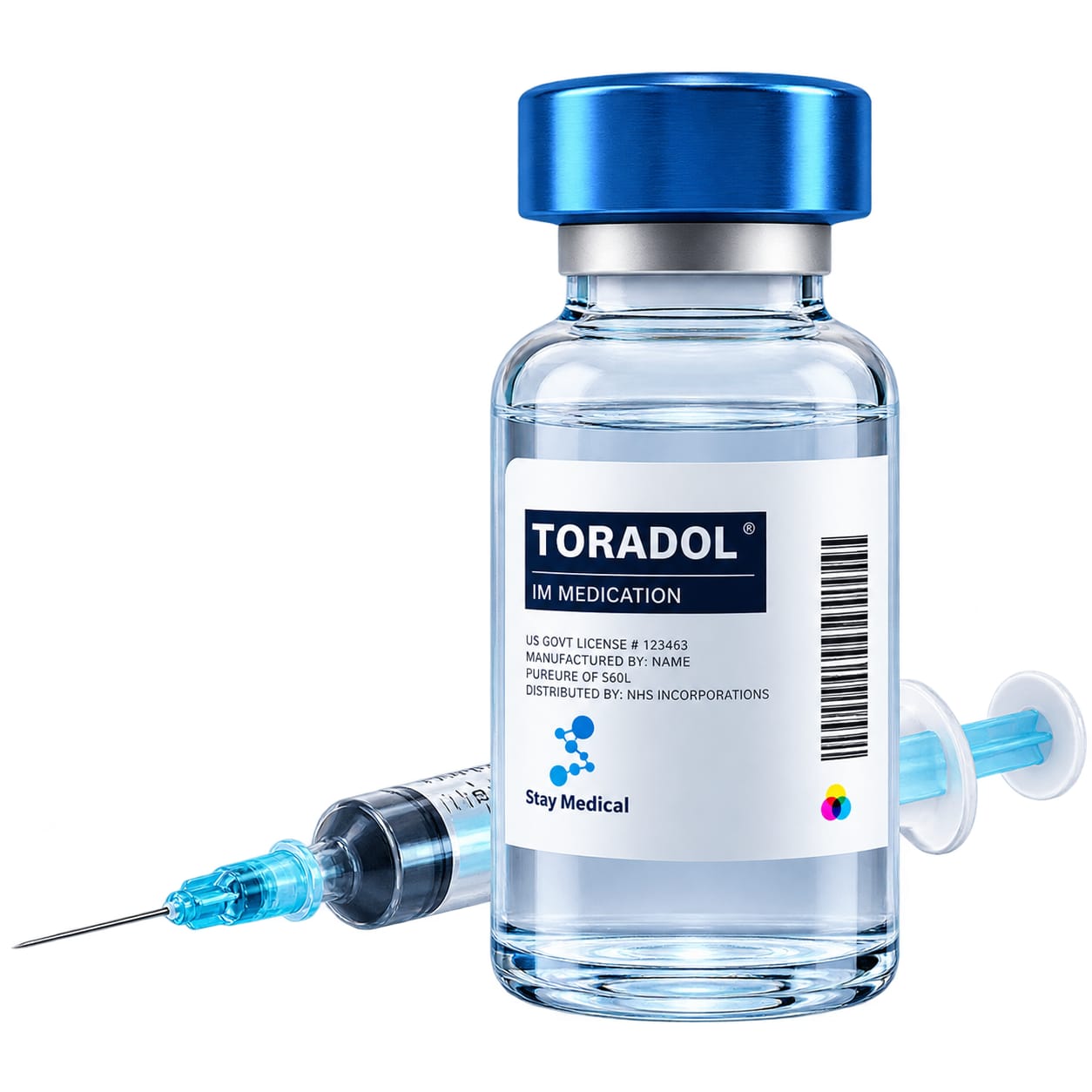
| Forms | Injection (10 mg/mL and 30 mg/mL in 1 mL glass ampoules), Tablet |
Quick overview
Toradol Injection contains the active ingredient ketorolac trometamol and belongs to a group of medicines called Non-Steroidal Anti-Inflammatory Drugs (NSAIDs). It is given as an injection into a muscle to relieve pain and reduce inflammation following surgery. While it can relieve symptoms of pain and inflammation, it will not cure the underlying condition. It is intended for short-term use, for no longer than 5 days.
What is Toradol Injection
TORADOL is an injection that contains the active ingredient ketorolac trometamol. It belongs to a family of medicines called Non-Steroidal Anti-Inflammatory Drugs (NSAIDs). Although it can relieve the symptoms of pain and inflammation, it will not cure your condition.
Toradol Injection uses
- To relieve pain that may occur following surgery
- To reduce inflammation (swelling and soreness) that may occur following surgery
Benefits of Toradol Injection
- Relieves pain following surgery
- Reduces inflammation, swelling and soreness
How Toradol Injection works
TORADOL belongs to a group of medicines called NSAIDs, which work to relieve pain and reduce inflammation such as swelling and soreness.
Toradol Injection dosage
TORADOL is given as an injection into a muscle by a doctor or trained nurse. The injection should not be injected directly into the veins (intravenously). It is given every 4 to 6 hours as required. Do not receive TORADOL for longer than 5 days, as prolonged use may increase the occurrence of side effects. Do not give TORADOL to a child under 16 years of age.
| Age group | Dose |
|---|---|
| Under 17 years | Not routinely recommended; pediatric use requires specialist guidance |
| 17–64 years, ≥50 kg | 30 mg every 6 hours; maximum 120 mg/day |
| 17–64 years, <50 kg | 15 mg every 6 hours; maximum 60 mg/day |
| 65+ years | 15 mg every 6 hours; maximum 60 mg/day |
| Renal impairment | Usually 15 mg every 6 hours; maximum 60 mg/day, with clinical assessment |
Available forms and strengths
- Injection (10 mg/mL and 30 mg/mL in 1 mL glass ampoules)
- Tablet
Side effects of Toradol Injection
Common
- Stomach upset including nausea, heartburn, indigestion
- Pain in the stomach or wind
- Diarrhoea
- Dizziness
- Drowsiness
- Headache
- Dry mouth
- Feeling extremely thirsty
- Skin rash or hives
- Sweating
- Aching muscles, muscle tenderness or weakness not caused by exercise
- Pain at the injection site
- Passing more or less urine than normal
Serious
- Severe dizziness or spinning sensation
- Severe or persistent headache
- Abnormal vision
- Bleeding or bruising more easily than normal, reddish or purplish blotches under the skin
- Severe pain or tenderness in any part of the stomach or back
- Unusual weight gain, swelling of ankles or legs
- Vomiting blood or material that looks like coffee grounds
- Bleeding from the back passage, black sticky bowel motions or bloody diarrhoea
- Swelling of the face, lips or tongue causing difficulty swallowing or breathing
- Asthma, wheezing, shortness of breath
- Sudden or severe itching, skin rash or hives
- Fainting, seizures or fits
- Pain or tightness in the chest
- Flu-like symptoms with a rash on the face, then an extended rash with a high temperature and enlarged lymph nodes
Warnings and precautions
- Do not use TORADOL if you are allergic to ketorolac trometamol, aspirin or any other NSAID medicine, or any of the ingredients. If you are allergic to aspirin or NSAID medicines, symptoms may be severe.
- Do not receive TORADOL for longer than 5 days. Prolonged use may increase the occurrence of side effects.
- Do not use TORADOL if you have a peptic ulcer or history of one, bleeding disorders, asthma, severe heart failure, or if you have recently had or are about to have heart bypass surgery.
- Do not give TORADOL to a child under 16 years of age; safety and effectiveness in children under 16 have not been established.
- TORADOL may hide some signs of an infection, such as pain and fever, and may make you think the infection is not serious or that you are better.
- Do not take TORADOL if you are pregnant or intend to become pregnant. It may affect your developing baby. It may also impair fertility and is not recommended in women attempting to conceive.
- Do not take TORADOL if you are breastfeeding or intend to breastfeed. It passes into breast milk and the effect on the baby is not known.
- Do not use TORADOL if you have kidney disease. If you have reduced kidney function, your doctor may prescribe a lower dose.
- Do not use TORADOL if you have severe liver disease.
- Tell your doctor if you drink alcohol. If you drink alcohol, dizziness or light-headedness may be worse.
- Be careful before you drive or use any machines or tools until you know how TORADOL affects you, as it may cause dizziness or light-headedness. If this occurs, do not drive.
Storage
- TORADOL will be stored in the pharmacy or on the hospital ward.
- It is kept in a cool dry place where the temperature stays below 30°C.
- It should be protected from light.
- If you no longer need to use this medicine or it is out of date, take it to any pharmacy for safe disposal.
- Do not use this medicine after the expiry date.
When to see a doctor
- Call your doctor straight away, or go straight to the Emergency Department at your nearest hospital if you notice very serious side effects such as vomiting blood, bleeding from the back passage, swelling of the face, lips or tongue, wheezing, shortness of breath, fainting, seizures or chest pain.
- Tell your doctor immediately if you notice serious side effects such as severe dizziness, severe headache, abnormal vision, easy bleeding or bruising, severe stomach or back pain, unusual weight gain or swelling of ankles or legs.
- If you think you have received too much TORADOL, seek urgent medical attention by contacting your local poison control center, your doctor, or going to your nearest hospital Emergency Department, even if there are no signs of discomfort or poisoning.
- Call your doctor straight away if you become pregnant while receiving TORADOL, or if you get an infection soon after receiving it.
Alternatives
- Diclofenac injection
- Ketoprofen injection
- Ibuprofen injection
- Paracetamol (acetaminophen) IV
- Fentanyl injection
Watch the video
FAQs
What is Toradol Injection used for?
Toradol Injection is used to relieve pain and reduce inflammation (swelling and soreness) that may occur following surgery.
How long can Toradol Injection be used?
Toradol Injection is intended for short-term use only, for no longer than 5 days, as prolonged use may increase the occurrence of side effects.
How is Toradol Injection given?
It is given as an injection into a muscle by a doctor or trained nurse, every 4 to 6 hours as required. It should not be injected directly into the veins.
Can children receive Toradol Injection?
No, Toradol should not be given to a child under 16 years of age, as safety and effectiveness in children under 16 have not been established.
Is Toradol Injection safe during pregnancy or breastfeeding?
No, Toradol should not be used during pregnancy or breastfeeding, as it may affect the developing baby, impair fertility, and passes into breast milk with unknown effects on the baby.
General information, not medical advice
Your prescriber and the leaflet in your pack know your situation. This page does not.
- Follow your prescriber and the leaflet
- Don't start, stop, or change a dose on your own
- Doses and warnings differ by country and product
Sources
- Australian Commission on Safety and Quality in Health Care - Medicine Finder: TORADOL Injection Consumer Medicine Information
- TORADOL Injection Consumer Medicine Information (CMI), prepared August 2021, published by MIMS October 2021
Video
Related medicines

Injectafer Injection: Uses, Dosage, Side Effects, Precautions and Alternates
Iron products
Injectafer (ferric carboxymaltose) treats iron deficiency anemia and heart failure-related iron deficiency via IV. Learn uses, dosage, side effects, and

Gliclazide Tablet: Uses, Dosage, Side Effects, Precautions and Alternates
Sulfonylurea (hypoglycemic/antidiabetic agent)
Gliclazide Tablet is a sulfonylurea for type 2 diabetes that boosts insulin release. Learn about dosage, side effects, warnings, and precautions.