
Safety
General information, not medical advice
Your prescriber and the leaflet in your pack know your situation. This page does not.
- Follow your prescriber and the leaflet
- Don't start, stop, or change a dose on your own
- Doses and warnings differ by country and product
Toremifene Tablet: Uses, Dosage, Side Effects, Precautions and Alternates
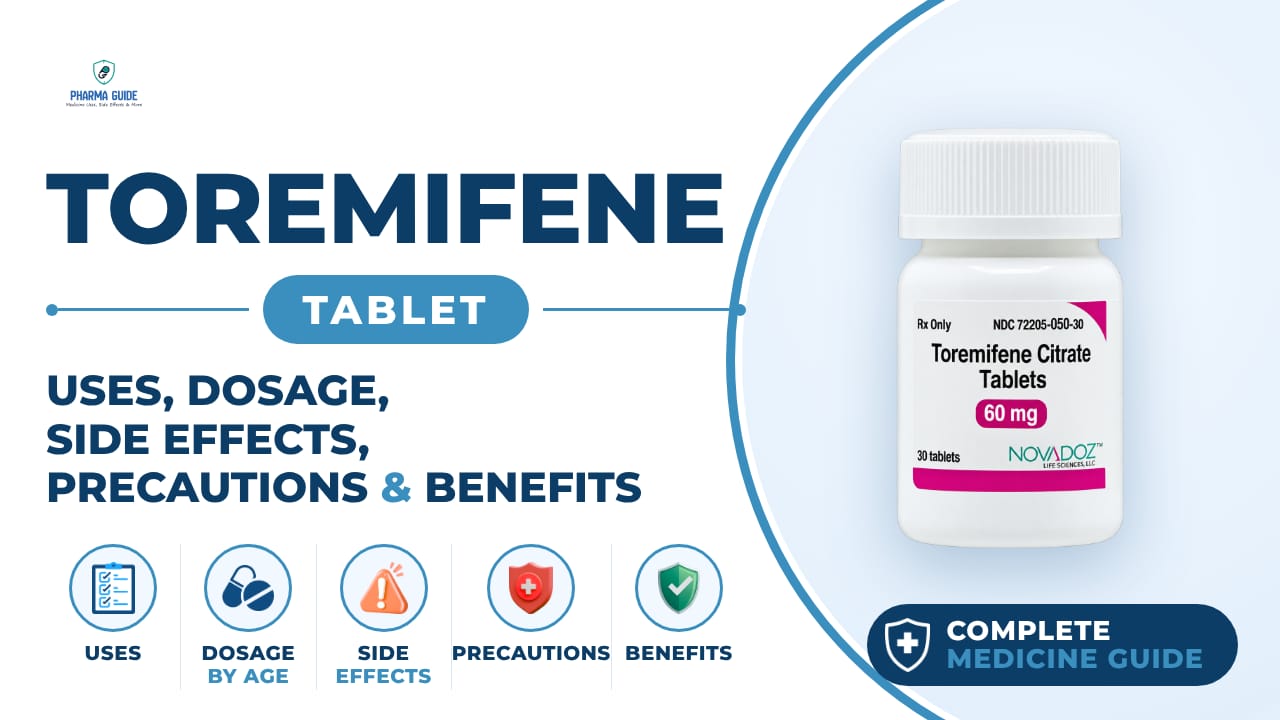
| Generic name | Toremifene citrate |
|---|---|
| Drug class | Estrogen agonist/antagonist, Selective estrogen receptor modulator (SERM) |
| Forms | Oral tablet (60 mg) |
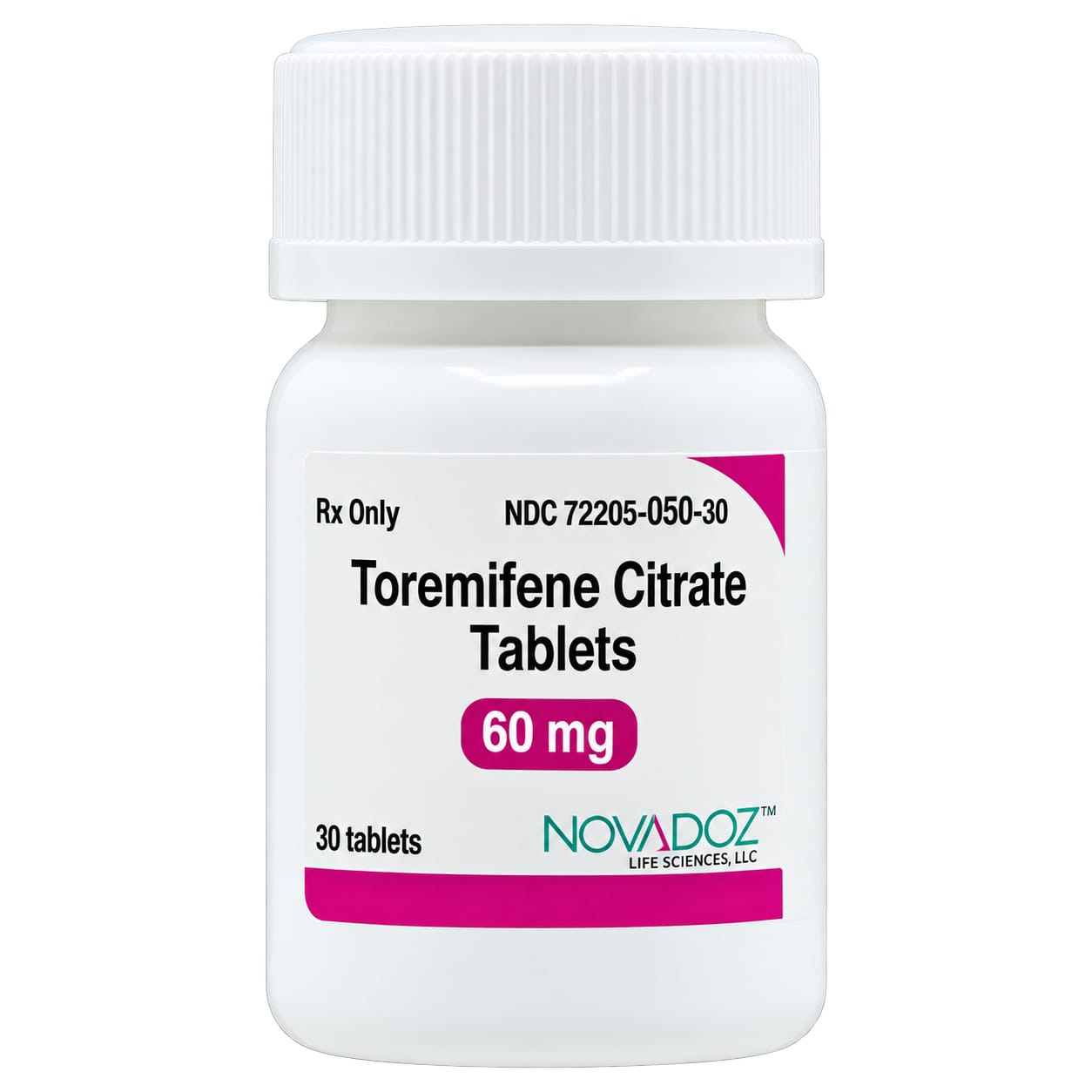
Quick overview
Toremifene Tablet (toremifene citrate) is a prescription estrogen agonist/antagonist, also called a selective estrogen receptor modulator (SERM), used in postmenopausal women to treat metastatic breast cancer. It works by blocking the effects of estrogen on breast tissue. It is taken once daily as a 60 mg oral tablet, and treatment is usually continued until the disease gets worse.
What is Toremifene Tablet
Toremifene is a prescription tablet used in postmenopausal women to treat breast cancer that has spread to other parts of the body (metastatic breast cancer). It works by blocking the effects of estrogen on breast tissue.
Toremifene Tablet uses
- Treatment of metastatic breast cancer in postmenopausal women whose tumors are estrogen-receptor positive or of unknown estrogen-receptor status
Benefits of Toremifene Tablet
- Can slow or stop the growth of certain breast cancers that rely on estrogen to grow
- Treats certain estrogen receptor-positive metastatic breast cancers
- Blocks estrogen activity in breast cancer cells
- Helps slow growth of hormone-sensitive tumors
- Provides an oral endocrine-treatment option
How Toremifene Tablet works
Toremifene attaches to estrogen receptors in the body. In breast cancer, this blocks estrogen from reaching the tumor, which stops estrogen from fueling the cancer's growth.
Toremifene Tablet dosage
Take the tablet once a day, with or without food. Take it at the same time each day and follow your prescription label exactly. Your doctor will do a pelvic exam before you start, and regular exams while you take it. You will need regular blood tests and other medical tests while on this medicine.
If you miss a dose, take it as soon as you remember, but skip it if it is almost time for your next dose — do not take two doses at once. Treatment is usually continued until the disease gets worse.
| Age group | Dose |
|---|---|
| Under 18 years | Safety and effectiveness have not been established |
| 18–39 years | 60 mg once daily |
| 65–74 years | 60 mg once daily, with oncology monitoring |
Available forms and strengths
- Oral tablet (60 mg)
Side effects of Toremifene Tablet
Common
- Hot flashes
- Sweating
- Nausea
- Vaginal discharge
- Dizziness
- Swelling (edema)
- Vomiting
- Vaginal bleeding
Serious
- Signs of a serious allergic reaction: hives, trouble breathing, swelling of face/lips/tongue/throat
- Fast or pounding heartbeats, fluttering in the chest, sudden dizziness, shortness of breath, or seizure (signs of a dangerous heart rhythm problem)
- Slow heart rate, weak pulse, fainting, or slow breathing
- Blurred vision, tunnel vision, eye pain, or seeing halos around lights
- Heart attack symptoms — chest pain or pressure, pain spreading to jaw or shoulder, nausea, sweating
- High calcium levels — confusion, tiredness, nausea, vomiting, loss of appetite, constipation, increased thirst or urination, weight loss
- Liver problems — loss of appetite, stomach pain, dark urine, clay-colored stools, yellowing of skin or eyes (jaundice)
- Signs of a blood clot — sudden numbness or weakness (especially on one side), severe headache, slurred speech, vision or balance problems, chest pain, wheezing, coughing up blood
- Pelvic pain or abnormal vaginal bleeding
- Low blood counts (leukopenia, thrombocytopenia)
- Cataracts and other eye problems
Warnings and precautions
- This medicine can cause a dangerous heart rhythm problem called QT prolongation, which can lead to a serious irregular heartbeat (Torsade de pointes) that may cause fainting, seizures, or death. Do not use it if you have long QT syndrome or uncorrected low potassium or magnesium levels.
- This medicine may increase the risk of cancer or other growths in the lining of the uterus. Report any unusual vaginal bleeding to your doctor right away, and have regular gynecological exams.
- In patients with cancer that has spread to the bones, this medicine can cause high blood calcium levels and a temporary flare of symptoms in the first weeks of treatment.
- People with a history of blood clots should generally not take this medicine.
- Avoid grapefruit and grapefruit juice, as well as St. John's Wort, while taking this medicine, since they can change how much of the drug is in your body.
- Taking this medicine with other drugs that also affect heart rhythm (QT interval) should be avoided, as this can raise the risk of serious heart problems.
- This medicine can harm an unborn baby and should not be used during pregnancy. It is only meant for women who can no longer become pregnant. If you can still become pregnant, use a non-hormonal birth control method while taking it.
- It isn't known if this medicine passes into breast milk. Your doctor will help you decide whether to stop breastfeeding or stop the medicine.
- This medicine works about the same way in people with kidney problems as in people with normal kidney function.
- This medicine can cause liver damage. People with liver problems should be monitored carefully, and liver function tests should be done regularly during treatment.
- It isn't known for certain how alcohol affects this medicine, but drinking alcohol may increase the chance of hot flashes.
- Avoid driving if dizziness, weakness, or visual symptoms occur.
Storage
- Store at room temperature, between 68°F to 77°F (20°C to 25°C).
- It can be exposed to temperatures between 59°F to 86°F (15°C to 30°C) for shorter periods of time, such as when transporting it.
- Store in a cool, dry place.
- Protect from light and heat.
- Keep out of the reach of children.
When to see a doctor
- Get emergency help right away if you have signs of a severe allergic reaction, such as hives, trouble breathing, or swelling of the face, lips, tongue, or throat.
- Stop taking the medicine and call your doctor immediately if you notice fast or pounding heartbeats, fluttering in your chest, sudden dizziness, shortness of breath, or a seizure.
- Call your doctor right away if you have pelvic pain, unusual vaginal bleeding, or signs of liver problems like loss of appetite, dark urine, or yellowing of the skin or eyes.
- Seek medical attention right away if you have symptoms of a blood clot, like sudden numbness or weakness on one side of the body, severe headache, slurred speech, or vision or balance problems.
- If you think you have taken too much of this medicine, get emergency medical help or contact a poison control center right away.
Alternatives
- Tamoxifen
- Fulvestrant
- Anastrozole
Watch the video
FAQs
What is Toremifene Tablet used for?
It is used to treat metastatic breast cancer in postmenopausal women whose tumors are estrogen-receptor positive or of unknown estrogen-receptor status.
How does Toremifene Tablet work?
Toremifene attaches to estrogen receptors in the body, blocking estrogen from reaching the tumor, which stops estrogen from fueling the cancer's growth.
What is the dosage of Toremifene Tablet?
It is taken once a day, with or without food, usually as a 60 mg tablet, at the same time each day, and continued until the disease gets worse.
What are the serious side effects of Toremifene Tablet?
Serious side effects include dangerous heart rhythm problems, blood clots, liver problems, high calcium levels, cataracts and eye problems, and pelvic pain or abnormal vaginal bleeding.
What should be avoided while taking Toremifene Tablet?
Avoid grapefruit and grapefruit juice, St. John's Wort, and other drugs that affect heart rhythm, since these can increase the risk of serious problems.
General information, not medical advice
Your prescriber and the leaflet in your pack know your situation. This page does not.
- Follow your prescriber and the leaflet
- Don't start, stop, or change a dose on your own
- Doses and warnings differ by country and product
Sources
Video
Related medicines

Injectafer Injection: Uses, Dosage, Side Effects, Precautions and Alternates
Iron products
Injectafer (ferric carboxymaltose) treats iron deficiency anemia and heart failure-related iron deficiency via IV. Learn uses, dosage, side effects, and

Gliclazide Tablet: Uses, Dosage, Side Effects, Precautions and Alternates
Sulfonylurea (hypoglycemic/antidiabetic agent)
Gliclazide Tablet is a sulfonylurea for type 2 diabetes that boosts insulin release. Learn about dosage, side effects, warnings, and precautions.