
Safety
General information, not medical advice
Your prescriber and the leaflet in your pack know your situation. This page does not.
- Follow your prescriber and the leaflet
- Don't start, stop, or change a dose on your own
- Doses and warnings differ by country and product
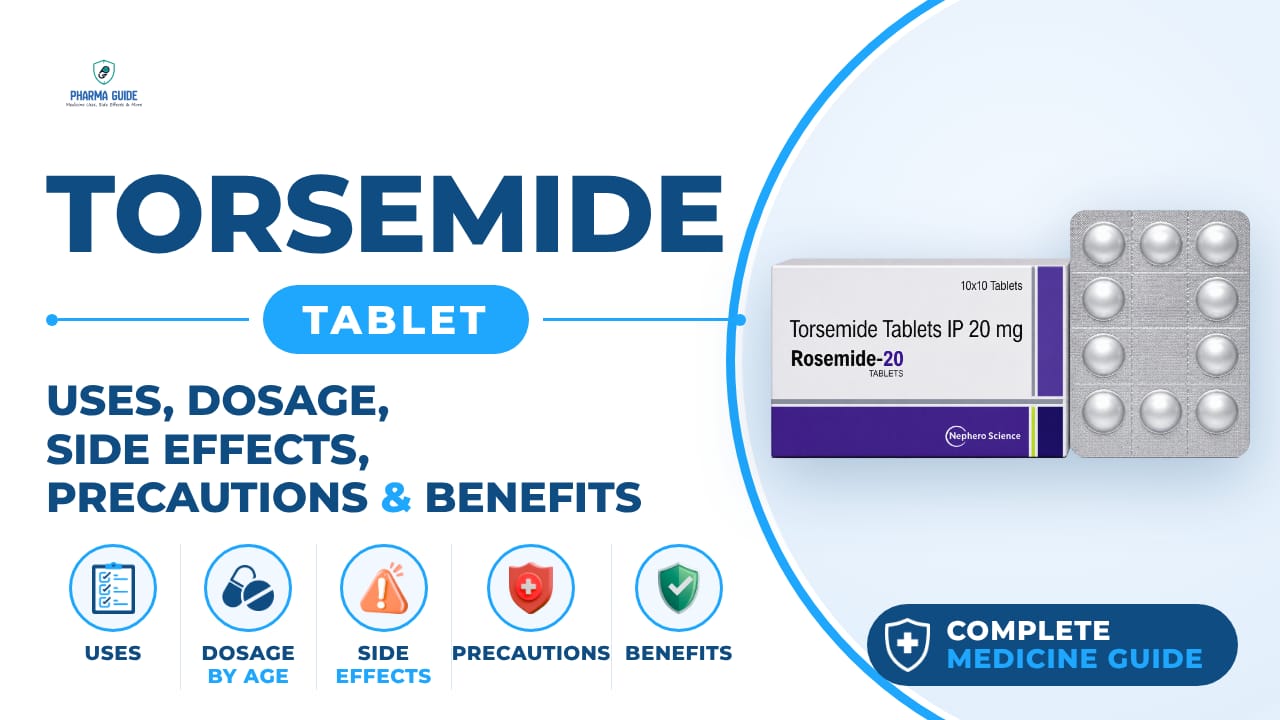
Torsemide Tablet: Uses, Dosage, Side Effects, Precautions and Alternates
| Generic name | Torsemide |
|---|---|
| Drug class | Loop diuretic (water pill) |
| Forms | Tablet |
Quick overview
Torsemide Tablet is a prescription loop diuretic, or water pill, used to reduce fluid buildup and swelling caused by heart, liver, or kidney problems, and to help lower high blood pressure. It works by helping the kidneys remove extra salt and water from the body. It is taken exactly as prescribed, often alongside diet changes recommended by a doctor, and requires regular monitoring of fluid levels and kidney function.
What is Torsemide Tablet
Torsemide is a prescription water pill used to reduce fluid buildup and swelling caused by heart, liver, or kidney problems, and to help lower high blood pressure. The generic name is torsemide, and it belongs to the loop diuretic (water pill) drug class.
Torsemide Tablet uses
- Treats edema (fluid retention/swelling) caused by congestive heart failure, liver disease (hepatic cirrhosis), or kidney disease
- Treats high blood pressure (hypertension), alone or with other medicines
Benefits of Torsemide Tablet
- Helps reduce swelling and excess fluid caused by heart, liver, or kidney disease
- Helps control high blood pressure, which lowers the risk of stroke, heart attack, heart failure, and kidney problems
How Torsemide Tablet works
Torsemide works on the kidneys to make them remove extra salt and water from the body into the urine, which increases urine flow and lowers fluid buildup and blood pressure.
Torsemide Tablet dosage
Take this medicine exactly as directed by your doctor; do not take more, more often, or for longer than prescribed. Try to take it at the same time each day to help you remember. This medicine does not cure high blood pressure or edema, so continue taking it even if you feel well; do not stop without talking to your doctor.
If you also take cholestyramine, take torsemide at least one hour before or four to six hours after cholestyramine, since it may keep torsemide from working properly. If you miss a dose, take it as soon as you remember; if it is almost time for your next dose, skip the missed one and go back to your regular schedule; do not double up doses. Follow any diet changes your doctor recommends, such as limiting salt or eating more potassium-rich foods.
| Age group | Dose |
|---|---|
| Under 18 years | Safety/effectiveness not established; specialist use only |
| 18–64 years – Edema | Usually 10–20 mg once daily initially; dose depends on the underlying condition |
| 18–64 years – Hypertension | Usually 5 mg once daily initially; may increase to 10 mg once daily |
| 65+ years | Usually adult dosing; start/adjust cautiously based on kidney function, blood pressure and electrolytes |
Available forms and strengths
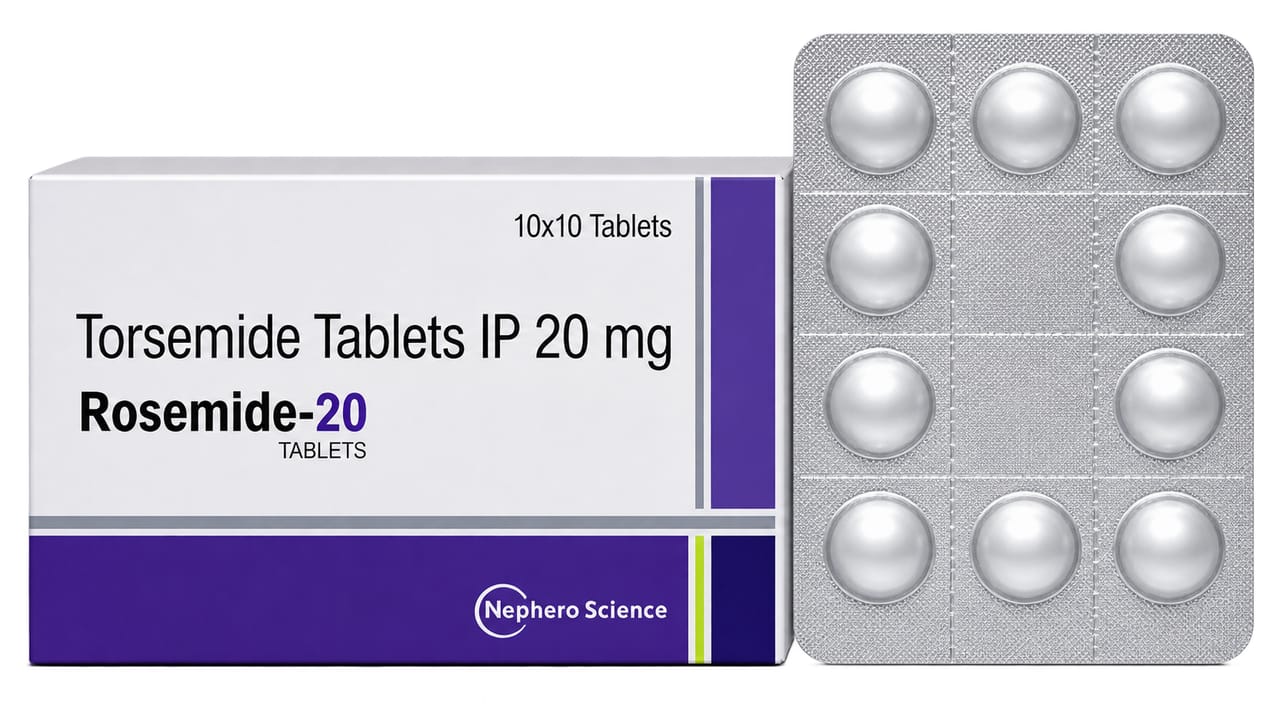
Torsemide is available as a tablet.
Side effects of Torsemide Tablet
Common
- Increased urination
- Acid or sour stomach, belching, heartburn, stomach discomfort
- Difficulty having a bowel movement
- Increased cough
- Muscle pain or stiffness, joint pain, swollen joints
- Nervousness, trouble sleeping
- Sneezing, stuffy or runny nose, sore throat
- Lack or loss of strength, difficulty moving
Serious
- Chest pain, irregular heartbeat, trouble breathing
- Decreased urination or difficulty passing urine
- Signs of dehydration or electrolyte imbalance: dry mouth, increased thirst, muscle cramps, nausea or vomiting, weakness, tiredness, drowsiness, confusion, fast heartbeat
- Sudden decrease or loss of hearing, ringing in the ears, dizziness, or a spinning sensation
- Numbness or tingling in hands, feet, or lips
- Seizures
- Swelling of hands, ankles, feet, or lower legs
- Black, tarry stools or vomiting blood
- Skin rash, blistering, peeling, or loosening of the skin, hives, itching
- Yellow eyes or skin
- Unusual bleeding or bruising
- Ongoing pain in the stomach area that may spread to the back
- Mood changes
- Loss of appetite
- Unusual tiredness or weakness
Warnings and precautions
- This medicine can cause a big drop in blood pressure and worsening kidney function, especially if you become dehydrated or take certain other medicines, so your fluid levels and kidney function should be checked regularly.
- This medicine can cause low levels of potassium, sodium, magnesium, or calcium in the blood, and can raise blood sugar or uric acid levels, so these should be checked periodically.
- This medicine can cause hearing problems, including ringing in the ears and hearing loss, which are usually reversible but more likely at higher doses or with kidney problems.
- This medicine should not be used in people who cannot make urine or who are in a liver-related coma.
- Do not take other prescription or over-the-counter medicines, including those for appetite control, asthma, colds, cough, hay fever, or sinus problems, unless you have discussed them with your doctor.
- There is not enough information to know if torsemide is safe to use during pregnancy. Tell your doctor if you are pregnant or planning to become pregnant.
- Torsemide may affect breast milk production, and its effects on a nursing baby are not known.
- Some guidance advises against breastfeeding while taking this medicine.
- Tell your doctor if you have or have ever had kidney disease, since this medicine can affect how well your kidneys work and your doctor may adjust your treatment.
- This medicine should be used with caution in people with severe liver disease, and starting treatment may need to happen in a hospital because it can cause sudden fluid and electrolyte changes that may worsen liver-related confusion.
- Alcohol can increase the dizziness and lightheadedness this medicine may cause, especially when standing up quickly.
- This medicine may cause dizziness or drowsiness, so do not drive or do anything that could be dangerous until you know how it affects you.
Storage
- Store the medicine in a closed container at room temperature, away from heat, moisture, and direct light
- Keep from freezing
- Keep out of the reach of children
- Do not keep outdated medicine or medicine no longer needed
- Ask your healthcare professional how you should dispose of any medicine you do not use
- Keep this medicine in the container it came in, tightly closed, and out of reach of children. Store it at room temperature and away from excess heat and moisture (not in the bathroom)
- Dispose of unneeded medications through a medicine take-back program rather than flushing them down the toilet
When to see a doctor
- Get emergency help right away if you have symptoms of overdose, such as blurred vision, confusion, fainting, fast heartbeat, rapid breathing, sweating, or unusual tiredness.
- Call your doctor right away if you have dry mouth, increased thirst, muscle cramps, nausea, or vomiting, since these may be signs of low potassium or dehydration.
- Call your doctor right away if you suddenly lose hearing or notice ringing in the ears, dizziness, or a spinning sensation.
- Call your doctor immediately or get emergency care if you have signs of severe dehydration or electrolyte imbalance, rapid weight loss, vomiting blood, chest pain, trouble breathing or swallowing, blistering or peeling skin, hives, rash, itching, or ongoing stomach pain that spreads to the back.
Alternatives
- Metolazone
- Spironolactone
- Chlorthalidone
- Hydrochlorothiazide
- Bumetanide
Watch the video
FAQs
What is Torsemide Tablet used for?
It is used to treat edema (fluid buildup and swelling) caused by congestive heart failure, liver disease, or kidney disease, and to treat high blood pressure, alone or with other medicines.
How does Torsemide Tablet work?
It works on the kidneys to make them remove extra salt and water from the body into the urine, which increases urine flow and lowers fluid buildup and blood pressure.
What is the usual dosage of Torsemide Tablet?
For edema, adults usually start at 10–20 mg once daily depending on the condition. For hypertension, the usual starting dose is 5 mg once daily, which may be increased to 10 mg once daily. Dosing in those 65 and older is adjusted cautiously based on kidney function, blood pressure, and electrolytes.
What are the serious side effects of Torsemide Tablet?
Serious side effects include chest pain, irregular heartbeat, trouble breathing, decreased urination, signs of dehydration or electrolyte imbalance, sudden hearing loss or ringing in the ears, numbness or tingling, seizures, swelling, black tarry stools or vomiting blood, skin rash or blistering, yellowing of the eyes or skin, and unusual bleeding or bruising.
Can I take Torsemide Tablet with cholestyramine?
If you also take cholestyramine, you should take torsemide at least one hour before or four to six hours after cholestyramine, since it may keep torsemide from working properly.
General information, not medical advice
Your prescriber and the leaflet in your pack know your situation. This page does not.
- Follow your prescriber and the leaflet
- Don't start, stop, or change a dose on your own
- Doses and warnings differ by country and product
Sources
- https://www.mayoclinic.org/drugs-supplements/torsemide-oral-route/description/drg-20067926
- https://medlineplus.gov/druginfo/meds/a601212.html
- Torsemide Tablets Prescribing Information, Teva Pharmaceuticals USA, Inc., Rev. D 2/2017
Video
Related medicines

Injectafer Injection: Uses, Dosage, Side Effects, Precautions and Alternates
Iron products
Injectafer (ferric carboxymaltose) treats iron deficiency anemia and heart failure-related iron deficiency via IV. Learn uses, dosage, side effects, and

Gliclazide Tablet: Uses, Dosage, Side Effects, Precautions and Alternates
Sulfonylurea (hypoglycemic/antidiabetic agent)
Gliclazide Tablet is a sulfonylurea for type 2 diabetes that boosts insulin release. Learn about dosage, side effects, warnings, and precautions.