
Safety
General information, not medical advice
Your prescriber and the leaflet in your pack know your situation. This page does not.
- Follow your prescriber and the leaflet
- Don't start, stop, or change a dose on your own
- Doses and warnings differ by country and product
Tosymra Nasal Spray: Uses, Dosage, Side Effects, Precautions and Alternates
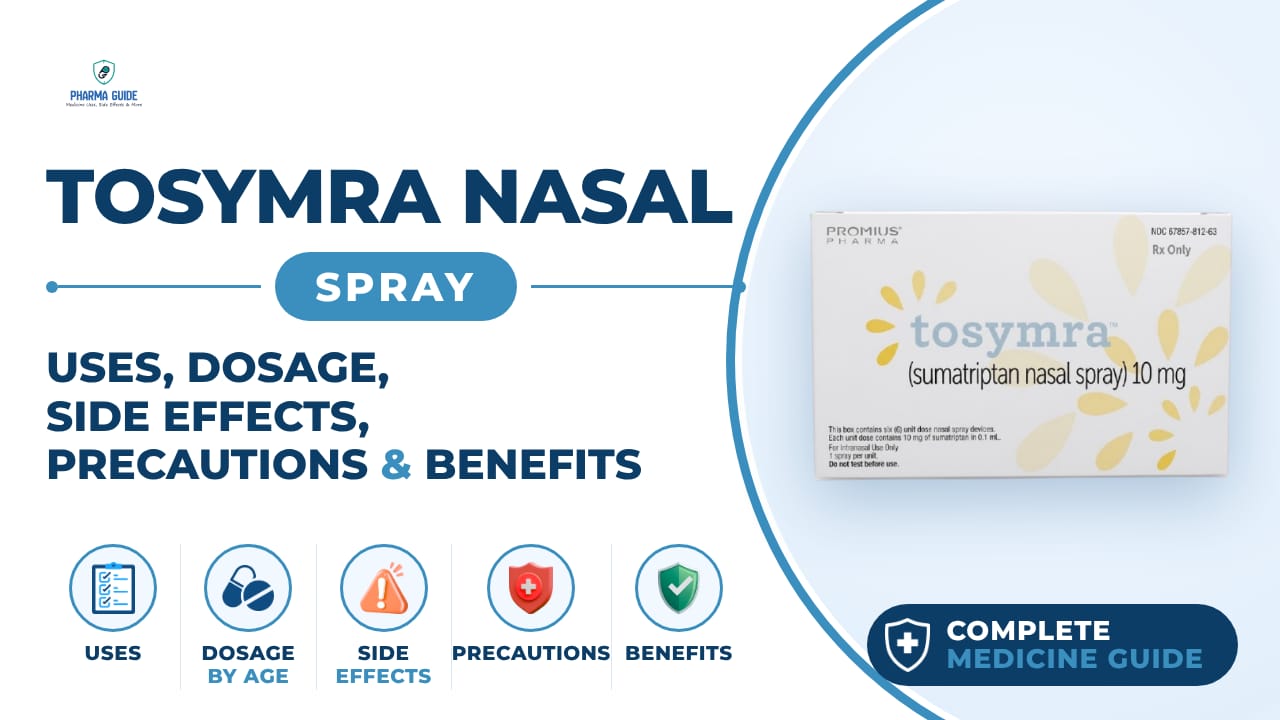
| Generic name | sumatriptan |
|---|---|
| Drug class | Serotonin (5-HT1B/1D) receptor agonist (triptan) |
| Forms | Nasal spray (single-dose device, 10 mg per spray) |
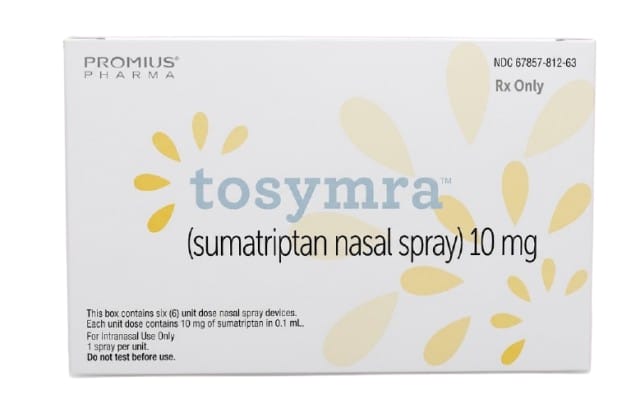
Quick overview
Tosymra Nasal Spray is a brand-name prescription nasal spray containing sumatriptan, a serotonin (5-HT1B/1D) receptor agonist (triptan). It is used to treat acute migraine attacks that have already started in adults, working quickly to stop migraine symptoms rather than prevent them. It is not approved to prevent migraines, treat cluster headaches, or for use in children under 18.
What is Tosymra Nasal Spray
Tosymra is a brand-name prescription nasal spray used to treat migraine attacks that have already started in adults. It works quickly to stop migraine symptoms rather than prevent them.
Tosymra Nasal Spray uses
- Treats acute migraine headache attacks with or without aura in adults
- Not approved to prevent migraines
- Not approved to treat cluster headaches
- Not approved for use in children under 18
Benefits of Tosymra Nasal Spray
- Helps relieve migraine pain
- Reduces headache severity
- May relieve migraine-related nausea
- May reduce sensitivity to light and sound
- Provides rapid nasal delivery of medicine
How Tosymra Nasal Spray works
Tosymra contains sumatriptan, which attaches to serotonin receptors on blood vessels in the brain. This causes the swollen blood vessels that are linked to migraine pain to narrow, and it also helps block the release of chemicals that cause inflammation.
Tosymra Nasal Spray dosage
Use it as soon as your migraine symptoms start, though it can be used at any time during a migraine. Spray one dose into one nostril only; never use more than one device for a single dose. Do not prime or test-spray the device before using it, as this wastes the dose. Gently blow your nose to clear your nostrils before use. Keep your head tilted back slightly while the device is in your nose so the medicine doesn't drip out. After spraying, keep your head upright, don't look down, and breathe gently in through your nose and out through your mouth for 10 to 20 seconds.
If your migraine returns or only partly improves, you may use a second dose at least 1 hour after the first. Space all doses at least 1 hour apart, and do not exceed the maximum amount allowed in 24 hours. It can be used without regard to food. Keep a written record of the date and time of each dose to avoid overuse and to share with your doctor. Some people may need to take their first dose in their healthcare provider's office so they can be monitored. This medicine is used only as needed for a migraine attack, not on a regular daily schedule.
| Age group | Dose |
|---|---|
| Under 18 years | Not recommended |
| 18–64 years | 10 mg, once/day |
| 65+ years | Not recommended |
Available forms and strengths
- Nasal spray (single-dose device, 10 mg per spray)
Side effects of Tosymra Nasal Spray
Common
- Unusual or abnormal taste
- Sore throat or throat irritation
- Dizziness
- Drowsiness
- Muscle pain or weakness
- Neck stiffness or discomfort
- Tightness in the head, jaw, or chest
- Numbness, tingling, or burning in and around the nose and throat
- Feeling of heaviness or pressure
- Flushing or a warm/hot sensation
- Application site (nasal) reactions
Serious
- Signs of a heart attack, such as chest discomfort, tightness or pain spreading to the jaw/arm/back, shortness of breath, cold sweat, nausea, or feeling lightheaded
- Blood vessel spasms that can lead to chest pain, heart attack, or stroke
- Sudden numbness or weakness, especially on one side of the body, confusion, or vision changes (possible stroke)
- Medication overuse headaches from using the drug too often
- Serotonin syndrome, with symptoms like agitation, sweating, nausea, vomiting, diarrhea, rapid heart rate, or hallucinations
- Significant increase in blood pressure
- Changes in color or sensation in fingers and toes (Raynaud's syndrome)
- Stomach and intestinal problems, including sudden severe stomach pain or bloody diarrhea
- Poor blood circulation to legs and feet, including cramping, numbness, or color changes
- Seizures
- Severe allergic reaction, including swelling of the face, lips, tongue, or throat, hives, or trouble breathing
Warnings and precautions
- Tosymra can cause serious heart problems, including heart attack, which can lead to death. Get emergency help right away if you have chest discomfort, tightness or pressure in the chest/throat/neck/jaw, pain spreading to the arm or back, shortness of breath, cold sweat, nausea, or lightheadedness.
- This medicine is not for people with risk factors for heart disease unless a heart exam shows no problem.
- Do not use Tosymra if you have heart problems, poor circulation in the legs/arms/stomach/kidneys, uncontrolled high blood pressure, severe liver problems, certain rare types of migraine, or a history of stroke or ministroke.
- Do not use Tosymra within 24 hours of taking another triptan medicine or an ergotamine-type medicine, since combining them raises the risk of serious side effects.
- Do not use Tosymra if you are taking, or have recently stopped taking, certain antidepressants called MAO-A inhibitors, as this combination is contraindicated and increases risk of serious side effects.
- Using migraine medicine such as Tosymra too often (10 or more days a month) may cause medication overuse headaches, which can make headaches worse.
- Serotonin syndrome, a rare but serious condition, can occur, especially when Tosymra is combined with certain antidepressants (SSRIs or SNRIs).
- Seizures have occurred in people using this medicine, even those with no prior history of seizures.
- It isn't known for certain if Tosymra is safe during pregnancy. Studies so far haven't shown a clear increased risk of birth defects in people who used sumatriptan, but no formal clinical trials have been done in pregnant people. Talk with your doctor about the risks and benefits before starting treatment.
- Sumatriptan passes into breast milk for about 12 hours after a dose.
- Your doctor may suggest avoiding breastfeeding during that time to reduce your baby's exposure to the medicine.
- Tell your doctor if you have kidney problems before using Tosymra.
- Tosymra should not be used if you have severe liver problems. Tell your doctor about any liver problems before starting treatment.
- There are no known interactions between Tosymra and alcohol, but alcohol can cause similar side effects, such as drowsiness and nausea, and can trigger migraines in some people, which may make you feel worse rather than better.
- This medicine can cause dizziness, weakness, or drowsiness. Do not drive, use machinery, or do anything requiring alertness if you have these symptoms.
Storage
- Store between 68°F and 77°F (20°C and 25°C)
- Temporary exposure to 59°F to 86°F (15°C to 30°C) is permitted if necessary
- Do not store in the refrigerator or freezer
- Avoid storing in areas that could get damp or wet, such as bathrooms
- Keep tightly sealed in its original packaging until ready to use
- Throw away the used device and its packaging in your household trash after use
- Keep out of the reach of children
- Ask your pharmacist for advice on disposing of unused or expired medication
When to see a doctor
- Get emergency help right away if you have signs of a heart attack, such as chest discomfort lasting more than a few minutes, severe tightness or pressure in the chest/throat/neck/jaw, pain in the arms/back/jaw/stomach, shortness of breath, cold sweat, nausea or vomiting, or feeling lightheaded.
- Call your healthcare provider right away if you notice symptoms of serotonin syndrome, such as hallucinations, agitation, fast heartbeat, changes in blood pressure, high body temperature, tight muscles, or trouble walking.
- Seek medical help if you develop hives, swelling of the tongue, mouth, or throat, or a sudden severe increase in blood pressure.
- If you use too much Tosymra, call your healthcare provider or go to the nearest hospital emergency room right away.
- Contact your doctor if your headaches get worse, as this may be a sign of medication overuse headache requiring a change in treatment.
Alternatives
- Zolmitriptan
- Zembrace SymTouch
- Sumavel DosePro
Watch the video
FAQs
What is Tosymra Nasal Spray used for?
Tosymra is used to treat acute migraine headache attacks with or without aura in adults. It is not approved to prevent migraines, treat cluster headaches, or for use in children under 18.
How does Tosymra Nasal Spray work?
Tosymra contains sumatriptan, which attaches to serotonin receptors on blood vessels in the brain, causing swollen blood vessels linked to migraine pain to narrow and helping block the release of chemicals that cause inflammation.
How is Tosymra Nasal Spray used?
Spray one dose into one nostril as soon as migraine symptoms start. Do not prime the device first. If your migraine returns or only partly improves, you may use a second dose at least 1 hour after the first, without exceeding the maximum allowed in 24 hours.
What are the serious side effects of Tosymra Nasal Spray?
Serious side effects include signs of a heart attack, blood vessel spasms, stroke symptoms, serotonin syndrome, significant increase in blood pressure, Raynaud's syndrome, stomach and intestinal problems, poor circulation, seizures, and severe allergic reactions.
Can Tosymra Nasal Spray be used with other migraine medicines?
No, Tosymra should not be used within 24 hours of taking another triptan medicine or an ergotamine-type medicine, since combining them raises the risk of serious side effects.
General information, not medical advice
Your prescriber and the leaflet in your pack know your situation. This page does not.
- Follow your prescriber and the leaflet
- Don't start, stop, or change a dose on your own
- Doses and warnings differ by country and product
Sources
Video
Related medicines

Injectafer Injection: Uses, Dosage, Side Effects, Precautions and Alternates
Iron products
Injectafer (ferric carboxymaltose) treats iron deficiency anemia and heart failure-related iron deficiency via IV. Learn uses, dosage, side effects, and

Gliclazide Tablet: Uses, Dosage, Side Effects, Precautions and Alternates
Sulfonylurea (hypoglycemic/antidiabetic agent)
Gliclazide Tablet is a sulfonylurea for type 2 diabetes that boosts insulin release. Learn about dosage, side effects, warnings, and precautions.