
Safety
General information, not medical advice
Your prescriber and the leaflet in your pack know your situation. This page does not.
- Follow your prescriber and the leaflet
- Don't start, stop, or change a dose on your own
- Doses and warnings differ by country and product
Toviaz Tablet: Uses, Dosage, Side Effects, Precautions and Alternates
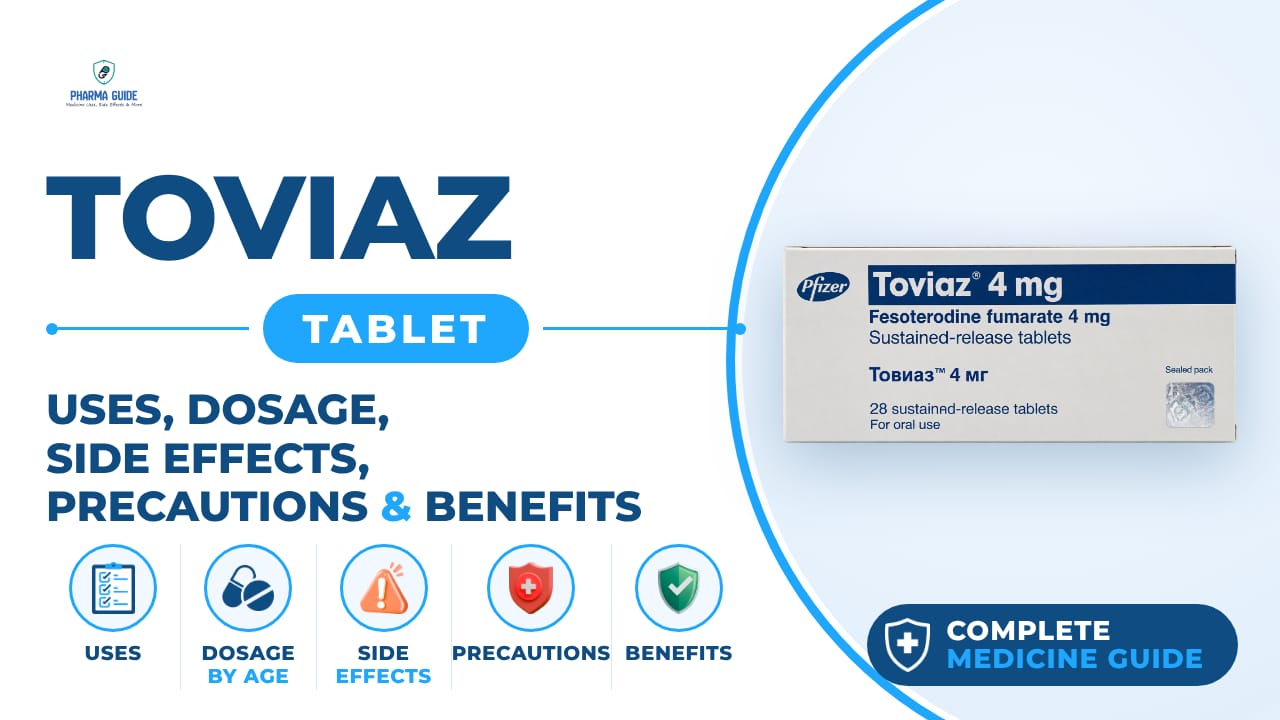
| Generic name | fesoterodine |
|---|---|
| Drug class | Urinary antispasmodic |
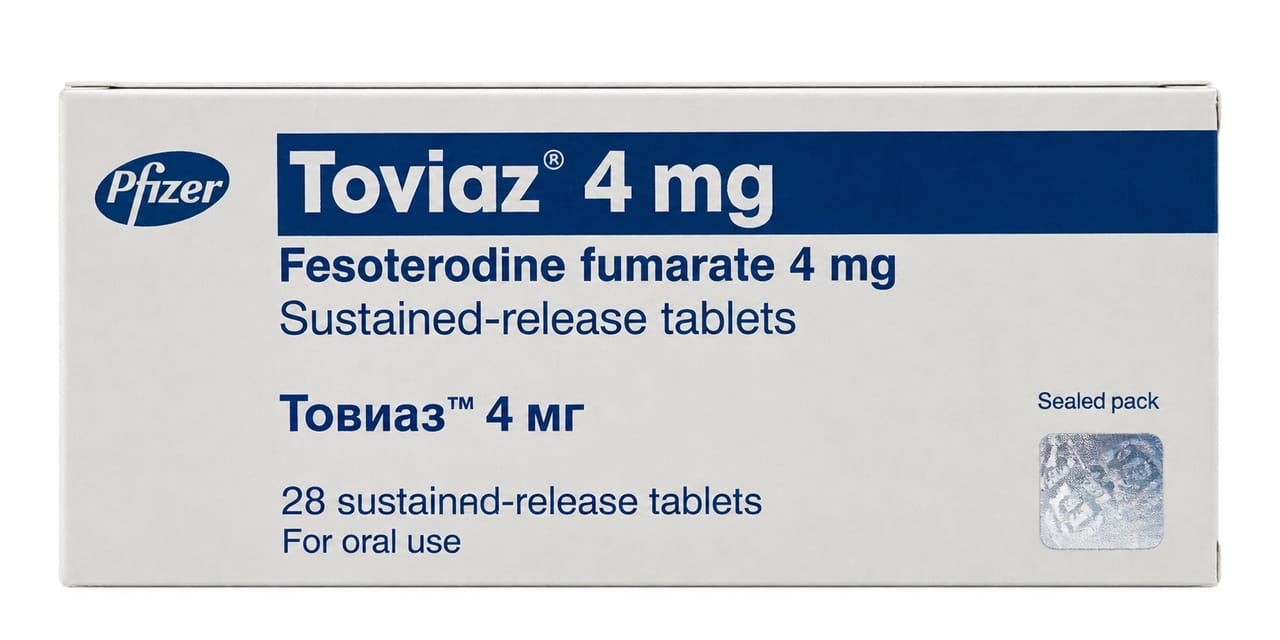
| Forms | Extended-release (prolonged-release) tablets, 4 mg and 8 mg |
Quick overview
Toviaz Tablet (fesoterodine) is a prescription urinary antispasmodic used to treat overactive bladder in adults and neurogenic detrusor overactivity in children 6 years and older weighing more than 55 pounds (25 kg). It works by blocking muscarinic receptors in the bladder, helping it hold more urine and reducing urgency. Common side effects include dry mouth and constipation, and it requires caution in people with certain eye, urinary, liver, or kidney conditions.
What is Toviaz Tablet
Toviaz is a prescription medicine that reduces spasms of the bladder muscles. It works by blocking certain nerve signals (muscarinic receptors) in the bladder, which helps the bladder hold more urine and reduces the urge to go.
Toviaz Tablet uses
- Treats overactive bladder in adults with symptoms of urinary frequency, urgency, and urge incontinence
- Treats neurogenic detrusor overactivity (NDO) in children 6 years and older who weigh more than 55 pounds (25 kg)
Benefits of Toviaz Tablet
- Reduces the number of times you need to urinate each day
- Reduces episodes of sudden, uncontrolled urine leakage
- Increases the amount of urine the bladder can hold before you feel the urge to go
- Increases the number of days you stay dry each week
How Toviaz Tablet works
Toviaz blocks specific nerve receptors (muscarinic receptors) in the bladder. This is thought to calm the overactive bladder muscle, allowing the bladder to hold more urine and reducing sudden urges to urinate.
Toviaz Tablet dosage
Take Toviaz with liquid, with or without food. Swallow the tablet whole; do not chew, divide, or crush it. Try to take it at the same time every day to help you remember. If you miss a dose, skip it and take your next dose at the regular time the next day; do not take two doses in one day. Do not stop taking this medicine without talking to your doctor, as your bladder symptoms may return or get worse. In children, the doctor may change the dose after the first week depending on body weight and kidney function or other medicines being taken.
| Age group | Dose |
|---|---|
| Under 6 years | Not recommended |
| 6 years and older | 4 mg once daily; may increase to 8 mg once daily depending on weight and response |
| 18–64 years | 4 mg once daily; may increase to 8 mg once daily |
| 65 years and older | 4 mg once daily; may increase to 8 mg once daily, depending on response and tolerability |
Available forms and strengths
- Extended-release (prolonged-release) tablets, 4 mg and 8 mg
Side effects of Toviaz Tablet
Common
- Dry mouth
- Constipation
- Painful or difficult urination (dysuria)
- Blurred vision
- Weight gain
- Stomach pain
- Diarrhea
- Nausea
- Dry eyes
- Headache
- Dizziness
- Trouble sleeping (insomnia)
- Dry throat
Serious
- Signs of an allergic reaction: hives, difficulty breathing, swelling of the face, lips, tongue, or throat (angioedema)
- Severe stomach pain or constipation
- Weak urine stream or trouble emptying the bladder
- Little or no urination (urinary retention)
- Severe drowsiness, dizziness, or confusion
- Fast heartbeat or palpitations
- Worsening of narrow-angle glaucoma
- Worsening of myasthenia gravis symptoms
Warnings and precautions
- Do not take Toviaz if you have uncontrolled narrow-angle glaucoma, a blockage of the urinary tract, or a blockage of the stomach or intestines.
- Do not crush, chew, or break the extended-release tablet.
- Swallow it whole, as breaking it may release too much drug at once. Toviaz can decrease sweating, so avoid becoming overheated or dehydrated during exercise or in hot weather, as this can increase the risk of heat stroke.
- Toviaz can cause a serious allergic reaction called angioedema, which may cause life-threatening swelling of the airway, sometimes after just one dose.
- Toviaz is not recommended for people with significant bladder blockage because it may cause urinary retention and possible kidney injury. Toviaz should be used carefully in people with myasthenia gravis, as it may worsen symptoms of this condition.
- Toviaz is not recommended during pregnancy because its effects on an unborn baby are not known. Breastfeeding is not recommended while taking Toviaz because it is not known if the drug passes into breast milk.
- People with kidney problems may need a lower dose, and severe kidney impairment combined with certain other medicines should be avoided or is not recommended. Toviaz should not be used in people with severe liver problems, and those with moderate liver problems may need dose adjustments or should avoid certain other medicines.
- Drinking alcohol while taking Toviaz can increase drowsiness. Toviaz can cause blurred vision, dizziness, and drowsiness, so avoid driving or operating machinery until you know how it affects you.
Storage
- Store at room temperature away from moisture and heat
- Do not store above 25°C
- Store in the original package to protect from moisture
- Keep out of the reach and sight of children
- Do not use after the expiry date on the carton and blister
- Do not throw away medicines via wastewater or household waste; ask your pharmacist how to dispose of medicines no longer needed
When to see a doctor
Get emergency medical help right away if you have signs of a serious allergic reaction, such as hives, difficulty breathing, or swelling of the face, lips, tongue, or throat. Call your doctor right away if you have severe stomach pain or constipation, a weak urine stream or trouble emptying your bladder, little or no urination, or headache, dizziness, or drowsiness. If you take too much Toviaz, contact your doctor or go to an emergency department right away. Stop taking Toviaz and seek immediate medical attention if you have swelling of the lips, tongue, or throat, or difficulty breathing.
Alternatives
- Myrbetriq (mirabegron)
- Detrol
- VESIcare (solifenacin)
- Ditropan XL (oxybutynin extended release)
- Tolterodine
- Trospium
- Solifenacin (Vesicare)
Watch the video
FAQs
What is Toviaz Tablet used for?
Toviaz treats overactive bladder in adults with urinary frequency, urgency, and urge incontinence, and neurogenic detrusor overactivity in children 6 years and older weighing more than 55 pounds (25 kg).
How does Toviaz Tablet work?
Toviaz blocks muscarinic receptors in the bladder, which calms the overactive bladder muscle, allowing it to hold more urine and reducing sudden urges to urinate.
What is the dosage of Toviaz Tablet?
The usual dose is 4 mg once daily, which may be increased to 8 mg once daily depending on age, weight, and response. It should be swallowed whole with liquid, with or without food.
What are the common side effects of Toviaz Tablet?
Common side effects include dry mouth, constipation, painful or difficult urination, blurred vision, weight gain, stomach pain, diarrhea, nausea, dry eyes, headache, dizziness, trouble sleeping, and dry throat.
Who should not take Toviaz Tablet?
Toviaz should not be taken by people with uncontrolled narrow-angle glaucoma, blockage of the urinary tract, or blockage of the stomach or intestines, and it is not recommended during pregnancy or breastfeeding.
General information, not medical advice
Your prescriber and the leaflet in your pack know your situation. This page does not.
- Follow your prescriber and the leaflet
- Don't start, stop, or change a dose on your own
- Doses and warnings differ by country and product
Sources
Video
Related medicines

Injectafer Injection: Uses, Dosage, Side Effects, Precautions and Alternates
Iron products
Injectafer (ferric carboxymaltose) treats iron deficiency anemia and heart failure-related iron deficiency via IV. Learn uses, dosage, side effects, and

Gliclazide Tablet: Uses, Dosage, Side Effects, Precautions and Alternates
Sulfonylurea (hypoglycemic/antidiabetic agent)
Gliclazide Tablet is a sulfonylurea for type 2 diabetes that boosts insulin release. Learn about dosage, side effects, warnings, and precautions.