
Safety
General information, not medical advice
Your prescriber and the leaflet in your pack know your situation. This page does not.
- Follow your prescriber and the leaflet
- Don't start, stop, or change a dose on your own
- Doses and warnings differ by country and product
Tralokinumab Injection: Uses, Dosage, Side Effects, Precautions and Alternates
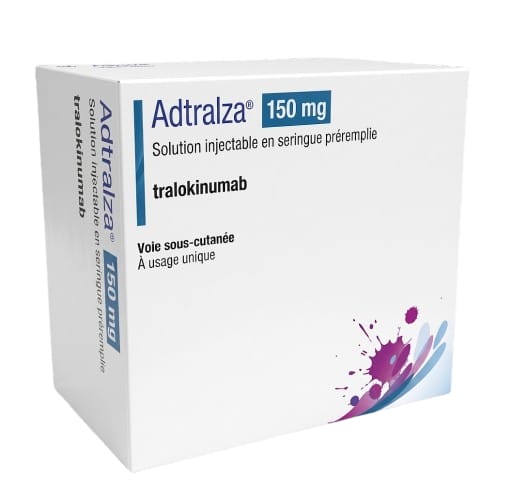
| Generic name | tralokinumab-ldrm |
|---|---|
| Drug class | Interleukin-13 (IL-13) inhibitor |
| Forms | Injection |
Quick overview
Tralokinumab Injection (tralokinumab-ldrm) is a biologic medicine, a lab-made monoclonal antibody, given by injection to treat moderate-to-severe eczema (atopic dermatitis) in adults and children aged 12 and older whose eczema has not responded well to topical treatments. It belongs to a drug class called interleukin-13 (IL-13) inhibitors and works by blocking a protein that drives inflammation in eczema. It is given as a subcutaneous injection, typically at a dose of 300 mg every 2 weeks.
What is Tralokinumab Injection
Tralokinumab is a biologic medicine (a lab-made monoclonal antibody) given by injection to treat moderate-to-severe eczema (atopic dermatitis) in adults and children aged 12 and older whose eczema has not responded well to topical treatments.
Tralokinumab Injection uses
- Moderate to severe atopic dermatitis (eczema)
- Persistent eczema not adequately controlled by topical treatment
- Eczema when topical prescription medicines are unsuitable
- Widespread inflammatory eczema requiring systemic treatment
- Eczema requiring biologic therapy under specialist care
Benefits of Tralokinumab Injection
- Reduces eczema-related itching.
- Helps reduce skin redness and inflammation.
- Improves skin appearance and comfort.
- Helps reduce eczema flare-ups.
- Supports better sleep when itching improves.
How Tralokinumab Injection works
Tralokinumab blocks a protein called interleukin-13 (IL-13) that drives inflammation in eczema. By stopping IL-13 from attaching to its receptor on cells, the medicine reduces inflammation, itching, and helps restore a healthy skin barrier.
Tralokinumab Injection dosage
Tralokinumab is given as an injection under the skin (subcutaneous injection), usually into the thigh or abdomen; a caregiver or healthcare provider may also use the upper arm. Do not inject into the area around the navel, or into skin that is damaged, bruised, scarred, or tender. Rotate injection sites with each dose and avoid injecting into the same spot twice in a row.
If the syringe or autoinjector has been in the refrigerator, let it warm at room temperature for about 30 minutes before injecting; do not warm it with heat, hot water, or a microwave. Do not shake the syringe. Check the liquid before injecting — it should be clear or slightly pearly and colorless or pale yellow; do not use it if it is cloudy, discolored, or has particles, or if it is expired.
Use each prefilled syringe or autoinjector only once, even if some medicine is left, then throw it away; do not reuse or recap needles. The autoinjector is only for use in adults; the prefilled syringe can be used by adults and children aged 12 and older. Most people can learn to give the injections themselves after training from a healthcare provider. Continue your normal diet unless your doctor tells you otherwise.
| Age group | Dose |
|---|---|
| Injection | Not recommended |
| 18–64 years | 300 mg, every 2 weeks |
| 65+ years | 300 mg, every 2 weeks |
Available forms and strengths
- Injection
Side effects of Tralokinumab Injection
Common
- Upper respiratory tract infections (cough, runny nose, sneezing, sore throat)
- Eye and eyelid inflammation (redness, swelling, itching, conjunctivitis)
- Injection site reactions (pain, swelling, redness)
- Higher counts of a certain white blood cell (eosinophilia) found in blood tests
Serious
- Allergic reactions, including anaphylaxis and angioedema
- Eye problems such as conjunctivitis that does not improve or keratitis (corneal ulcer)
- Eczema herpeticum (a rare but serious herpes skin infection)
Warnings and precautions
- Do not use tralokinumab if you are allergic to it or any of its ingredients. Stop the medicine and call your doctor right away if you notice signs of an allergic reaction such as breathing trouble, swelling of the face, mouth, or tongue, hives, itching, fainting, dizziness, or skin rash.
- Tralokinumab can cause eye problems like conjunctivitis or keratitis (a corneal ulcer). Tell your healthcare provider about any eye pain or vision changes.
- Any parasitic worm infection should be treated before starting tralokinumab. If you think you have a worm infection during treatment, tell your healthcare provider right away.
- Do not receive live vaccines while being treated with tralokinumab.
- It is not known whether tralokinumab could harm an unborn baby.
- There is a pregnancy registry that tracks women who use tralokinumab during pregnancy, and limited human safety data means doctors generally recommend avoiding it in pregnancy unless necessary.
- It is not known whether tralokinumab passes into breast milk or whether it could affect a nursing baby. Talk to your doctor if you are breastfeeding.
- There is limited information on tralokinumab use in people with severe kidney problems, so no specific dose change is currently recommended.
- There is limited information on tralokinumab use in people with severe liver problems, so no specific dose change is currently recommended.
Storage
- Store unused prefilled syringes or autoinjectors in the refrigerator at 2°C to 8°C (36°F to 46°F) in the original carton to protect them from light.
- If necessary, prefilled syringes or autoinjectors may be kept at room temperature up to 30°C (86°F) for a maximum of 14 days in the original carton. Write the date of removal on the outer carton in the space provided.
- Do not store above 30°C (86°F). Do not put tralokinumab back in the refrigerator after they have reached room temperature. If not used within 14 days, then discard.
- Do not expose the prefilled syringe to heat or direct sunlight.
- Do not freeze. Do not shake.
- Discard any unused product remaining in the prefilled syringe.
- Keep this medication in the container it came in, tightly closed, and out of reach of children.
- Dispose of unneeded medications in a way so that pets, children, and other people cannot take them. Do not flush this medication down the toilet. Use a medicine take-back program.
When to see a doctor
- Get medical help right away if you have breathing problems, swelling of the face, mouth or tongue, hives, itching, fainting, or dizziness — these can be signs of a serious allergic reaction.
- Tell your doctor right away about any eye pain or changes in your vision.
- If you think you might have a worm (parasite) infection while on tralokinumab, tell your healthcare provider immediately.
- If someone has collapsed, had a seizure, has trouble breathing, or cannot be woken up after an overdose, call emergency services right away.
Alternatives
- Cibinqo (abrocitinib)
- Adbry (tralokinumab)
- Dupixent (dupilumab)
Watch the video
FAQs
What is Tralokinumab Injection used for?
It is used to treat moderate-to-severe eczema (atopic dermatitis) in adults and children aged 12 and older whose eczema has not responded well to topical treatments.
How is Tralokinumab Injection given?
It is given as a subcutaneous injection, typically 300 mg every 2 weeks, usually into the thigh or abdomen, with injection sites rotated each time.
How does Tralokinumab Injection work?
It blocks a protein called interleukin-13 (IL-13) that drives inflammation in eczema, which helps reduce inflammation, itching, and supports restoring a healthy skin barrier.
What are the common side effects of Tralokinumab Injection?
Common side effects include upper respiratory tract infections, eye and eyelid inflammation, injection site reactions, and higher counts of eosinophils found in blood tests.
Can I receive vaccines while using Tralokinumab Injection?
No, you should not receive live vaccines while being treated with tralokinumab.
General information, not medical advice
Your prescriber and the leaflet in your pack know your situation. This page does not.
- Follow your prescriber and the leaflet
- Don't start, stop, or change a dose on your own
- Doses and warnings differ by country and product
Sources
Video
Related medicines

Injectafer Injection: Uses, Dosage, Side Effects, Precautions and Alternates
Iron products
Injectafer (ferric carboxymaltose) treats iron deficiency anemia and heart failure-related iron deficiency via IV. Learn uses, dosage, side effects, and

Gliclazide Tablet: Uses, Dosage, Side Effects, Precautions and Alternates
Sulfonylurea (hypoglycemic/antidiabetic agent)
Gliclazide Tablet is a sulfonylurea for type 2 diabetes that boosts insulin release. Learn about dosage, side effects, warnings, and precautions.