
Safety
General information, not medical advice
Your prescriber and the leaflet in your pack know your situation. This page does not.
- Follow your prescriber and the leaflet
- Don't start, stop, or change a dose on your own
- Doses and warnings differ by country and product
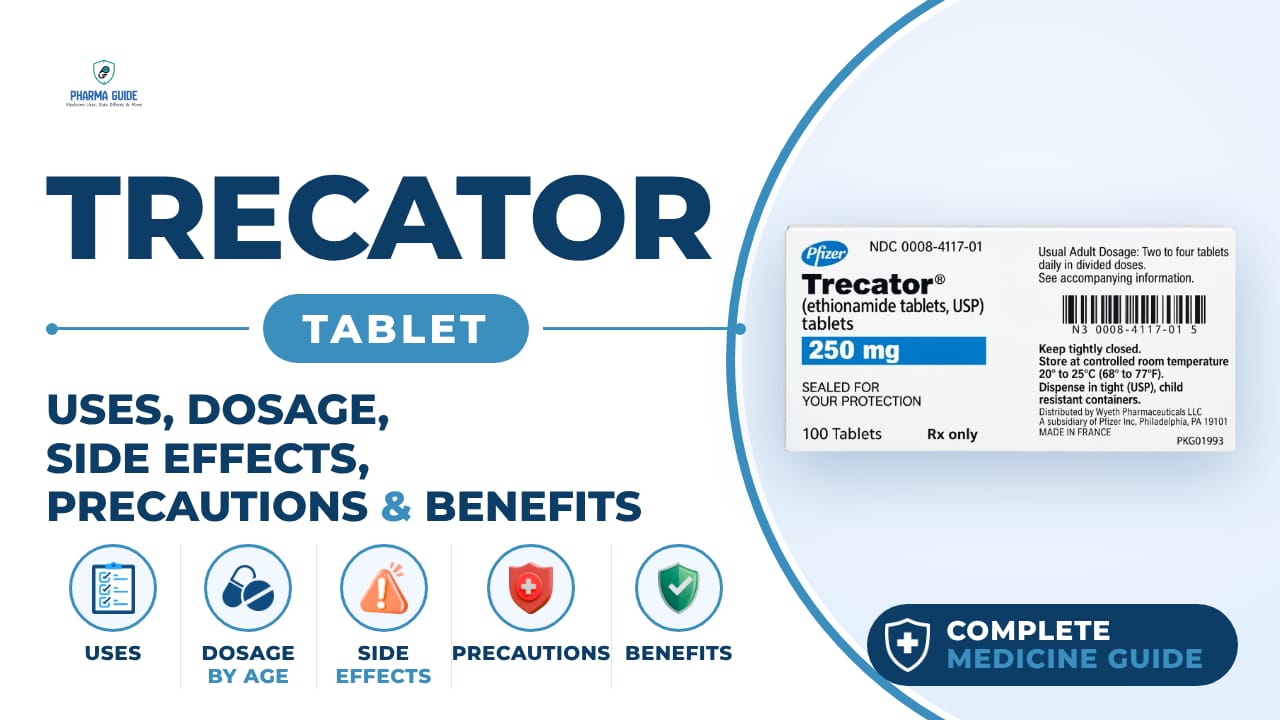
Trecator Tablet: Uses, Dosage, Side Effects, Precautions and Alternates
| Generic name | ethionamide |
|---|---|
| Drug class | Antitubercular agent (nicotinic acid derivative) |
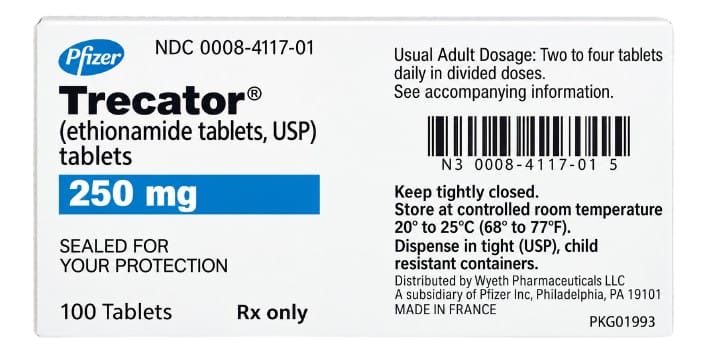
| Forms | Tablet (250 mg) |
Quick overview
Trecator Tablet contains ethionamide, an antitubercular agent used together with other medicines to treat tuberculosis (TB), including TB resistant to first-choice antibiotics. It is a prescription-only medicine, not available as a generic, and must always be combined with other anti-TB drugs rather than taken alone. Common doses are taken by mouth, often alongside vitamin B6, and the medicine carries several warnings including risks to the liver, eyes, nerves, thyroid, and blood sugar.
What is Trecator Tablet
Trecator is a prescription antibiotic tablet used together with other medicines to treat tuberculosis (TB). It is not available as a generic.
Trecator Tablet uses
- Treats tuberculosis (TB) that is resistant to first-choice antibiotics like isoniazid or rifampin
- Treats TB infection in people who cannot take other anti-TB antibiotics
- Always used together with other anti-TB medicines, never alone
Benefits of Trecator Tablet
- Treats drug-resistant tuberculosis (TB) as part of combination therapy.
- Helps stop the growth of TB-causing bacteria.
- Helps control TB infections that are resistant to certain medicines.
- Supports treatment of difficult-to-treat TB cases.
- Helps improve treatment outcomes when combined with other prescribed TB medicines.
How Trecator Tablet works
Trecator stops TB bacteria from making the building blocks they need to grow and multiply, which helps your body clear the infection.
Trecator Tablet dosage
Take Trecator with or without food, or with food if it upsets your stomach. Your doctor may have you take it as one dose a day or split into two or three smaller doses to reduce stomach upset. Take it with other anti-TB medicines as directed; do not take it alone. Keep taking it for the full length of time your doctor prescribes, even if you feel better, and do not skip doses, since this can let the bacteria become resistant to treatment. You may need to take each dose in front of a healthcare provider to make sure you don't miss any. Your doctor may also have you take vitamin B6 (pyridoxine) along with this medicine to help prevent nerve problems.
If you miss a dose, take it as soon as you remember, unless it's almost time for your next dose—then skip the missed one and continue as normal; do not double up.
| Age group | Dose |
|---|---|
| Under 18 years | Not recommended |
| 18–64 years | 250 mg, twice/day |
| 65+ years | 250 mg, twice/day |
Available forms and strengths
- Tablet (250 mg)
Side effects of Trecator Tablet
Common
- Nausea, vomiting, diarrhea
- Stomach pain
- Extra saliva
- Metallic taste in the mouth
- Mouth sores, red or swollen gums, or trouble swallowing
- Loss of appetite
- Weight loss
- Headache, dizziness
- Drowsiness, low mood, or restlessness
Serious
- Signs of a severe allergic reaction: hives, trouble breathing, swelling of the face, lips, tongue, or throat
- Severe skin reactions: painful red or purple skin that looks burned or peels, blisters on the skin, mouth, nose, or genitals, or flu-like symptoms with rash
- Numbness, tingling, or burning pain in the hands or feet
- Confusion or unusual thoughts or behavior
- Eye pain, blurred vision, double vision, or vision loss
- Feeling light-headed like you might pass out
- Seizures (convulsions)
- Signs of liver problems: upper stomach pain, dark urine, clay-colored stools, yellowing of the skin or eyes (jaundice)
- Signs of low blood sugar: sweating, shakiness, dizziness, fast heartbeat, confusion
- Signs of low thyroid function: tiredness, weight gain, feeling cold, swelling in the neck (goiter)
Warnings and precautions
- Never take this medicine alone for TB—it must be combined with other anti-TB medicines, or the bacteria can become resistant and much harder to treat.
- This medicine can cause severe skin reactions that can affect your organs and become life-threatening. Tell your provider right away if you get a rash.
- This medicine can cause vision problems. You may need regular eye exams while taking it, and should report any change in eyesight right away.
- This medicine can cause liver injury, so you'll need regular blood tests to check your liver while taking it.
- This medicine can cause low blood sugar, which is an added concern if you have diabetes. Watch your blood sugar closely and know the symptoms of low blood sugar.
- This medicine can cause low thyroid function, leading to tiredness, weight gain, feeling cold, or a swollen thyroid gland. You'll need regular blood tests to check your thyroid.
- It isn't known if Trecator can harm an unborn baby. Tell your doctor if you are pregnant or planning to become pregnant, since animal studies showed it could cause birth defects.
- It isn't known whether this medicine passes into breast milk. Tell your doctor if you are breastfeeding so they can watch your baby for side effects.
- Do not use this medicine if you have severe liver disease. Your doctor will check your liver function with blood tests before and during treatment.
- Avoid drinking alcohol while taking this medicine, since too much alcohol combined with Trecator can rarely cause a psychotic reaction and may raise the risk of liver damage.
Storage
- Store at room temperature between 68°F and 77°F (20°C to 25°C)
- Store in a dry place away from moisture and heat
- Keep out of the reach of children and pets
- Throw away unused or expired medicine properly rather than flushing it, unless told to do so; ask your pharmacist about drug take-back options
When to see a doctor
- Get emergency help right away for signs of a severe allergic reaction, such as hives, trouble breathing, or swelling of the face, lips, tongue, or throat.
- Call your doctor right away if you have numbness, tingling, or burning pain in your hands or feet, confusion, unusual thoughts or behavior, eye pain or vision changes, feeling faint, a seizure, or signs of liver problems like dark urine, pale stools, or yellowing skin or eyes.
- Stop the medicine and get help right away if you notice a rash or symptoms of a severe skin reaction, such as painful, peeling, or blistered skin, or flu-like symptoms with fever and chills.
- If you think you or someone else has taken too much of this medicine, get emergency medical help or contact a poison control center right away.
Alternatives
- Pretomanid
- Bedaquiline
- Cycloserine
Watch the video
FAQs
What is Trecator Tablet used for?
Trecator is a prescription antibiotic used together with other medicines to treat tuberculosis (TB), including TB resistant to first-choice antibiotics like isoniazid or rifampin, or in people who cannot take other anti-TB antibiotics.
Can Trecator be taken alone for TB?
No. Trecator must always be used together with other anti-TB medicines. Taking it alone can allow the bacteria to become resistant and much harder to treat.
What is the usual dose of Trecator for adults?
For adults aged 18 to 64 and those 65 and older, the typical dose is 250 mg twice a day. It is not recommended for use in people under 18 years old.
Why is vitamin B6 given with Trecator?
Your doctor may have you take vitamin B6 (pyridoxine) along with Trecator to help prevent nerve problems.
What are serious side effects of Trecator Tablet?
Serious side effects include severe allergic reactions, severe skin reactions, numbness or tingling in the hands or feet, confusion, eye pain or vision changes, seizures, signs of liver problems, low blood sugar, and low thyroid function.
General information, not medical advice
Your prescriber and the leaflet in your pack know your situation. This page does not.
- Follow your prescriber and the leaflet
- Don't start, stop, or change a dose on your own
- Doses and warnings differ by country and product
Sources
Video
Related medicines

Injectafer Injection: Uses, Dosage, Side Effects, Precautions and Alternates
Iron products
Injectafer (ferric carboxymaltose) treats iron deficiency anemia and heart failure-related iron deficiency via IV. Learn uses, dosage, side effects, and

Gliclazide Tablet: Uses, Dosage, Side Effects, Precautions and Alternates
Sulfonylurea (hypoglycemic/antidiabetic agent)
Gliclazide Tablet is a sulfonylurea for type 2 diabetes that boosts insulin release. Learn about dosage, side effects, warnings, and precautions.