
Safety
General information, not medical advice
Your prescriber and the leaflet in your pack know your situation. This page does not.
- Follow your prescriber and the leaflet
- Don't start, stop, or change a dose on your own
- Doses and warnings differ by country and product
Trental Tablet: Uses, Dosage, Side Effects, Precautions and Alternates
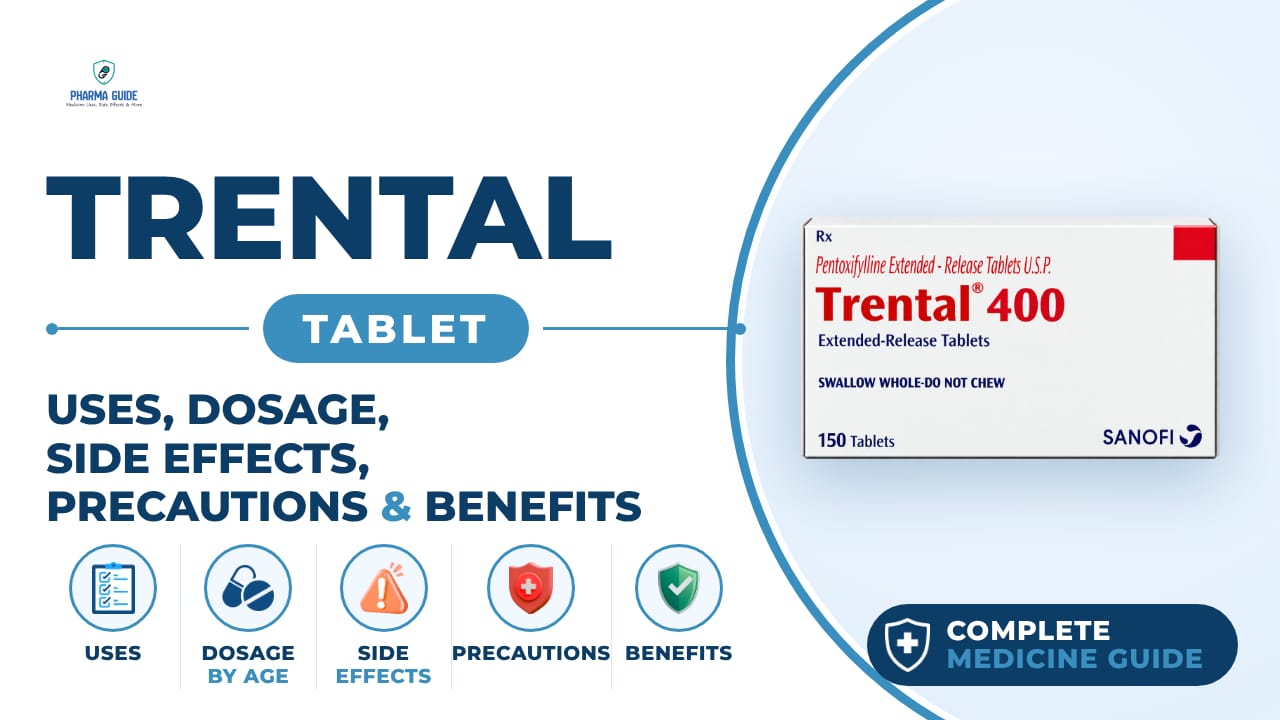
| Generic name | pentoxifylline |
|---|---|
| Drug class | Hemorheologic agent / vasoactive drug (miscellaneous coagulation modifier) |
| Forms | Sustained release (extended-release) tablet, 400 mg |
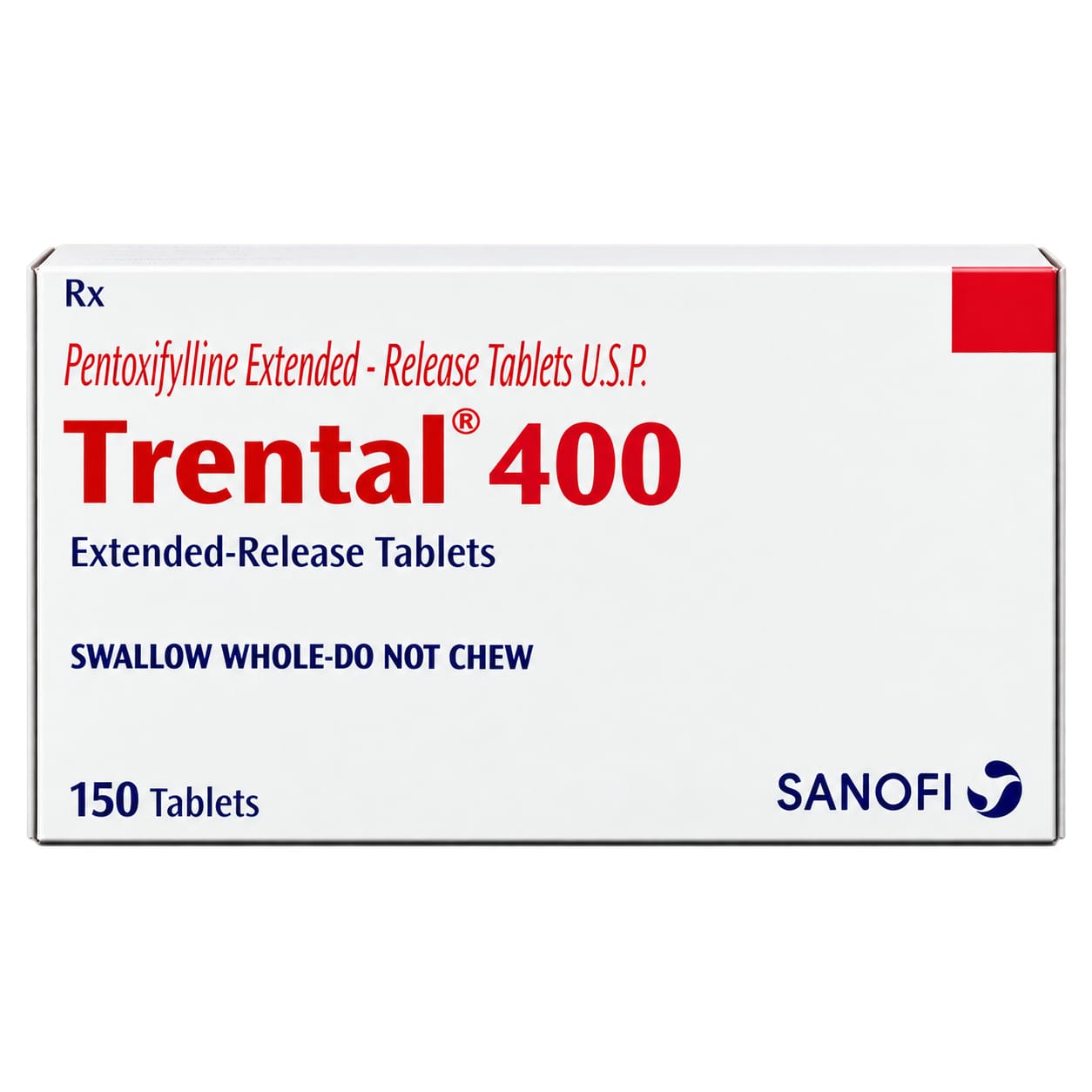
Quick overview
Trental Tablet (pentoxifylline) is a hemorheologic agent that helps blood flow more easily through the vessels, improving oxygen delivery to tissues, especially in the arms and legs. It is used to treat chronic blood flow problems and symptoms of poor circulation, such as leg pain while walking and slow-healing skin sores. Trental works by relaxing blood vessels, making red blood cells more flexible, and reducing platelet clumping. It is taken with meals as an extended-release tablet, exactly as prescribed by a doctor.
What is Trental Tablet
Trental is a medicine that changes the blood so it flows more easily. This helps the blood carry oxygen to tissues and organs, especially in the legs and arms.
Trental Tablet uses
- Treating chronic blood flow problems in the arms and legs caused by narrowed or blocked blood vessels
- Relieving symptoms of poor circulation such as leg pain while walking (intermittent claudication) and slow-healing skin sores (trophic ulcers)
Benefits of Trental Tablet
- Can improve blood flow and help reduce leg cramps and other symptoms of poor circulation
- May relieve signs of impaired blood flow such as pain with walking or skin ulcers
- Helps improve symptoms of intermittent claudication
- May improve walking distance
- Improves red-blood-cell flexibility and blood flow
How Trental Tablet works
Trental relaxes blood vessel walls, makes red blood cells more flexible so they move more easily through small vessels, and reduces the clumping together of platelets. Together these actions make the blood less thick and help it flow better.
Trental Tablet dosage
Take the tablets with meals, as prescribed by your doctor. Swallow the extended-release tablets whole; do not crush, chew, or break them. Take the doses at the regular intervals your doctor tells you, and do not change your dose on your own. It may take several weeks up to about two months before you notice improvement in your symptoms. Let your doctor know if your symptoms have not improved after about 8 weeks of treatment. If you miss a dose, take it as soon as you remember, but skip it if it is almost time for your next dose - do not double up.
| Age group | Dose |
|---|---|
| Under 18 years | Safety and effectiveness are not established |
| 18–64 years | 400 mg three times daily with meals |
Available forms and strengths
- Sustained release (extended-release) tablet, 400 mg
Side effects of Trental Tablet
Common
- Nausea
- Vomiting
- Gas
- Bloating
- Belching
- Upset stomach (dyspepsia/heartburn)
- Diarrhea
- Dizziness or light-headedness
- Headache
- Blurred vision
- Flushing (warmth, redness, or tingly feeling)
- General feeling of being unwell (malaise)
Serious
- Chest pain
- Fast or irregular heartbeat, or pounding/fluttering in the chest
- Easy bruising or bleeding, including bleeding around the eyes
- Feeling like you might pass out
- Red or pink urine
- Bloody or tarry stools, or coughing up blood or vomit that looks like coffee grounds
- Allergic reaction or skin reaction such as itching, swelling, red spots, and blisters
- Difficulty breathing
Warnings and precautions
- Do not use this medicine if you are allergic to it or to substances like caffeine, theophylline, or theobromine, or to any ingredient in the tablet.
- Do not use this medicine if you have recently had a heart attack, or if you have severe coronary artery disease where extra heart stimulation could be harmful.
- Do not use this medicine if you have any type of bleeding (such as bleeding at the back of the eye) or are at risk of increased bleeding, or if you have a stomach ulcer or a recent history of one.
- Do not use this medicine if you have recently had bleeding in the brain or in the retina of the eye.
- If you notice signs of a severe allergic reaction, stop the medicine right away and tell your doctor.
- This medicine can increase the risk of bleeding, especially if you are also taking blood thinners or have a bleeding or clotting disorder. Your doctor may need to monitor you closely.
- Use with caution if you have low or unstable blood pressure, or severe irregular heartbeat, since your doctor will need to monitor you more closely.
- Trental is not generally recommended during pregnancy. It should only be used if your doctor decides the benefits to you outweigh the possible risks to your unborn baby.
- This medicine passes into breast milk and could affect a nursing baby. Talk with your doctor about whether to stop breastfeeding or stop taking the medicine.
- People with kidney problems should be watched closely while taking this medicine and may need a lower dose. It is not recommended for those with severe kidney impairment.
- People with liver problems should be watched closely while taking this medicine and may need a lower dose. It is not recommended for those with severe liver impairment.
- Most people can drive or use machines while taking this medicine, but you should avoid these tasks until you know how the medicine affects you.
Storage
- Store at room temperature (15 to 30°C)
- Protect from light
- Protect from moisture and excessive heat
- There is an expiration date on the label; do not use the medicine after this date
- Return any leftover tablets to the pharmacist, unless the doctor tells you to keep them at home
- Keep out of reach of children
When to see a doctor
- Get emergency medical help right away if you have signs of a severe allergic reaction, such as hives, trouble breathing, or swelling of the face, lips, tongue, or throat.
- Call your doctor right away if you have chest pain, a pounding or fluttering heartbeat, pink or red urine, feel like you might faint, or show signs of stomach bleeding like bloody or tarry stools or vomit that looks like coffee grounds.
- Stop the medicine and call your doctor or pharmacist right away if you notice an allergic or skin reaction (itching, swelling, red spots, blisters), chest pain, difficulty breathing, or unusual bleeding such as bleeding around the eyes or blood in your stool.
- If you think you have taken too much of this medicine, get emergency medical help right away, even if you do not feel unwell yet.
Alternatives
- Yescarta
- Breyanzi
- Tecartus
Watch the video
FAQs
What is Trental Tablet used for?
Trental is used to treat chronic blood flow problems in the arms and legs caused by narrowed or blocked blood vessels, relieving symptoms of poor circulation such as leg pain while walking (intermittent claudication) and slow-healing skin sores (trophic ulcers).
How does Trental Tablet work?
Trental relaxes blood vessel walls, makes red blood cells more flexible so they move more easily through small vessels, and reduces platelet clumping, making blood less thick and improving blood flow.
How should I take Trental Tablet?
Take the tablets with meals as prescribed, swallowing the extended-release tablets whole without crushing, chewing, or breaking them. It may take several weeks up to about two months before you notice improvement, and you should tell your doctor if symptoms have not improved after about 8 weeks.
What are the common side effects of Trental Tablet?
Common side effects include nausea, vomiting, gas, bloating, belching, upset stomach, diarrhea, dizziness or light-headedness, headache, blurred vision, flushing, and a general feeling of being unwell.
Who should not take Trental Tablet?
Trental should not be used by people allergic to it or to caffeine, theophylline, or theobromine, those who recently had a heart attack or have severe coronary artery disease, anyone with bleeding risks or a stomach ulcer, or those who recently had bleeding in the brain or retina.
General information, not medical advice
Your prescriber and the leaflet in your pack know your situation. This page does not.
- Follow your prescriber and the leaflet
- Don't start, stop, or change a dose on your own
- Doses and warnings differ by country and product
Sources
Video
Related medicines

Injectafer Injection: Uses, Dosage, Side Effects, Precautions and Alternates
Iron products
Injectafer (ferric carboxymaltose) treats iron deficiency anemia and heart failure-related iron deficiency via IV. Learn uses, dosage, side effects, and

Gliclazide Tablet: Uses, Dosage, Side Effects, Precautions and Alternates
Sulfonylurea (hypoglycemic/antidiabetic agent)
Gliclazide Tablet is a sulfonylurea for type 2 diabetes that boosts insulin release. Learn about dosage, side effects, warnings, and precautions.