
Safety
General information, not medical advice
Your prescriber and the leaflet in your pack know your situation. This page does not.
- Follow your prescriber and the leaflet
- Don't start, stop, or change a dose on your own
- Doses and warnings differ by country and product
Trevicta Injection: Uses, Dosage, Side Effects, Precautions and Alternates
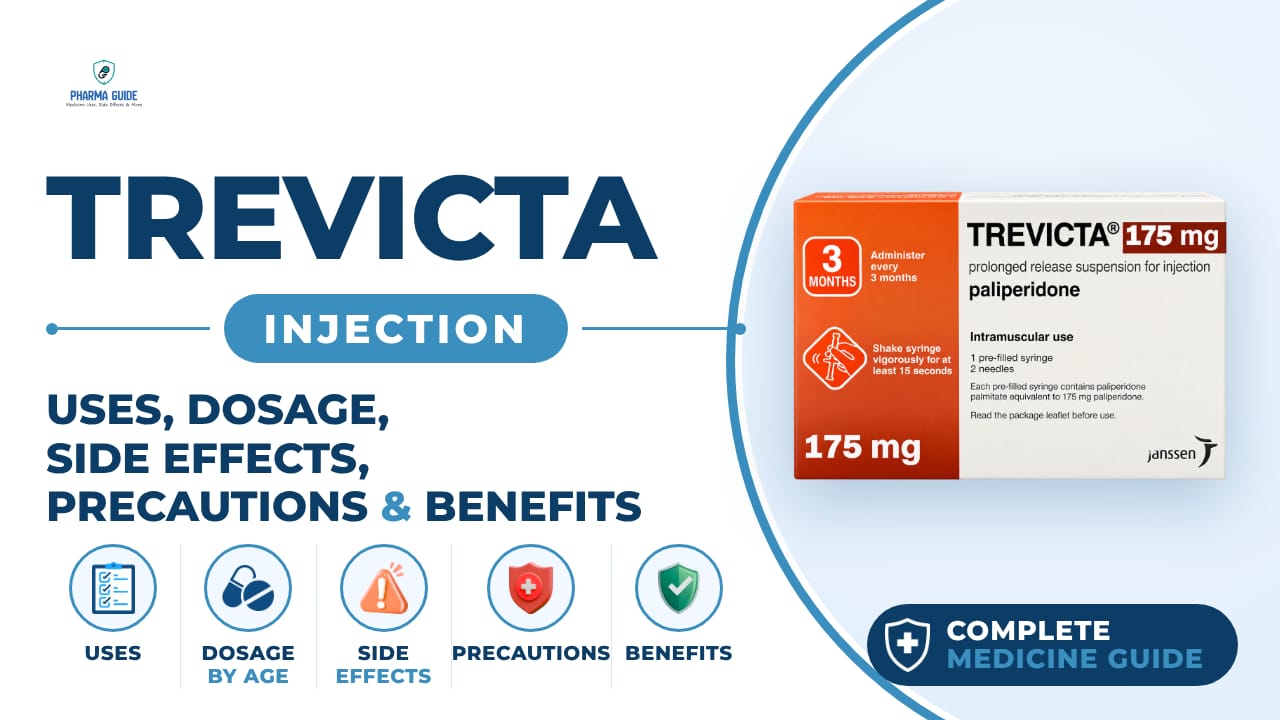
| Generic name | Paliperidone (as paliperidone palmitate) |
|---|---|
| Drug class | Atypical antipsychotic (psycholeptic) |
| Forms | Prolonged-release suspension for injection in pre-filled syringes (175 mg, 263 mg, 350 mg, and 525 mg) |
Quick overview
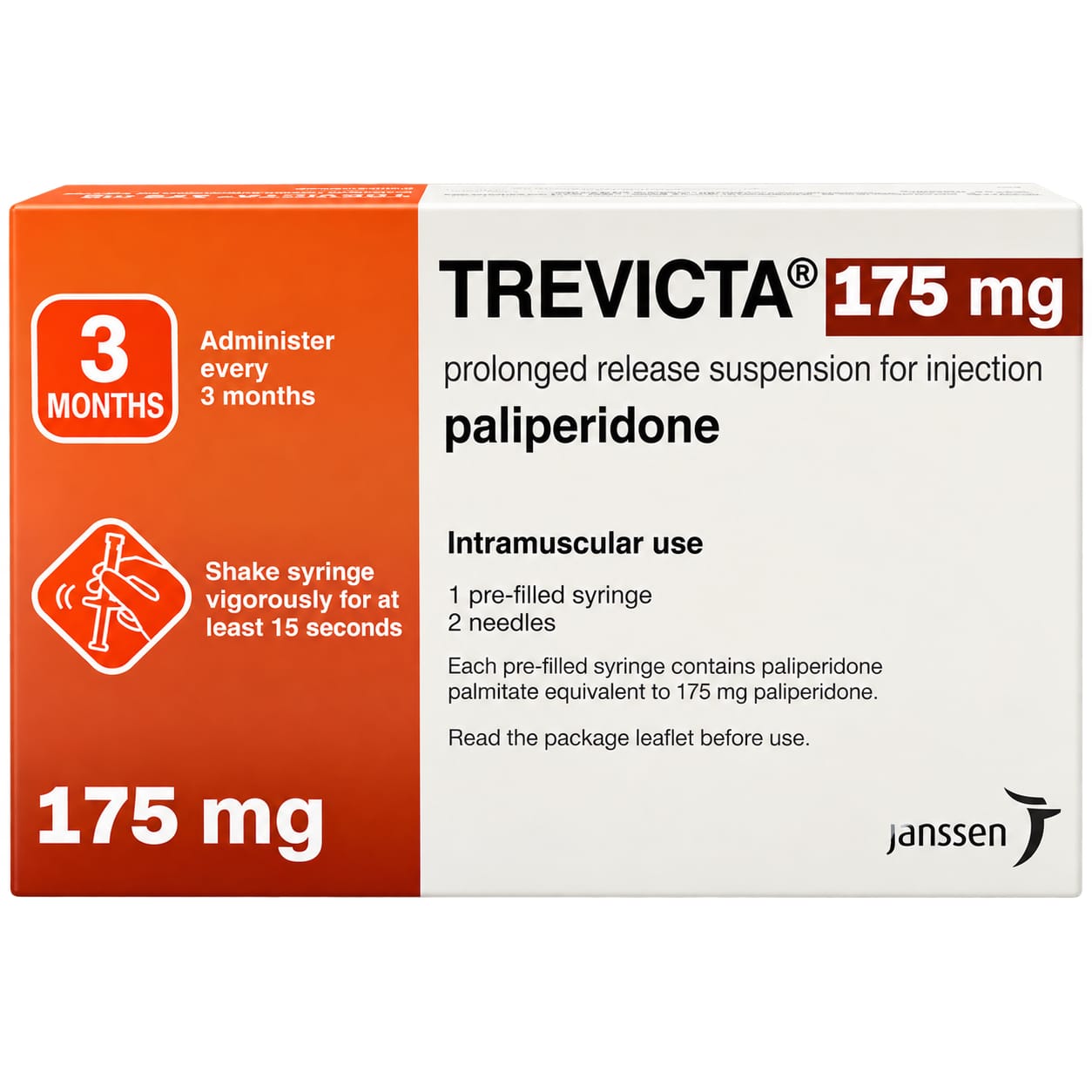
Trevicta Injection contains paliperidone (as paliperidone palmitate), an atypical antipsychotic medicine. It is a long-acting injectable suspension given into a muscle once every 3 months to provide maintenance treatment for schizophrenia in adults already stable on monthly paliperidone injections. It must be administered only by a healthcare professional and offers a less frequent dosing schedule compared to daily pills or monthly injections.
What is Trevicta Injection
Trevicta is a long-acting injectable antipsychotic medicine containing paliperidone palmitate. It is given as a prolonged-release suspension that slowly releases the medicine into the body over a few months after being injected into a muscle.
Trevicta Injection uses
- Maintenance treatment of schizophrenia in adults who are already stable on monthly paliperidone injections
- Used for schizophrenia in adults and adolescents aged 12 to 17 (per one source)
- Used for schizoaffective disorder in adults, alone or with mood stabilizers or antidepressants (per one source)
Benefits of Trevicta Injection
- Given just once every 3 months instead of daily pills or monthly injections
- Works as well as monthly paliperidone injections at preventing relapse of schizophrenia symptoms
- Reduces the need for daily oral antipsychotic pills or frequent doctor visits, which can help people stick with treatment
How Trevicta Injection works
Paliperidone works by blocking certain brain chemical receptors, mainly for dopamine and serotonin. By blocking these receptors, it helps calm down overactive brain signaling and reduces symptoms of schizophrenia.
Trevicta Injection dosage
This medicine must be given only by a healthcare professional as an injection into a muscle (the shoulder or buttock area); it is not for self-injection. It is given once every 3 months, with some flexibility in timing (up to 2 weeks early or late). The syringe must be shaken well right before the injection to mix the suspension properly. It can only be started after a patient has been stable on monthly paliperidone injections for a period of time. If a dose is missed for a long time, a special re-starting schedule or restarting with the monthly injection may be needed.
| Age group | Dose |
|---|---|
| Under 18 years | Safety and effectiveness not established; no approved pediatric dosage |
| 18–74 years | Maintenance dose: 175–525 mg intramuscularly every 3 months, based on the previous monthly paliperidone dose |
| 75 years and older | No separately established geriatric dose; reference range 175–525 mg every 3 months, subject to careful medical assessment |
Available forms and strengths
Prolonged-release suspension for injection in pre-filled syringes (175 mg, 263 mg, 350 mg, and 525 mg)
Side effects of Trevicta Injection
Common
- Weight gain and increased blood sugar levels
- Insomnia or sleep difficulties, and fatigue
- Headaches and dizziness
- Anxiety or restlessness
- Upper respiratory tract infections (like colds)
- Injection site reactions (pain, redness, or swelling where the shot was given)
- Movement changes such as tremors, muscle stiffness, or abnormal muscle movements
Serious
- Neuroleptic Malignant Syndrome: a rare, life-threatening reaction with high fever, severe muscle stiffness, and confusion
- Heart rhythm changes (QT prolongation)
- Blood clots
- Increased risk of stroke in elderly patients with dementia-related psychosis
- Tardive dyskinesia: involuntary, repetitive movements of the face, tongue, or other body parts
- Severe allergic (anaphylactic) reactions
- Low white blood cell counts (which can increase infection risk)
- Severe drop in blood pressure upon standing
Warnings and precautions
- This medicine must only be prescribed and given by a qualified psychiatrist or other healthcare specialist.
- This medicine should not be given to people allergic to paliperidone, risperidone, or any of its other ingredients.
- This medicine is not meant for calming people who are severely agitated or in an acute psychotic crisis needing immediate symptom control.
- Elderly people with dementia-related psychosis have a higher risk of death and stroke-related problems when using this type of medicine, so it is not recommended for them.
- Because this medicine stays in the body for a long time, any side effects may also last longer or take longer to go away.
- There isn't enough information from studies in pregnant women about this medicine's safety. Babies born to mothers who used this medicine late in pregnancy may have withdrawal or movement symptoms after birth, and should be watched closely by doctors.
- This medicine should not be used while breastfeeding, because it passes into breast milk and can affect the nursing baby, even long after the injection was given due to how long it stays in the body.
- This medicine is not recommended for people with moderate or severe kidney problems. People with mild kidney problems need a dose adjustment and must first be stabilized on the monthly injection before switching to this one.
- No dose change is needed for people with mild or moderate liver problems. There isn't enough information on people with severe liver problems, so caution is advised.
- Alcohol should be avoided while using this medicine.
- This medicine may cause sleepiness, fainting, or blurred vision, which can affect your ability to drive or use machines safely. Do not drive or operate machinery until you know how this medicine affects you.
Storage
- This medicinal product does not require any special storage conditions. Any unused product or waste material should be disposed of in accordance with local requirements.
When to see a doctor
- Get emergency medical help right away if you develop high fever, severe muscle stiffness, and confusion, which could be signs of a rare but life-threatening reaction.
- Seek urgent medical care if you have a painful erection that lasts more than 4 hours.
- Tell your doctor right away if you notice uncontrollable, repeated movements of your face, tongue, or other body parts, as this may need the medicine to be stopped.
- Seek medical attention if you notice signs of high blood sugar, such as excessive thirst, frequent urination, excessive hunger, or weakness.
Alternatives
- Olanzapine
- Aripiprazole
- Risperidone
Watch the video
FAQs
What is Trevicta Injection used for?
Trevicta is used for maintenance treatment of schizophrenia in adults who are already stable on monthly paliperidone injections.
How often is Trevicta Injection given?
It is given once every 3 months as an injection into a muscle, with some flexibility of up to 2 weeks early or late, and must be administered only by a healthcare professional.
Can Trevicta be self-injected at home?
No, Trevicta must be given only by a healthcare professional as an injection into the shoulder or buttock muscle; it is not for self-injection.
What are the common side effects of Trevicta Injection?
Common side effects include weight gain, increased blood sugar, insomnia, fatigue, headaches, dizziness, anxiety, upper respiratory infections, injection site reactions, and movement changes like tremors or muscle stiffness.
Is Trevicta Injection safe during pregnancy or breastfeeding?
There isn't enough safety information for pregnant women, and babies born to mothers who used it late in pregnancy may have withdrawal or movement symptoms. It should not be used while breastfeeding, as it passes into breast milk.
General information, not medical advice
Your prescriber and the leaflet in your pack know your situation. This page does not.
- Follow your prescriber and the leaflet
- Don't start, stop, or change a dose on your own
- Doses and warnings differ by country and product
Sources
Video
Related medicines

Injectafer Injection: Uses, Dosage, Side Effects, Precautions and Alternates
Iron products
Injectafer (ferric carboxymaltose) treats iron deficiency anemia and heart failure-related iron deficiency via IV. Learn uses, dosage, side effects, and

Gliclazide Tablet: Uses, Dosage, Side Effects, Precautions and Alternates
Sulfonylurea (hypoglycemic/antidiabetic agent)
Gliclazide Tablet is a sulfonylurea for type 2 diabetes that boosts insulin release. Learn about dosage, side effects, warnings, and precautions.