
Safety
General information, not medical advice
Your prescriber and the leaflet in your pack know your situation. This page does not.
- Follow your prescriber and the leaflet
- Don't start, stop, or change a dose on your own
- Doses and warnings differ by country and product
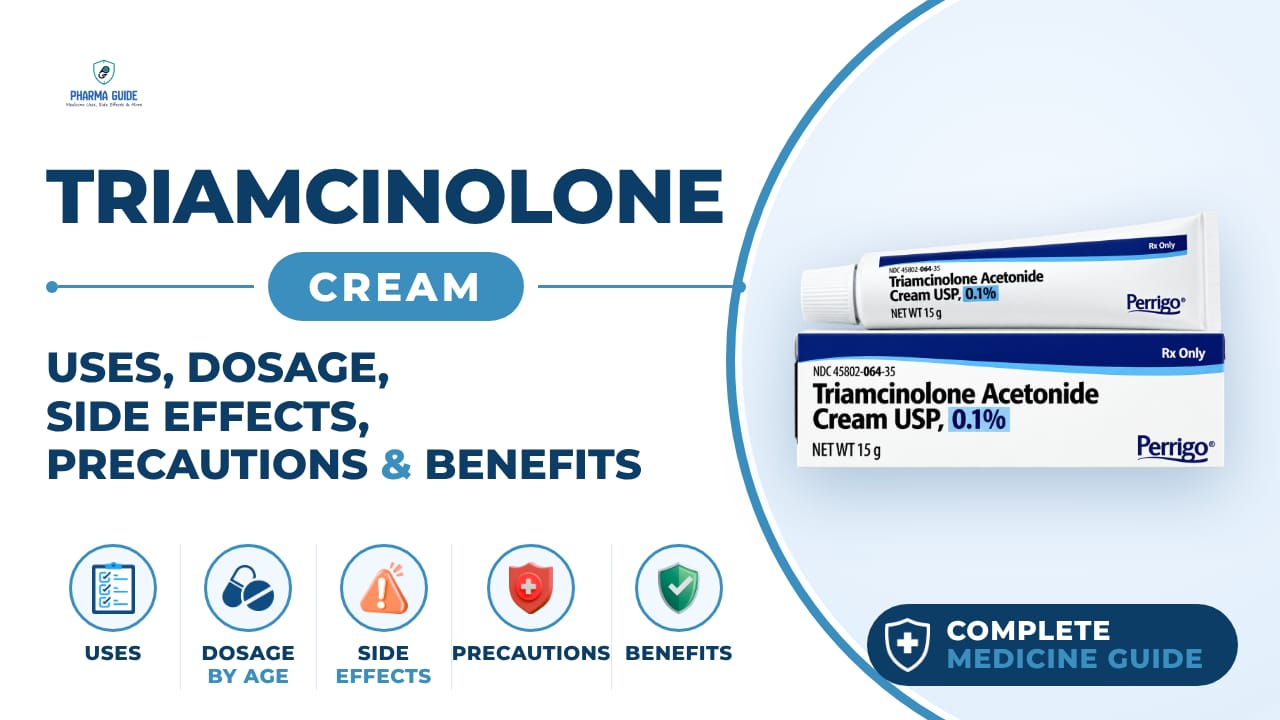
Triamcinolone Cream: Uses, Dosage, Side Effects, Precautions and Alternates
| Generic name | triamcinolone (triamcinolone acetonide) |
|---|---|
| Drug class | corticosteroid (glucocorticoid) |
| Forms | Cream, Ointment, Lotion, Spray (aerosol), Dental paste |
Quick overview
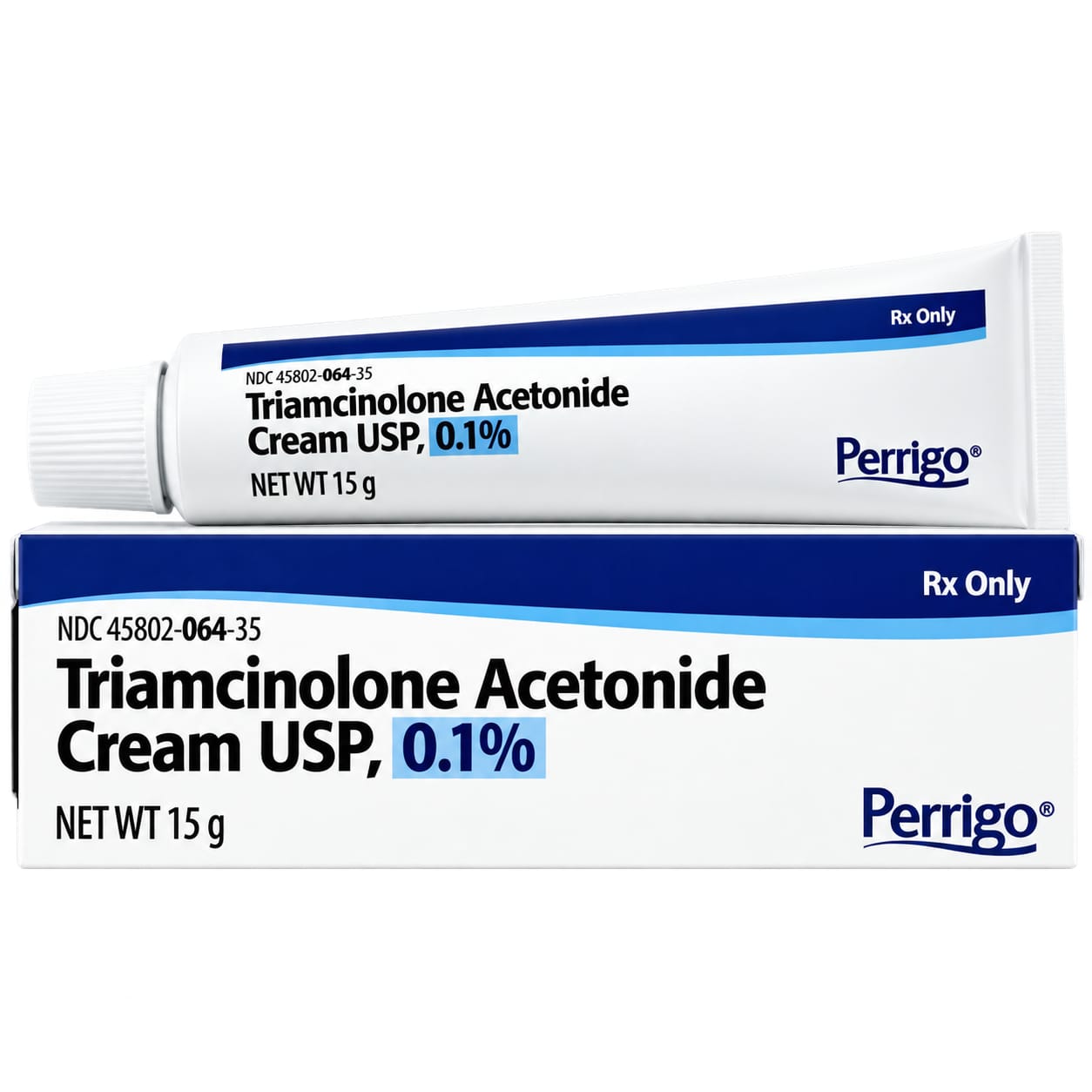
Triamcinolone Cream (triamcinolone acetonide) is a mid-potency topical corticosteroid used to treat inflammatory skin conditions such as eczema, psoriasis, and allergic rashes. It works by calming an overactive immune response in the skin, reducing swelling, redness, and itching. It is available in several forms, including cream, ointment, lotion, spray, and dental paste.
What is Triamcinolone Cream
Triamcinolone cream is a topical corticosteroid medicine. It is a mid-potency steroid cream applied to the skin to treat inflammatory skin conditions.
Triamcinolone Cream uses
- Eczema and contact dermatitis
- Psoriasis
- Allergic skin reactions and rashes, including poison ivy
- Lichen planus
- Atopic dermatitis
- Seborrheic dermatitis
- Discoid lupus erythematosus
- Itching, redness, dryness, crusting, scaling, and discomfort of various skin conditions
- Mouth sores (dental paste form)
Benefits of Triamcinolone Cream
- Reduces skin inflammation
- Relieves itching
- Reduces redness
- Helps control eczema symptoms
- Helps manage certain dermatitis and psoriasis symptoms
- Reduces swelling and irritation
How Triamcinolone Cream works
The cream works by calming down an overactive immune response in the skin and reducing swelling, redness, and itching.
Triamcinolone Cream dosage
Wash the affected area with mild soap and water and pat it dry before applying. Apply a thin layer of cream and rub it in gently until absorbed. Avoid applying to cuts, burns, scrapes, or areas with infection. Only apply to the area your doctor told you to treat, not other areas or conditions. Wash your hands after applying, unless your hands are the treated area. Cover the treated area only if your doctor tells you to.
If using on a child's diaper area, do not use tight-fitting diapers or plastic pants. Keep the cream out of your eyes if using on the face. Do not apply other skin products on the treated area without checking with your doctor first.
If you miss an application, apply it as soon as you remember, but skip it if it is almost time for the next one—do not apply a double amount.
| Age group | Dose |
|---|---|
| Adults 18–64 years | 0.1% or 0.5% cream: thin layer 2–3 times daily |
Available forms and strengths
- Cream (0.1% or 0.5%)
- Ointment
- Lotion
- Spray (aerosol)
- Dental paste
Side effects of Triamcinolone Cream
Common
- Mild skin irritation, redness, or dryness
- Burning, itching, or stinging at the application site
- Dry skin or peeling
- Stretch marks
- Acne or other skin eruptions
- Change in skin color
- Unwanted hair growth at the application site
- Small red or white bumps around the mouth
- Tiny red bumps around hair follicles
Serious
- Thinning of the skin, making it fragile and easy to bruise
- Severe rash or redness
- Swelling, warmth, or pain at the application site (sign of possible infection)
- Blistering, crusting, or flaking skin
- Allergic reactions such as rash, hives, or swelling of the face, lips, tongue, or throat
- Signs of adrenal gland problems with long-term use, such as fatigue, irritability, dizziness, or increased thirst or urination
- Redness and scaling around the mouth
- Slowed growth and delayed weight gain in children
Warnings and precautions
- This medicine contains an immunosuppressant and should only be used for inflammatory or autoimmune skin conditions. It should be avoided on areas with infections or injuries.
- Using this cream over large areas or for a long time increases the risk that the drug gets absorbed into the body, which can disrupt the body's natural hormone production.
- People with Cushing's syndrome may find their symptoms get worse with this medicine.
- People with diabetes or high blood sugar should use this medicine only with caution and regular monitoring because it can raise blood sugar levels.
- This medicine should be used with caution in people with increased pressure in the head (intracranial hypertension), as it may worsen symptoms.
- Using it on skin with infections, large sores, or severe injuries may increase the risk of side effects.
- Children may absorb more of the medicine through the skin, especially over large areas, putting them at higher risk for serious side effects, so it should be used only under close medical supervision in children.
- Mid-potency creams like this one should be used with caution on sensitive areas like the face and groin because the skin there absorbs more medicine, and only under a doctor's direct advice.
- Pregnant women should only use this cream if truly necessary and under a doctor's guidance, since it isn't known for certain how it affects pregnancy.
- Breastfeeding women should only use this cream if necessary and under medical guidance.
- People with liver conditions should be cautious and consult their healthcare provider before using this cream.
- People with kidney conditions, among other underlying health issues, should also be cautious and talk with their healthcare provider before using this medicine.
Storage
- Store at room temperature, away from direct sunlight
- Keep this medication in the container it came in, tightly closed, and out of reach of children
- Store it at room temperature and away from excess heat and moisture (not in the bathroom)
- Do not freeze it
- Dispose of unneeded medication using a medicine take-back program instead of flushing it down the toilet
- Keep out of sight and reach of children
When to see a doctor
- Call your doctor right away if you notice increased irritation, swelling, or signs of a secondary infection where you applied the cream.
- Call your doctor immediately if you develop a severe rash, or redness, swelling, or other signs of skin infection where you applied the cream.
- Get emergency help right away if you notice signs of a serious allergic reaction, such as hives, trouble breathing, or swelling of the face, lips, tongue, or throat.
- If someone swallows this medicine, contact your local poison control center right away, and call emergency services if the person has collapsed or is not breathing.
- If a mouth sore being treated with the dental paste form does not start to heal within a week, call your doctor.
Alternatives
- Hydrocortisone cream
- Desonide cream
- Mometasone cream
Watch the video
FAQs
What is Triamcinolone Cream used for?
It is used to treat inflammatory skin conditions such as eczema, psoriasis, allergic skin reactions including poison ivy, lichen planus, atopic dermatitis, seborrheic dermatitis, discoid lupus erythematosus, and mouth sores when used as a dental paste.
How should I apply Triamcinolone Cream?
Wash and dry the affected area, then apply a thin layer and rub it in gently until absorbed. Only treat the area your doctor specified, avoid cuts, burns, or infected skin, and wash your hands afterward unless your hands are being treated.
What are the common side effects of Triamcinolone Cream?
Common side effects include mild skin irritation, redness, dryness, burning, stinging, peeling, stretch marks, acne, change in skin color, unwanted hair growth, and small bumps around the mouth or hair follicles.
Can Triamcinolone Cream be used during pregnancy?
Pregnant women should only use it if truly necessary and under a doctor's guidance, since its effects on pregnancy are not known for certain.
What forms does Triamcinolone Cream come in?
It is available as a cream (0.1% or 0.5%), ointment, lotion, aerosol spray, and dental paste.
General information, not medical advice
Your prescriber and the leaflet in your pack know your situation. This page does not.
- Follow your prescriber and the leaflet
- Don't start, stop, or change a dose on your own
- Doses and warnings differ by country and product
Sources
Video
Related medicines
Dexamethasone Injection: Uses, Dosage, Side Effects, Precautions and Alternates
Corticosteroid (glucocorticoid)
Dexamethasone Injection is a corticosteroid shot used for inflammation, allergic reactions, breathing problems, and more. Learn uses, dosage, and side effects.
Prednisolone Tablet: Uses, Dosage, Side Effects, Precautions and Alternates
Corticosteroid (glucocorticoid)
Prednisolone Tablet is a corticosteroid that reduces inflammation and calms the immune system. Learn about its uses, dosage, side effects, and precautions.