
Safety
General information, not medical advice
Your prescriber and the leaflet in your pack know your situation. This page does not.
- Follow your prescriber and the leaflet
- Don't start, stop, or change a dose on your own
- Doses and warnings differ by country and product
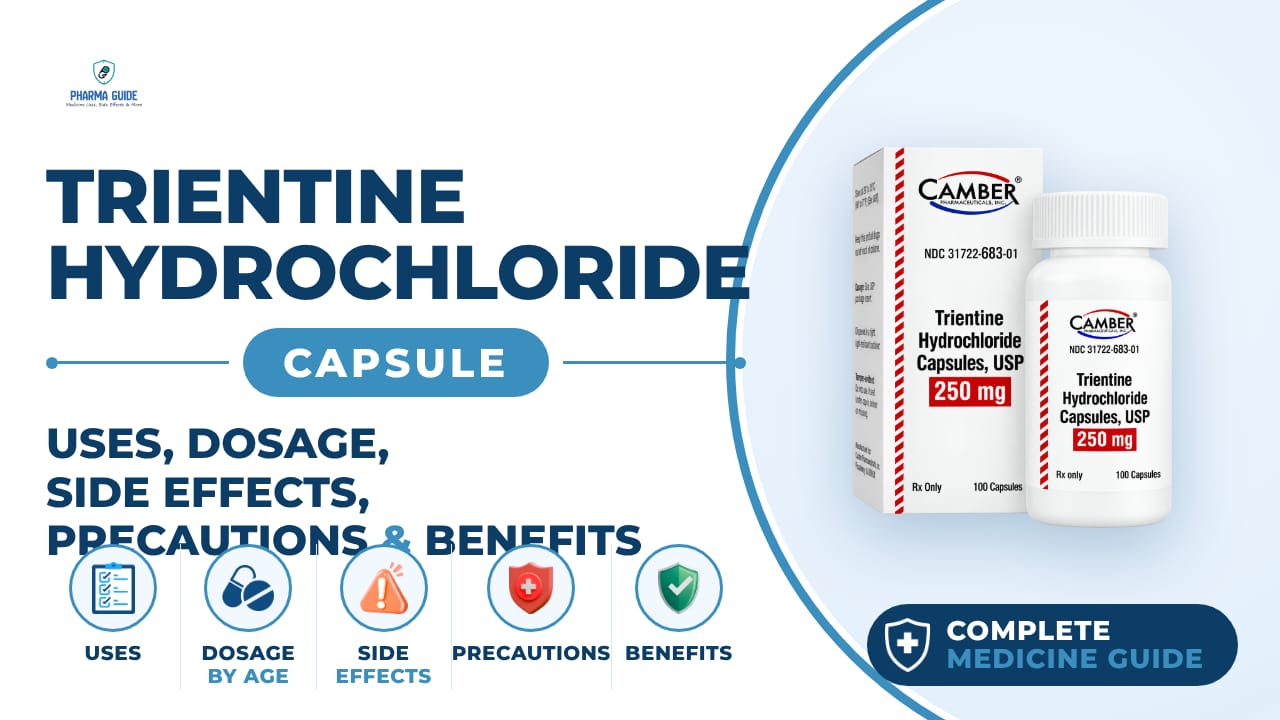
Trientine Hydrochloride Capsule: Uses, Dosage, Side Effects, Precautions and Alternates
| Generic name | trientine hydrochloride |
|---|---|
| Drug class | copper chelator (chelating agent) |
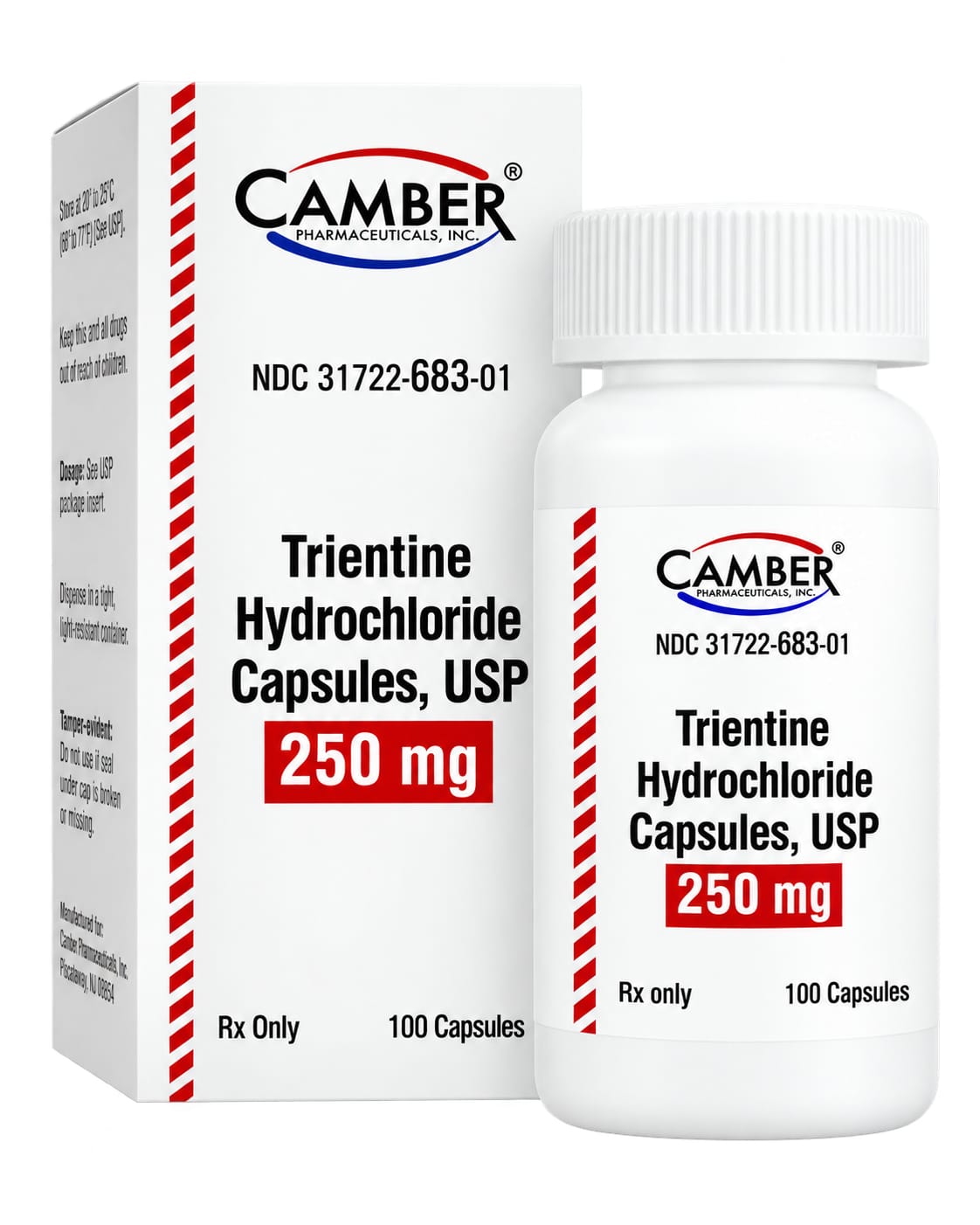
| Forms | 250 mg oral capsules, 500 mg oral capsules, 300 mg oral tablets (other brands) |
Quick overview
Trientine Hydrochloride Capsule (trientine hydrochloride) is a prescription copper chelator used to remove extra copper from the body in patients with Wilson disease who cannot tolerate D-penicillamine. It works by binding to excess copper so it can be cleared through the kidneys and excreted in urine. It is taken as a capsule, usually for life, under a doctor's supervision.
What is Trientine Hydrochloride Capsule
Trientine hydrochloride is a prescription medicine used to remove extra copper from the body. It is given as a capsule and belongs to the copper chelator (chelating agent) drug class.
Trientine Hydrochloride Capsule uses
- Treats Wilson disease in patients who cannot tolerate D-penicillamine.
- Removes excess copper through chelation.
- Helps prevent further copper accumulation in organs.
- Supports treatment of Wilson disease-related liver abnormalities.
Benefits of Trientine Hydrochloride Capsule
- Copper Removal: Helps eliminate excessive copper through urinary excretion.
- Liver Protection: May prevent further copper-related liver injury when treatment is effective.
- Neurological Management: May help stabilize neurological complications associated with Wilson disease, although some patients can worsen initially.
- Long-Term Control: Supports sustained management of a lifelong inherited condition.
How Trientine Hydrochloride Capsule works
Trientine attaches to extra copper in the body, forming a compound that the kidneys can remove. This copper compound then leaves the body in urine, which helps bring copper levels down and prevents organ damage.
Trientine Hydrochloride Capsule dosage
Take on an empty stomach, at least 1 hour before meals or 2 hours after meals. Take at least 1 hour apart from any other medicine, food, or milk. Swallow the capsule whole with a full glass of water; do not open, crush, chew, or dissolve it. If contents of a capsule touch your skin, wash the area with soap and water right away.
This medicine does not cure Wilson's disease, so treatment is usually needed for life; do not stop without talking to your doctor. Follow any special diet instructions from your doctor, such as avoiding high-copper foods like chocolate, mushrooms, liver, molasses, broccoli, shellfish, organ meats, and nuts.
During the first month of treatment, you may need to check your temperature every night and report any fever or skin rash. Keep all appointments for blood and urine tests so your doctor can monitor treatment.
| Age group | Dose |
|---|---|
| Under 6 years | No well-established dosage in the referenced U.S. label; specialist assessment is necessary |
| 6–17 years | 500–750 mg/day initially, in 2–4 divided doses; labeled maximum 1,500 mg/day |
| 18–64 years | 750–1,250 mg/day initially, in 2–4 divided doses; labeled maximum 2,000 mg/day |
| 65 years and older | No established age-specific regimen; specialist-selected treatment based on adult reference dosing and organ function |
Available forms and strengths
- 250 mg oral capsules
- 500 mg oral capsules
- 300 mg oral tablets (other brands)
Side effects of Trientine Hydrochloride Capsule
Common
- Stomach pain
- Changes in bowel habits (diarrhea or constipation)
- Rash or dermatitis
- Hair loss
- Mood changes
- Heartburn
- Dizziness or headache
- Iron deficiency
Serious
- Severe allergic reactions: hives, itching, trouble breathing, swelling of the face, lips, tongue, or throat
- Worsening of Wilson's disease symptoms (such as muscle spasms, tremors, or trouble with coordination), especially early in treatment
- Lupus-like symptoms: joint pain, stiffness, fever, flu-like feeling, chest pain, or a rash that worsens in sunlight
- Signs of copper or iron deficiency: extreme tiredness, weakness, dizziness, confusion, loss of balance, numbness, tingling, pale skin, or weight loss
- Fever or skin rash, no matter how mild
Warnings and precautions
- Do not take mineral supplements such as iron, zinc, calcium, or magnesium close to the time you take trientine, since they can block its absorption.
- This medicine may cause your Wilson's disease symptoms, especially nerve-related ones, to get temporarily worse when you first start treatment.
- Do not take trientine unless your doctor has prescribed it for you, and never share it with others.
- You may need to check your temperature every night during the first month of treatment and tell your doctor about any fever or skin rash.
- It is not known if trientine can harm an unborn baby. Tell your doctor if you are pregnant or planning to become pregnant, since untreated Wilson's disease during pregnancy can also cause problems.
- It is not known if trientine passes into breast milk. Ask your doctor if it is safe to breastfeed while using this medicine.
- Kidney function should be assessed during treatment. No universally established numerical renal dose adjustment is provided in the referenced U.S. labeling.
- Tell your doctor if you have liver disease, especially biliary cirrhosis, before taking this medicine.
- It is not known whether drinking alcohol affects this medicine.
- Trientine is not generally associated with significant sedation, but patients experiencing dizziness, weakness, or neurological symptoms should avoid driving.
Storage
- Trientine capsules should be stored in a refrigerator, between 36 F and 46 F (2 C and 8 C), in a tightly closed container.
- Keep container tightly closed. Store below 25°C (77°F). Store Trientine hydrochloride capsules in its original container.
- Keep out of the reach of children.
- Do not keep outdated medicine or medicine no longer needed.
- Ask your healthcare professional how you should dispose of any medicine you do not use.
When to see a doctor
- Get emergency help right away if you have signs of a severe allergic reaction, such as trouble breathing, swelling of the face, lips, tongue, or throat, or hives.
- Call your doctor right away if you have fever or skin rash, signs of copper deficiency (weakness, confusion, loss of balance, numbness, tingling, weight loss), signs of anemia (pale skin, tiredness, light-headedness, cold hands and feet), or lupus-like symptoms (joint or muscle pain, flu symptoms, chest pain, rash that worsens in sunlight).
- If you or someone else takes too much trientine, get emergency medical help right away or contact a poison control center.
Alternatives
- Cufence
- Zinc Acetate
- D-Penicillamine
Watch the video
FAQs
What is Trientine Hydrochloride Capsule used for?
It is used to treat Wilson disease in patients who cannot tolerate D-penicillamine, removing excess copper from the body through chelation and helping prevent further copper accumulation in organs.
How does Trientine Hydrochloride Capsule work?
It attaches to extra copper in the body, forming a compound that the kidneys can remove, which leaves the body in urine and helps bring copper levels down to prevent organ damage.
How should I take Trientine Hydrochloride Capsule?
Take it on an empty stomach, at least 1 hour before meals or 2 hours after meals, and at least 1 hour apart from other medicine, food, or milk. Swallow the capsule whole with a full glass of water; do not open, crush, chew, or dissolve it.
What are the common side effects of Trientine Hydrochloride Capsule?
Common side effects include stomach pain, changes in bowel habits, rash or dermatitis, hair loss, mood changes, heartburn, dizziness or headache, and iron deficiency.
Can Trientine Hydrochloride Capsule worsen Wilson's disease symptoms?
Yes, it may cause Wilson's disease symptoms, especially nerve-related ones like muscle spasms, tremors, or trouble with coordination, to temporarily worsen when you first start treatment.
General information, not medical advice
Your prescriber and the leaflet in your pack know your situation. This page does not.
- Follow your prescriber and the leaflet
- Don't start, stop, or change a dose on your own
- Doses and warnings differ by country and product
Sources
Video
Related medicines

Injectafer Injection: Uses, Dosage, Side Effects, Precautions and Alternates
Iron products
Injectafer (ferric carboxymaltose) treats iron deficiency anemia and heart failure-related iron deficiency via IV. Learn uses, dosage, side effects, and

Gliclazide Tablet: Uses, Dosage, Side Effects, Precautions and Alternates
Sulfonylurea (hypoglycemic/antidiabetic agent)
Gliclazide Tablet is a sulfonylurea for type 2 diabetes that boosts insulin release. Learn about dosage, side effects, warnings, and precautions.