
Safety
General information, not medical advice
Your prescriber and the leaflet in your pack know your situation. This page does not.
- Follow your prescriber and the leaflet
- Don't start, stop, or change a dose on your own
- Doses and warnings differ by country and product
Trihexyphenidyl Tablet: Uses, Dosage, Side Effects, Precautions and Alternates
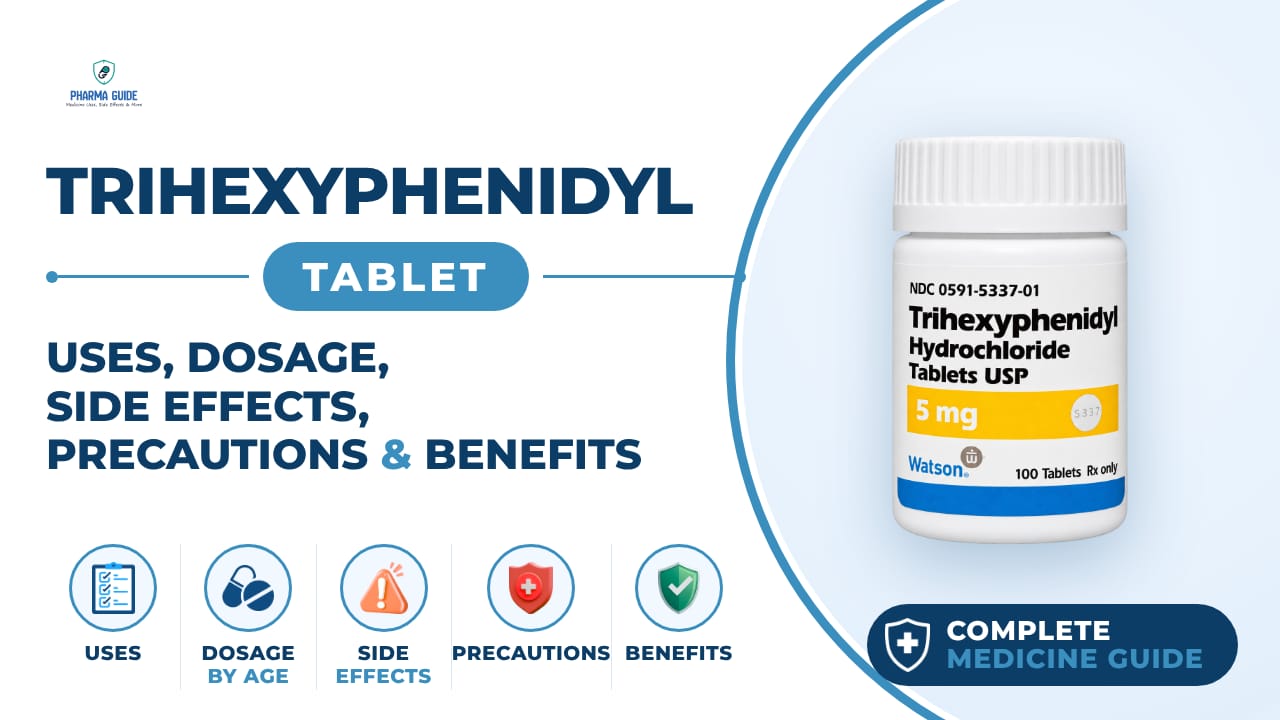
| Generic name | Trihexyphenidyl hydrochloride |
|---|---|
| Drug class | Anticholinergic antiparkinson agent |
| Forms | Tablet, Elixir |
Quick overview
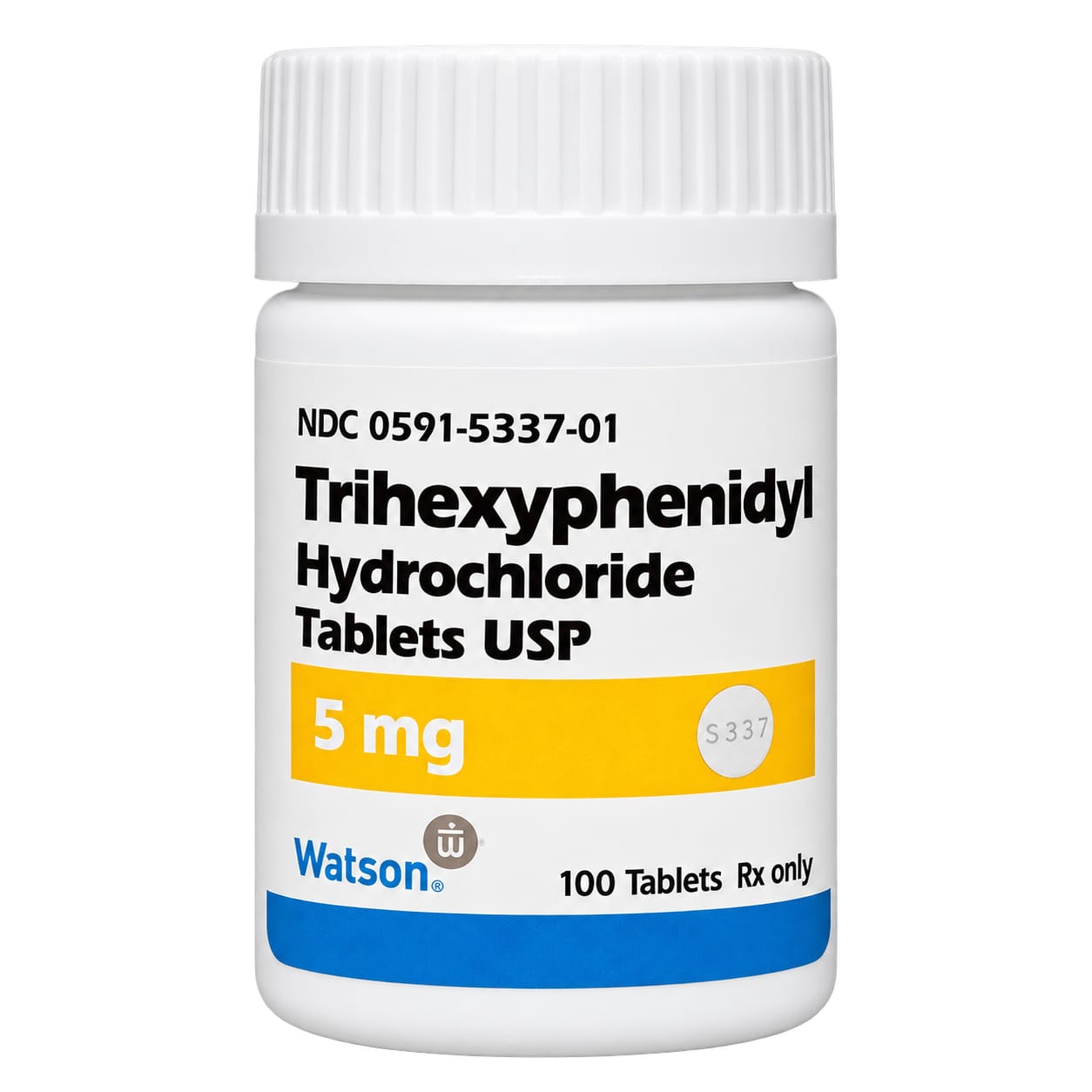
Trihexyphenidyl Tablet (trihexyphenidyl hydrochloride) is a prescription anticholinergic antiparkinson agent taken by mouth. It is used to treat movement problems caused by Parkinson's disease and movement side effects caused by certain other medications. It works by blocking a brain chemical called acetylcholine to help relax muscles and rebalance brain signals controlling movement. It is available as a tablet and as an elixir.
What is Trihexyphenidyl Tablet
Trihexyphenidyl is a prescription medicine that treats movement problems caused by Parkinson's disease or certain other medications. It comes as a tablet taken by mouth.
Trihexyphenidyl Tablet uses
- Parkinson's disease (helps with stiffness, tremors, and poor muscle control)
- Movement side effects (extrapyramidal symptoms) caused by certain psychiatric or nausea medications, such as haloperidol or chlorpromazine
Benefits of Trihexyphenidyl Tablet
- Reduces muscle stiffness, rigidity, and tremors, making walking and daily movements easier
- Controls muscle spasms, cramps, and involuntary movements caused by other medicines
- Can be used alone or together with other Parkinson's medicines like levodopa
How Trihexyphenidyl Tablet works
The medicine blocks a brain chemical called acetylcholine, which helps relax muscles and rebalance brain signals that control movement.
Trihexyphenidyl Tablet dosage
Take by mouth with a full glass of water, as directed on your prescription label. You may take it before or after food, though it is usually taken with meals. If it upsets your stomach, it can be taken with food. Do not stop taking this medicine suddenly, since this can cause a serious reaction — keep taking it unless your care team tells you to stop. If you miss a dose, take it as soon as you can; if it's almost time for the next dose, skip the missed one and do not double up.
Children: special care may be needed, and use should be decided by a doctor. Older adults (over 65): may react more strongly to this medicine and may need a smaller dose.
| Age group | Dose |
|---|---|
| Under 18 years | Safety and effectiveness not established; no standard pediatric dosage |
| 18–39 years | Starting dose: 1 mg daily; usual maintenance 6–10 mg daily |
| 40–64 years | Starting dose: 1 mg daily; usual maintenance 6–10 mg daily |
| 65–74 years | No separate established dose; lower individualized doses are preferred because of increased sensitivity |
Available forms and strengths
- Tablet
- Elixir
Side effects of Trihexyphenidyl Tablet
Common
- Dry mouth, nose, or throat
- Blurred vision or dilated pupils
- Dizziness, drowsiness, or lightheadedness
- Upset stomach, nausea, or vomiting
- Constipation
- Difficulty or pain when urinating
- Nervousness, excitement, or headache
Serious
- Severe eye pain, sudden vision changes, or seeing halos around lights (possible glaucoma)
- Confusion, memory problems, paranoia, anxiety, or hallucinations, especially in older adults
- Fever that doesn't go away along with decreased sweating (risk of heatstroke)
- Allergic reaction: skin rash, itching, hives, swelling of the face, lips, tongue, or throat
- Signs of a serious condition called Neuroleptic Malignant Syndrome if the medicine is stopped suddenly, including high fever and muscle stiffness
Warnings and precautions
- This medicine can trigger or worsen narrow-angle glaucoma, a serious eye condition. Watch for severe eye pain, sudden vision changes, or seeing colored halos around lights.
- This medicine lowers sweating, which raises the risk of overheating or heatstroke in hot weather.
- Do not stop this medicine suddenly. Stopping abruptly can cause severe withdrawal symptoms, high fever, or a dangerous condition called Neuroleptic Malignant Syndrome. Always reduce the dose gradually under a doctor's guidance.
- This medicine is not recommended for people with narrow-angle glaucoma.
- This medicine is not recommended for pregnant women unless it is really necessary. Talk with your doctor about the risks and benefits.
- This medicine is not recommended while breastfeeding, as it may affect milk production.
- People with kidney disease should use this medicine with caution and tell their care team about their condition.
- People with liver disease should use this medicine with caution, since it may build up in the body more than usual.
- Avoid alcohol while taking this medicine, since it can increase side effects like dizziness and trouble concentrating.
- This medicine can affect your coordination, reaction time, and judgment. Do not drive or operate machinery until you know how it affects you.
Storage
- Store between 15 and 30 degrees C (59 and 86 degrees F)
- Keep from freezing
- Keep out of reach of children and pets
- Get rid of any unused medication after the expiration date
- Take the medication to a take-back program if possible
- If you cannot return it, check the label or ask your care team whether it should go in the trash or be flushed; if trash is safe, mix it with something like cat litter or coffee grounds, seal it in a bag, and throw it away
When to see a doctor
- Get medical help right away if you have an allergic reaction: skin rash, itching, hives, or swelling of the face, lips, tongue, or throat.
- Contact your care team right away if you have a fever that won't go away or decreased sweating.
- Get medical attention right away for sudden eye pain or vision changes, such as blurry vision, seeing halos around lights, or vision loss.
- If you think you have taken too much of this medicine, contact a poison control center or go to an emergency room right away.
Alternatives
- Amantadine
- Biperiden
- Procyclidine
- Benztropine
Watch the video
FAQs
What is Trihexyphenidyl Tablet used for?
It treats movement problems caused by Parkinson's disease, such as stiffness and tremors, and extrapyramidal side effects caused by certain psychiatric or nausea medications like haloperidol or chlorpromazine.
How does Trihexyphenidyl Tablet work?
It blocks a brain chemical called acetylcholine, which helps relax muscles and rebalance brain signals that control movement.
Can I stop taking Trihexyphenidyl Tablet suddenly?
No, you should not stop this medicine suddenly, as it can cause a serious reaction, including a dangerous condition called Neuroleptic Malignant Syndrome. Always reduce the dose gradually under a doctor's guidance.
What are the common side effects of Trihexyphenidyl Tablet?
Common side effects include dry mouth, nose, or throat, blurred vision, dizziness or drowsiness, upset stomach, constipation, difficulty urinating, and nervousness or headache.
Is Trihexyphenidyl Tablet safe during pregnancy?
It is not recommended for pregnant women unless really necessary, so you should talk with your doctor about the risks and benefits.
General information, not medical advice
Your prescriber and the leaflet in your pack know your situation. This page does not.
- Follow your prescriber and the leaflet
- Don't start, stop, or change a dose on your own
- Doses and warnings differ by country and product
Sources
Video
Related medicines
Akineton Tablet: Uses, Dosage, Side Effects, Precautions and Alternates
Anticholinergic antiparkinson agent
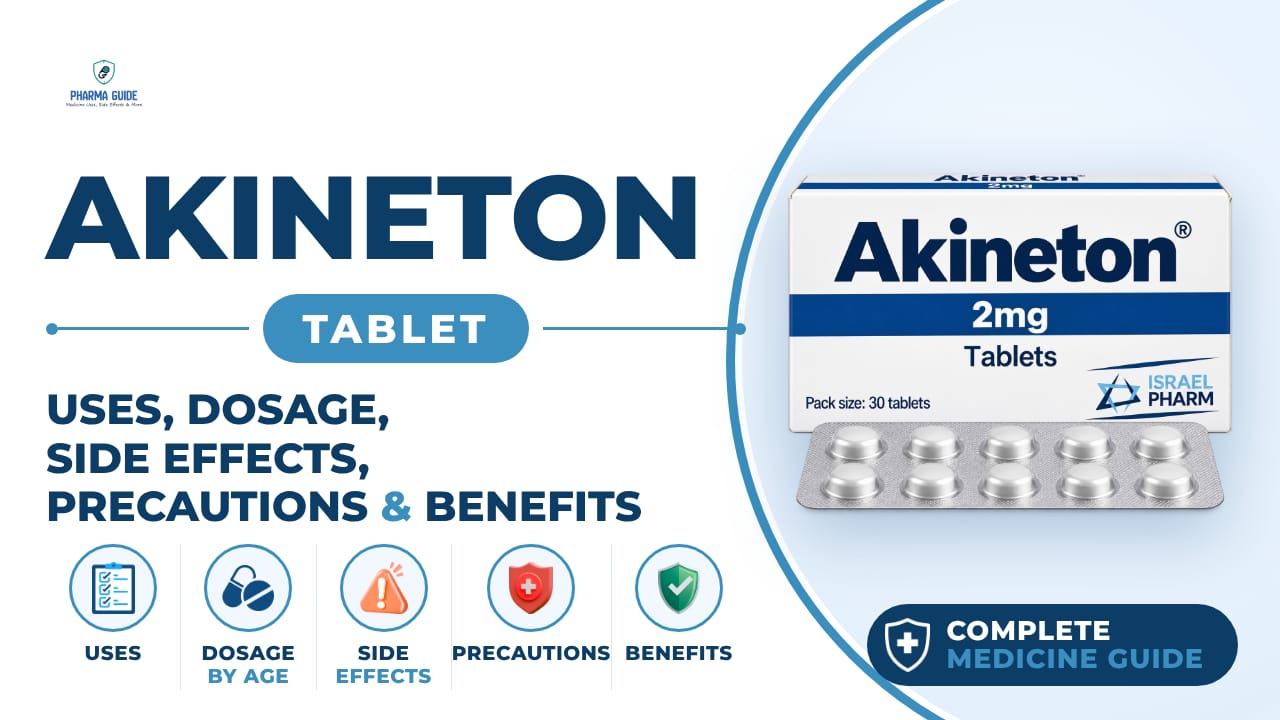
Akineton Tablet (biperiden) treats Parkinson's disease and drug-induced muscle spasms. Learn uses, dosage, side effects, warnings, and alternatives.
Artane Tablet: Uses, Dosage, Side Effects, Precautions and Alternates
Anticholinergic antiparkinson agent
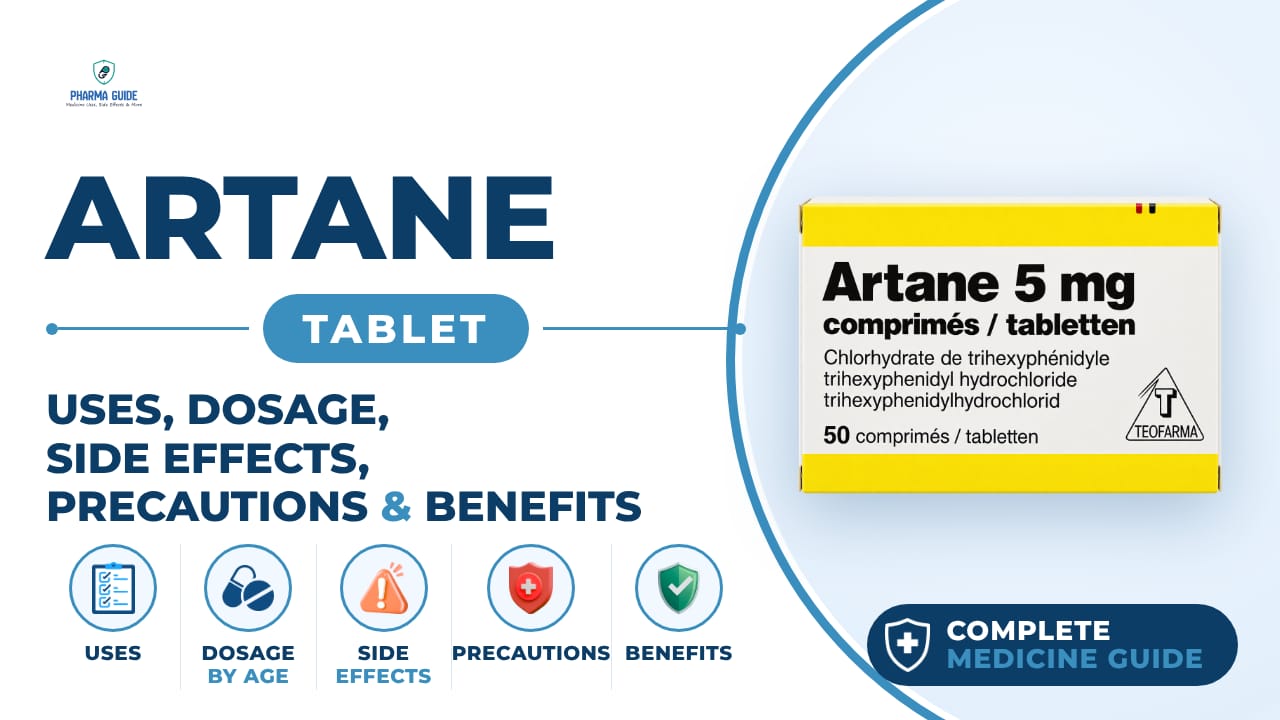
Artane Tablet (trihexyphenidyl) treats Parkinson's tremors, stiffness, and drug-induced muscle problems. Learn its uses, dosage, side effects, and precautions.