
Safety
General information, not medical advice
Your prescriber and the leaflet in your pack know your situation. This page does not.
- Follow your prescriber and the leaflet
- Don't start, stop, or change a dose on your own
- Doses and warnings differ by country and product
Trilafon Tablet: Uses, Dosage, Side Effects, Precautions and Alternates
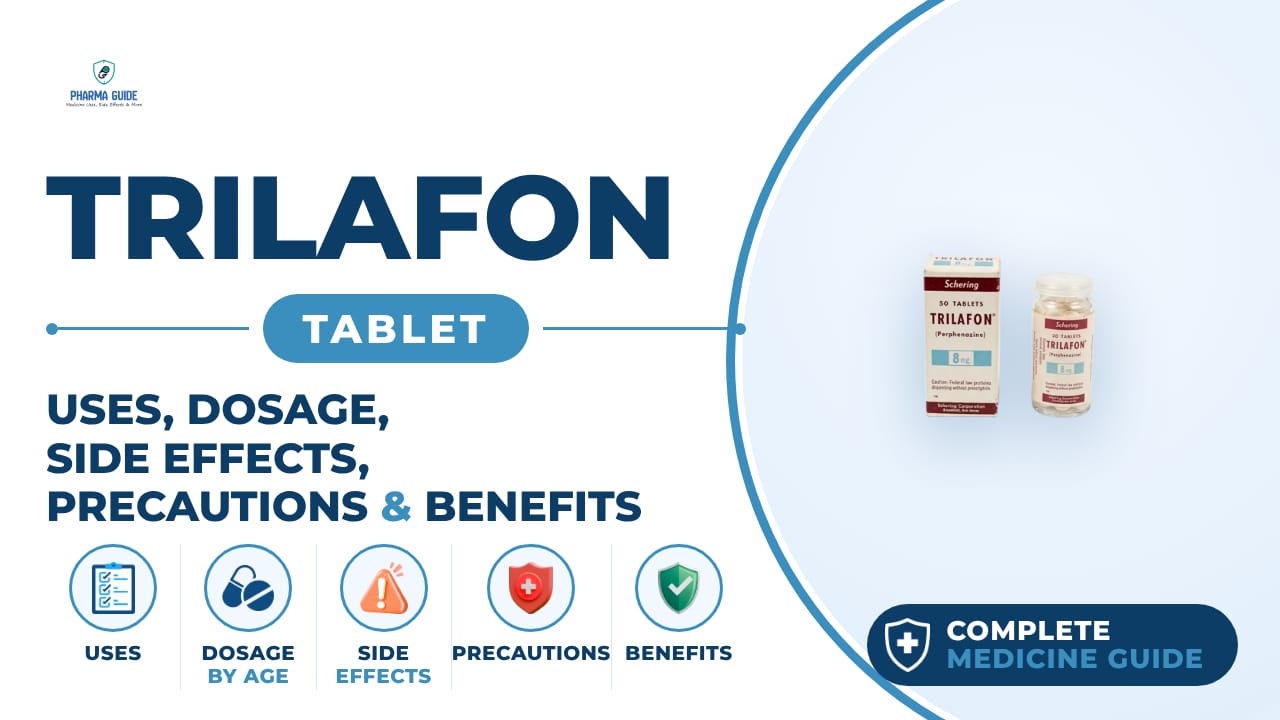
| Generic name | Perphenazine |
|---|---|
| Drug class | Phenothiazine antipsychotic (typical antipsychotic) |
| Forms | Tablet, Tablet, film coated, Tablet, sugar coated, Liquid, Syrup |

Quick overview
Trilafon Tablet (perphenazine) is a phenothiazine antipsychotic medicine used to treat schizophrenia, manage psychotic disorders, and control severe nausea and vomiting. The brand name has been discontinued in the U.S., but generic perphenazine may still be available. It works by affecting dopamine activity in the brain, and dosing, side effects, and precautions should be followed exactly as directed by a doctor.
What is Trilafon Tablet
Trilafon is a phenothiazine antipsychotic medicine. The brand name has been discontinued in the U.S., but generic perphenazine may still be available.
Trilafon Tablet uses
- Treatment of schizophrenia.
- Management of psychotic disorders.
- Control of severe nausea and vomiting.
- Management of certain psychiatric symptoms as prescribed.
Benefits of Trilafon Tablet
- May help improve concentration and daily functioning.
- May help make thoughts clearer.
- May reduce distress caused by psychotic symptoms.
- May help support more stable daily routines.
- May help improve social functioning during treatment.
How Trilafon Tablet works
Trilafon is thought to work by affecting dopamine activity in the brain, which helps regulate thoughts and mood and also helps relieve severe nausea and vomiting. The exact way it works is not completely understood.
Trilafon Tablet dosage
Follow all directions on your prescription label and read all medication guides or instruction sheets. Your doctor may occasionally change your dose; use the medicine exactly as directed. You will need frequent medical tests while taking this medicine. Tell your surgeon you are taking this medicine if you need surgery.
Do not stop taking this medicine suddenly, since this can cause nausea, vomiting, dizziness, or tremors; ask your doctor how to stop safely. If you miss a dose, take it as soon as you can, but skip it if it is almost time for your next dose; do not take two doses at once.
| Age group | Dose |
|---|---|
| Under 18 years | Not recommended |
| 18–64 years | 4–8 mg, three times/day |
| 65+ years | 4–8 mg, three times/day |
Available forms and strengths
- Tablet
- Tablet, film coated
- Tablet, sugar coated
- Liquid
- Syrup
Side effects of Trilafon Tablet
Common
- Mild dizziness or drowsiness
- Blurred vision, headache
- Sleep problems (insomnia), strange dreams
- Loss of appetite, vomiting, diarrhea, constipation
- Increased sweating or urination
- Dry mouth or stuffy nose
- Breast swelling or discharge
- Mild itching or skin rash
- Nausea
- Faster or slower heartbeat
- Drop in blood pressure when standing up
Serious
- Uncontrolled muscle movements in the arms, legs, or face (chewing, lip smacking, frowning, tongue movement, blinking or eye movement)
- Worsening symptoms of schizophrenia
- Confusion, paranoia, feeling restless or excited
- Seizures (convulsions)
- A light-headed feeling, like you might pass out
- Jaundice (yellowing of the skin or eyes)
- Little or no urinating
- Slow heart rate, weak pulse, weak or shallow breathing
- Low white blood cell counts - fever, chills, mouth sores, skin sores, sore throat, cough, trouble breathing, feeling light-headed
- Severe nervous system reaction - very stiff (rigid) muscles, high fever, sweating, fast or uneven heartbeats
- Tardive dyskinesia (uncontrollable movements like lip smacking, eye blinking, sticking out tongue, grimacing)
- Neuroleptic malignant syndrome (high fever, fast heart rate, full body stiffness, confusion)
- Suicidal thoughts or behavior in people with depression
Warnings and precautions
- It is not known whether this medicine is safe to use during pregnancy. Taking antipsychotic medicine in the last three months of pregnancy may cause breathing problems, feeding problems, or withdrawal symptoms in the newborn. Tell your doctor if you are pregnant or become pregnant.
- It may not be safe to breastfeed while using this medicine. Ask your doctor about any risk.
- Tell your doctor if you have kidney disease before taking this medicine. You should not use this medicine if you have liver disease or liver damage.
- Avoid drinking alcohol while taking this medicine, since it can increase some of the side effects.
- Avoid driving or doing anything dangerous until you know how this medicine affects you, since dizziness or drowsiness can cause falls, accidents, or serious injury.
- High doses or long-term use of this medicine can cause a serious, possibly permanent movement disorder. This risk is higher the longer you use the medicine, especially in women and older adults.
- This medicine is not approved for treating psychosis related to dementia in older adults and may increase the risk of death in this group.
- Do not use this medicine if you have liver disease, brain damage, bone marrow depression, a blood cell disorder, or if you are using large amounts of alcohol or medicines that make you sleepy.
- Taking this medicine with other drugs that cause drowsiness or slow breathing, such as opioids, sleeping pills, muscle relaxers, or anxiety or seizure medicines, can cause dangerous or life-threatening effects.
- This medicine can make your skin sunburn more easily. Avoid too much sun or tanning beds and use protective clothing and sunscreen.
- Do not stop taking this medicine suddenly, because this can cause nausea, vomiting, dizziness, or tremors. Ask your doctor how to stop safely.
Storage
- Store at room temperature, around 20–25°C.
- Keep in a dry place, away from moisture.
- Protect from direct sunlight and excessive heat.
- Keep in the original packaging.
- Keep out of reach of children.
When to see a doctor
- Get emergency medical help right away if you have signs of an allergic reaction, such as hives, trouble breathing, or swelling of the face, lips, tongue, or throat.
- Call your doctor right away if you notice twitching or uncontrollable movements of your eyes, lips, tongue, face, arms, or legs, since these could be early signs of a dangerous side effect.
- Seek emergency medical help right away if you think you have taken too much of this medicine, since an overdose can be fatal.
Alternatives
- Olanzapine
- Fluphenazine
- Haloperidol
Watch the video
FAQs
What is Trilafon Tablet used for?
Trilafon Tablet is used to treat schizophrenia, manage psychotic disorders, control severe nausea and vomiting, and manage certain psychiatric symptoms as prescribed.
How does Trilafon Tablet work?
It is thought to work by affecting dopamine activity in the brain, which helps regulate thoughts and mood and also helps relieve severe nausea and vomiting. The exact mechanism is not completely understood.
What is the dosage of Trilafon Tablet for adults?
For adults aged 18–64 years and those 65 and older, the typical dose is 4–8 mg, three times a day. It is not recommended for use in those under 18 years.
What are the serious side effects of Trilafon Tablet?
Serious side effects include uncontrolled muscle movements, worsening schizophrenia symptoms, confusion, seizures, jaundice, slow heart rate, low white blood cell counts, neuroleptic malignant syndrome, and tardive dyskinesia.
Can I drink alcohol while taking Trilafon Tablet?
No, you should avoid drinking alcohol while taking this medicine, since it can increase some of the side effects.
General information, not medical advice
Your prescriber and the leaflet in your pack know your situation. This page does not.
- Follow your prescriber and the leaflet
- Don't start, stop, or change a dose on your own
- Doses and warnings differ by country and product
Sources
Video
Related medicines

Injectafer Injection: Uses, Dosage, Side Effects, Precautions and Alternates
Iron products
Injectafer (ferric carboxymaltose) treats iron deficiency anemia and heart failure-related iron deficiency via IV. Learn uses, dosage, side effects, and

Gliclazide Tablet: Uses, Dosage, Side Effects, Precautions and Alternates
Sulfonylurea (hypoglycemic/antidiabetic agent)
Gliclazide Tablet is a sulfonylurea for type 2 diabetes that boosts insulin release. Learn about dosage, side effects, warnings, and precautions.