
Safety
General information, not medical advice
Your prescriber and the leaflet in your pack know your situation. This page does not.
- Follow your prescriber and the leaflet
- Don't start, stop, or change a dose on your own
- Doses and warnings differ by country and product
Trimovate Cream: Uses, Dosage, Side Effects, Precautions and Alternates
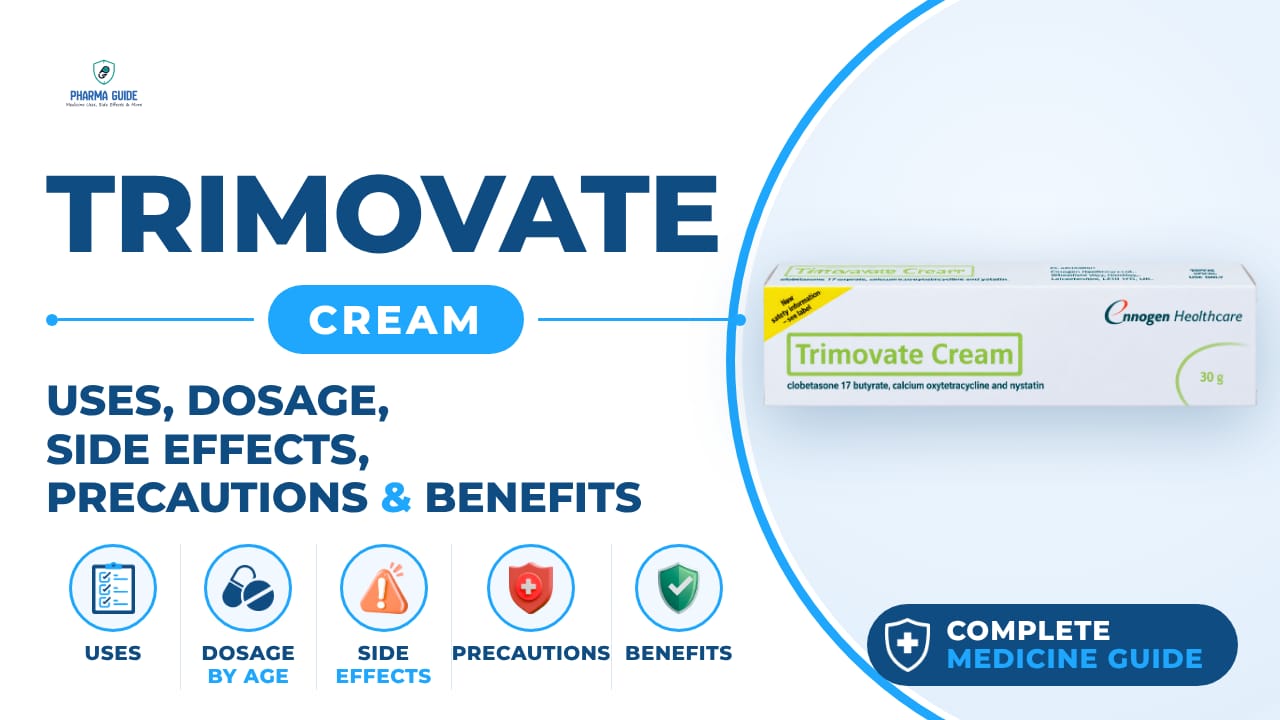
| Generic name | Clobetasone butyrate, oxytetracycline and nystatin |
|---|---|
| Drug class | Combination topical corticosteroid, antibiotic and antifungal cream |
| Forms | Cream |
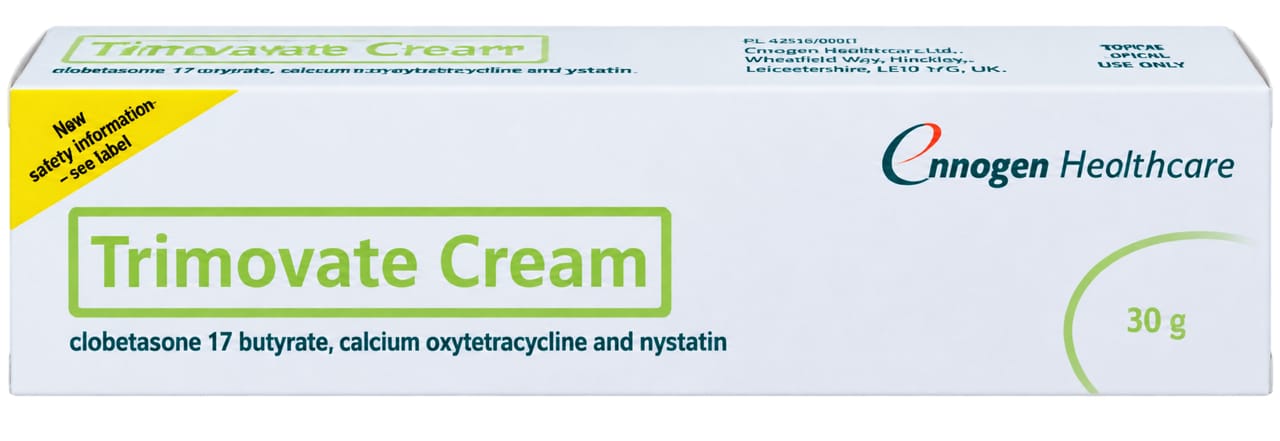
Quick overview
Trimovate Cream is a prescription-only topical treatment combining clobetasone butyrate (a steroid), oxytetracycline (an antibiotic), and nystatin (an antifungal). It is used for skin conditions that involve inflammation along with a bacterial or fungal infection, or where infection is suspected or likely. The cream calms itching, redness, and inflammation while working against infection at the same time.
What is Trimovate Cream
Trimovate is a prescription-only topical treatment made from three active ingredients: clobetasone butyrate (a steroid), oxytetracycline (an antibiotic), and nystatin (an antifungal). It is used to treat skin conditions that involve inflammation along with a bacterial or fungal infection, or where infection is suspected or likely.
Trimovate Cream uses
- Skin infections
- Atopic dermatitis (eczema)
- Allergic dermatitis
- Psoriasis
- Inflammatory skin conditions
- Itchy, irritated or dry skin caused by skin-to-skin contact (intertrigo)
- Nappy rash
- Impetigo
- Seborrhoeic dermatitis when infection is part of the picture
- Anogenital pruritus
Benefits of Trimovate Cream
- Soothes inflammation and offers symptomatic relief
- Works to prevent bacterial or fungal skin infections from spreading
- Relieves itching, redness, and inflammation fast
How Trimovate Cream works
Trimovate combines three ingredients that work together: the steroid reduces inflammation and calms itching and redness, the antibiotic slows the growth of certain bacteria by stopping them from making proteins they need to survive, and the antifungal damages yeast (Candida) cells so they can't grow. Together they calm the skin and treat infection at the same time.
Trimovate Cream dosage
Clean the affected area with soap and water, and dry the skin thoroughly before applying. Apply a thin layer of cream to the affected area and gently massage it in until fully absorbed. Try not to get cream on the surrounding areas of healthy skin. Wash your hands thoroughly after using the cream, unless the affected area is on your hands. The cream is usually applied once or twice a day, but frequency and duration can vary from patient to patient.
Avoid contact with eyes, mouth, and other mucous membranes; rinse with water if accidental contact occurs. Do not use for longer than your doctor or the label recommends. Avoid applying to large areas of skin, broken or severely damaged skin, or sensitive areas such as the eyes unless instructed by your doctor. Do not cover the treated area with dressings unless advised.
If you miss an application, apply it when you remember, but do not use extra to make up for a missed dose. If also using an emollient, allow time for the cream to absorb before applying the moisturiser. Care should be used in children, generally for the shortest duration possible and under close supervision of a healthcare professional.
| Age group | Dose |
|---|---|
| Under 1 year | Doctor-directed use only |
| 1–11 years | Apply a thin layer 2–3 times daily, as prescribed |
| 12–17 years | Apply a thin layer 2–3 times daily |
| 18 years & older | Apply a thin layer 2–3 times daily |
| Older adults | Apply a thin layer 2–3 times daily, as prescribed |
Available forms and strengths
- Cream
Side effects of Trimovate Cream
Common
- Mild burning, stinging, or irritation at the application site
- Skin reactions or irritation, such as redness, itching, or burning
- Acne or other skin problems
- Folliculitis (inflammation of hair follicles)
- Contact dermatitis (skin irritation caused by contact with a substance)
Serious
- Allergic reactions, such as rash, hives, or difficulty breathing
- Thin or fragile skin
- Stretch marks
- Increased hair growth
- Discolouration of the skin cells
- Changes in skin pigmentation
- Visible small blood vessels
- Systemic steroid effects such as Cushingoid features and adrenal suppression, especially in children or with prolonged use
- Photosensitivity reactions in sensitive people
Warnings and precautions
Do not use Trimovate if you have a known allergy to any of its ingredients, a primary viral skin infection, primary skin lesions caused by bacterial, fungal or yeast infection, a confirmed infection with certain resistant organisms including MRSA, or if you have acne, rosacea, or itchy skin without inflammation.
Avoid using this cream for a long time, especially in children and infants, as this may lead to the adrenal glands not working properly. It is generally not recommended to use Trimovate on the face because if it gets into the eyes it can cause glaucoma. Repeated exposure near the eyes, such as on the eyelids, can increase the risk of cataracts or glaucoma. Get checked if you notice blurred vision or other visual changes.
Fabric that has been in contact with this product can burn more easily. Avoid naked flames and do not smoke while using it, since washing may reduce but not fully remove this risk. Using the cream over large areas, under dressings or nappies, on broken skin, or for longer than advised increases the risk of the medicine being absorbed into the body, which can affect the adrenal glands and cause other steroid-related effects.
For external use only. Avoid contact with the eyes, mouth, and mucous membranes. Use only for the prescribed skin condition and for the shortest appropriate duration. Because it contains a corticosteroid, avoid prolonged or repeated use without medical advice.
Avoid applying to the face, groin, skin folds, or genital area unless specifically prescribed. Do not apply to large areas, broken skin, or under airtight dressings unless directed by a doctor. Do not use for viral skin infections such as herpes or chickenpox.
Prolonged steroid use can cause skin thinning, stretch marks, discoloration, and increased susceptibility to infection. Unnecessary or prolonged antibiotic use may contribute to antibiotic resistance. Stop and seek medical advice if the rash gets worse, spreads, or does not improve.
There is no specific interaction with alcohol for topical use, but the medicine should be used as directed by a prescriber.
The safety of this cream during pregnancy has not been established, and it should only be used if the potential benefits outweigh the potential risks to the unborn baby. Use should be for the minimum amount and shortest duration.
Trimovate should only be used while breastfeeding if the benefit outweighs the risk, using the minimum amount for the shortest time, and it should not be applied to the breasts to avoid accidental ingestion by the infant.
Storage
- Store below 25°C in a dry place, away from direct heat and sunlight
- Keep the tube tightly closed after use
- Store out of sight and reach of children
- Do not use the cream after the expiry date printed on the packaging
When to see a doctor
Contact your doctor or a pharmacist if you experience any unusual symptoms or side effects while using this medication. If the treated area looks more infected, with more pain, swelling, pus, or spreading redness, or if symptoms are not improving after about a week, stop use and seek advice promptly. If you notice signs of steroid absorption into the body, such as unusual weight or appearance changes, stop and seek medical advice.
Alternatives
- Fucibet Cream
- Fucidin Cream
- Nystatin Cream
- Mupirocin Ointment/Cream
Watch the video
FAQs
What is Trimovate Cream used for?
It treats skin conditions involving inflammation along with a bacterial or fungal infection, such as eczema, dermatitis, intertrigo, nappy rash, and impetigo, or where infection is suspected or likely.
How do you apply Trimovate Cream?
Clean and dry the affected area, then apply a thin layer and gently massage it in, avoiding healthy surrounding skin. It is usually applied once or twice a day, with frequency and duration varying by patient.
Can Trimovate Cream be used on the face?
It is generally not recommended for the face, as getting it into the eyes can cause glaucoma, and repeated use near the eyes can increase the risk of cataracts or glaucoma.
What are the side effects of Trimovate Cream?
Common side effects include mild burning, stinging, irritation, acne, folliculitis, and contact dermatitis. Serious effects can include allergic reactions, skin thinning, stretch marks, and systemic steroid effects with prolonged use.
Is Trimovate Cream safe during pregnancy?
Its safety in pregnancy has not been established, so it should only be used if the potential benefits outweigh the risks, using the minimum amount for the shortest duration.
General information, not medical advice
Your prescriber and the leaflet in your pack know your situation. This page does not.
- Follow your prescriber and the leaflet
- Don't start, stop, or change a dose on your own
- Doses and warnings differ by country and product
Sources
- Trimovate: Patient Information Leaflet
- electronic Medicines Compendium (emc) Trimovate Cream: Summary of Product Characteristics (SmPC)
- NHS Atopic eczema
- NHS Contact dermatitis
- NICE Dermatitis: contact
Video
Related medicines

Injectafer Injection: Uses, Dosage, Side Effects, Precautions and Alternates
Iron products
Injectafer (ferric carboxymaltose) treats iron deficiency anemia and heart failure-related iron deficiency via IV. Learn uses, dosage, side effects, and

Gliclazide Tablet: Uses, Dosage, Side Effects, Precautions and Alternates
Sulfonylurea (hypoglycemic/antidiabetic agent)
Gliclazide Tablet is a sulfonylurea for type 2 diabetes that boosts insulin release. Learn about dosage, side effects, warnings, and precautions.