
Safety
General information, not medical advice
Your prescriber and the leaflet in your pack know your situation. This page does not.
- Follow your prescriber and the leaflet
- Don't start, stop, or change a dose on your own
- Doses and warnings differ by country and product
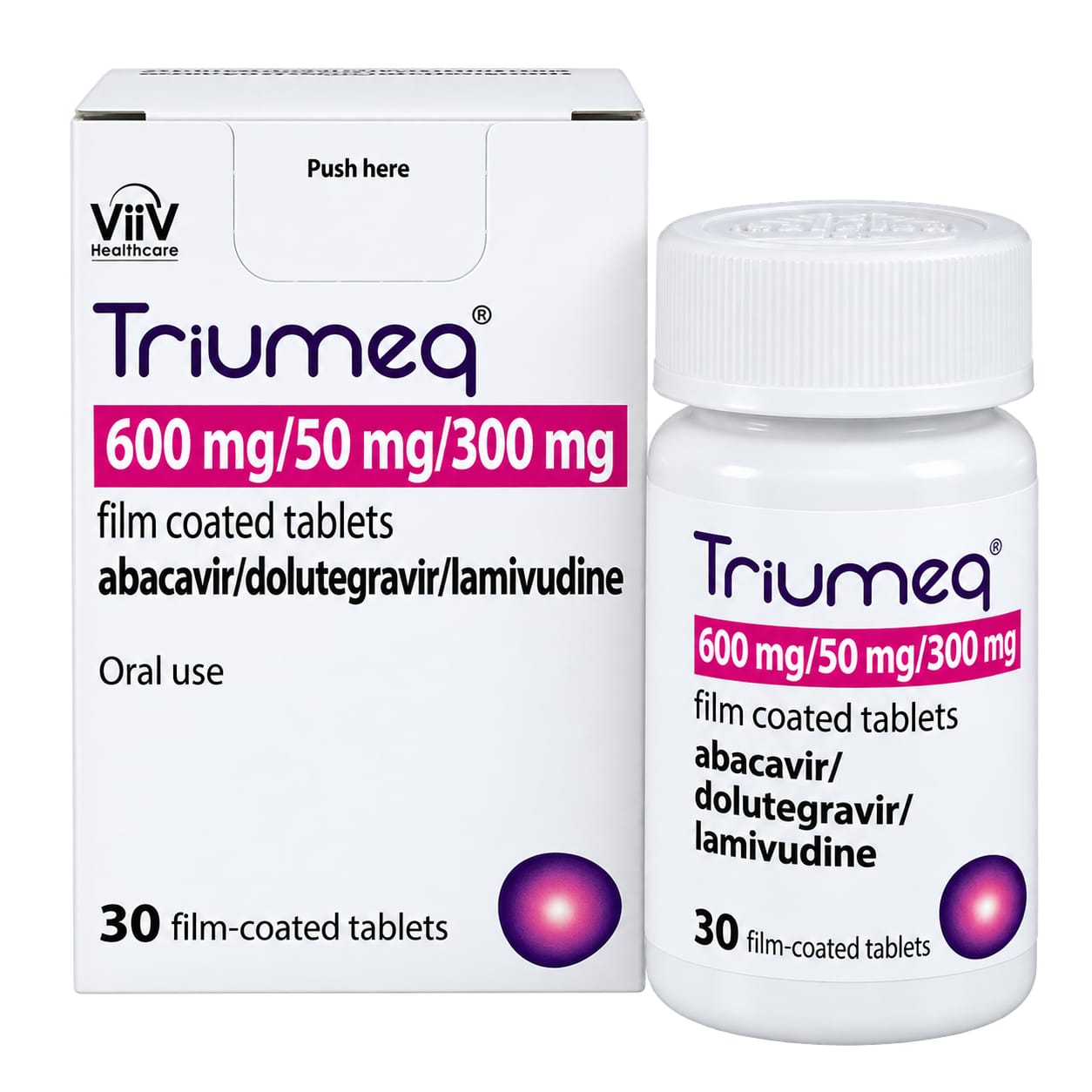
Triumeq Tablet: Uses, Dosage, Side Effects, Precautions and Alternates

| Generic name | dolutegravir, abacavir and lamivudine |
|---|---|
| Drug class | Antiretroviral (integrase inhibitor combined with nucleoside analogue reverse transcriptase inhibitors) |
| Forms | Tablet, Tablet for oral suspension (Triumeq PD) |
Quick overview
Triumeq Tablet is a combination antiretroviral medicine containing dolutegravir, abacavir, and lamivudine, used to treat HIV infection in adults and children over 12 years old weighing at least 40 kg. It works by blocking enzymes the virus needs to multiply, helping to control HIV as part of a single daily tablet regimen. Common side effects include fever, rash, nausea, and headache, while serious risks include severe allergic reactions and liver problems. It should be used exactly as prescribed, with attention to specific warnings about abacavir hypersensitivity and hepatitis B.
What is Triumeq Tablet
Triumeq is a combination tablet containing three active ingredients: dolutegravir, abacavir and lamivudine. It is used to treat HIV infection in adults and children over 12 years old (weighing at least 40 kg).
Triumeq Tablet uses
- Treats human immunodeficiency virus (HIV) infection, which can lead to Acquired Immune Deficiency Syndrome (AIDS) and other related illnesses
- Used in adults and children over 12 years old weighing at least 40 kg
Benefits of Triumeq Tablet
- HIV-1 Treatment: Used with its three active medicines in a single tablet to treat HIV-1 infection.
- Viral Suppression: Helps prevent HIV from multiplying.
- Immune-System Support: Effective viral suppression helps preserve immune function.
- Single-Tablet Therapy: Combines abacavir, dolutegravir, and lamivudine into one daily tablet.
How Triumeq Tablet works
Dolutegravir blocks an enzyme called integrase that HIV uses to enter cells and make copies of itself. Abacavir and lamivudine block a different enzyme called reverse transcriptase, which also stops the virus from copying itself and spreading.
Triumeq Tablet dosage
Swallow the tablet whole with water. You do not need to take it with food. Take it at the same time each day to help you remember.
If you miss a dose, take it as soon as you remember, then continue as before; if it's almost time for your next dose, skip the missed one and take your next dose as scheduled — do not double up. Do not stop using this medicine or lower the dose without checking with your doctor first.
Do not take antacids during the 6 hours before or for at least 2 hours after taking this medicine. Do not take calcium or iron supplements during the 6 hours before or for at least 2 hours after taking this medicine, unless taken with food, in which case they can be taken at the same time.
| Age group | Dose |
|---|---|
| 3 Months–<25 kg | Pediatric Triumeq PD dosing is weight-based; specialist supervision is required |
| ≥25 kg / Adolescents | 1 Triumeq tablet once daily (600 mg + 50 mg + 300 mg) |
| Adults (18+ Years) | 1 tablet once daily (600 mg + 50 mg + 300 mg) |
Available forms and strengths
- Tablet (600 mg + 50 mg + 300 mg)
- Tablet for oral suspension (Triumeq PD)
Side effects of Triumeq Tablet
Common
- Fever
- Skin rash
- Nausea and/or vomiting
- Stomach pain (abdominal pain)
- Tiredness
- Headache
- Trouble sleeping (insomnia)
- Diarrhea
- Dizziness
- Feeling drowsy
- Loss of appetite
- Weight gain
- Hair loss
- Itching
- Nightmares and abnormal dreams
- Sleep disorder
- Joint pain
- Muscle pain and discomfort
- Gas (flatulence)
- Indigestion
Serious
- Severe allergic (hypersensitivity) reaction with skin rash and/or fever, shortness of breath, sore throat, cough, nausea, vomiting, diarrhea, stomach pain, severe tiredness or generally feeling ill
- Lactic acidosis (high acid levels in the blood) with fast or difficult breathing, drowsiness, numbness or weakness in limbs, nausea, vomiting, stomach pain
- Liver problems including hepatitis and liver failure, with yellowing of skin or eyes or unusually dark urine
- Severe skin reactions such as erythema multiforme, Stevens-Johnson syndrome, or toxic epidermal necrolysis
- Signs of an inflamed pancreas (pancreatitis) such as severe stomach pain, nausea, vomiting
- Suicidal thoughts and behaviors, especially in those with prior depression or mental health problems
- Anaemia with fatigue, weakness, shortness of breath, heart palpitations, headache
- Signs of muscle breakdown (rhabdomyolysis) such as muscle pain or weakness, discolored urine
- Tingling or numbness of the hands and feet or arms and legs
- Heart attack symptoms such as chest pain, pain in jaw, neck, back, or arms, dizziness, trouble breathing
- Worsening of existing hepatitis B infection, or development of hepatitis B virus resistant to lamivudine, especially if you stop taking Triumeq suddenly
- Kidney problems such as swelling in the feet or legs, producing less urine than usual, or confusion
Warnings and precautions
- Abacavir in Triumeq can cause a serious, potentially life-threatening allergic (hypersensitivity) reaction. Contact your doctor immediately if you get a skin rash, or symptoms from at least two of these groups: fever; shortness of breath, sore throat or cough; nausea, vomiting, diarrhea or stomach pain; or severe tiredness, achiness or feeling generally unwell.
- If you have ever had a hypersensitivity reaction to Triumeq, you must never take Triumeq or any other medicine containing abacavir again, as this can cause a life-threatening reaction.
- Do not take Triumeq with dofetilide or pilsicainide (for heart conditions) or fampridine (for multiple sclerosis).
- If you have hepatitis B, do not stop taking Triumeq without instructions from your doctor, as this may cause your hepatitis to flare up or worsen.
- Triumeq has a boxed warning, the most serious type of FDA warning, about the risk of allergic reaction, worsening of existing hepatitis B, and developing hepatitis B virus resistant to lamivudine.
- Do not take Triumeq if you have moderate or severe liver problems, as it is unknown whether the medicine is safe or effective for these conditions.
- Check with your doctor if you are pregnant or planning to become pregnant. Your doctor can discuss the risks and benefits with you.
- Talk to your doctor if you are breastfeeding or planning to breastfeed. A small amount of the medicine can pass into breast milk.
- Tell your doctor if you have a kidney problem, as you may need extra check-ups, including blood tests, while taking this medicine.
- If you have serious liver disease, Triumeq may not be suitable for you.
- Drinking alcohol while taking Triumeq may increase certain side effects such as nausea, dizziness, and headache. Talk to your doctor about how much, if any, alcohol is safe for you.
- Be careful before driving or using machines until you know how this medicine affects you, as it may cause dizziness or other effects that make you less alert.
Storage
- Store in the original package to protect from moisture. Keep the bottle tightly closed. Do not remove the desiccant.
- Keep your tablets in a cool dry place where the temperature stays below 30°C
- Keep your tablets in the bottle until it is time to take them
- Do not store in the bathroom or near a sink. Do not leave it on a windowsill or in the car
- Keep it where young children cannot reach it; a locked cupboard at least one-and-a-half metres above the ground is a good place to store medicines
- If you no longer need the medicine or it is out of date, take it to any pharmacy for safe disposal
- Do not use this medicine after the expiry date
When to see a doctor
- Contact your doctor immediately or go straight to the nearest hospital Emergency Department if you get a skin rash, or symptoms from at least two of these groups: fever; shortness of breath, sore throat or cough; nausea, vomiting, diarrhea or stomach pain; severe tiredness or achiness or generally feeling ill.
- Call your doctor straight away or go to the Emergency Department if you have signs of liver problems such as yellowing skin or eyes, or unusually dark urine.
- Stop taking Triumeq and talk to your doctor immediately if you become unwell with fast, difficult breathing, drowsiness, numbness or weakness in the limbs, nausea, vomiting, or stomach pain — these can be signs of a serious condition involving high acid levels in the blood.
- Call your doctor straight away if you become pregnant while taking this medicine.
- If you think you have taken too much Triumeq, seek urgent medical attention immediately, even if you feel fine.
- Tell your doctor immediately if you notice symptoms of infection or inflammation, such as muscle weakness or pain, joint pain or swelling, weakness starting in the hands and feet, palpitations, tremor, or hyperactivity.
Alternatives
- Biktarvy
- Genvoya
- Dovato
Watch the video
FAQs
What is Triumeq Tablet used for?
Triumeq is used to treat HIV infection in adults and children over 12 years old weighing at least 40 kg, helping prevent the virus from multiplying and preserving immune function.
How does Triumeq Tablet work?
Dolutegravir blocks the integrase enzyme HIV uses to enter cells and copy itself, while abacavir and lamivudine block the reverse transcriptase enzyme, together stopping the virus from copying itself and spreading.
What is the dosage of Triumeq Tablet?
Adults and adolescents weighing 25 kg or more take one tablet (600 mg + 50 mg + 300 mg) once daily, swallowed whole with water, with or without food, at the same time each day.
What are the serious side effects of Triumeq Tablet?
Serious side effects include severe allergic reactions, lactic acidosis, liver problems like hepatitis or liver failure, severe skin reactions, pancreatitis, suicidal thoughts, anaemia, rhabdomyolysis, and worsening of hepatitis B if stopped suddenly.
What precautions should I take with Triumeq Tablet?
Be aware of the risk of life-threatening allergic reactions to abacavir, never retake Triumeq after a hypersensitivity reaction, avoid certain heart and MS medicines, and do not stop taking it abruptly if you have hepatitis B without medical advice.
General information, not medical advice
Your prescriber and the leaflet in your pack know your situation. This page does not.
- Follow your prescriber and the leaflet
- Don't start, stop, or change a dose on your own
- Doses and warnings differ by country and product
Sources
- TRIUMEQ Consumer Medicine Information (CMI), ViiV Healthcare, prepared 5 August 2025, Version 18.0
- https://www.medicalnewstoday.com/articles/drugs-triumeq-side-effects
- https://www.goodrx.com/triumeq/what-is
Video
Related medicines

Injectafer Injection: Uses, Dosage, Side Effects, Precautions and Alternates
Iron products
Injectafer (ferric carboxymaltose) treats iron deficiency anemia and heart failure-related iron deficiency via IV. Learn uses, dosage, side effects, and

Gliclazide Tablet: Uses, Dosage, Side Effects, Precautions and Alternates
Sulfonylurea (hypoglycemic/antidiabetic agent)
Gliclazide Tablet is a sulfonylurea for type 2 diabetes that boosts insulin release. Learn about dosage, side effects, warnings, and precautions.