
Safety
General information, not medical advice
Your prescriber and the leaflet in your pack know your situation. This page does not.
- Follow your prescriber and the leaflet
- Don't start, stop, or change a dose on your own
- Doses and warnings differ by country and product
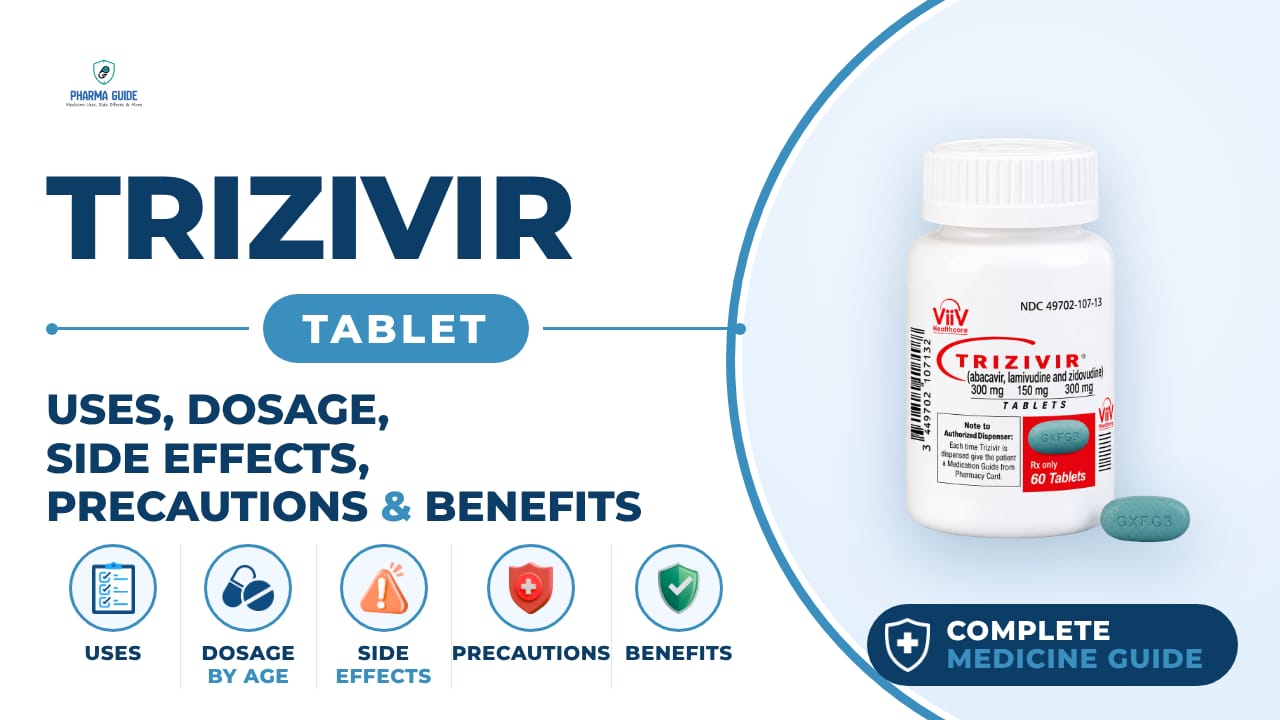
Trizivir Tablet: Uses, Dosage, Side Effects, Precautions and Alternates
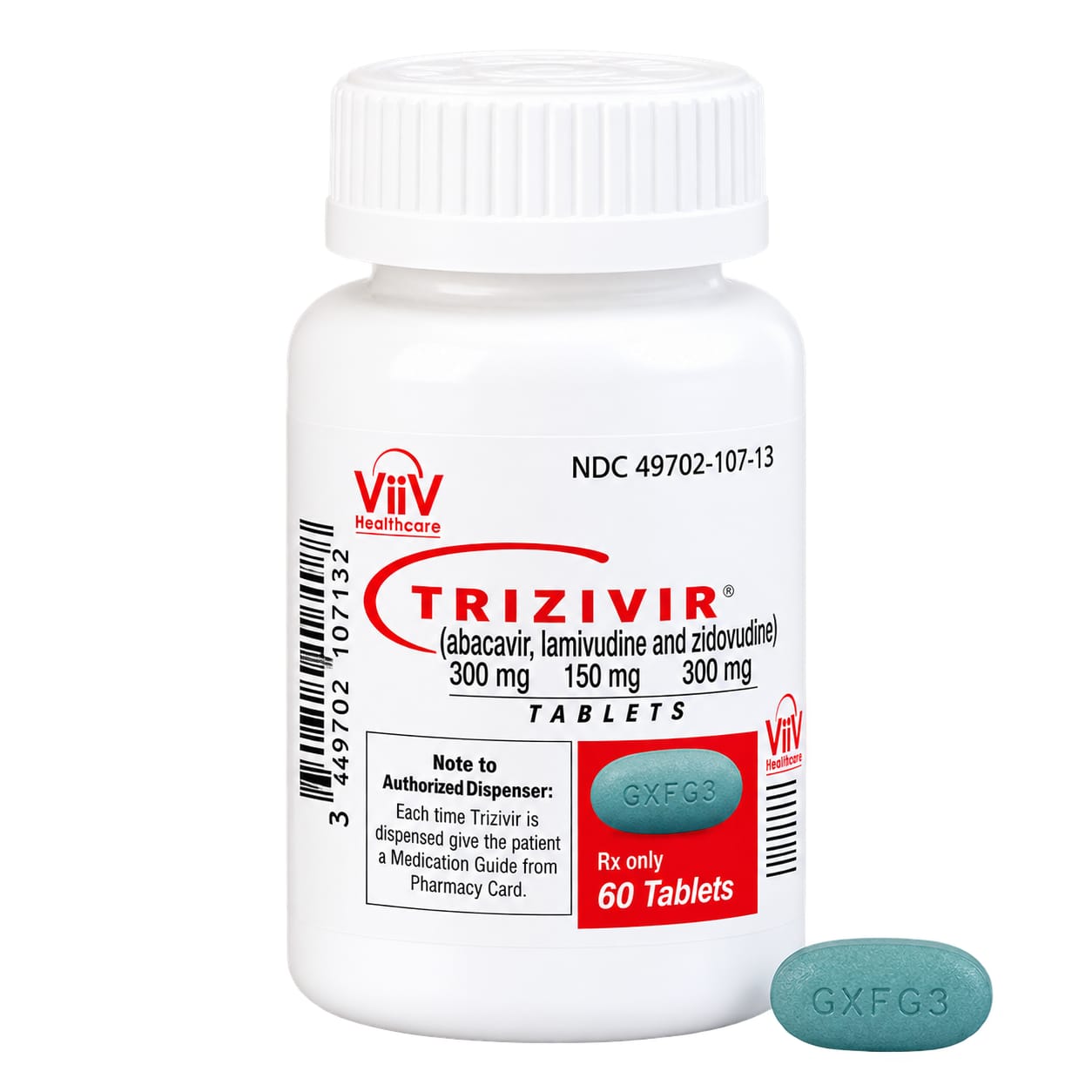
| Generic name | abacavir sulfate, lamivudine, and zidovudine |
|---|---|
| Drug class | Antiretroviral agent (nucleoside analogue reverse transcriptase inhibitor, NRTI) |
| Forms | Film-coated tablet |
Quick overview
Trizivir Tablet is a combination antiretroviral medicine containing abacavir sulfate, lamivudine, and zidovudine, used to treat HIV infection in adults. It replaces three medicines that were previously taken separately in similar doses. Trizivir helps reduce viral load, supports CD4 cell counts, and provides a fixed-dose three-drug regimen that can be used alone or with other HIV medicines.
What is Trizivir Tablet
Trizivir is a combination tablet containing three antiviral medicines—abacavir, lamivudine, and zidovudine—used to treat HIV infection in adults. It replaces the three medicines that were previously taken separately in similar doses. It belongs to the drug class known as antiretroviral agents, specifically nucleoside analogue reverse transcriptase inhibitors (NRTIs).
Trizivir Tablet uses
- Treatment of Human Immunodeficiency Virus (HIV) infection in adults, used alone or with other HIV medicines
- Treats HIV-1 infection
- Helps reduce HIV viral load
- Helps maintain or improve CD4 cell counts
- Provides a fixed-dose three-drug antiretroviral regimen
- Helps slow HIV disease progression
Benefits of Trizivir Tablet
- Helps control HIV infection by reducing the amount of virus in the body and keeping it at a low level
- Helps increase CD4 cell counts, a type of white blood cell important for fighting infection
- Combines three HIV medicines in one tablet
- Supports long-term viral suppression
- Helps protect immune-system function
- Provides convenient twice-daily dosing
How Trizivir Tablet works
Trizivir's three ingredients are converted inside cells into active forms that block an HIV enzyme called reverse transcriptase, which the virus needs to copy its genetic material. This stops the virus from multiplying.
Trizivir Tablet dosage
Trizivir can be taken with or without food. Swallow the tablet whole with water. Take doses at regular times, about 12 hours apart. It is important to take Trizivir regularly and not miss doses, as irregular dosing may make the medicine less effective and may increase the risk of an allergic reaction. If you forget a dose, take it as soon as you remember, then continue as before; do not take a double dose to make up for a missed one. Trizivir is not recommended for children, as safety and effectiveness have not been established. Use with special care and monitoring in elderly patients due to age-related changes in kidney function and blood counts.
| Age group | Dose |
|---|---|
| Under 18 years | Safety and effectiveness are not established for routine pediatric use |
| 18–64 years | 1 tablet twice daily |
Available forms and strengths
- Film-coated tablet
Side effects of Trizivir Tablet
Common
- Headache
- Nausea
- Vomiting
- Diarrhea
- Stomach pain
- Loss of appetite
- Dizziness
- Tiredness, lack of energy
- Fever
- General feeling of being unwell
- Difficulty sleeping (insomnia)
- Muscle pain and discomfort
- Joint pain
- Cough
- Irritated or runny nose
- Skin rash
- Hair loss
- Low red or white blood cell counts (anemia, neutropenia, leucopenia)
- Increased liver enzymes
- Increased bilirubin (may cause yellowing of skin)
Serious
- Hypersensitivity (allergic) reaction to abacavir, which can be life-threatening
- Lactic acidosis (build-up of acid in the blood)
- Severe liver problems, including enlarged or fatty liver
- Pancreatitis (inflammation of the pancreas)
- Severe anemia or very low white blood cell counts requiring transfusion or treatment change
- Muscle breakdown (rhabdomyolysis) or muscle disease (myopathy)
- Serious skin reactions such as Stevens-Johnson syndrome or toxic epidermal necrolysis
- Heart muscle disease (cardiomyopathy)
- Possible increased risk of heart attack
- Worsening of hepatitis B after stopping treatment
- Immune reconstitution inflammatory syndrome (flare-up of hidden infections or autoimmune disease)
- Bone death (osteonecrosis), especially in long-term users
Warnings and precautions
- Serious and sometimes fatal allergic (hypersensitivity) reactions to abacavir have occurred. The risk is much higher in people who carry a gene called HLA-B*5701, but reactions can also happen in people without this gene. You should be tested for this gene before starting Trizivir.
- If you have ever had an allergic reaction to Trizivir or any abacavir-containing medicine, you must never take Trizivir or any other abacavir-containing medicine again, as restarting can cause a severe, life-threatening reaction within hours, including dangerously low blood pressure or death.
- Trizivir can cause a serious build-up of acid in the blood (lactic acidosis) and severe liver problems, including an enlarged, fatty liver; these can be fatal. Women and overweight people may be at higher risk.
- If you have hepatitis B and stop taking Trizivir, your hepatitis may suddenly become worse. Your doctor will need to monitor your liver closely for several months after stopping.
- Zidovudine, part of Trizivir, can cause serious reductions in blood cell counts (anemia, low white blood cells), especially in people with advanced HIV disease.
- Long-term use of zidovudine can cause muscle pain or weakness (myopathy).
- Trizivir does not cure HIV or prevent its transmission to others; you may still develop other infections, and you should continue to take precautions to avoid spreading HIV.
- Trizivir is not generally recommended during pregnancy, but your doctor may still prescribe it if the benefits outweigh the risks, especially to reduce the risk of passing HIV to the baby.
- Women taking Trizivir should not breastfeed because HIV and the medicine's ingredients can pass into breast milk.
- Trizivir is not recommended for people with reduced kidney function because the dose cannot be adjusted in this combination tablet; separate medicines should be used instead.
- Trizivir must not be used by people with liver problems, as it can build up to unsafe levels and cause harm.
- Drinking alcohol can increase the amount of abacavir in your blood, though no dose change is usually needed; discuss alcohol use with your doctor.
- Trizivir can cause dizziness and other effects that may affect your ability to drive or operate machinery safely.
Storage
- Do not store above 30°C
- Keep out of the reach and sight of children
- Do not take after the expiry date shown on the carton
- Do not dispose of unused tablets in waste water or household rubbish; ask your pharmacist how to dispose of medicines no longer required
When to see a doctor
- Contact your doctor immediately if you develop a skin rash, or if you have symptoms from at least two of these groups: fever; shortness of breath, sore throat, or cough; nausea, vomiting, diarrhea, or stomach pain; or severe tiredness, achiness, or generally feeling unwell. These may be signs of a serious allergic reaction.
- Seek medical help right away if you notice signs of lactic acidosis, such as deep or rapid breathing, drowsiness, numbness or weakness in the limbs, nausea, vomiting, or stomach pain.
- Tell your doctor immediately if you notice yellowing of your skin or eyes, dark urine, loss of appetite, or pain in the upper right side of your stomach, which may indicate liver problems.
- Seek urgent medical care if you develop severe skin reactions such as blistering or peeling skin, which could indicate a serious condition like Stevens-Johnson syndrome.
- Tell your doctor right away if you develop signs of a new infection or inflammation after starting treatment, as your immune system may react to hidden infections.
- Tell your doctor if you notice joint stiffness, aches (especially in the hip, knee, or shoulder), or difficulty moving, as these could be signs of bone problems (osteonecrosis).
Alternatives
- Bictegravir-based regimens
- Dolutegravir-based regimens
- Tenofovir + emtricitabine-based regimens
Watch the video
FAQs
What is Trizivir Tablet used for?
Trizivir is used to treat HIV infection in adults, either alone or with other HIV medicines. It helps reduce viral load, maintain or improve CD4 cell counts, and slow HIV disease progression.
How should Trizivir Tablet be taken?
Trizivir can be taken with or without food. Swallow the tablet whole with water, taking doses about 12 hours apart at regular times. It is important not to miss doses, as irregular dosing may reduce effectiveness and increase the risk of an allergic reaction.
What are the serious side effects of Trizivir Tablet?
Serious side effects include life-threatening hypersensitivity reactions to abacavir, lactic acidosis, severe liver problems, pancreatitis, severe anemia or low white blood cell counts, muscle breakdown, serious skin reactions like Stevens-Johnson syndrome, cardiomyopathy, worsening of hepatitis B after stopping treatment, and bone death (osteonecrosis).
Who should not take Trizivir Tablet?
People who have ever had an allergic reaction to Trizivir or any abacavir-containing medicine should never take it again, as restarting can cause a severe, life-threatening reaction. It is also not recommended for people with reduced kidney function or liver problems.
Can Trizivir Tablet be taken during pregnancy or breastfeeding?
Trizivir is not generally recommended during pregnancy, but a doctor may prescribe it if benefits outweigh risks, especially to reduce the risk of passing HIV to the baby. Women taking Trizivir should not breastfeed because HIV and the medicine's ingredients can pass into breast milk.
General information, not medical advice
Your prescriber and the leaflet in your pack know your situation. This page does not.
- Follow your prescriber and the leaflet
- Don't start, stop, or change a dose on your own
- Doses and warnings differ by country and product
Sources
Video
Related medicines

Injectafer Injection: Uses, Dosage, Side Effects, Precautions and Alternates
Iron products
Injectafer (ferric carboxymaltose) treats iron deficiency anemia and heart failure-related iron deficiency via IV. Learn uses, dosage, side effects, and

Gliclazide Tablet: Uses, Dosage, Side Effects, Precautions and Alternates
Sulfonylurea (hypoglycemic/antidiabetic agent)
Gliclazide Tablet is a sulfonylurea for type 2 diabetes that boosts insulin release. Learn about dosage, side effects, warnings, and precautions.