
Safety
General information, not medical advice
Your prescriber and the leaflet in your pack know your situation. This page does not.
- Follow your prescriber and the leaflet
- Don't start, stop, or change a dose on your own
- Doses and warnings differ by country and product
Trulicity Injection: Uses, Dosage, Side Effects, Precautions and Alternates
| Generic name | dulaglutide |
|---|---|
| Drug class | GLP-1 agonist (glucagon-like peptide-1 receptor agonist) |
| Forms | Injection |
Quick overview
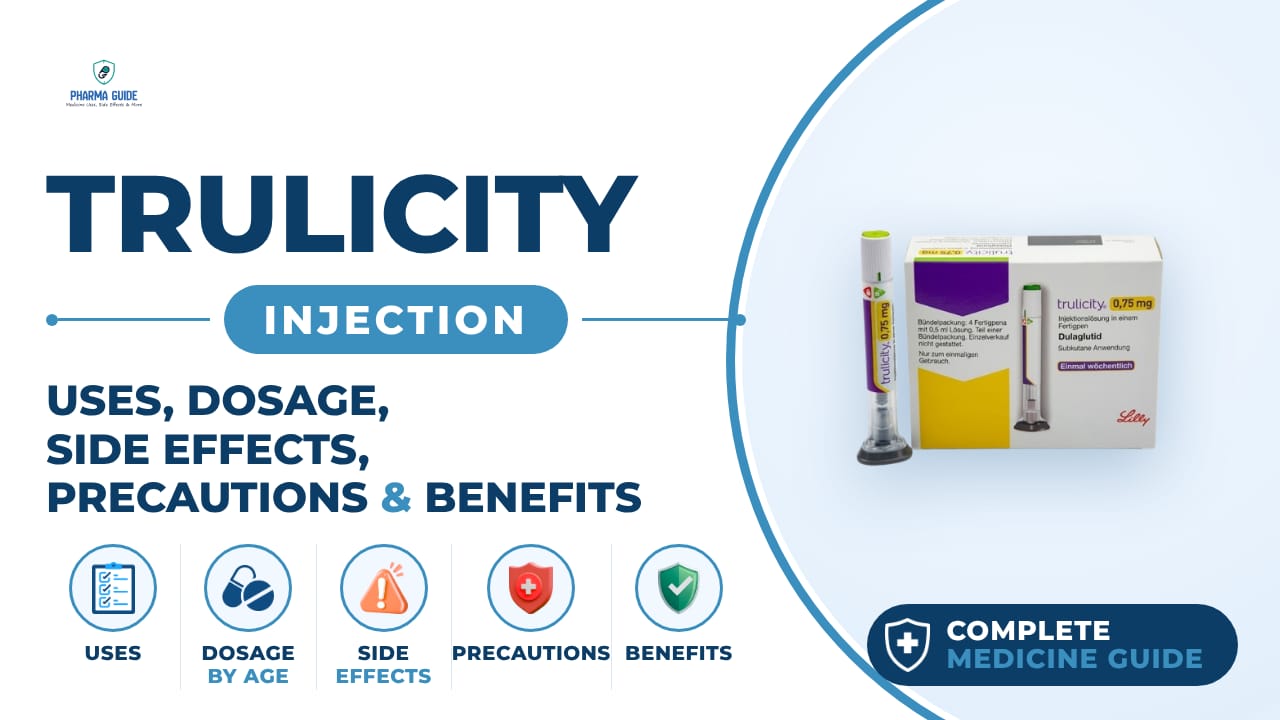
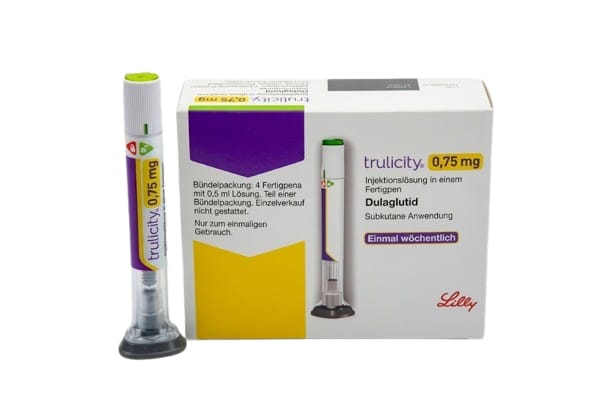
Trulicity Injection is a brand-name prescription medicine containing dulaglutide, a GLP-1 receptor agonist. It comes as a liquid solution in ready-to-use, single-dose disposable pens and is given as an injection under the skin once a week. Trulicity is used for type 2 diabetes to help control blood sugar and to reduce the risk of major heart problems in certain adults.
What is Trulicity Injection
Trulicity is a brand-name prescription injection medicine used for type 2 diabetes. It contains dulaglutide and comes as a liquid solution inside ready-to-use, single-dose disposable pens. It is given as an injection under the skin once a week.
Trulicity Injection uses
- Improve blood sugar control in adults and children 10 years and older with type 2 diabetes, used along with diet and exercise
- Reduce the risk of major heart problems such as heart attack and stroke, and death caused by heart problems, in adults with type 2 diabetes who have known cardiovascular disease or multiple cardiovascular risk factors
Benefits of Trulicity Injection
- Lowers blood sugar levels (HbA1c) when used with diet and exercise
- Reduces the risk of heart attack, stroke, and cardiovascular death in adults with type 2 diabetes and heart disease or risk factors
- Some people may lose weight while using it, though it is not approved as a weight-loss drug
How Trulicity Injection works
Trulicity acts like a natural hormone called GLP-1 that your body makes after eating. It tells your pancreas to release more insulin when your blood sugar is high, lowers the amount of sugar your liver releases, and slows down digestion, which all help lower blood sugar levels.
Trulicity Injection dosage
Trulicity is taken once a week, on the same day each week, at any time of day, with or without food. You can change the day of the week you take it, as long as your last dose was at least 3 days before. It is injected under the skin of the stomach area, thigh, or upper arm, and the injection site should be rotated with each weekly dose rather than using the exact same spot each time.
Don't mix insulin and Trulicity together in the same injection; if using both in the same body area, space the injections apart rather than right next to each other. The pen is ready to use and doesn't need to be assembled; check it isn't expired or damaged before use.
If you miss a dose and there are at least 3 days until your next scheduled dose, take the missed dose as soon as you remember. If less than 3 days remain, skip the missed dose and take the next one as scheduled. Don't take two doses within 3 days of each other.
| Age group | Dose |
|---|---|
| Under 18 years | 0.75 mg, once/week |
| 18–60 years | 0.75 mg, once/week |
| 60+ years | 0.75 mg, once/week |
Available forms and strengths
Trulicity is available as an injection.
Side effects of Trulicity Injection
Common
- Nausea
- Vomiting
- Diarrhea
- Stomach (abdominal) pain
- Decreased appetite
- Fatigue (lack of energy)
- Indigestion/upset stomach
- Constipation
- Passing gas
- Stomach bloating
- Heartburn
- Injection site reactions (pain, redness, bruising, rashes)
Serious
- Possible thyroid tumors, including thyroid cancer
- Inflammation of the pancreas (pancreatitis)
- Low blood sugar (hypoglycemia), especially when used with insulin or sulfonylureas
- Severe allergic reaction (anaphylaxis, swelling of face/throat, trouble breathing)
- New or worsening kidney problems (kidney damage or failure)
- Severe digestive problems
- Gallbladder problems (gallstones, cholecystitis)
- Vision changes/worsening diabetic retinopathy
- Thoughts of suicide or self-harm, worsening mood or depression
Warnings and precautions
Trulicity has a boxed warning, the most serious FDA warning, about a possible risk of thyroid tumors. In animal studies, Trulicity increased the risk of thyroid tumors, and it isn't known if this risk also applies to humans. You should not take Trulicity if you or a family member has had a type of thyroid cancer called medullary thyroid carcinoma (MTC), or if you have Multiple Endocrine Neoplasia syndrome type 2 (MEN 2).
Trulicity isn't recommended for people with severe stomach or intestinal problems, including gastroparesis (slow stomach emptying), because it can make these conditions worse and lead to serious side effects. Trulicity should not be used by people with type 1 diabetes or for treating diabetic ketoacidosis. If you've had pancreatitis while taking Trulicity before, you should not restart the drug.
Using Trulicity with insulin or sulfonylurea medications can raise the risk of low blood sugar; your doctor may need to lower the dose of those other medications. Trulicity slows stomach emptying and has been linked to rare cases of food or fluid being breathed into the lungs during surgery or procedures involving anesthesia or deep sedation. Tell all your healthcare providers you are using Trulicity before any procedure.
It isn't known if Trulicity is safe to use during pregnancy. Animal studies showed harm to offspring at high doses, but this may not predict effects in humans. Talk with your doctor about the benefits and risks if you are pregnant or planning pregnancy.
It isn't known if Trulicity passes into human breast milk or if it's safe during breastfeeding. Talk with your doctor, who can recommend the safest way to feed your child.
Trulicity can cause kidney problems and may worsen existing kidney problems, often related to dehydration from nausea, vomiting, or diarrhea. Your doctor will monitor your kidney function, and you may need to stop the drug if your kidney problems get worse.
It isn't known exactly how safe Trulicity is for people with liver problems. Your doctor will monitor your liver function while you take this medication, and you may need to stop treatment if your liver problems worsen.
There are no known interactions between Trulicity and alcohol. Most people with diabetes should limit alcohol to no more than one drink a day for women or two for men, and people whose blood sugar isn't well controlled should wait until it is better managed before drinking.
No studies have looked specifically at the effects of Trulicity on driving or using machines. If you take it with a sulfonylurea or insulin, take precautions to avoid low blood sugar while driving or operating machinery.
Storage
- Store Trulicity pens in the refrigerator, in their original packaging, protected from light
- Can be stored at room temperature (no higher than 86°F/30°C) for up to 14 days
- Never freeze Trulicity; don't use it if it has been frozen
- Each pen is for one use only; throw it away after use, even if some medicine is left inside
- Dispose of used pens right away in an FDA-approved sharps disposal container to prevent accidental needle injury or drug exposure, especially for children and pets
When to see a doctor
Call your doctor right away if you notice a lump in your neck, trouble swallowing, shortness of breath, or a hoarse voice that doesn't go away — these can be signs of a thyroid tumor.
Stop using Trulicity and call your healthcare provider right away if you have severe stomach pain that doesn't go away, with or without vomiting, which may spread from your abdomen to your back — this could be pancreatitis.
Stop using Trulicity and get medical help right away if you have symptoms of a serious allergic reaction, such as swelling of your face, lips, tongue, or throat, trouble breathing or swallowing, severe rash or itching, fainting, or a very rapid heartbeat.
Tell your healthcare provider right away if you have signs of gallbladder problems, such as pain in your upper stomach, fever, yellowing of the skin or eyes, or clay-colored stools.
If you think you've taken too much Trulicity, call your healthcare provider or go to the nearest emergency room right away.
Alternatives
- Saxenda Injection
- Ozempic Injection
- Wegovy Injection
Watch the video
FAQs
How often is Trulicity injected?
Trulicity is given as an injection under the skin once a week, on the same day each week, at any time of day, with or without food.
Where should Trulicity be injected?
It is injected under the skin of the stomach area, thigh, or upper arm, and the injection site should be rotated with each weekly dose rather than using the exact same spot each time.
What should I do if I miss a dose of Trulicity?
If there are at least 3 days until your next scheduled dose, take the missed dose as soon as you remember. If less than 3 days remain, skip the missed dose and take the next one as scheduled, without taking two doses within 3 days of each other.
What is the most serious warning for Trulicity?
Trulicity has a boxed warning about a possible risk of thyroid tumors, based on animal studies, and should not be used by people with a personal or family history of medullary thyroid carcinoma or Multiple Endocrine Neoplasia syndrome type 2.
How should Trulicity pens be stored?
Trulicity pens should be stored in the refrigerator in their original packaging, protected from light, and can be kept at room temperature (no higher than 86°F/30°C) for up to 14 days; they should never be frozen.
General information, not medical advice
Your prescriber and the leaflet in your pack know your situation. This page does not.
- Follow your prescriber and the leaflet
- Don't start, stop, or change a dose on your own
- Doses and warnings differ by country and product
Sources
- https://www.medicalnewstoday.com/articles/drugs-trulicity#side-effects
- https://www.drugs.com/trulicity.html
- New Zealand Data sheet, Trulicity (dulaglutide), vA8.0_July2026
- GoodRx: Trulicity (dulaglutide)
Video
Related medicines

Injectafer Injection: Uses, Dosage, Side Effects, Precautions and Alternates
Iron products
Injectafer (ferric carboxymaltose) treats iron deficiency anemia and heart failure-related iron deficiency via IV. Learn uses, dosage, side effects, and

Gliclazide Tablet: Uses, Dosage, Side Effects, Precautions and Alternates
Sulfonylurea (hypoglycemic/antidiabetic agent)
Gliclazide Tablet is a sulfonylurea for type 2 diabetes that boosts insulin release. Learn about dosage, side effects, warnings, and precautions.