
Safety
General information, not medical advice
Your prescriber and the leaflet in your pack know your situation. This page does not.
- Follow your prescriber and the leaflet
- Don't start, stop, or change a dose on your own
- Doses and warnings differ by country and product
Trusopt Eye Drops: Uses, Dosage, Side Effects, Precautions and Alternates
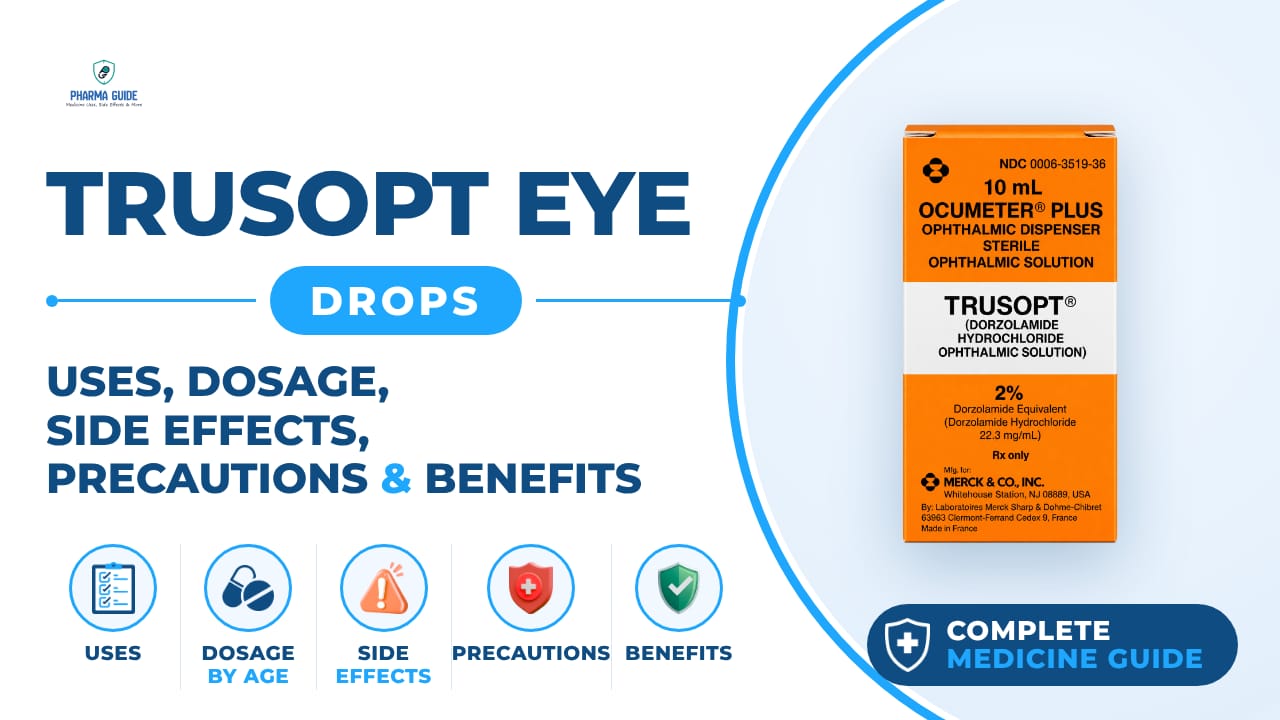
| Generic name | Dorzolamide hydrochloride |
|---|---|
| Drug class | Carbonic anhydrase inhibitor (ophthalmic glaucoma agent) |
| Forms | Eye drops (ophthalmic solution) |
Quick overview
Trusopt Eye Drops contain dorzolamide hydrochloride, a carbonic anhydrase inhibitor used to lower high pressure inside the eye. They are prescribed for open-angle glaucoma and ocular hypertension, either alone or together with other eye drops or medicines. Trusopt works by reducing the amount of fluid the eye produces, which lowers eye pressure.
What is Trusopt Eye Drops
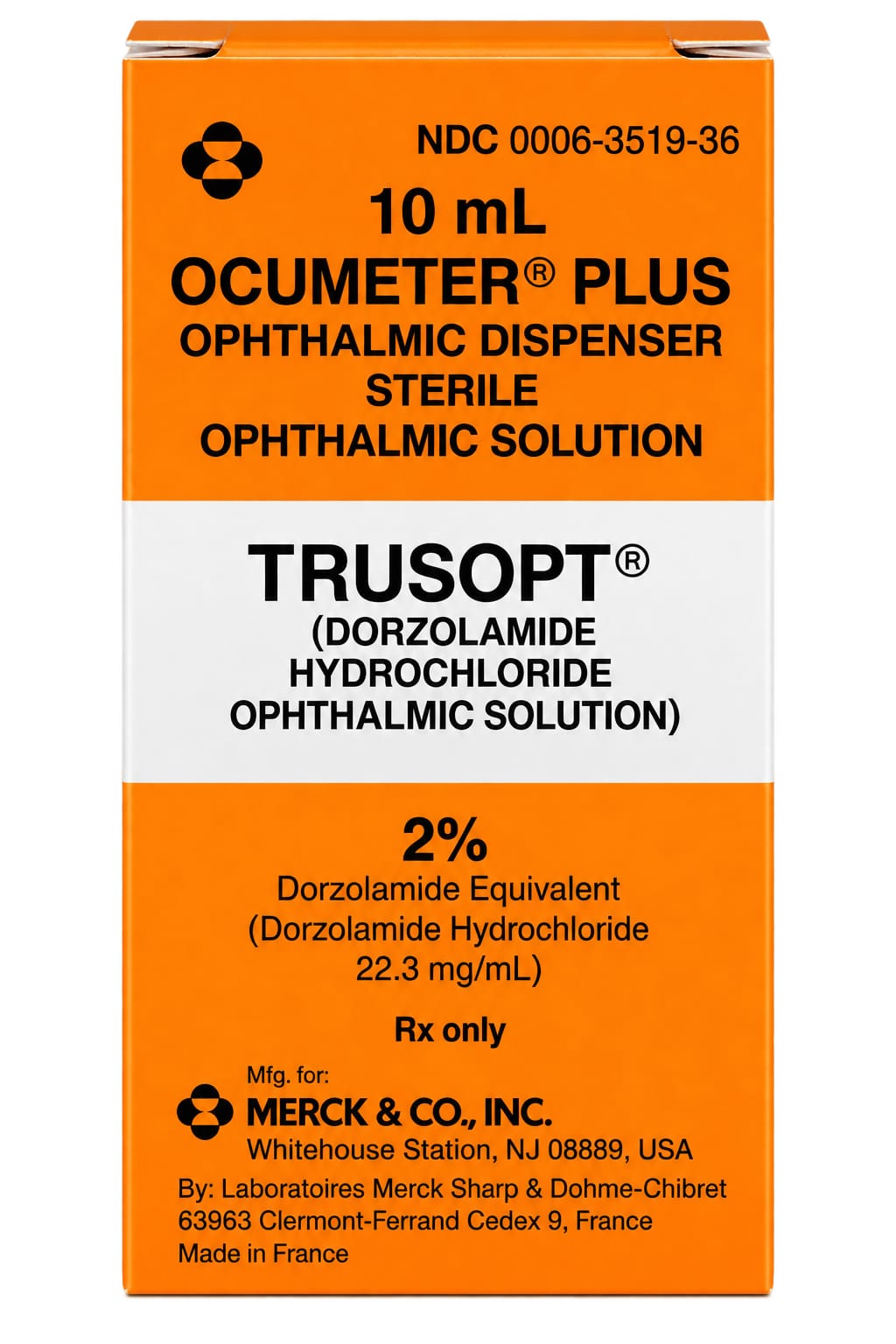
Trusopt is a prescription eye drop containing dorzolamide hydrochloride. It is used to lower high pressure inside the eye, which can be caused by glaucoma or other eye conditions.
Trusopt Eye Drops uses
- Treating open-angle glaucoma
- Lowering high pressure inside the eye (ocular hypertension)
- Used alone or together with other eye drops or medicines to lower eye pressure
Benefits of Trusopt Eye Drops
- Helps control glaucoma and protect against vision loss, though it does not cure the condition
- Can be used together with other glaucoma medicines for extra pressure-lowering effect
How Trusopt Eye Drops works
Trusopt blocks an enzyme in the eye called carbonic anhydrase. This reduces the amount of fluid the eye makes, which lowers the pressure inside the eye.
Trusopt Eye Drops dosage
Wash your hands before using the eye drops. Pull down your lower eyelid to make a small pocket and place a drop into it, then close your eyes for 1 to 2 minutes. Do not let the dropper tip touch your eye or any other surface, to avoid contaminating the drops.
If you use other eye drops, wait at least 10 minutes before using them after Trusopt. Do not use the drops while wearing soft contact lenses; wait at least 15 minutes after using Trusopt before putting lenses back in.
Use the drops at about the same time each day for the best effect. If using three times a day, space doses about 8 hours apart (morning, afternoon, bedtime); if using twice a day, space doses about 12 hours apart (morning and evening).
Do not use the eye drops if the liquid has changed color or has particles in it — ask your pharmacist for new medicine. Trusopt is not recommended for use in children, as safety and effectiveness have not been established in this group.
| Age group | Dose |
|---|---|
| Under 2 years | Safety and effectiveness not established |
| 2–17 years | 1 drop in affected eye(s) 3 times daily; use under ophthalmologist supervision |
| 18–64 years | 1 drop in affected eye(s) 3 times daily |
| 65 years and older | 1 drop in affected eye(s) 3 times daily |
Available forms and strengths
- Eye drops (ophthalmic solution)
Side effects of Trusopt Eye Drops
Common
- Burning or stinging in the eye
- Mild eye discomfort
- A bitter taste in the mouth
- Blurred vision
- Itching, tearing, or redness of the eye
- Dry mouth
- Nosebleeds
- Throat irritation
- Headache, dizziness
- Tiredness, weakness
- Numbness or tingling in fingers or toes
Serious
- Signs of an allergic reaction such as hives, difficulty breathing, or swelling of the face or throat
- Severe skin reaction with fever, sore throat, burning eyes, skin pain, or a red or purple skin rash with blistering and peeling
- Swelling or redness of the eyelids
- Sensitivity to light
- Signs of eye infection such as swelling, redness, severe discomfort, crusting, or drainage
- Kidney stones
Warnings and precautions
- Do not use Trusopt if you are allergic to it or any of its ingredients.
- Tell your doctor if you have ever had an allergy to sulfa drugs, since Trusopt is chemically related to these medicines.
- Trusopt should not be used with narrow-angle (angle-closure) glaucoma without additional treatment, as it has not been studied for this condition.
- Do not use while wearing soft contact lenses, because a preservative in Trusopt can permanently stain them. Wait at least 15 minutes after using the drops before putting lenses back in.
- Do not touch the dropper tip to your eye or any surface, as this can contaminate the drops and lead to a serious eye infection.
- Tell your doctor right away if you have any eye injury, infection, or surgery, since you may need to stop using Trusopt for a short time.
- Do not stop using Trusopt without talking to your doctor first, because stopping may cause your eye pressure to rise again and damage your eye.
- Tell your doctor if you are pregnant or planning to become pregnant. Your doctor will discuss the risks and benefits of using Trusopt during pregnancy. Trusopt should not be used while breastfeeding, as it is not known whether it passes into breast milk.
- Tell your doctor if you have kidney disease. Trusopt is not recommended for people with severe kidney problems. Tell your doctor if you have liver disease, since Trusopt should be used with caution in people with liver problems.
- Alcohol is not expected to directly interact with Trusopt, but it is best to avoid alcohol to help keep your vision clear and support overall eye health.
- Trusopt can cause blurred vision and dizziness in some people. Be careful driving or using machinery until you know how this medicine affects you.
Storage
- Store at room temperature, in an upright position, tightly closed
- Do not freeze
- Keep away from light
- Keep in a cool, dry place; do not store above 25°C to 30°C depending on product
- Do not store in the bathroom or near a sink
- Do not leave in the car or on window sills
- Do not carry the eye drops in your clothing pockets
- Do not leave the cap off the bottle for any length of time
- Write the date you opened the bottle and throw away any remaining solution after four weeks
- Keep out of reach of children, ideally in a locked cupboard at least one-and-a-half meters above the ground
When to see a doctor
- Get emergency medical help if you have signs of an allergic reaction such as hives, difficulty breathing, or swelling of your face or throat.
- Stop using Trusopt and call your doctor right away if you notice swelling or redness of your eyelids, sensitivity to light, or signs of an eye infection like swelling, redness, severe discomfort, crusting, or drainage.
- If you develop a severe skin reaction with blisters, peeling skin, a red or purple rash, sores, or fever and sore throat, stop using this medicine right away and contact your doctor.
- If you have wheezing, trouble breathing, swelling of the face, lips, mouth, tongue, or throat, or sudden itchy skin swellings (hives), stop using the drops and get emergency help right away.
- If you think you or someone else may have swallowed the eye drops or used too many, contact your doctor or poison control right away, or go to the emergency room, even if there are no symptoms.
Alternatives
- Azopt
- Simbrinza
- Timolol ophthalmic
Watch the video
FAQs
What is Trusopt Eye Drops used for?
Trusopt is used to treat open-angle glaucoma and lower high pressure inside the eye (ocular hypertension), either alone or together with other eye drops or medicines.
How does Trusopt Eye Drops work?
Trusopt blocks an enzyme in the eye called carbonic anhydrase, which reduces the amount of fluid the eye makes and lowers the pressure inside the eye.
How should I use Trusopt Eye Drops?
Place one drop into the affected eye(s) as directed, avoiding contact between the dropper tip and your eye or any surface. If using three times a day, space doses about 8 hours apart; if twice a day, space doses about 12 hours apart. Wait at least 10 minutes before using other eye drops.
Can I wear contact lenses while using Trusopt?
No, you should not use Trusopt while wearing soft contact lenses because a preservative in the drops can permanently stain them. Wait at least 15 minutes after using Trusopt before putting lenses back in.
What are the common side effects of Trusopt Eye Drops?
Common side effects include burning or stinging in the eye, mild eye discomfort, a bitter taste in the mouth, blurred vision, itching, tearing, or redness of the eye, dry mouth, nosebleeds, throat irritation, headache, dizziness, tiredness, and numbness or tingling in fingers or toes.
General information, not medical advice
Your prescriber and the leaflet in your pack know your situation. This page does not.
- Follow your prescriber and the leaflet
- Don't start, stop, or change a dose on your own
- Doses and warnings differ by country and product
Sources
Video
Related medicines

Injectafer Injection: Uses, Dosage, Side Effects, Precautions and Alternates
Iron products
Injectafer (ferric carboxymaltose) treats iron deficiency anemia and heart failure-related iron deficiency via IV. Learn uses, dosage, side effects, and

Gliclazide Tablet: Uses, Dosage, Side Effects, Precautions and Alternates
Sulfonylurea (hypoglycemic/antidiabetic agent)
Gliclazide Tablet is a sulfonylurea for type 2 diabetes that boosts insulin release. Learn about dosage, side effects, warnings, and precautions.