
Safety
General information, not medical advice
Your prescriber and the leaflet in your pack know your situation. This page does not.
- Follow your prescriber and the leaflet
- Don't start, stop, or change a dose on your own
- Doses and warnings differ by country and product
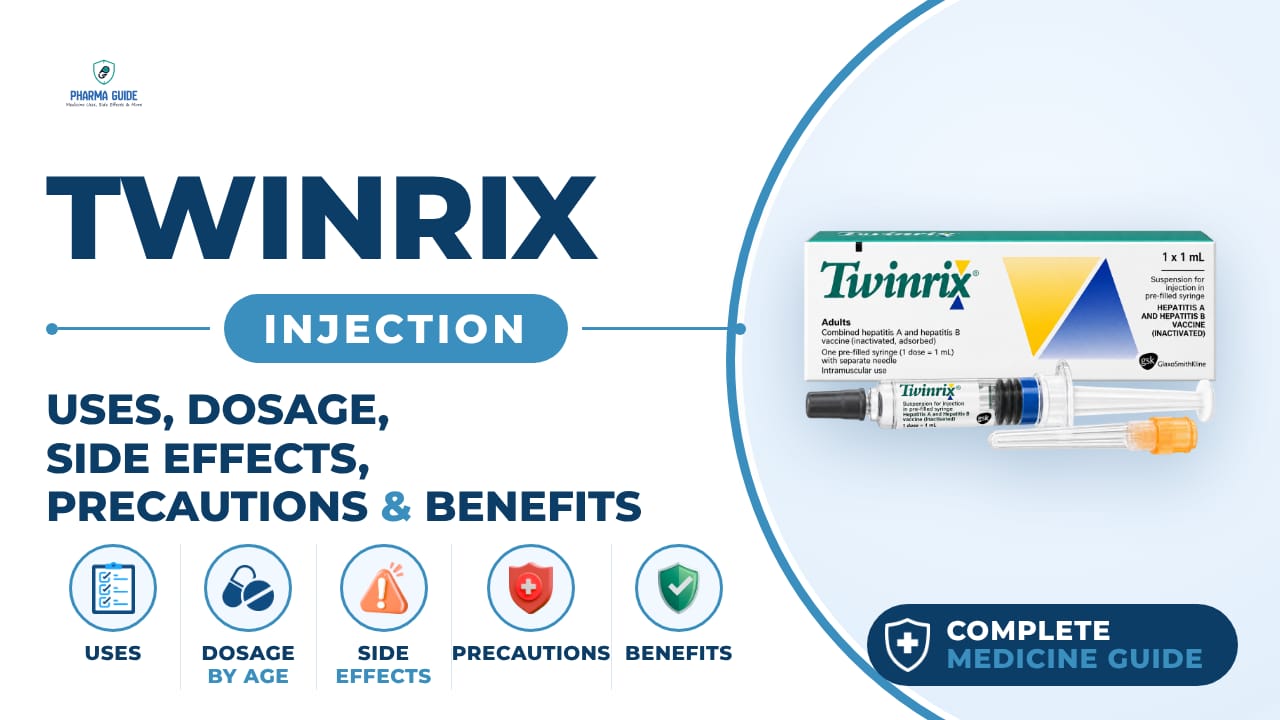
Twinrix Injection: Uses, Dosage, Side Effects, Precautions and Alternates
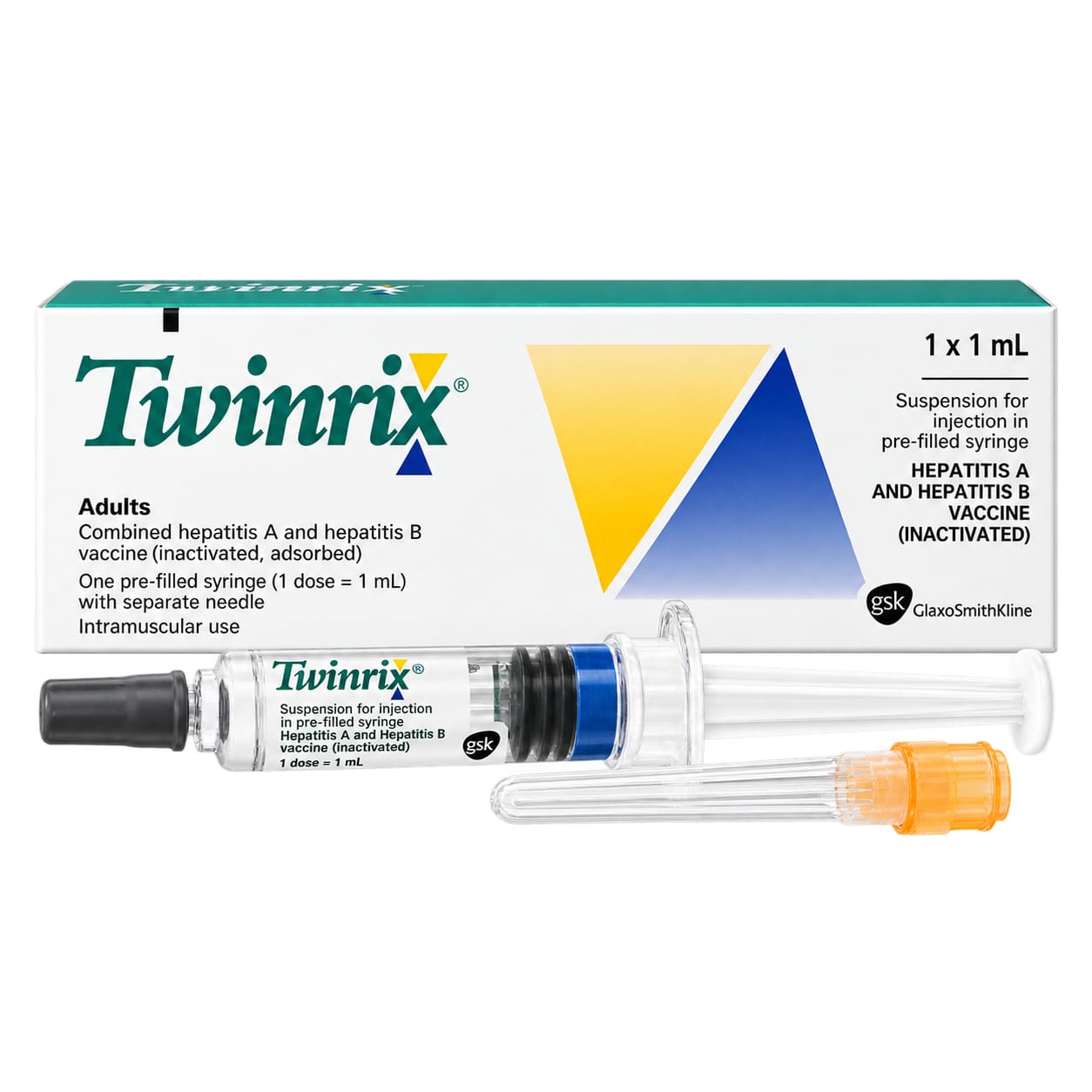
| Generic name | Combined hepatitis A virus (inactivated) and hepatitis B surface antigen (recombinant) vaccine |
|---|---|
| Drug class | Combination vaccine |
| Forms | Suspension for injection in prefilled syringes, Single dose vials (in some countries) |
Quick overview
Twinrix is a combination vaccine given by injection that helps protect against both hepatitis A and hepatitis B infections. It comes in two strengths: Twinrix (720/20) for adults and older children, and Twinrix Junior (360/10) for younger children. It is given to adults, adolescents, children and infants as part of a vaccination schedule.
What is Twinrix Injection
Twinrix is a combination vaccine given by injection that helps protect against both hepatitis A and hepatitis B infections. It comes in two strengths: Twinrix (720/20) for adults and older children, and Twinrix Junior (360/10) for younger children.
Twinrix Injection uses
- Prevents hepatitis A infection
- Prevents hepatitis B infection
- Given to adults, adolescents, children and infants
Benefits of Twinrix Injection
- Protects against hepatitis A
- Protects against hepatitis B
- Combines two vaccines into one series
- Useful for travelers and others who need protection against both infections
- Helps reduce risk of serious liver complications from hepatitis infection
How Twinrix Injection works
The vaccine works by causing the body to produce its own protective antibodies against hepatitis A and hepatitis B. It cannot give you either disease because it does not contain live virus.
Twinrix Injection dosage
Twinrix is given as an injection into the upper arm muscle for adults and older children, or into the thigh muscle for infants. For people with bleeding problems, the dose may need to be given under the skin instead of into the muscle. It must never be given into a vein.
It is important to keep all follow-up appointments so every dose is given at the correct time. If a dose is missed, contact your doctor to arrange another visit as soon as possible, and make sure the full course is completed for full protection.
| Age group | Dose |
|---|---|
| 18–64 years | 1 mL IM on a 0, 1, and 6 month schedule |
| 65 years and older | 1 mL IM on the same 0, 1, and 6 month schedule |
Available forms and strengths
- Suspension for injection in prefilled syringes
- Single dose vials (in some countries)
- Twinrix (720/20) for adults and older children
- Twinrix Junior (360/10) for younger children
Side effects of Twinrix Injection
Common
- Soreness, redness, swelling, a hard lump, bruising or itching around the injection site
- Immediate injection site pain, stinging and burning feeling
- Fatigue, headache, unusual tiredness, drowsiness, dizziness or feeling generally unwell
- Fever
- Fainting or chills
- Ringing in the ears
- Feeling sick or vomiting, stomach pains or diarrhoea
- Loss of appetite
- Muscle aches and pains, painful joints, neck stiffness
- Disturbed sleep
- Cough, sore throat, respiratory infections
- Sweating, flushing
- Irritability (especially in children)
Serious
- Feelings of numbness, weakness and/or fatigue in limbs, tingling in fingers or toes
- Generalised stiffness, difficulty passing urine
- Swollen glands, unusual bleeding, bleeding or bruising more easily than normal
- Sudden headache, neck stiffness, dislike of bright lights, convulsions (fits)
- Visual changes
- Drooping eyelids or sagging facial muscles
- Swelling of limbs, face, eyes, inside of nose, mouth or throat
- Shortness of breath, breathing or swallowing difficulties
- Hives, itching (especially of hands or feet), reddening of skin (especially around the ears), or severe skin reactions
- Unusual tiredness or weakness that is sudden and severe
Warnings and precautions
- Do not have this vaccine if you have ever had an allergic reaction to it, to any of its ingredients (including neomycin sulphate), or to any other hepatitis A or hepatitis B vaccine.
- Do not have the vaccine if you have a severe infection with a high fever — vaccination should wait until you recover. A minor infection like a cold is not usually a problem, but mention it to your doctor first.
- This vaccine must never be injected into a vein.
- Fainting can happen before or after any injection, so tell your doctor or nurse if you or your child have fainted after a previous injection.
- This vaccine will not protect against hepatitis caused by other viruses such as hepatitis C or hepatitis E, and may not prevent disease if you are already infected with hepatitis A or B at the time of vaccination.
- People with a weakened immune system, including those on immune-suppressing medicines or with HIV, may not respond as well to the vaccine and could need extra doses.
- People with bleeding disorders or who bruise easily may need the injection given under the skin instead of into the muscle, since injecting into muscle could cause bleeding.
- Tell your doctor if you are pregnant or planning to become pregnant. The vaccine should only be used in pregnancy when clearly needed, and your doctor will discuss the possible risks and benefits with you.
- Talk to your doctor if you are breastfeeding. It isn't known if the vaccine passes into breast milk, but it isn't expected to cause problems for breastfed babies. Even so, it should be used with caution while breastfeeding.
- Tell your doctor if you have a kidney problem, including if you are on dialysis, since people on hemodialysis may not build up full protection after the vaccine course and may need extra doses.
- Tell your doctor if you have a liver problem before being vaccinated.
- No direct vaccine interaction with alcohol, but heavy alcohol use can harm liver health and may impair immune response.
- Be careful driving or operating machinery until you know how this vaccine affects you. It normally shouldn't affect your ability to drive, but some people may feel dizzy or light-headed afterward.
Storage
- Store in the refrigerator between +2C and +8C
- Never freeze the pack — freezing destroys the vaccine
- Keep in the original pack until it is time to be given
- Keep out of the reach of children
- Store in a cool dry place away from moisture, heat or sunlight; do not store in the bathroom, near a sink, in the car, or on window sills
- Do not use after the expiry date
- Do not use if the packaging is torn or shows signs of tampering
- Ask your pharmacist what to do with any leftover vaccine that has expired or not been used
- Take unwanted or out-of-date medicine to any pharmacy for safe disposal
When to see a doctor
- Get medical help straight away if you notice swelling of your limbs, face, eyes, nose, mouth or throat.
- Call your doctor immediately or go to the nearest hospital emergency department if you have shortness of breath or trouble breathing or swallowing.
- Seek urgent medical care for hives, itching (especially of the hands or feet), unusual skin redness (especially around the ears), or severe skin reactions.
- Get help right away if you feel sudden, severe tiredness or weakness.
- Seek medical attention if you have a sudden severe headache with neck stiffness, discomfort around bright lights, or convulsions.
- Contact your doctor or go to the emergency department if you or your child don't feel well during or after getting a dose of this vaccine.
- If you think too much vaccine has been given, get urgent medical attention — contact your doctor, call your local poison control center, or go to the nearest hospital emergency department, even if you notice no symptoms.
Alternatives
- Separate hepatitis A vaccine
- Separate hepatitis B vaccine
- Recombivax HB
Watch the video
FAQs
What is Twinrix Injection used for?
Twinrix is a combination vaccine given by injection that helps protect against both hepatitis A and hepatitis B infections. It is given to adults, adolescents, children and infants as part of a vaccination schedule.
How is Twinrix Injection given?
Twinrix is given as an injection into the upper arm muscle for adults and older children, or into the thigh muscle for infants. For people with bleeding problems, the dose may need to be given under the skin instead of into the muscle. It must never be given into a vein.
What is the dosage schedule for Twinrix in adults?
For people aged 18 to 64 years and those 65 and older, the dose is 1 mL given into the muscle on a 0, 1, and 6 month schedule.
What are the common side effects of Twinrix Injection?
Common side effects include soreness, redness, swelling or itching at the injection site, fatigue, headache, dizziness, fever, fainting or chills, feeling sick or vomiting, loss of appetite, muscle aches, disturbed sleep, and irritability especially in children.
Can Twinrix be used during pregnancy or breastfeeding?
The vaccine should only be used in pregnancy when clearly needed, with your doctor discussing possible risks and benefits. While breastfeeding, it isn't known if the vaccine passes into breast milk, but it isn't expected to cause problems for breastfed babies, so it should be used with caution.
General information, not medical advice
Your prescriber and the leaflet in your pack know your situation. This page does not.
- Follow your prescriber and the leaflet
- Don't start, stop, or change a dose on your own
- Doses and warnings differ by country and product
Sources
- Twinrix (720/20) and Twinrix Junior (360/10) Consumer Medicine Information, GlaxoSmithKline Australia Pty Ltd, Version 7.0, prepared 09 July 2025
- Twinrix Product Monograph Including Patient Medication Information, GlaxoSmithKline Inc. Canada, Date of Authorization: July 02, 2025
- Twinrix Package Insert, GlaxoSmithKline South Africa (Pty) Ltd, GDS 013, Namibia, 15 August 2016
Video
Related medicines

Injectafer Injection: Uses, Dosage, Side Effects, Precautions and Alternates
Iron products
Injectafer (ferric carboxymaltose) treats iron deficiency anemia and heart failure-related iron deficiency via IV. Learn uses, dosage, side effects, and

Gliclazide Tablet: Uses, Dosage, Side Effects, Precautions and Alternates
Sulfonylurea (hypoglycemic/antidiabetic agent)
Gliclazide Tablet is a sulfonylurea for type 2 diabetes that boosts insulin release. Learn about dosage, side effects, warnings, and precautions.