
Safety
General information, not medical advice
Your prescriber and the leaflet in your pack know your situation. This page does not.
- Follow your prescriber and the leaflet
- Don't start, stop, or change a dose on your own
- Doses and warnings differ by country and product
Twirla Patch: Uses, Dosage, Side Effects, Precautions and Alternates
| Generic name | ethinyl estradiol and levonorgestrel (transdermal) |
|---|---|
| Drug class | Contraceptives (combination hormonal contraceptive) |
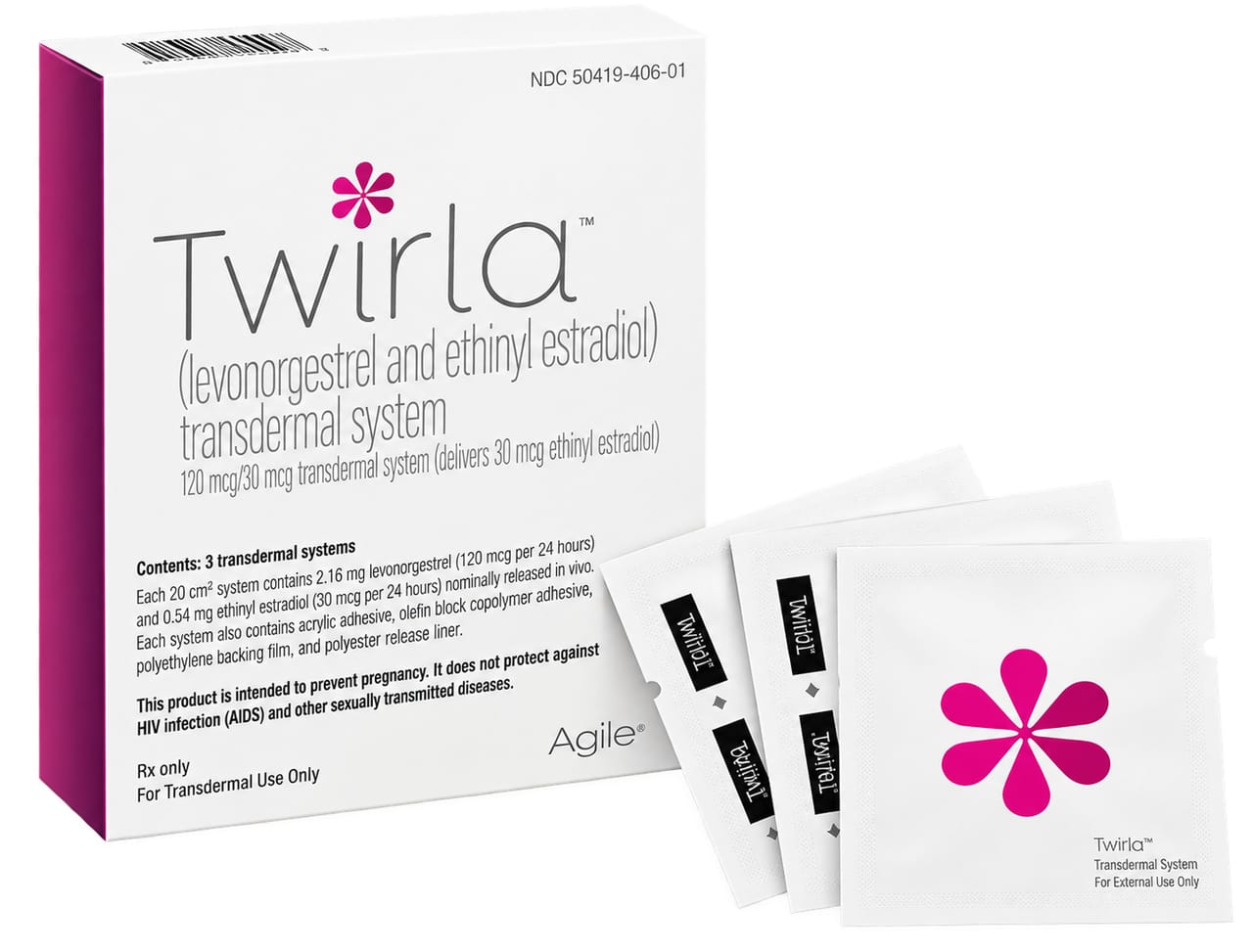
| Forms | Transdermal patch (skin patch) |
Quick overview
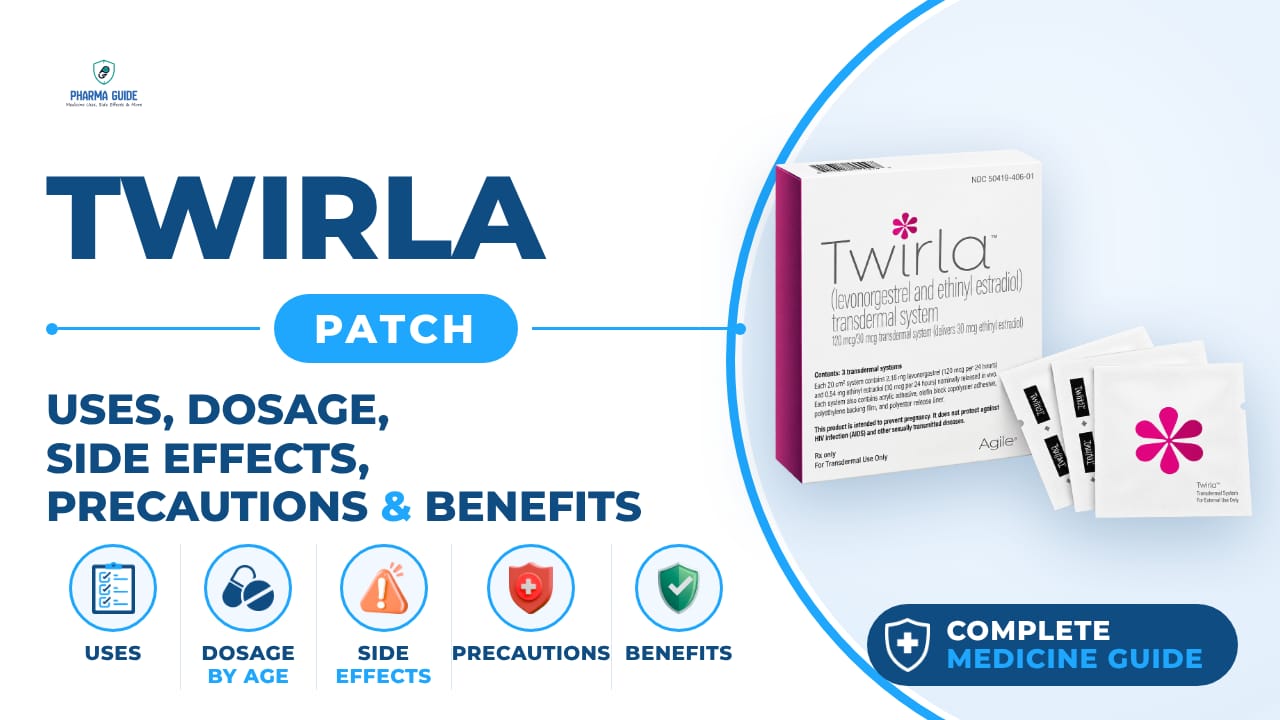
Twirla Patch contains ethinyl estradiol and levonorgestrel and belongs to the combination hormonal contraceptive class. It is a prescription birth control patch worn on the skin, used to prevent pregnancy in women with a body mass index (BMI) under 30. It works by stopping ovulation, thickening cervical mucus, and altering the uterine lining. It is applied once weekly for three weeks of each cycle, followed by a patch-free week.
What is Twirla Patch
Twirla is a prescription birth control patch that contains two female hormones, ethinyl estradiol and levonorgestrel. It is worn on the skin and is used to prevent pregnancy in women with a body mass index (BMI) under 30.
Twirla Patch uses
- Prevent pregnancy (birth control)
Benefits of Twirla Patch
- Helps prevent pregnancy when used correctly.
- Provides a once-weekly contraceptive option for 3 weeks of each cycle.
- Delivers estrogen and progestin through the skin, avoiding a daily pill.
- Helps suppress ovulation and also thickens cervical mucus to reduce the chance of fertilization.
- Offers a convenient combined hormonal contraceptive option for suitable women with BMI under 30 kg/m².
How Twirla Patch works
Twirla mainly works by stopping ovulation. It also thickens cervical mucus so sperm cannot easily reach the uterus, and it changes the lining of the uterus so a fertilized egg is less likely to implant.
Twirla Patch dosage
Use Twirla exactly as prescribed and follow all directions on your prescription label and instruction sheets. Do not wear more than one patch at a time, and never cut a patch. Apply a new patch every 7 days for 3 weeks in a row, changing it on the same day each week and wearing each patch for the full 7 days.
On the 22nd day, remove the patch and go one week without wearing a patch before starting a new cycle; the patch-free week should not be longer than 7 days. Apply the patch to clean, dry skin that is not broken or irritated, in a spot that won't be rubbed by tight clothing. The patch can be placed on the lower stomach, buttocks, or upper body, but not on the breasts.
Do not put makeup, lotion, powder, or oil on the skin where the patch is or will be applied. Swimming or being in water for 30 minutes or longer may affect how well the patch sticks; check the patch daily to make sure it has not come loose.
You may need back-up birth control when you first start using Twirla, or if a patch becomes loose or falls off for more than a day; follow instructions for what to do in that case. If you are having major surgery or will be on long-term bed rest, your doctor may have you stop wearing the patch several weeks ahead of time and restart it a couple of weeks afterward.
You may have breakthrough bleeding, especially in the first few months of use; tell your doctor if bleeding is very heavy or if you miss two or more periods in a row.
| Age group | Dose |
|---|---|
| Before menarche | Not indicated |
| Adolescents after menarche | Apply 1 patch once weekly for 3 consecutive weeks, then 1 patch-free week |
| 18–34 years | Apply 1 patch weekly for 3 weeks, followed by 7 patch-free days |
| 35 years to menopause | Same weekly 3-weeks-on/1-week-off regimen when medically appropriate |
| Postmenopausal women | Not indicated |
Available forms and strengths
- Transdermal patch (skin patch)
Side effects of Twirla Patch
Common
- Menstrual cramps
- Nausea
- Weight gain
- Headache
- Skin reactions where the patch was worn, such as bumps, redness, skin color changes, itching, rash, dryness, pain, swelling, or bleeding
- Breakthrough bleeding or spotting
Serious
- Signs of a stroke - sudden numbness or weakness (especially on one side of the body), severe headache, problems with vision or speech
- Signs of a blood clot - sudden vision loss, stabbing chest pain, shortness of breath, coughing up blood, swelling or pain in an arm or leg
- Heart attack symptoms - chest pain or pressure, pain spreading to the jaw or shoulder, nausea, sweating
- Severe headache or pounding in the neck or ears
- Jaundice (yellowing of the skin or eyes)
- Swelling in the hands, ankles, or feet
- A change in the pattern or severity of migraine headaches
- Symptoms of depression - sleep problems, weakness, tired feeling, mood changes
- Liver problems, including liver tumors
- Gallbladder problems
- High blood sugar levels
- High blood pressure
- High cholesterol or triglycerides
- Possible increased risk of cervical cancer
- Severe menstrual bleeding problems
- Absence of menstrual bleeding, which may or may not mean pregnancy
- Dark patches of skin on the face (chloasma)
- Signs of a serious allergic reaction - hives, difficulty breathing, swelling of the face, lips, tongue, or throat
Warnings and precautions
- Do not use Twirla if you smoke and are over 35 years old, since smoking greatly raises the risk of serious heart problems, stroke, or blood clots with this medicine.
- Do not use Twirla if your BMI is 30 kg/m2 or higher, because this increases the risk of blood clots and other side effects.
- Your risk of a serious blood clot may be higher with a birth control skin patch than with birth control pills.
- Do not use Twirla if you have untreated high blood pressure, heart disease, a history of stroke or blood clot, certain diabetes complications, hormone-sensitive cancers, unexplained vaginal bleeding, liver disease, severe migraines, or if you take certain hepatitis C medicines.
- Twirla does not protect against HIV/AIDS or other sexually transmitted infections.
- Eating grapefruit or drinking grapefruit juice can raise the level of estrogen in your body while using Twirla, so talk to your doctor about this.
- If you need major surgery or will be on long-term bed rest, your doctor may want you to stop wearing the patch for several weeks before and after, because of blood clot risk.
- Do not use Twirla if you are pregnant or think you might be pregnant. You may need a negative pregnancy test before starting the patch, and you should tell your doctor right away if you think you may be pregnant.
- Twirla passes into breast milk and can reduce how much milk you make. Talk to your doctor about whether you should use it while breastfeeding.
- Twirla should not be used if you have diabetes that has caused kidney damage.
- Do not use Twirla if you have liver disease or liver cancer. Twirla can also affect liver function, including causing liver tumors or raising liver enzymes, and your doctor may monitor your liver while you use it.
- There are no known interactions between Twirla and alcohol.
Storage
- Store at 20–25°C (68–77°F) at controlled room temperature.
- Keep each patch in its original sealed pouch until ready to apply.
- Store the pouches flat and in their original carton to protect the patches.
- Do not refrigerate or freeze, and protect from excessive heat and moisture.
- Keep out of reach and sight of children and pets, including used patches.
When to see a doctor
- Get emergency medical help right away if you have signs of a serious allergic reaction, such as hives, trouble breathing, or swelling of your face, lips, tongue, or throat.
- Stop using Twirla and call your doctor right away if you notice signs of a stroke, such as sudden numbness or weakness (especially on one side of the body), a severe headache, or problems with vision or speech.
- Stop using Twirla and get emergency help right away if you have signs of a blood clot, such as sudden vision loss, stabbing chest pain, shortness of breath, coughing up blood, or swelling or pain in an arm or leg.
- Stop using Twirla and seek help right away if you have symptoms of a heart attack, such as chest pain or pressure, pain spreading to your jaw or shoulder, nausea, or sweating.
- Call your doctor if you have a severe headache, pounding in your neck or ears, yellowing of the skin or eyes, or swelling in your hands, ankles, or feet.
- Call your doctor if your migraine headaches change in pattern or get worse, or if you have symptoms of depression such as sleep problems, weakness, tiredness, or mood changes.
- Call your doctor right away if you miss two or more periods in a row while using Twirla.
- If you think you have used too much Twirla or someone else has, get medical help right away or contact a poison control center.
Alternatives
- Annovera
- NuvaRing
- Zafemy Patch
- Xulane Patch
Watch the video
FAQs
How often do you apply Twirla Patch?
Apply a new patch once weekly for 3 weeks in a row, changing it on the same day each week, followed by one patch-free week before starting a new cycle.
Where can you place the Twirla Patch?
The patch can be placed on the lower stomach, buttocks, or upper body, but not on the breasts, and should go on clean, dry, unbroken skin not rubbed by tight clothing.
Who should not use Twirla Patch?
Twirla should not be used by women with a BMI of 30 or higher, smokers over 35, or those with untreated high blood pressure, heart disease, a history of stroke or blood clot, certain diabetes complications, hormone-sensitive cancers, unexplained vaginal bleeding, liver disease, or severe migraines.
Does Twirla Patch protect against sexually transmitted infections?
No, Twirla does not protect against HIV/AIDS or other sexually transmitted infections.
What are serious side effects of Twirla Patch?
Serious side effects include signs of stroke, blood clots, heart attack, severe headache, jaundice, swelling in the hands or feet, liver or gallbladder problems, and changes in migraine pattern.
General information, not medical advice
Your prescriber and the leaflet in your pack know your situation. This page does not.
- Follow your prescriber and the leaflet
- Don't start, stop, or change a dose on your own
- Doses and warnings differ by country and product
Sources
Video
Related medicines

Injectafer Injection: Uses, Dosage, Side Effects, Precautions and Alternates
Iron products
Injectafer (ferric carboxymaltose) treats iron deficiency anemia and heart failure-related iron deficiency via IV. Learn uses, dosage, side effects, and

Gliclazide Tablet: Uses, Dosage, Side Effects, Precautions and Alternates
Sulfonylurea (hypoglycemic/antidiabetic agent)
Gliclazide Tablet is a sulfonylurea for type 2 diabetes that boosts insulin release. Learn about dosage, side effects, warnings, and precautions.