
Safety
General information, not medical advice
Your prescriber and the leaflet in your pack know your situation. This page does not.
- Follow your prescriber and the leaflet
- Don't start, stop, or change a dose on your own
- Doses and warnings differ by country and product
Twynsta Tablet: Uses, Dosage, Side Effects, Precautions and Alternates
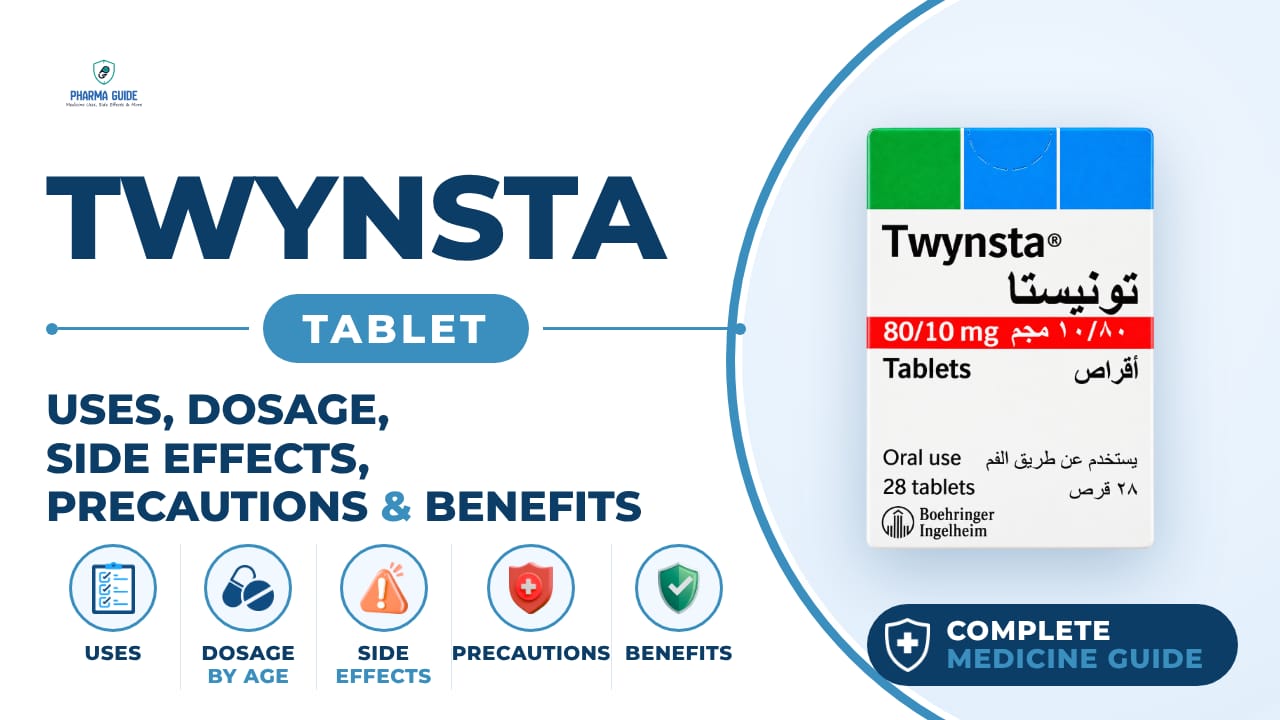
| Generic name | Telmisartan / Amlodipine (as Amlodipine Besylate) |
|---|---|
| Drug class | Angiotensin II AT1 Receptor Blocker / Calcium Channel Blocker |
| Forms | Tablets: 40 mg/5 mg, Tablets: 40 mg/10 mg, Tablets: 80 mg/5 mg, Tablets: 80 mg/10 mg |
Quick overview
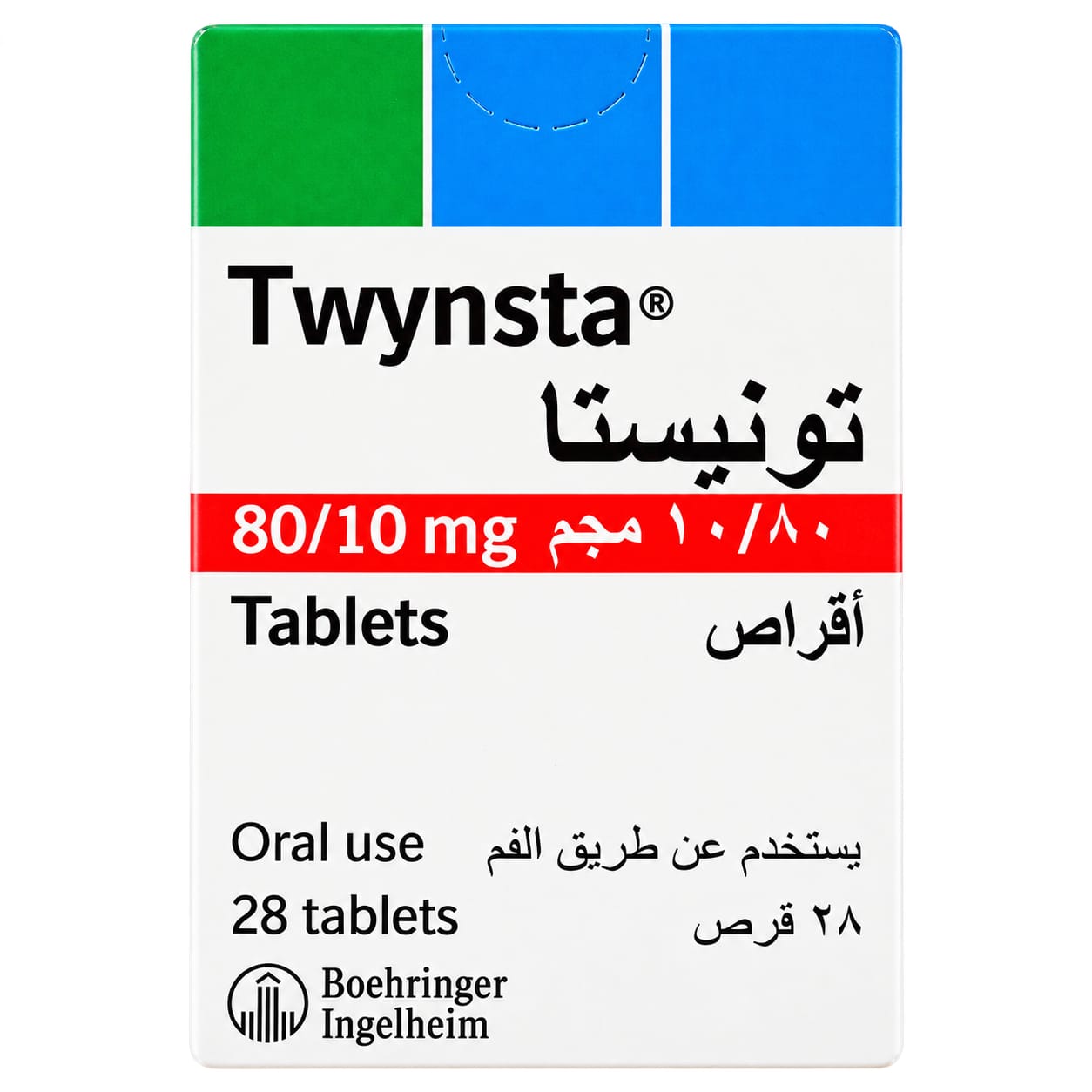
Twynsta Tablet contains telmisartan and amlodipine (as amlodipine besylate), from the Angiotensin II AT1 Receptor Blocker and Calcium Channel Blocker drug classes. It is a combination tablet used to treat high blood pressure, working by relaxing and widening blood vessels. It is taken once daily and is available in several strengths.
What is Twynsta Tablet
Twynsta is a combination tablet containing two medicines, telmisartan and amlodipine, that work together to lower high blood pressure. Telmisartan blocks a substance called angiotensin II that narrows blood vessels, and amlodipine stops calcium from entering blood vessel walls, which also helps blood vessels relax.
Twynsta Tablet uses
- Treats high blood pressure (hypertension)
- Helps lower both systolic and diastolic blood pressure
- Used when one blood-pressure medicine alone does not provide enough control
- Can replace separate telmisartan and amlodipine tablets in suitable patients
- Helps relax and widen blood vessels
Benefits of Twynsta Tablet
- Combines an ARB with a calcium-channel blocker
- Can provide stronger blood-pressure control than either component alone
- Provides convenient once-daily combination treatment
How Twynsta Tablet works
Telmisartan blocks the action of a natural substance called angiotensin II that would otherwise narrow blood vessels and raise blood pressure. Amlodipine blocks calcium from entering the muscle cells of blood vessel walls, which stops the vessels from tightening. Together these two actions relax blood vessels and lower blood pressure more than either medicine used alone.
Twynsta Tablet dosage
Take one tablet once a day, at about the same time each day, preferably in the morning. It can be taken with or without food, but take it the same way each day. Swallow the tablet whole with water or another non-alcoholic drink. Take the tablet out of the blister pack only right before you take it, since the tablets absorb moisture easily.
If you miss a dose, take it as soon as you remember; if it is almost time for your next dose, skip the missed dose and continue as normal — do not take a double dose.
People with liver problems should not take more than the lowest-dose tablet per day, and should be monitored carefully. No dose adjustment is usually needed for elderly patients, but increasing the dose should be done carefully in this group. This medicine is not recommended for use in patients under 18 years of age. Avoid grapefruit or grapefruit juice while taking this medicine, as it may increase the blood-pressure-lowering effect in some patients.
| Age group | Dose |
|---|---|
| Under 18 years | No established pediatric dosage |
| 18–39 years | Usually 40/5 mg or 80/5 mg once daily |
| 40–64 years | Usually 40/5 mg or 80/5 mg once daily |
Available forms and strengths
- Tablets: 40 mg/5 mg
- Tablets: 40 mg/10 mg
- Tablets: 80 mg/5 mg
- Tablets: 80 mg/10 mg
Side effects of Twynsta Tablet
Common
- Swelling of the ankles, feet, or hands (edema)
- Dizziness
- Back pain
- Feeling tired or sleepy
- Flushing or redness of face and neck
- Feeling like your heart is pounding or racing
- Abdominal pain, nausea, or diarrhea
- Headache
- Muscle cramps
- Changes in bowel habits (diarrhea or constipation)
- Visual disturbances including double vision
Serious
- Rare but serious allergic reaction (angioedema) causing swelling of the face, lips, tongue, or throat, and difficulty breathing or swallowing, which can be fatal
- Low blood pressure, especially with symptoms of dizziness, fainting, or lightheadedness
- Kidney problems, including acute kidney failure, especially with swelling in feet/ankles/hands or unexplained weight gain
- Heart problems or heart attack, especially worsening chest pain
- High potassium levels in the blood (hyperkalemia), which can cause irregular heartbeat and muscle weakness
- Liver disorder, including yellowing of skin or eyes, dark urine, abdominal pain, nausea, and fatigue
- Decreased platelets, causing bruising, bleeding, fatigue, and weakness
- Sepsis (blood poisoning), including fatal outcome
- Stevens-Johnson syndrome and toxic epidermal necrolysis (severe skin reactions with blistering)
- Rhabdomyolysis (muscle breakdown) causing unexplained muscle pain, tenderness, or weakness
- Decreased white blood cells, increasing risk of infection
- Inflamed pancreas (pancreatitis)
- Inflammation of blood vessels (vasculitis)
- Low blood sugar in diabetic patients
Warnings and precautions
- A rare but fatal case of severe allergic swelling (angioedema) affecting the throat has occurred with telmisartan. If swelling of the face, lips, tongue, or throat or difficulty breathing occurs, stop the medicine and get emergency help immediately.
- Do not take this medicine together with certain other blood pressure medicines (ACE inhibitors or aliskiren) if you have diabetes or kidney problems, as this combination increases the risk of serious side effects like very low blood pressure, high potassium, and kidney failure.
- This medicine must not be used during the second and third trimesters of pregnancy as it can cause serious injury or death to the developing baby. It should not be used during pregnancy at all because it can cause serious harm or death to an unborn baby, especially if taken after the first three months. If you become pregnant, stop taking this medicine and contact your doctor right away.
- This medicine should not be used while breastfeeding, since amlodipine passes into breast milk and it is not known whether telmisartan does as well.
- People with certain heart conditions, such as narrowing of the aortic valve, cardiogenic shock, or unstable heart failure after a recent heart attack, should not take this medicine.
- Patients with a rare hereditary condition called fructose intolerance should not take the higher-strength tablets, which contain a sugar called sorbitol.
- Starting this medicine with certain strong antibiotics or antifungal medicines can increase amlodipine levels in the blood to dangerous levels and should generally be avoided.
- People with kidney problems, including those on dialysis or with a kidney transplant, should use this medicine with caution, and doctors may periodically check kidney function and blood potassium levels.
- This medicine should be used with caution in people with liver problems, and is not recommended for those with severe liver impairment. The dose should not exceed the lowest strength in patients with mild to moderate liver impairment.
- Drinking alcohol while taking this medicine can make low blood pressure worse, which may cause dizziness, especially when standing up.
- This medicine can cause dizziness, lightheadedness, or fainting, especially after the first dose or when the dose is increased, so caution is needed before driving or using machines until you know how the medicine affects you.
Storage
- Store in the original package in order to protect from light and moisture
- Store at 15-30°C
- Do not remove the tablet from the blister until right before you take it
- Keep out of reach and sight of children
- Do not use after the expiry date on the carton, which refers to the last day of that month
- Medicines should not be disposed of via wastewater or household waste; ask your pharmacist how to dispose of medicines no longer required
When to see a doctor
- Get emergency medical help right away if you notice swelling of the face, lips, tongue, or throat, or have sudden difficulty breathing or swallowing, since this can be a life-threatening allergic reaction
- Seek medical attention if you feel faint or dizzy, as this may be a sign of low blood pressure
- Contact your doctor if you notice swelling in your feet, ankles, or hands, or sudden unexplained weight gain, as these may be signs of kidney problems
- Get emergency help if you experience chest pain that gets worse or does not go away, as this may indicate a heart problem
- Contact your doctor if you think you have taken too much of this medicine, even if you do not have symptoms
- Seek medical help right away if you experience unexplained muscle pain, tenderness, or weakness along with dark brown urine, as this could indicate a serious muscle breakdown condition
Alternatives
- Telmisartan alone
- Amlodipine alone
- Losartan + amlodipine
Watch the video
FAQs
What is Twynsta Tablet used for?
Twynsta Tablet is used to treat high blood pressure (hypertension). It helps lower both systolic and diastolic blood pressure, especially when one blood-pressure medicine alone does not provide enough control.
How does Twynsta Tablet work?
Twynsta contains telmisartan, which blocks angiotensin II from narrowing blood vessels, and amlodipine, which stops calcium from entering blood vessel walls. Together these actions relax and widen blood vessels, lowering blood pressure more than either medicine alone.
How should I take Twynsta Tablet?
Take one tablet once a day at about the same time, preferably in the morning, with or without food. Swallow it whole with water, and only remove it from the blister pack right before taking it since it absorbs moisture easily.
What are the common side effects of Twynsta Tablet?
Common side effects include swelling of the ankles, feet, or hands, dizziness, back pain, tiredness, flushing, headache, muscle cramps, abdominal pain, nausea, diarrhea, and visual disturbances.
Can Twynsta Tablet be used during pregnancy?
No, Twynsta must not be used during pregnancy, especially in the second and third trimesters, as it can cause serious injury or death to the developing baby. If you become pregnant while taking it, stop the medicine and contact your doctor immediately.
General information, not medical advice
Your prescriber and the leaflet in your pack know your situation. This page does not.
- Follow your prescriber and the leaflet
- Don't start, stop, or change a dose on your own
- Doses and warnings differ by country and product
Sources
Video
Related medicines

Injectafer Injection: Uses, Dosage, Side Effects, Precautions and Alternates
Iron products
Injectafer (ferric carboxymaltose) treats iron deficiency anemia and heart failure-related iron deficiency via IV. Learn uses, dosage, side effects, and

Gliclazide Tablet: Uses, Dosage, Side Effects, Precautions and Alternates
Sulfonylurea (hypoglycemic/antidiabetic agent)
Gliclazide Tablet is a sulfonylurea for type 2 diabetes that boosts insulin release. Learn about dosage, side effects, warnings, and precautions.