
Safety
General information, not medical advice
Your prescriber and the leaflet in your pack know your situation. This page does not.
- Follow your prescriber and the leaflet
- Don't start, stop, or change a dose on your own
- Doses and warnings differ by country and product
Typhoid Vaccine Injection: Uses, Dosage, Side Effects, Precautions and Alternates
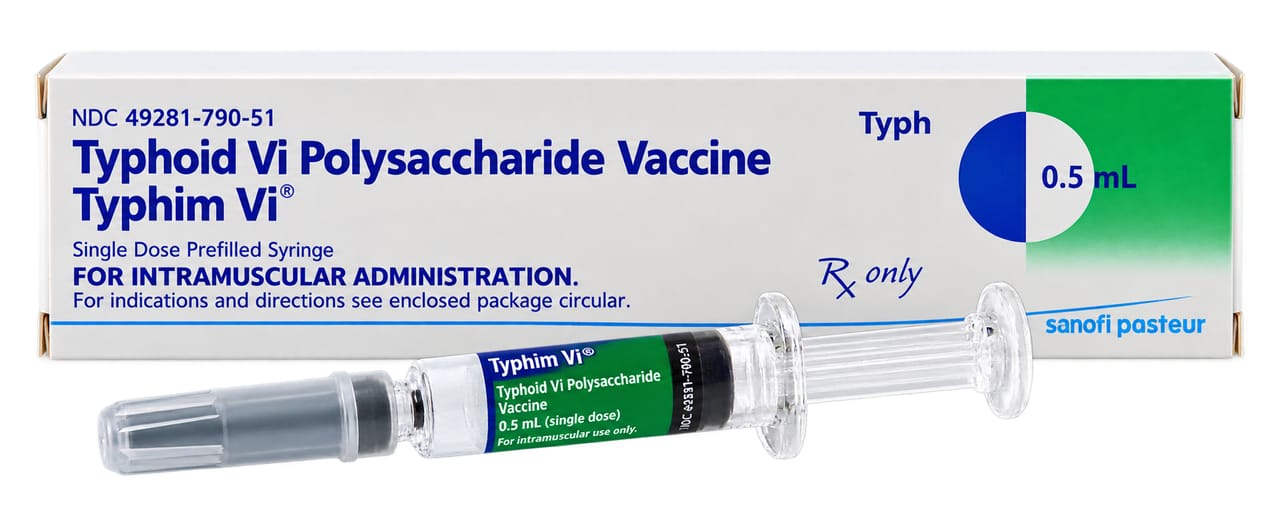
| Generic name | Typhoid Vi Polysaccharide Vaccine |
|---|---|
| Forms | Solution (injection/shot) |
Quick overview
Typhoid Vaccine Injection (Typhoid Vi Polysaccharide Vaccine) is a shot given to help prevent typhoid fever, a serious infection caused by the bacterium Salmonella typhi. It is usually given to people traveling to areas where typhoid is common, as well as those in close contact with a typhoid carrier or laboratory workers handling the bacteria. The vaccine works by prompting your body to make antibodies against typhoid bacteria, though it does not protect everyone completely.
What is Typhoid Vaccine Injection
This is a vaccine given as a shot to help prevent typhoid fever, a serious infection caused by the bacterium Salmonella typhi. It is usually given to people traveling to areas where typhoid is common.
Typhoid Vaccine Injection uses
- Used to prevent typhoid fever
- Recommended for travelers to parts of the world where typhoid is common
- Recommended for people in close contact with a typhoid carrier
- Recommended for laboratory workers who work with Salmonella typhi bacteria
Benefits of Typhoid Vaccine Injection
- Typhoid Prevention: Helps protect against typhoid fever caused by Salmonella Typhi.
- Travel Protection: Useful for people traveling to areas where typhoid is more common.
- Immune Response: Stimulates the body to develop protection against typhoid bacteria.
- Reduced Infection Risk: Lowers the risk of developing typhoid after exposure.
- Childhood Protection: Certain typhoid conjugate vaccines can be used in young children.
How Typhoid Vaccine Injection works
The vaccine causes your body to make its own antibodies that protect against the typhoid bacteria, so if you're exposed later, your body is ready to fight it off.
Typhoid Vaccine Injection dosage
This vaccine is given as a shot into a muscle, usually in the upper arm. It should be given at least two weeks before travel, ideally one month before. A booster shot is needed every 2 to 3 years if you continue to be at risk. It can be given at the same time as other vaccines if given in different body parts and not mixed in the same syringe. Continue to practice safe eating and drinking habits even after vaccination, since the vaccine does not fully protect everyone.
| Age group | Dose |
|---|---|
| Under 2 Years | Typhoid conjugate vaccine (TCV) may be given from 6 months; follow local schedule |
| 2–15 Years | 0.5 mL single dose, depending on vaccine type |
| 16–64 Years | 0.5 mL single dose, depending on vaccine type |
| 65+ Years | 0.5 mL dose when indicated; follow healthcare provider's advice |
Available forms and strengths
- Solution (injection/shot)
Side effects of Typhoid Vaccine Injection
Common
- Pain, redness, swelling, tenderness or a lump at the injection site
- Fever
- General feeling of discomfort or illness
- Unusual tiredness or weakness
- Headache
- Nausea
- Diarrhea
- Muscle aches, cramps, pain, or stiffness
- Joint pain or swelling
- Vomiting
- Abdominal pain
Serious
- Signs of a severe allergic reaction such as hives, swelling of the face and throat, difficulty breathing, a fast heartbeat, dizziness, or weakness
- Difficulty breathing or swallowing
- Fainting or severe dizziness after the injection
- Swelling of the eyes, face, or inside of the nose
- Unusual hoarseness
Warnings and precautions
- This vaccine can cause a serious, life-threatening allergic reaction called anaphylaxis. Tell your doctor right away if you have a rash, itching, or swelling of the tongue and throat, or trouble breathing after getting the shot.
- The vaccine does not work 100% of the time, so you should still be careful about food and water safety even after vaccination.
- People with a weakened immune system may not be as well protected by the vaccine.
- Do not get this vaccine if you have had a severe allergic reaction to a previous dose or to any of its ingredients, or if you are currently ill with a high fever.
- This vaccine will not treat typhoid fever if you already have it, and it does not protect against other illnesses like food poisoning or paratyphoid fever.
- Tell your doctor if you are pregnant, plan to become pregnant, or think you might be pregnant, so you can discuss the risks and benefits together.
- Studies suggest this vaccine poses minimal risk to a breastfeeding infant, but you should still tell your doctor if you are breastfeeding.
- Inform your healthcare provider about any previous severe allergic reaction to a typhoid vaccine.
- Follow the recommended schedule for the specific typhoid vaccine used.
- Stay under observation for about 15 minutes after injection if advised.
- Typhoid vaccination does not provide protection against every cause of food- or water-borne illness.
Storage
- If you need to store this drug at home, talk with your doctor, nurse, or pharmacist about how to store it.
- Keep all drugs in a safe place. Keep all drugs out of the reach of children and pets.
- Throw away unused or expired drugs. Do not flush down a toilet or pour down a drain unless you are told to do so. Check with your pharmacist if you have questions about the best way to throw out drugs.
When to see a doctor
- Get emergency help right away if you notice hives, swelling of the face and throat, trouble breathing, a fast heartbeat, dizziness, or weakness after the shot.
- Tell your doctor right away if you feel dizzy, faint, or notice vision changes or ringing in the ears after the injection.
- See your doctor as soon as possible if you develop symptoms of typhoid fever, even if you've been vaccinated, especially after returning from travel abroad.
- Call your doctor right away if you have signs of an allergic reaction such as rash, hives, itching, swollen or peeling skin, wheezing, chest tightness, or trouble breathing or swallowing.
Alternatives
- Typhim Vi
- Typbar-TCV
- Typherix
Watch the video
FAQs
Who should get the Typhoid Vaccine Injection?
It is recommended for people traveling to areas where typhoid is common, those in close contact with a typhoid carrier, and laboratory workers who handle Salmonella typhi bacteria.
How is the Typhoid Vaccine Injection given?
It is given as a shot into a muscle, usually in the upper arm, at least two weeks before travel, ideally one month before.
How often do I need a booster for the Typhoid Vaccine Injection?
A booster shot is needed every 2 to 3 years if you continue to be at risk of typhoid exposure.
What are the common side effects of the Typhoid Vaccine Injection?
Common side effects include pain, redness, or swelling at the injection site, fever, tiredness, headache, nausea, diarrhea, muscle aches, joint pain, vomiting, and abdominal pain.
Does the Typhoid Vaccine Injection fully protect against typhoid fever?
No, the vaccine does not work 100% of the time, so you should continue practicing safe eating and drinking habits even after vaccination.
General information, not medical advice
Your prescriber and the leaflet in your pack know your situation. This page does not.
- Follow your prescriber and the leaflet
- Don't start, stop, or change a dose on your own
- Doses and warnings differ by country and product
Sources
Video
Related medicines

Injectafer Injection: Uses, Dosage, Side Effects, Precautions and Alternates
Iron products
Injectafer (ferric carboxymaltose) treats iron deficiency anemia and heart failure-related iron deficiency via IV. Learn uses, dosage, side effects, and

Gliclazide Tablet: Uses, Dosage, Side Effects, Precautions and Alternates
Sulfonylurea (hypoglycemic/antidiabetic agent)
Gliclazide Tablet is a sulfonylurea for type 2 diabetes that boosts insulin release. Learn about dosage, side effects, warnings, and precautions.