
Safety
General information, not medical advice
Your prescriber and the leaflet in your pack know your situation. This page does not.
- Follow your prescriber and the leaflet
- Don't start, stop, or change a dose on your own
- Doses and warnings differ by country and product
Ubrogepant Tablet: Uses, Dosage, Side Effects, Precautions and Alternates
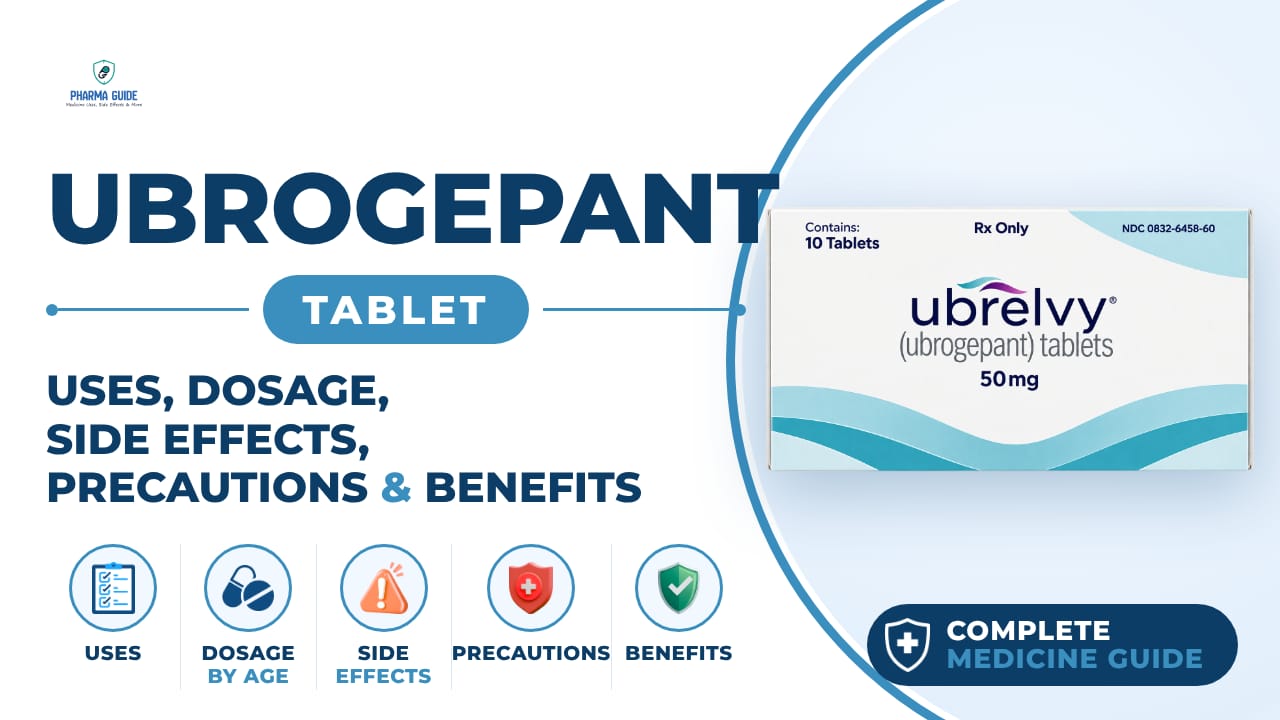
| Generic name | Ubrogepant |
|---|---|
| Drug class | Calcitonin gene-related peptide (CGRP) receptor antagonist |
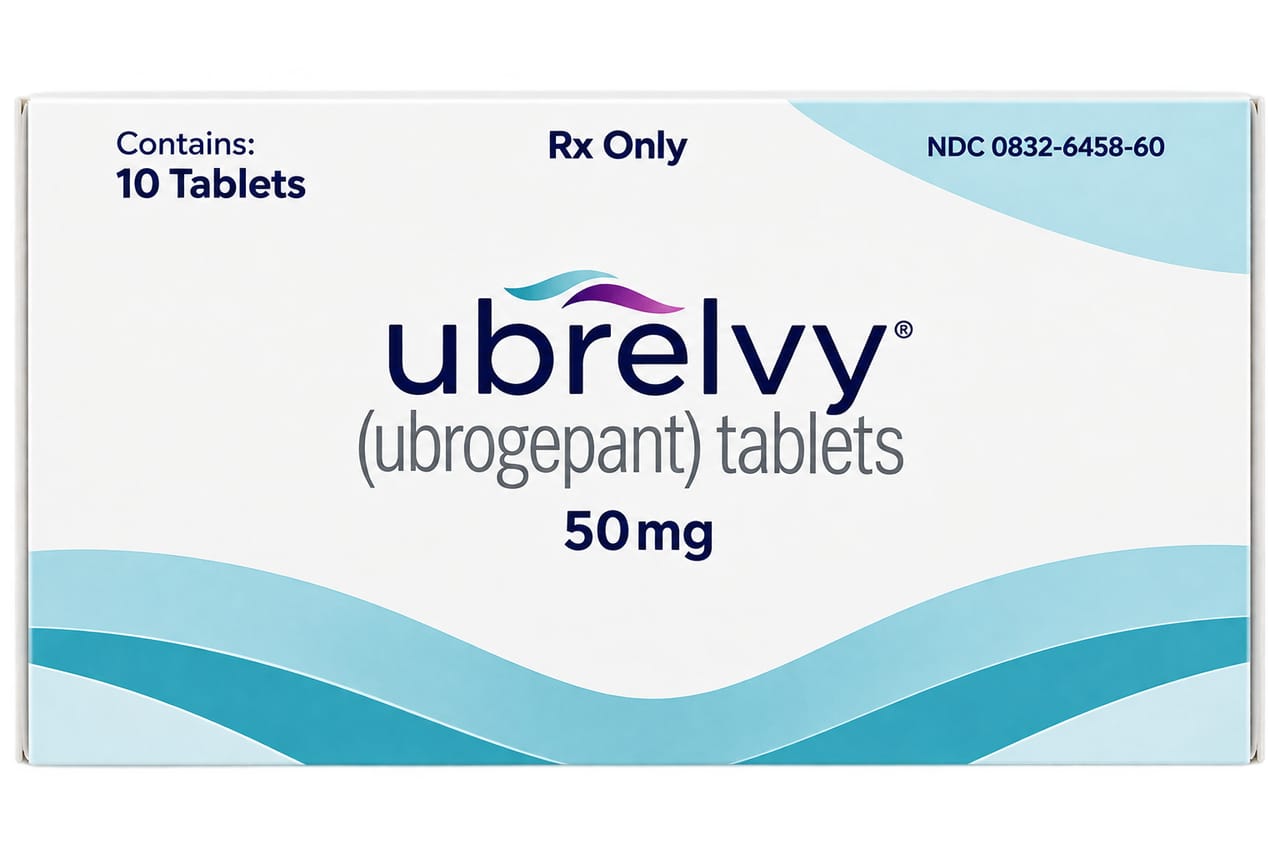
| Forms | Tablets (50 mg and 100 mg) |
Quick overview
Ubrogepant Tablet (generic name: ubrogepant) is a prescription medicine belonging to the CGRP receptor antagonist drug class. It is used for the acute treatment of migraine attacks that have already started, not for preventing migraines. It is the first oral CGRP receptor antagonist and does not cause the liver problems seen with some earlier experimental drugs in this class.
What is Ubrogepant Tablet
Ubrogepant is a prescription tablet used to treat migraine attacks after they start. It is the first CGRP receptor antagonist that can be taken by mouth, and it does not cause the liver problems seen with some earlier experimental drugs in this class.
Ubrogepant Tablet uses
- Treats migraine headache symptoms, including severe throbbing head pain, nausea, and sensitivity to light and sound, in adults with or without aura
- Used for acute (sudden, in-the-moment) treatment of a migraine attack that has already started, not for preventing migraines
Benefits of Ubrogepant Tablet
- Helps relieve migraine pain and lets more people return to normal daily activities after an attack
- Does not cause medication-overuse headaches the way some other migraine drugs can
- Does not narrow blood vessels, so it may be used by some people who cannot take triptans because of heart or blood vessel conditions
- Generally well tolerated with mostly mild side effects
How Ubrogepant Tablet works
During a migraine, nerve fibers release a protein called CGRP, which widens blood vessels in the brain and sends pain signals, along with triggering inflammation. Ubrogepant blocks the CGRP receptor so this protein cannot attach and cause these effects, which reduces blood vessel widening, nerve activation, and inflammation — easing migraine symptoms.
Ubrogepant Tablet dosage
Take this medicine by mouth at the first sign of a migraine headache, not during the warning aura phase — wait until the headache pain itself starts. It can be taken with or without food. Swallow the tablet whole; do not crush, break, or chew it.
A second dose may be taken if needed, but only after waiting at least 2 hours since the first dose. Do not take a second dose within 24 hours of eating grapefruit or drinking grapefruit juice.
Follow your doctor's instructions on the maximum number of tablets allowed in 24 hours and the maximum number of migraines to treat in 30 days. Keep a headache diary noting when headaches occur and when you take this medicine, to share with your doctor. Call your doctor if your headaches do not improve or happen more often after taking this medicine.
Children: use and dosing must be decided by a doctor, as safety and effectiveness have not been established in children. Elderly: dosing is usually started cautiously because of a higher chance of age-related kidney or liver problems.
| Age group | Dose |
|---|---|
| Under 18 years | Not recommended |
| 18–60 years | 50 mg, once/day |
| 60+ years | 50 mg, once/day |
Available forms and strengths
- Tablets (50 mg and 100 mg)
Side effects of Ubrogepant Tablet
Common
- Nausea
- Drowsiness or sleepiness
- Dry mouth
- Unusual tiredness or weakness
Serious
- Allergic reaction: swelling of the face, throat, mouth, eyes, or tongue; hives; rash; itching; trouble swallowing or breathing; dizziness; rapid heartbeat; chest tightness; cough
- Numb, cold, painful, or discolored fingers or toes (possible Raynaud's phenomenon)
- Signs of high blood pressure within days of starting treatment: blurred vision, dizziness, headache, nervousness, pounding in the ears, or slow or fast heartbeat
Warnings and precautions
- Do not take this medicine together with strong CYP3A4 inhibitor drugs such as ketoconazole, clarithromycin, or itraconazole, since this combination can cause serious side effects.
- This medicine is not meant to prevent migraines or reduce how often they happen — it only treats an attack once it starts.
- It is not known whether it is safe to use this medicine for more than 8 migraine attacks in a 30-day period.
- This medicine may cause a temporary rise in blood pressure, so people with uncontrolled high blood pressure should use it cautiously or avoid it, and blood pressure should be checked regularly during treatment.
- Avoid eating grapefruit or drinking grapefruit juice, as this can change how much of the drug is absorbed and affect dosing of a second tablet.
- Pregnancy: There is not enough information to know if this medicine is safe during pregnancy. Animal studies showed possible harm to the developing baby at high doses.
- Tell your doctor if you are pregnant, planning to become pregnant, or if you become pregnant while taking this medicine.
- Breastfeeding: It is not known whether this medicine passes into breast milk or affects a nursing baby. Talk with your doctor about the benefits of breastfeeding against your need for this medicine.
- Kidney: People with severe kidney problems may need a lower dose, and this medicine should be avoided in those with end-stage kidney disease. No dose change is needed for mild or moderate kidney problems.
- Liver: People with severe liver problems may need a lower dose because the drug builds up more in the body. No dose change is needed for mild or moderate liver problems.
- Alcohol: Limit how much alcohol you drink while taking this medicine, since it can add to drowsiness.
- Driving: This medicine can cause drowsiness, so avoid driving, using machines, or doing anything that requires full alertness until you know how it affects you.
Storage
- Keep this medication in the container it came in, tightly closed, and out of reach of children
- Store it at room temperature and away from excess heat and moisture (not in the bathroom)
- Keep from freezing
- Dispose of unneeded medications in a way so that pets, children, and other people cannot take them
- Do not flush this medication down the toilet
- Use a medicine take-back program if available
When to see a doctor
- Get emergency medical help right away if you have signs of a serious allergic reaction, such as swelling of the face, throat, lips, or tongue, hives, trouble breathing or swallowing, dizziness, or a fast heartbeat.
- Call your doctor right away if your fingers or toes become numb, cold, painful, or change color.
- If you think you have taken too much of this medicine and have severe symptoms such as passing out or trouble breathing, get emergency medical help immediately; monitoring should continue for at least 24 hours.
- Call your doctor if your headaches do not improve or become more frequent after taking this medicine.
Alternatives
- Zolmitriptan
- Sumatriptan
- Rimegepant
Watch the video
FAQs
What is Ubrogepant Tablet used for?
It is used for the acute treatment of migraine attacks that have already started, including pain, nausea, and light/sound sensitivity, but not for preventing migraines.
How should Ubrogepant Tablet be taken?
Take it by mouth at the first sign of a migraine headache (once pain starts, not during the aura phase), with or without food, swallowing the tablet whole without crushing or chewing it.
Can a second dose of Ubrogepant Tablet be taken?
Yes, a second dose may be taken if needed, but only after waiting at least 2 hours since the first dose, and not within 24 hours of eating grapefruit or drinking grapefruit juice.
What are the common side effects of Ubrogepant Tablet?
Common side effects include nausea, drowsiness or sleepiness, dry mouth, and unusual tiredness or weakness.
Is Ubrogepant Tablet safe during pregnancy?
There is not enough information to know if it is safe during pregnancy, and animal studies showed possible harm to the developing baby at high doses, so you should tell your doctor if you are pregnant or planning to become pregnant.
General information, not medical advice
Your prescriber and the leaflet in your pack know your situation. This page does not.
- Follow your prescriber and the leaflet
- Don't start, stop, or change a dose on your own
- Doses and warnings differ by country and product
Sources
Video
Related medicines

Injectafer Injection: Uses, Dosage, Side Effects, Precautions and Alternates
Iron products
Injectafer (ferric carboxymaltose) treats iron deficiency anemia and heart failure-related iron deficiency via IV. Learn uses, dosage, side effects, and

Gliclazide Tablet: Uses, Dosage, Side Effects, Precautions and Alternates
Sulfonylurea (hypoglycemic/antidiabetic agent)
Gliclazide Tablet is a sulfonylurea for type 2 diabetes that boosts insulin release. Learn about dosage, side effects, warnings, and precautions.