
Safety
General information, not medical advice
Your prescriber and the leaflet in your pack know your situation. This page does not.
- Follow your prescriber and the leaflet
- Don't start, stop, or change a dose on your own
- Doses and warnings differ by country and product
Ultram ER Tablet: Uses, Dosage, Side Effects, Precautions and Alternates
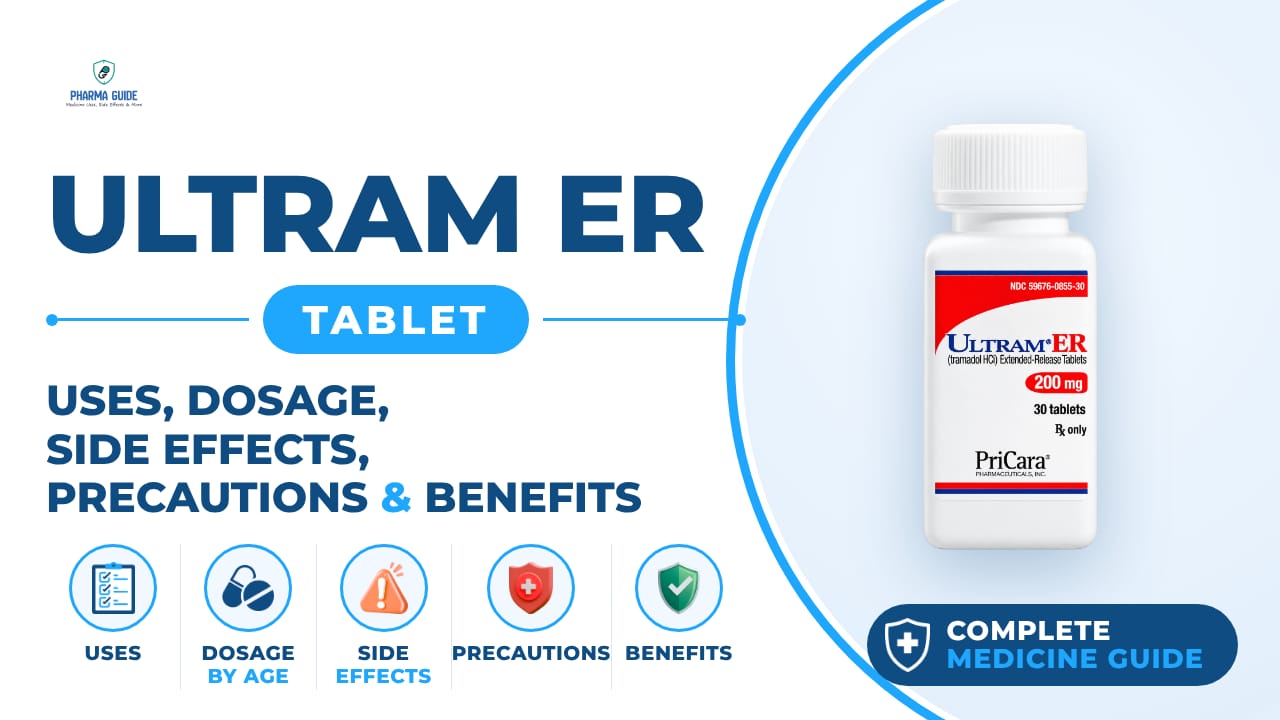
| Generic name | Tramadol hydrochloride |
|---|---|
| Drug class | Opioid analgesic (centrally acting synthetic analgesic) |
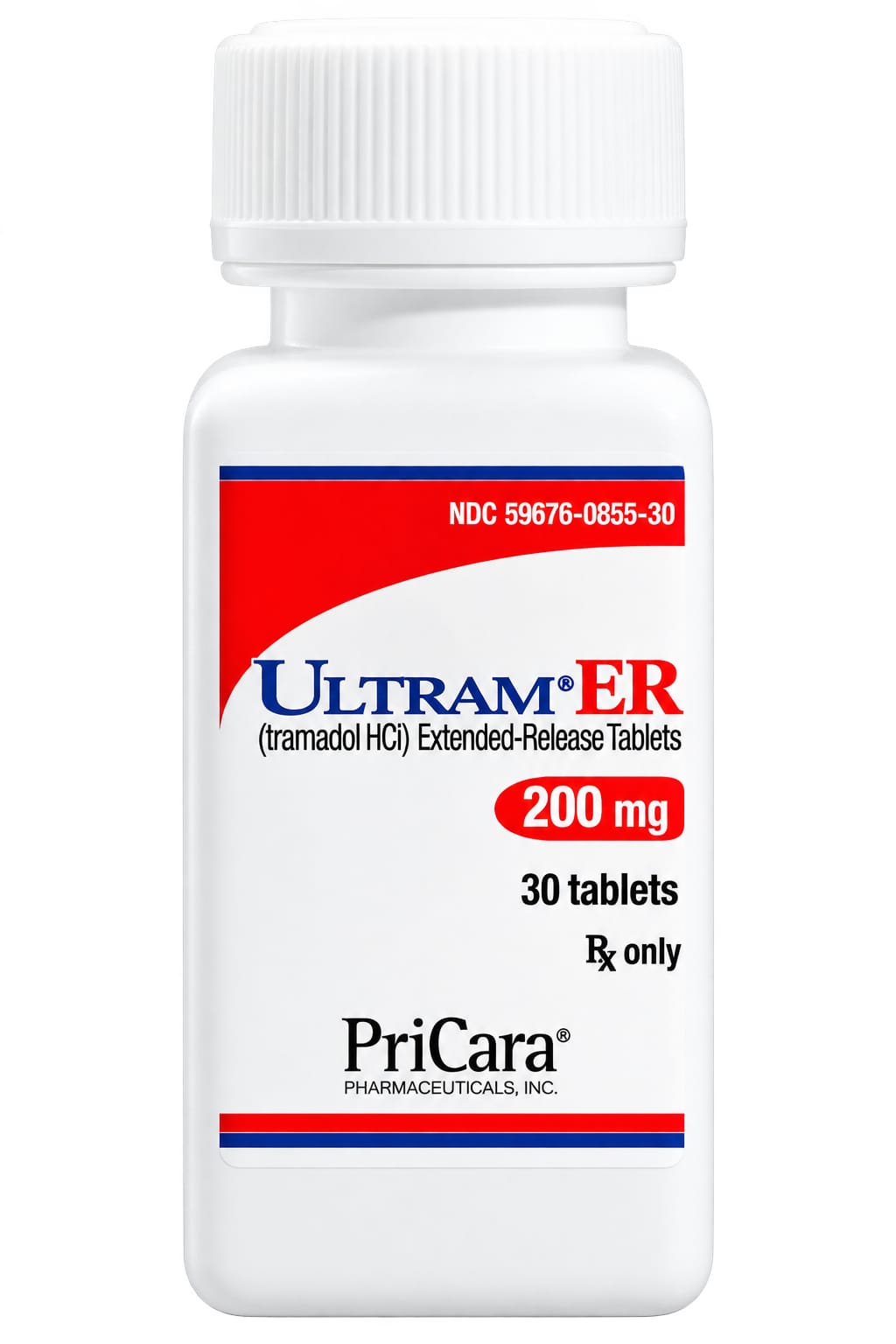
| Forms | Extended-release tablet (100 mg, 200 mg, 300 mg) |
Quick overview
Ultram ER Tablet contains tramadol hydrochloride, an opioid analgesic that works centrally in the brain and nervous system. It is an extended-release tablet taken once a day to manage moderate to moderately severe chronic pain in adults who need around-the-clock treatment. It works by acting on opioid receptors and affecting serotonin and norepinephrine pathways involved in pain. It carries important warnings, including risks of seizures, serotonin syndrome, breathing problems, and dependence.
What is Ultram ER Tablet
Ultram ER is an extended-release tablet form of tramadol, a man-made opioid pain medicine. It is meant to be taken once a day to control pain throughout the day rather than several times a day like the immediate-release form.
Ultram ER Tablet uses
- Management of moderate to moderately severe chronic pain in adults who need around-the-clock pain treatment for an extended period of time
Benefits of Ultram ER Tablet
- Provides extended relief of moderate to moderately severe chronic pain.
- Helps reduce persistent pain intensity when non-opioid treatments are inadequate.
- Provides once-daily, around-the-clock pain control because of its extended-release formulation.
- May improve comfort, sleep, and daily functioning when chronic pain is appropriately controlled.
- Is useful for patients who require continuous opioid pain management rather than occasional as-needed treatment.
How Ultram ER Tablet works
Tramadol works in the brain and nervous system to change how the body senses and reacts to pain. It attaches to opioid receptors in the brain and also weakly blocks the reabsorption of certain brain chemicals (norepinephrine and serotonin), which together help reduce pain signals.
Ultram ER Tablet dosage
The tablet must be swallowed whole; do not chew, crush, split, or dissolve it. It can be taken without regard to meals, but it is recommended to take it in a consistent manner each day (either always with food or always without). It should be taken once daily and should not be used as an as-needed medicine. Do not take it with other tramadol-containing products at the same time. Do not stop taking it suddenly without talking to your doctor, since stopping abruptly can cause withdrawal symptoms; your doctor may lower your dose gradually instead. Older adults (over 65, especially over 75) should generally start at the lower end of the dosing range because of a higher chance of side effects.
| Age group | Dose |
|---|---|
| Under 18 years | Not recommended; tramadol has important pediatric safety restrictions |
| 18–64 years – Chronic severe pain | Usually start 100 mg once daily; may increase by 100 mg every 5 days according to response |
| 65–75 years | Start cautiously at the lowest effective dose |
| Over 75 years | Use with greater caution because tramadol elimination may be prolonged |
Available forms and strengths
- Extended-release tablet (100 mg, 200 mg, 300 mg)
Side effects of Ultram ER Tablet
Common
- Dizziness
- Nausea
- Constipation
- Headache
- Somnolence (sleepiness)
- Flushing
- Itching
- Vomiting
- Insomnia
- Dry mouth
- Diarrhea
- Weakness (asthenia)
- Sweating
Serious
- Severe allergic (anaphylactoid) reactions, including swelling of the face/throat, hives, and severe skin reactions such as Stevens-Johnson syndrome or toxic epidermal necrolysis
- Slow, shallow, or stopped breathing (respiratory depression)
- Seizures
- Serotonin syndrome (confusion, agitation, fast heartbeat, sweating, muscle twitching, seizures)
- Suicidal thoughts or actions
- Severe low blood pressure or fainting
- Adrenal insufficiency (weakness, nausea, low blood pressure) with long-term use
- Low sodium levels (hyponatremia), especially in older women
- Low blood sugar (hypoglycemia)
- Increased sensitivity to pain (hyperalgesia)
- Physical dependence, misuse, and withdrawal symptoms if stopped abruptly
Warnings and precautions
- Ultram ER can cause seizures, and this risk goes up if you take doses higher than prescribed or combine it with certain other medicines like antidepressants or other opioids.
- This medicine should not be given to people who are suicidal or prone to addiction, and should be used carefully in people taking tranquilizers or antidepressants or who drink alcohol heavily.
- Ultram ER can cause a dangerous condition called serotonin syndrome, especially when combined with other medicines that affect serotonin levels, and this can happen even at recommended doses.
- Serious and sometimes fatal severe allergic reactions have occurred with tramadol, often after the very first dose.
- This medicine should be used carefully in people at risk of slowed or difficult breathing, since combining it with certain other drugs or alcohol can cause dangerous breathing problems.
- Stopping this medicine suddenly can cause withdrawal symptoms such as anxiety, sweating, trouble sleeping, tremors, and nausea; tapering off gradually may reduce these symptoms.
- Ultram ER can be misused by crushing, chewing, snorting, or injecting it, which can lead to overdose and death; the tablet is meant to be swallowed whole for oral use only.
- Taking too much of this medicine can cause serious breathing problems, coma, and death, sometimes within the first hour of an overdose.
- Ultram ER should only be used during pregnancy if the potential benefit justifies the risk to the baby. Long-term use during pregnancy can cause withdrawal symptoms in the newborn after birth.
- Ultram ER is not recommended for breastfeeding mothers because its safety in nursing infants has not been studied.
- People with severe kidney problems should not take Ultram ER because the drug and its active breakdown product build up more in the body when the kidneys don't work well, and there isn't enough dosing flexibility with this medicine to use it safely in that situation.
- People with severe liver problems should not take Ultram ER because the liver processes this drug, and severe impairment can cause the drug to build up to unsafe levels.
- Do not drink alcohol while taking Ultram ER, as combining the two can cause dangerous slowed breathing, extreme sleepiness, coma, or death.
- Ultram ER can affect your ability to think clearly or react quickly, so avoid driving or using machinery until you know how the medicine affects you.
Storage
- Store at 20–25°C (68–77°F) at controlled room temperature.
- Keep in a cool, dry place away from excessive heat and moisture.
- Keep tablets in the original, tightly closed container.
- Protect from direct light and avoid hot or humid storage areas.
- Store securely to prevent accidental ingestion, misuse, or unauthorized access.
- Keep out of reach and sight of children and pets.
When to see a doctor
- Get emergency help right away if you have signs of a serious allergic reaction, such as breathing problems, swelling of the face, lips, mouth, tongue, or throat, trouble swallowing, or hives.
- Get emergency help right away if you notice signs of slowed or difficult breathing, such as bluish lips or fingernails, confusion, extreme sleepiness, or trouble staying awake.
- Get emergency help if you experience symptoms of serotonin syndrome, such as sweating, fever, confusion, agitation, fast heartbeat, muscle twitching, or seizures.
- Get emergency help right away if you have signs that a seizure is happening, such as uncontrolled jerking movements, stiffening of the arms and legs, or loss of consciousness.
- If you are having thoughts of harming yourself, get help right away by contacting emergency services or a crisis line. Also call your healthcare provider right away if you notice new or worsening thoughts of suicide, depression, or unusual mood changes.
- Get emergency medical help if you develop new or worsening stomach pain, especially in the upper right area that spreads to your back or shoulder, with or without nausea and vomiting.
- Get medical help right away or contact a poison control center if you or someone else has taken too much of this medicine.
- Get emergency help right away if you notice a painful red or purple skin rash that looks burned and peels off, or blisters in the mouth, nose, or genitals, as these can be signs of a severe skin reaction.
Alternatives
- Hydromorphone
- Hydrocodone
- Oxycodone
- Tapentadol
- Tramadol Immediate-Release
Watch the video
FAQs
What is Ultram ER Tablet used for?
It is used for the management of moderate to moderately severe chronic pain in adults who need around-the-clock pain treatment for an extended period of time.
How should Ultram ER Tablet be taken?
The tablet must be swallowed whole without chewing, crushing, splitting, or dissolving it. It can be taken with or without food, but should be taken consistently the same way each day, once daily, and not as an as-needed medicine.
What is the usual starting dose of Ultram ER for adults?
Adults aged 18-64 with chronic severe pain usually start at 100 mg once daily, which may be increased by 100 mg every 5 days according to response.
What are the common side effects of Ultram ER Tablet?
Common side effects include dizziness, nausea, constipation, headache, somnolence, flushing, itching, vomiting, insomnia, dry mouth, diarrhea, weakness, and sweating.
Can I stop taking Ultram ER Tablet suddenly?
No, you should not stop taking it suddenly without talking to your doctor, since abrupt stopping can cause withdrawal symptoms like anxiety, sweating, trouble sleeping, tremors, and nausea; your doctor may lower your dose gradually instead.
General information, not medical advice
Your prescriber and the leaflet in your pack know your situation. This page does not.
- Follow your prescriber and the leaflet
- Don't start, stop, or change a dose on your own
- Doses and warnings differ by country and product
Sources
Video
Related medicines

Injectafer Injection: Uses, Dosage, Side Effects, Precautions and Alternates
Iron products
Injectafer (ferric carboxymaltose) treats iron deficiency anemia and heart failure-related iron deficiency via IV. Learn uses, dosage, side effects, and

Gliclazide Tablet: Uses, Dosage, Side Effects, Precautions and Alternates
Sulfonylurea (hypoglycemic/antidiabetic agent)
Gliclazide Tablet is a sulfonylurea for type 2 diabetes that boosts insulin release. Learn about dosage, side effects, warnings, and precautions.