
Safety
General information, not medical advice
Your prescriber and the leaflet in your pack know your situation. This page does not.
- Follow your prescriber and the leaflet
- Don't start, stop, or change a dose on your own
- Doses and warnings differ by country and product
Uplizna Injection: Uses, Dosage, Side Effects, Precautions and Alternates
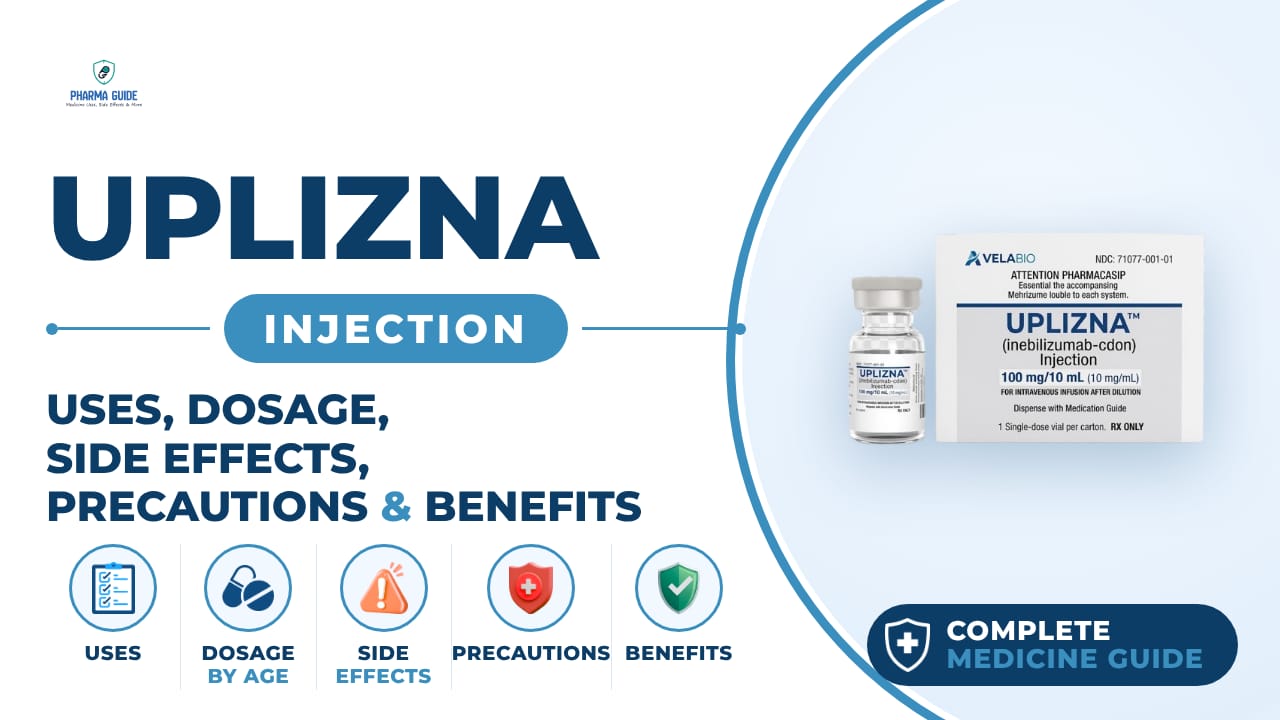
| Generic name | inebilizumab-cdon |
|---|---|
| Drug class | CD19-directed cytolytic antibody (selective immunosuppressant) |
| Forms | Injection |
Quick overview
Uplizna Injection (inebilizumab-cdon) is a prescription CD19-directed cytolytic antibody given by IV infusion to adults with certain immune system conditions. It works by reducing specific immune cells called B cells, which helps calm an overactive immune system. It is used for neuromyelitis optica spectrum disorder, immunoglobulin G4-related disease, and generalized myasthenia gravis. Treatment involves an initial two-dose series followed by maintenance infusions every six months.
What is Uplizna Injection
Uplizna is a prescription medicine given by IV infusion. It is used in adults to treat certain immune system conditions by reducing specific immune cells called B cells. Its generic name is inebilizumab-cdon, and it belongs to the drug class of CD19-directed cytolytic antibodies, a type of selective immunosuppressant.
Uplizna Injection uses
- Neuromyelitis optica spectrum disorder (NMOSD) in adults who are anti-aquaporin-4 (AQP4) antibody positive
- Immunoglobulin G4-related disease (IgG4-RD) in adults
- Generalized myasthenia gravis (gMG) in adults who are anti-acetylcholine receptor (AChR) or anti-muscle specific tyrosine kinase (MuSK) antibody positive
Benefits of Uplizna Injection
- Helps prevent relapses (flare-ups or worsening) of NMOSD, IgG4-RD, and gMG
- Reduced the time to a relapse in NMOSD compared with placebo in clinical studies
- Reduced the risk of disease flares in IgG4-RD compared with placebo in clinical studies
- Improved daily function and muscle strength scores in gMG compared with placebo in clinical studies
How Uplizna Injection works
Uplizna attaches to a protein called CD19 found on the surface of certain immune cells called B cells. This causes those B cells to be destroyed, which calms down an overactive immune system and helps stop it from attacking healthy tissue, though the exact way this helps each condition is not fully known.
Uplizna Injection dosage
Uplizna is given as an intravenous (IV) infusion by a healthcare professional, usually in a hospital or infusion center. Each infusion takes about 90 minutes to complete. The first two doses are given 2 weeks apart, then maintenance doses are given once every 6 months.
Before each infusion, you will be given medicines such as a corticosteroid, an antihistamine, and a fever-reducing medicine to help prevent infusion reactions. You will be monitored by a healthcare provider during the infusion and for at least 1 hour afterward.
You should complete any needed vaccinations at least 4 weeks before starting treatment, since certain live vaccines are not recommended during treatment. If you miss an infusion appointment, call your doctor's office right away to reschedule.
| Age group | Dose |
|---|---|
| Under 18 years | Not recommended |
| 18–64 years | 300 mg, once per dose |
| 65+ years | 300 mg, once per dose |
Available forms and strengths
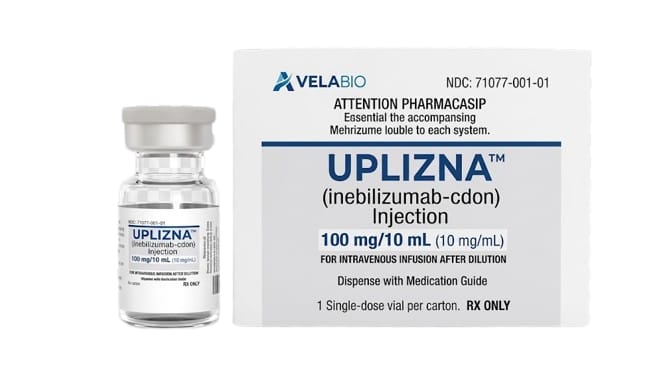
Uplizna is available as an injection.
Side effects of Uplizna Injection
Common
- Urinary tract infection
- Joint pain (arthralgia)
- Respiratory infections, such as the common cold or flu
- Fever
- Muscle or joint pain
- Back pain
- Headache
- Low white blood cell counts (lymphopenia)
- Infusion-related reactions
Serious
- Infusion reactions, including anaphylaxis, with symptoms like shortness of breath, fever, headache, nausea, sleepiness, rash, or palpitations
- Serious infections, including life-threatening or fatal bacterial, fungal, or viral infections
- Hepatitis B virus reactivation, which may cause serious liver problems including liver failure or death
- Progressive multifocal leukoencephalopathy (PML), a rare and serious brain infection
- Flare-up of tuberculosis
- Low blood cell counts, including low white blood cells and low neutrophils
- Reduced immunoglobulin levels, which can increase infection risk
Warnings and precautions
- Do not receive Uplizna if you have had a life-threatening infusion reaction to it, have an active hepatitis B infection, or have active or untreated latent tuberculosis.
- Uplizna can cause infusion reactions, including a severe allergic reaction called anaphylaxis, which can be serious enough to require hospital care.
- Serious infections, including life-threatening or fatal ones, can occur during and after treatment with Uplizna.
- If you have had hepatitis B in the past, the virus could become active again during or after treatment, which can cause serious liver problems including liver failure or death.
- A rare, serious brain infection called PML can happen with this medicine and usually leads to death or severe disability.
- Live or live-attenuated vaccines are not recommended during treatment and until B-cells return to normal levels after stopping treatment.
- Based on animal studies, Uplizna may cause harm to an unborn baby and can reduce the baby's antibody response even after B-cells return to normal.
- It is not known if Uplizna is safe to use during pregnancy or if it could harm an unborn baby. The drug may lower white blood cell levels in a developing baby. Talk with your doctor if you are pregnant or planning to become pregnant, and use effective birth control during treatment and for 6 months after your last infusion.
- It is not known whether Uplizna passes into breast milk or what effect it might have on a breastfed baby. Talk with your doctor about the best way to feed your baby if you are receiving this medicine.
- Inform your doctor about any active infection. Check for hepatitis B and tuberculosis before treatment.
- Alcohol is not known to interact with Uplizna, and it is likely safe to drink alcohol while taking it, but you should check with your doctor or pharmacist if you have concerns.
- Seek urgent help for breathing difficulty or severe allergic reactions.
Storage
- Store in a refrigerator at 36°F to 46°F (2°C to 8°C) in the original carton to protect from light
- Do not freeze
- Do not shake
- Store vials upright
When to see a doctor
- Get help right away if you have signs of a severe allergic reaction, such as swelling or trouble breathing.
- Tell your healthcare provider right away if you notice signs of an infusion reaction, such as headache, nausea, sleepiness, shortness of breath, fever, muscle aches, rash, or heart palpitations.
- Tell your healthcare provider right away if you have signs of an infection, such as painful or frequent urination, nasal congestion, runny nose, sore throat, fever, chills, cough, or body aches.
- Call your healthcare provider right away if you notice symptoms that could suggest PML, such as weakness on one side of the body, loss of coordination, vision changes, confusion, or personality changes.
- If you miss an appointment for your infusion, call your doctor's office right away to reschedule.
Alternatives
- Enspryng
- Soliris
- Ultomiris
Watch the video
FAQs
What is Uplizna Injection used for?
Uplizna is used in adults to treat neuromyelitis optica spectrum disorder (NMOSD) in those who are anti-aquaporin-4 (AQP4) antibody positive, immunoglobulin G4-related disease (IgG4-RD), and generalized myasthenia gravis (gMG) in those who are anti-AChR or anti-MuSK antibody positive.
How is Uplizna given and what is the dosage schedule?
Uplizna is given as an IV infusion by a healthcare professional, taking about 90 minutes. The first two doses are given 2 weeks apart, then maintenance doses of 300 mg are given once every 6 months for ages 18 and older.
What are the common side effects of Uplizna Injection?
Common side effects include urinary tract infection, joint pain, respiratory infections like the common cold or flu, fever, muscle or joint pain, back pain, headache, low white blood cell counts, and infusion-related reactions.
What serious risks are associated with Uplizna?
Serious risks include infusion reactions such as anaphylaxis, serious or life-threatening infections, hepatitis B reactivation that can cause liver failure, progressive multifocal leukoencephalopathy (PML), flare-up of tuberculosis, and low blood cell counts.
How should Uplizna Injection be stored?
Uplizna should be stored in a refrigerator at 36°F to 46°F (2°C to 8°C) in its original carton to protect it from light, should not be frozen or shaken, and vials should be stored upright.
General information, not medical advice
Your prescriber and the leaflet in your pack know your situation. This page does not.
- Follow your prescriber and the leaflet
- Don't start, stop, or change a dose on your own
- Doses and warnings differ by country and product
Sources
Video
Related medicines

Injectafer Injection: Uses, Dosage, Side Effects, Precautions and Alternates
Iron products
Injectafer (ferric carboxymaltose) treats iron deficiency anemia and heart failure-related iron deficiency via IV. Learn uses, dosage, side effects, and

Gliclazide Tablet: Uses, Dosage, Side Effects, Precautions and Alternates
Sulfonylurea (hypoglycemic/antidiabetic agent)
Gliclazide Tablet is a sulfonylurea for type 2 diabetes that boosts insulin release. Learn about dosage, side effects, warnings, and precautions.