
Safety
General information, not medical advice
Your prescriber and the leaflet in your pack know your situation. This page does not.
- Follow your prescriber and the leaflet
- Don't start, stop, or change a dose on your own
- Doses and warnings differ by country and product
Utibron Inhaler: Uses, Dosage, Side Effects, Precautions and Alternates
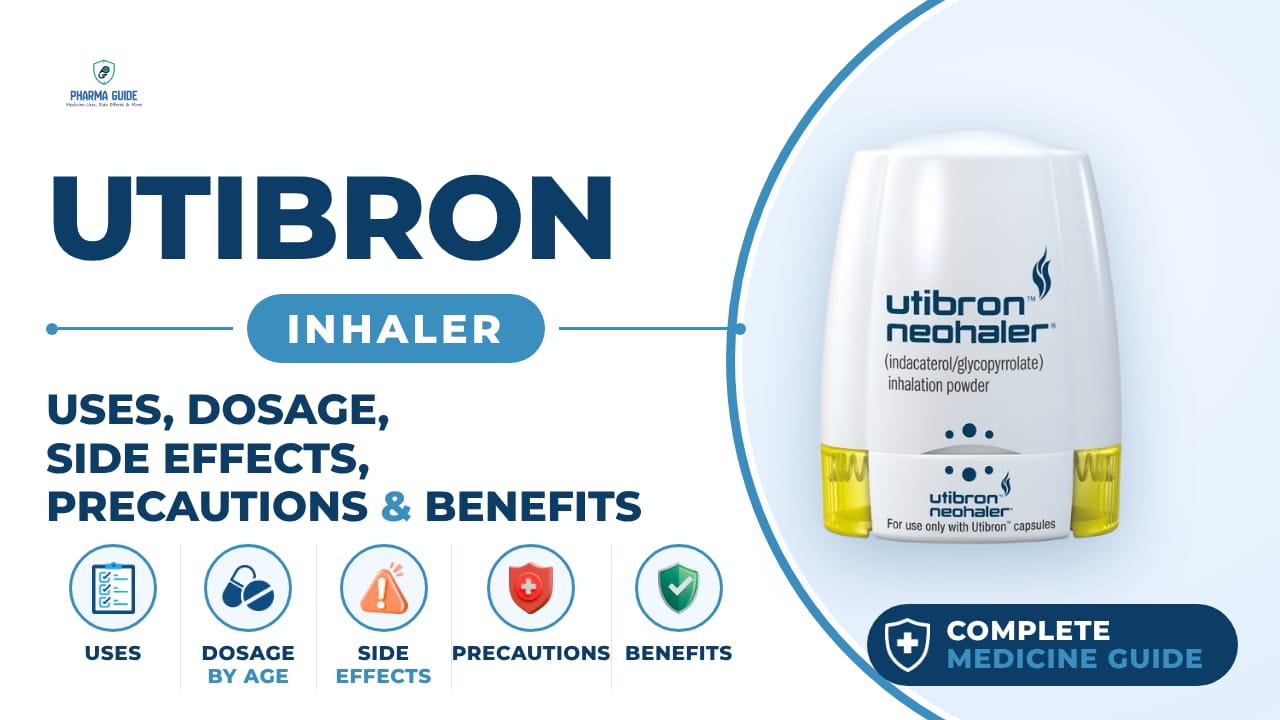
| Generic name | indacaterol and glycopyrrolate |
|---|---|
| Drug class | Bronchodilator combination (LABA and anticholinergic) |
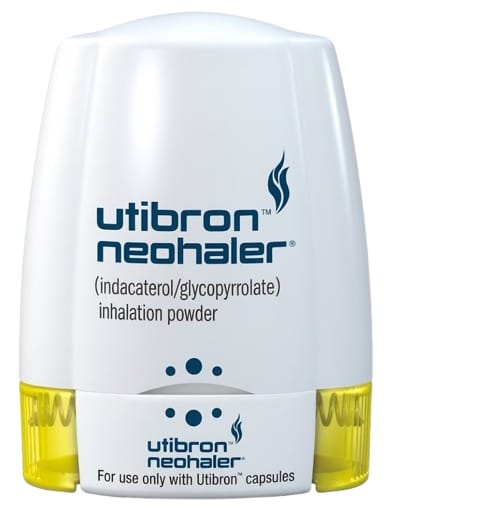
| Forms | Inhalation powder in capsules used with the Neohaler inhaler device |
Quick overview
Utibron Inhaler (indacaterol and glycopyrrolate) is an inhaled bronchodilator combination used long-term to treat chronic obstructive pulmonary disease (COPD), including chronic bronchitis and emphysema. It combines a long-acting beta2-adrenergic agonist (LABA) and an anticholinergic to help relax and open the airways. It is taken twice daily using the Neohaler device and is not a rescue inhaler for sudden symptoms. This product has been discontinued in the United States.
What is Utibron Inhaler
Utibron Neohaler is an inhaled medicine that combines two types of bronchodilators: a long-acting beta2-adrenergic agonist (LABA) called indacaterol and an anticholinergic called glycopyrrolate. It is used long-term to treat chronic obstructive pulmonary disease (COPD), which includes chronic bronchitis and emphysema. Note: this product has been discontinued in the United States.
Utibron Inhaler uses
- Chronic obstructive pulmonary disease (COPD)
- Chronic bronchitis associated with COPD
- Emphysema associated with COPD
- Long-term maintenance of airway opening
- Management of ongoing COPD-related breathing difficulties
Benefits of Utibron Inhaler
- Helps relax the muscles around the airways in the lungs to make breathing easier
- Used twice daily to improve COPD symptoms such as wheezing, cough, chest tightness, and shortness of breath
- Studies showed it improved lung function (FEV1) more than placebo or either of its ingredients used alone
- Patients using it needed less rescue inhaler medicine compared to placebo
How Utibron Inhaler works
The medicine contains two ingredients that work together. Indacaterol relaxes the muscles around the airways by acting on beta2 receptors in the lungs, which widens the airways. Glycopyrrolate blocks a different set of receptors (muscarinic receptors) in the airway muscles, which also helps the airways relax and stay open. Together they have added bronchodilating effects.
Utibron Inhaler dosage
This medicine is for oral inhalation only; do not swallow the capsules. Use one capsule inhaled through the Neohaler device two times each day, one in the morning and one in the evening, at the same time every day. Do not use more often than prescribed.
Only use the capsules with the Neohaler inhaler device provided; do not use with any other inhaler or use the device for other medicines. Do not place a capsule directly in the mouthpiece; it must be loaded into the device's capsule chamber. After inhaling, check that the capsule is empty by opening the inhaler; most people empty the capsule with one or two inhalations.
If a dose is missed, take it as soon as remembered, then take the next dose at the usual time; do not use two capsules at once and do not use more than two capsules in a day. This medicine is not a rescue inhaler and does not relieve sudden COPD symptoms; always carry a fast-acting rescue inhaler for sudden symptoms.
Do not stop using this medicine suddenly without talking to your doctor, as symptoms may get worse. Not approved for use in children or adolescents under 18 years old. No dosage adjustment is needed for elderly patients 75 years of age and older.
| Age group | Dose |
|---|---|
| Under 18 years | Not recommended |
| 18–64 years | 27.5 mcg / 15.6 mcg, twice/day |
| 65+ years | 27.5 mcg / 15.6 mcg, twice/day |
Available forms and strengths
- Inhalation powder in capsules used with the Neohaler inhaler device
- 27.5 mcg / 15.6 mcg strength
Side effects of Utibron Inhaler
Common
- Runny or stuffy nose
- Sore throat
- High blood pressure (hypertension)
- Back pain
- Mouth or oropharyngeal pain
- Cough
- Headache
- Dizziness
- Diarrhea
- Heartburn/indigestion
Serious
- Serious asthma-related events (hospitalization, intubation, death) when LABA medicines are used without an inhaled corticosteroid
- Paradoxical bronchospasm (sudden worsening of breathing right after use)
- Serious allergic reactions including anaphylaxis, angioedema, rash, hives, swelling of tongue/lips/face, trouble breathing or swallowing
- Heart effects such as fast or irregular heartbeat, increased blood pressure, chest pain
- New or worsened acute narrow-angle glaucoma (eye pain, blurred vision, halos around lights, red eyes)
- New or worsened urinary retention (difficulty or painful urination, weak stream)
- Low potassium (hypokalemia) causing muscle spasm, weakness, or abnormal heart rhythm
- High blood sugar (hyperglycemia)
Warnings and precautions
- People with asthma who take LABA medicines like the one in this inhaler have an increased risk of death from asthma problems. This medicine is not approved for treating asthma.
- This medicine is not a rescue inhaler and will not work fast enough to treat a sudden breathing attack. Always carry a fast-acting rescue inhaler for sudden symptoms.
- Do not use this medicine together with other inhaled medicines containing a long-acting beta agonist, as this can lead to overdose effects.
- This medicine can cause paradoxical bronchospasm, a sudden worsening of breathing or wheezing that can be life-threatening.
- Should not be started in patients having a severe, suddenly worsening COPD flare-up, and should not be used to relieve sudden symptoms.
- It is not known whether this medicine can harm an unborn baby. Tell your doctor if you are pregnant or planning to become pregnant.
- It is not known if the medicines in this inhaler pass into breast milk or if they could harm a nursing baby. One source advises not breastfeeding while using this medicine; talk with your doctor to decide.
- This medicine can be used at the usual dose in people with mild to moderate kidney problems. In people with severe kidney problems or those on dialysis, it should only be used if the benefits outweigh the risks because blood levels of one ingredient may be higher.
- This medicine can be used at the usual dose in people with mild to moderate liver problems. It has not been studied in people with severe liver impairment.
Storage
- Store at room temperature between 68°F to 77°F (20°C to 25°C)
- Do not remove capsules from the blister card until ready to use a dose
- Do not store capsules inside the Neohaler inhaler
- Keep in a dry place away from light and moisture
- Keep out of the reach of children
- Always use a new Neohaler inhaler provided with each new prescription
When to see a doctor
- Get emergency medical care if your breathing problems get worse quickly, or if your rescue inhaler does not relieve your breathing problems.
- Stop using this medicine and get emergency help right away if you have sudden shortness of breath immediately after using your inhaler.
- Stop using the medicine and seek emergency care if you have signs of a serious allergic reaction, such as rash, hives, or swelling of the tongue, lips, or face, or trouble breathing or swallowing.
- Stop taking the medicine and call your healthcare provider right away before your next dose if you notice signs of acute narrow-angle glaucoma, such as eye pain, nausea or vomiting, blurred vision, or seeing halos around lights.
- Stop taking the medicine and call your healthcare provider right away before your next dose if you develop signs of urinary retention, such as difficulty or painful urination or a weak urine stream.
- Call your healthcare provider if your breathing problems get worse over time while using this medicine, as you may need a different treatment.
Alternatives
- Stiolto Respimat
- Anoro Ellipta
- Ultibro Breezhaler
Watch the video
FAQs
What is Utibron Inhaler used for?
Utibron Inhaler was used long-term to treat chronic obstructive pulmonary disease (COPD), including chronic bronchitis and emphysema, by helping relax and open the airways.
Is Utibron Inhaler still available?
No, Utibron Inhaler has been discontinued in the United States.
How is Utibron Inhaler used?
It was inhaled using the Neohaler device, with one capsule inhaled twice daily—once in the morning and once in the evening at the same times each day. It was not a rescue inhaler for sudden symptoms.
What are the common side effects of Utibron Inhaler?
Common side effects included runny or stuffy nose, sore throat, high blood pressure, back pain, mouth or throat pain, cough, headache, dizziness, diarrhea, and heartburn or indigestion.
What are alternatives to Utibron Inhaler?
Alternatives mentioned include Stiolto Respimat, Anoro Ellipta, and Ultibro Breezhaler.
General information, not medical advice
Your prescriber and the leaflet in your pack know your situation. This page does not.
- Follow your prescriber and the leaflet
- Don't start, stop, or change a dose on your own
- Doses and warnings differ by country and product
Sources
Video
Related medicines

Injectafer Injection: Uses, Dosage, Side Effects, Precautions and Alternates
Iron products
Injectafer (ferric carboxymaltose) treats iron deficiency anemia and heart failure-related iron deficiency via IV. Learn uses, dosage, side effects, and

Gliclazide Tablet: Uses, Dosage, Side Effects, Precautions and Alternates
Sulfonylurea (hypoglycemic/antidiabetic agent)
Gliclazide Tablet is a sulfonylurea for type 2 diabetes that boosts insulin release. Learn about dosage, side effects, warnings, and precautions.