
Safety
General information, not medical advice
Your prescriber and the leaflet in your pack know your situation. This page does not.
- Follow your prescriber and the leaflet
- Don't start, stop, or change a dose on your own
- Doses and warnings differ by country and product
Vabomere Injection: Uses, Dosage, Side Effects, Precautions and Alternates
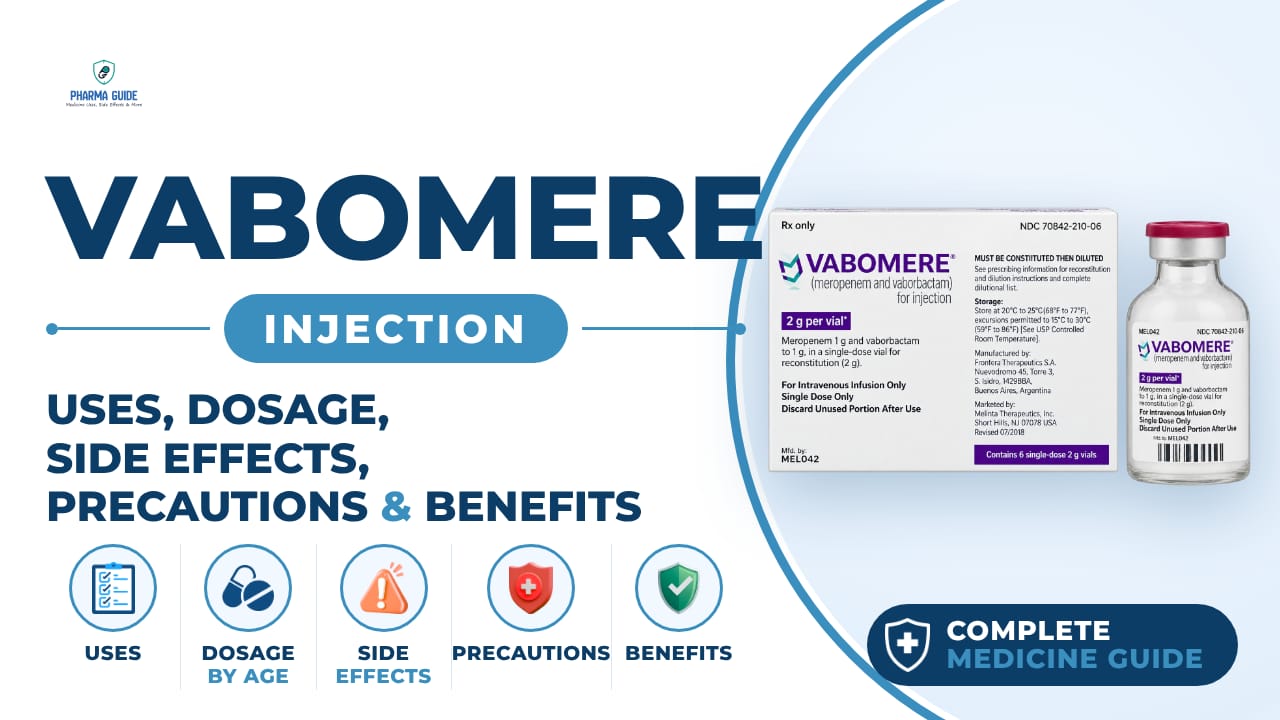
| Generic name | meropenem and vaborbactam |
|---|---|
| Drug class | carbapenem antibiotic and beta-lactamase inhibitor |
| Forms | Powder for solution for injection (given by IV infusion) |
Quick overview
Vabomere Injection combines meropenem and vaborbactam, a carbapenem antibiotic paired with a beta-lactamase inhibitor, given through a vein. It is used to treat complicated urinary tract infections, kidney infections, and certain resistant bacterial infections. Vabomere is given by a health care provider as an IV infusion, typically over about 3 hours, and treatment may continue for up to 14 days depending on the infection and kidney function.
What is Vabomere Injection
Vabomere is an antibiotic medicine given through a vein (IV). It combines two ingredients: meropenem, which kills bacteria, and vaborbactam, which helps meropenem keep working against bacteria that would otherwise resist it.
Vabomere Injection uses
- Complicated urinary tract infections (cUTI)
- Kidney infections (pyelonephritis)
- Infections caused by susceptible bacteria
- Resistant Gram-negative bacterial infections, when suitable
- Selected serious infections in a hospital setting, under a doctor's supervision
Benefits of Vabomere Injection
- Treats complicated urinary tract infections (UTIs)
- Helps treat kidney infections (pyelonephritis)
- Fights certain resistant Gram-negative bacteria
- Helps stop bacterial growth and control infection
- Provides a treatment option for selected difficult-to-treat bacterial infections
How Vabomere Injection works
Meropenem kills bacteria by stopping them from building their cell walls. Some bacteria make substances that can block meropenem from working, but vaborbactam destroys those substances so meropenem can keep working.
Vabomere Injection dosage
This medicine is given by a health care provider as an infusion into a vein, usually over about 3 hours. It is usually given every 8 to 12 hours for up to 14 days, depending on how well your kidneys are working. You should complete the full course of treatment even if you start to feel better, to help prevent the infection from coming back or becoming resistant to treatment. If you are using this medicine at home, you must be shown how to properly mix, store, and give the IV infusion, and how to safely dispose of needles and tubing. Your kidney function may be checked regularly while you are using this medicine.
| Age group | Dose |
|---|---|
| Under 18 years | Not recommended |
| 18–64 years | 4 g, 3 times/day |
| 65+ years | 4 g, 3 times/day |
Available forms and strengths
Powder for solution for injection (given by IV infusion).
Side effects of Vabomere Injection
Common
- Headache
- Pain, itching, hardness, swelling, or redness where the injection was given
- Diarrhea
- Nausea
- Yeast or vaginal infection
- Low potassium levels
- Fever
Serious
- Severe allergic reactions, including a reaction called DRESS that can affect the liver, kidneys, and heart
- Seizures, especially in people with brain infections, a history of seizures, or kidney problems
- Severe or persistent diarrhea from an overgrowth of germs called C. diff, which can occur even months after stopping the medicine
- Low platelet levels, which can increase the risk of bleeding or bruising
- Decreased mental alertness or coordination, including confusion, headaches, or numbness/tingling
- Severe skin reactions with fever, rash, blistering, or peeling skin
- Muscle breakdown (rhabdomyolysis) with muscle pain, weakness, or dark urine
- Liver problems, including liver injury
- Gastrointestinal bleeding, shown as black or bloody stool, weakness, or tiredness
Warnings and precautions
- Serious and sometimes fatal allergic reactions can occur with this type of antibiotic. If you've had a severe allergic reaction to penicillins, cephalosporins, carbapenems, or monobactams, tell your doctor before starting this medicine.
- This medicine can cause seizures, especially in people with brain infections, a history of seizures, kidney problems, or other brain conditions.
- If you take valproic acid or divalproex sodium for seizures, this medicine can lower the levels of that drug in your blood, raising your risk of breakthrough seizures.
- Antibiotics, including this one, can cause a serious type of diarrhea caused by an overgrowth of C. difficile bacteria, which can happen even two or more months after you stop the medicine.
- If you use hormonal birth control, this medicine may make it less effective, so use an additional or alternative method of contraception during treatment.
- Using this medicine without a confirmed or strongly suspected bacterial infection is unlikely to help and raises the risk that bacteria will become drug-resistant.
- This medicine may pose a risk to an unborn baby, though it isn't fully known. Tell your doctor if you are pregnant or planning to become pregnant so they can weigh the benefits and risks.
- This medicine passes into breast milk. Tell your doctor if you are breastfeeding so they can advise whether it's right for you.
- Your dose may need to be lowered if you have kidney problems, and your kidney function may be monitored with blood tests during treatment.
- Your liver function may be monitored during treatment, especially if you already have liver problems, due to a risk of liver injury.
- It isn't known for certain how alcohol affects this medicine, but heavy drinking can weaken your immune system and make it harder to fight infection. Alcohol may also add to feelings of drowsiness or reduced alertness caused by this medicine. It's best to limit alcohol while using it.
- This medicine can cause headaches, confusion, seizures, or numbness/tingling that could affect your alertness or coordination. Don't drive or operate machinery until you know how it affects you.
Storage
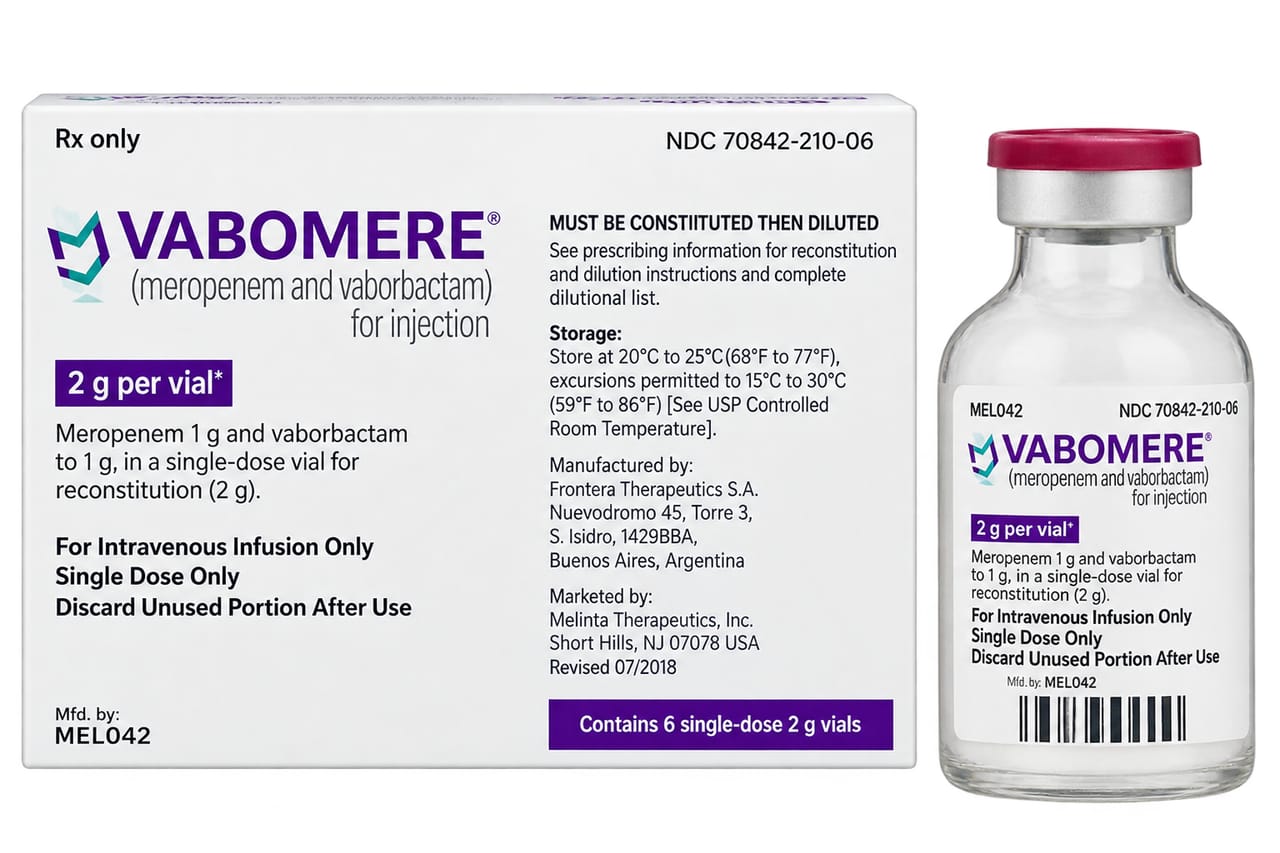
- Store unmixed powder at room temperature (20°C to 25°C / 68°F to 77°F), with brief excursions allowed between 15°C to 30°C (59°F to 86°F)
- After mixing, the solution must be diluted further right away before use
- The diluted solution must be used within 4 hours if kept at room temperature, or within 22 hours if kept refrigerated (2°C to 8°C / 36°F to 46°F)
- Do not freeze
- Each single-use vial is for one use only; throw it away after use even if some medicine remains
- Keep out of the reach and sight of children
When to see a doctor
- Get emergency help right away if you have signs of a serious allergic reaction, such as trouble breathing or wheezing, racing heart, fever, swollen glands, swelling of the face/lips/mouth/tongue/throat, trouble swallowing, hives or rash, nausea or vomiting, dizziness or fainting, stomach cramps, joint pain, dark urine, or yellow skin/eyes.
- Tell your health care provider right away if you notice signs that a seizure may be happening, such as muscle twitching, jerking, or spasms; stiffening of the arms and legs; feeling anxious, confused, or a sense of dread; dizziness; or falling or losing consciousness.
- Tell your health care provider right away if you develop watery diarrhea, diarrhea that doesn't go away, blood in your stool, severe stomach cramps, or a fever that starts during or after treatment, even if it's been a couple of months since you finished the medicine.
- Tell your health care provider if you notice easy bruising or bleeding, bleeding that won't stop, or nosebleeds, as these can be signs of low platelet levels.
- If you have muscle pain, tenderness, weakness, or dark urine, contact your health care provider right away, as this could be a sign of a rare muscle breakdown condition.
- If you think you or someone else has received too much of this medicine, get medical help right away or contact a poison control center.
Alternatives
- Cefiderocol
- Vaborbactam
- Meropenem
Watch the video
FAQs
What is Vabomere Injection used for?
Vabomere is used to treat complicated urinary tract infections, kidney infections (pyelonephritis), and certain resistant Gram-negative bacterial infections, including selected serious infections in a hospital setting.
How is Vabomere Injection given?
Vabomere is given by a health care provider as an IV infusion, typically over about 3 hours, usually every 8 to 12 hours for up to 14 days depending on the infection and kidney function.
How does Vabomere Injection work?
Vabomere combines meropenem, which kills bacteria by stopping them from building cell walls, with vaborbactam, which destroys substances bacteria make to block meropenem, helping it keep working.
What are the serious side effects of Vabomere Injection?
Serious side effects include severe allergic reactions (including DRESS), seizures, severe diarrhea from C. diff, low platelet levels, decreased mental alertness, severe skin reactions, muscle breakdown, liver problems, and gastrointestinal bleeding.
Can Vabomere Injection affect birth control?
Yes, Vabomere may make hormonal birth control less effective, so an additional or alternative method of contraception should be used during treatment.
General information, not medical advice
Your prescriber and the leaflet in your pack know your situation. This page does not.
- Follow your prescriber and the leaflet
- Don't start, stop, or change a dose on your own
- Doses and warnings differ by country and product
Sources
Video
Related medicines

Injectafer Injection: Uses, Dosage, Side Effects, Precautions and Alternates
Iron products
Injectafer (ferric carboxymaltose) treats iron deficiency anemia and heart failure-related iron deficiency via IV. Learn uses, dosage, side effects, and

Gliclazide Tablet: Uses, Dosage, Side Effects, Precautions and Alternates
Sulfonylurea (hypoglycemic/antidiabetic agent)
Gliclazide Tablet is a sulfonylurea for type 2 diabetes that boosts insulin release. Learn about dosage, side effects, warnings, and precautions.