
Safety
General information, not medical advice
Your prescriber and the leaflet in your pack know your situation. This page does not.
- Follow your prescriber and the leaflet
- Don't start, stop, or change a dose on your own
- Doses and warnings differ by country and product
Vagifem Vaginal Tablet: Uses, Dosage, Side Effects, Precautions and Alternates
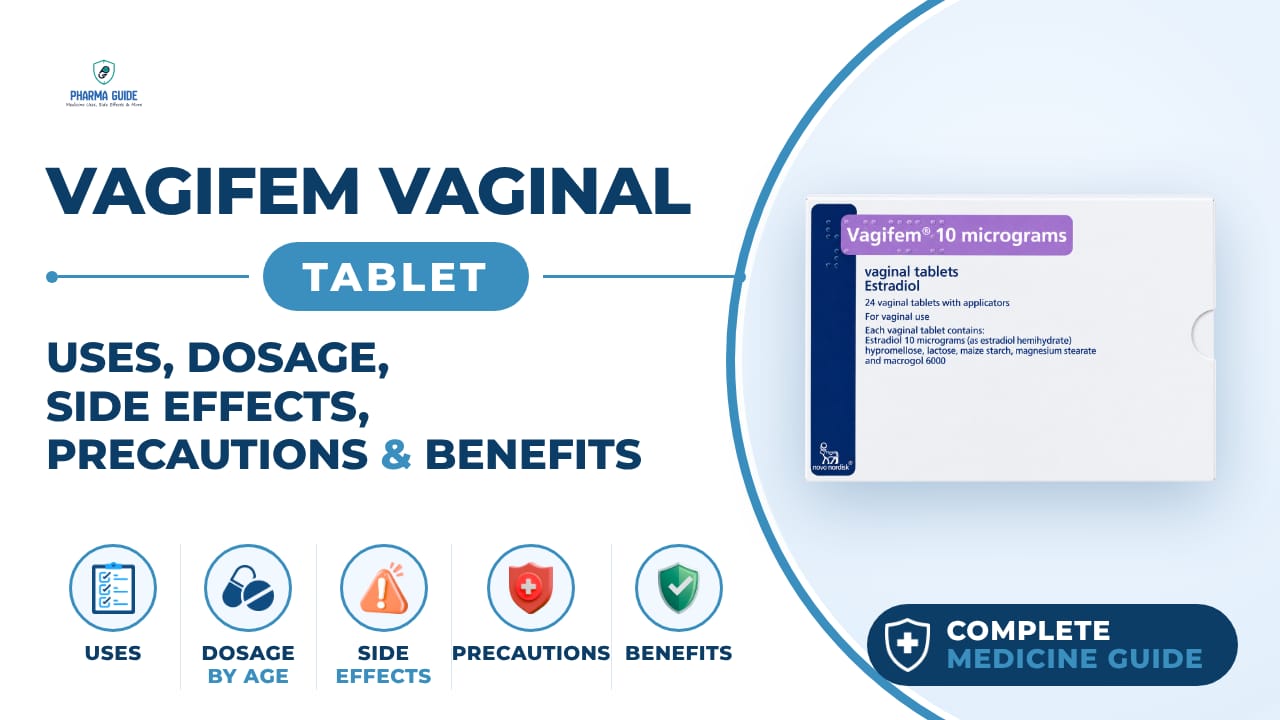
| Generic name | estradiol |
|---|---|
| Drug class | estrogen hormone (vaginal hormone replacement therapy) |
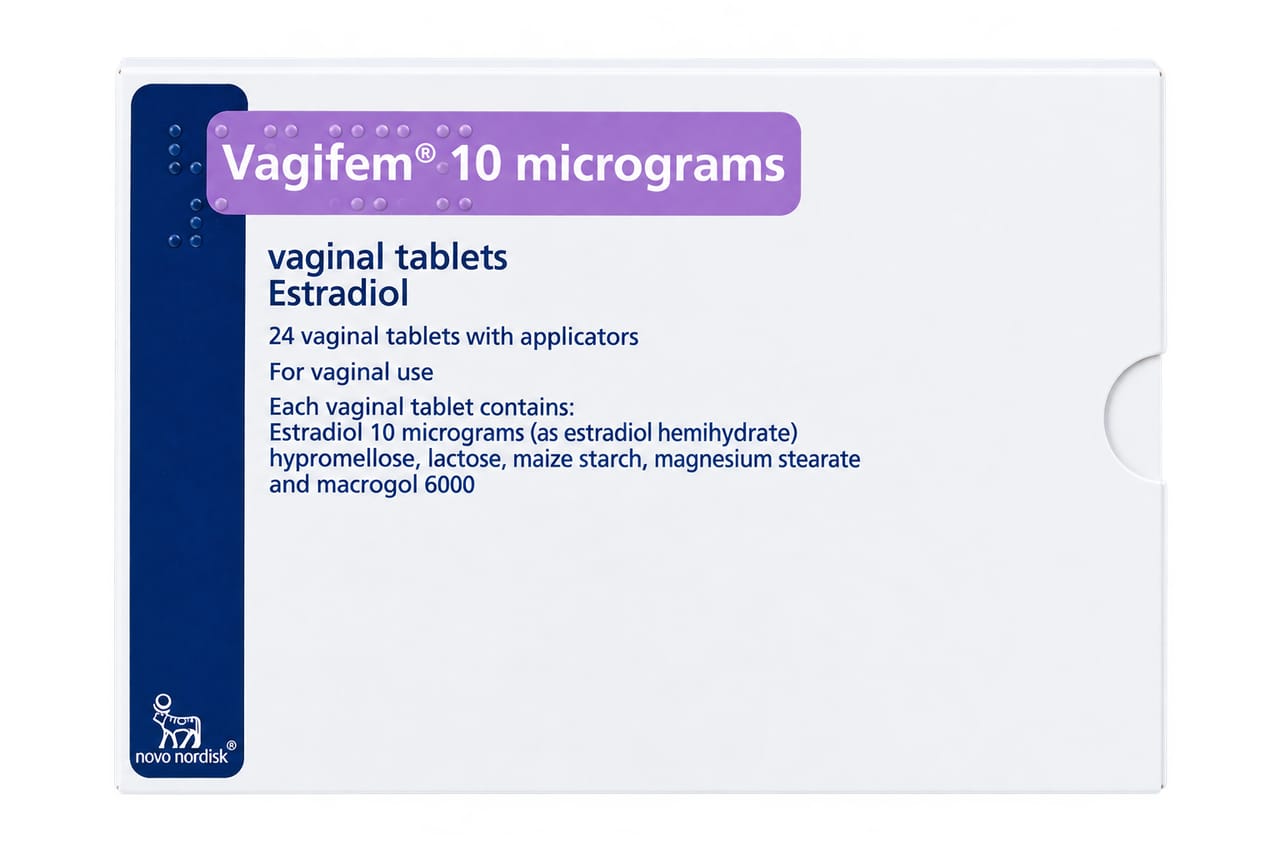
| Forms | Vaginal tablet with applicator (10 micrograms estradiol) |
Quick overview
Vagifem Vaginal Tablet contains estradiol, an estrogen hormone used as vaginal hormone replacement therapy. It is used to treat symptoms of vaginal atrophy caused by low estrogen after menopause, such as dryness, thinning, and irritation of vaginal tissue. The tablet comes pre-loaded in a disposable applicator for direct vaginal insertion and should be used only under a doctor's supervision.
What is Vagifem Vaginal Tablet
Vagifem is a small vaginal tablet that contains estradiol, a form of estrogen that is identical to the hormone made naturally by a woman's ovaries. It comes pre-loaded in a disposable applicator and is placed directly into the vagina.
Vagifem Vaginal Tablet uses
- Treats symptoms of vaginal atrophy (thinning, dryness, and irritation of vaginal tissue) caused by low estrogen after menopause
Benefits of Vagifem Vaginal Tablet
- Relieves vaginal dryness
- Reduces burning and irritation
- Helps improve painful intercourse related to vaginal atrophy
- Treats symptoms of genitourinary syndrome of menopause
- Provides mainly local estrogen therapy
How Vagifem Vaginal Tablet works
Vagifem releases estradiol, which is the same estrogen your body naturally makes, directly into the vaginal tissue. This helps reverse the thinning and dryness of the vaginal lining that happens when estrogen levels drop after menopause, which relieves symptoms like dryness, itching, and burning.
Vagifem Vaginal Tablet dosage
Treatment can be started on any day. For the first two weeks, one tablet is used daily. After the first two weeks, use one tablet twice a week, with three or four days between doses. Try to use it at the same time of day each time. It is inserted using the supplied single-use applicator, similar to inserting a tampon. Gently insert as far as it comfortably goes without forcing it. If the tablet comes out right after insertion, insert another one. Do not use two doses at the same time to make up for a missed one. This medicine should only be used under a doctor's supervision, with regular checkups at least once a year.
| Age group | Dose |
|---|---|
| 50–64 years | Common regimen: 10 mcg vaginally once daily for 2 weeks, then 10 mcg twice weekly |
| 65 years and older | Same usual regimen when appropriate: 10 mcg daily for 2 weeks, then twice weekly |
Available forms and strengths
- Vaginal tablet with applicator (10 micrograms estradiol)
Side effects of Vagifem Vaginal Tablet
Common
- Headache
- Stomach or abdominal pain, cramps, or discomfort
- Nausea and vomiting
- Bloating or abdominal distension
- Vaginal bleeding, discharge, or discomfort
- Vaginal yeast infection or genital fungal infection
- Back pain
- Weight gain
- Hair loss
- Fluid retention
- Breast pain or tenderness
Serious
- New breast lumps
- Unusual or unexpected vaginal bleeding
- Changes in vision or speech
- Sudden new severe headaches
- Severe chest or leg pain, with or without shortness of breath, weakness, or fatigue
- Signs of a blood clot (leg swelling or pain, chest pain, sudden shortness of breath)
- Signs of a stroke (sudden severe headache, vomiting, dizziness, fainting, vision or speech problems, weakness or numbness in face, arm, or leg)
- Signs of a heart attack (crushing chest pain or heaviness)
- Yellowing of the skin or eyes (jaundice)
- Allergic reaction (hives, itching, swelling, low blood pressure, rapid heartbeat, sweating)
- Persistent sad mood (depression)
- Sudden partial or complete loss of vision
Warnings and precautions
- Vagifem must not be used during pregnancy. If you become pregnant while using it, stop and contact your doctor right away. Vagifem should not be used while breastfeeding.
- People with kidney disease should talk to their doctor before using Vagifem, since estrogen can cause fluid retention which may affect kidney conditions. Vagifem should not be used by women with liver disease or dysfunction unless liver function tests have returned to normal. Vagifem is not known to affect your ability to drive or use machines.
- Estrogen-alone therapy can increase the risk of stroke and blood clots in the legs or lungs. It should not be used to try to prevent heart disease.
- Using estrogen alone may raise the risk of dementia in women 65 and older.
- Taking oral estrogen for a long time can raise the risk of overgrowth of the womb lining and uterine cancer, though this has not been shown with Vagifem specifically.
- Using estrogen-only hormone therapy for 5 or more years has been linked to a slightly higher risk of ovarian cancer.
- Do not use this medicine if you have, or have had, certain cancers, blood clots, stroke, heart attack, or liver problems.
- If you need surgery, tell your surgeon you are using Vagifem, since you may need to stop it several weeks beforehand to lower the risk of blood clots.
Storage
- Store in a dry place, at room temperature between 15 and 25°C
- Protect from light
- Store in original package
- Do not refrigerate
- Keep in a safe place out of the reach of children
- Do not use after the expiry date printed on the package
- Do not throw away medicines via wastewater or household waste; ask your pharmacist how to dispose of medicines no longer used
When to see a doctor
- Get medical help right away if you notice new breast lumps, unusual vaginal bleeding, vision or speech changes, sudden severe headaches, or chest/leg pain with shortness of breath or weakness.
- Stop using Vagifem and see a doctor right away if you get migraine-like headaches for the first time, yellowing of skin or eyes, swelling of the face/tongue/throat with difficulty breathing, a big rise in blood pressure, or if you become pregnant.
- Seek medical help if you notice signs of a blood clot, such as painful swelling and redness in the leg, sudden chest pain, or difficulty breathing.
- If you think you have taken too much Vagifem, contact your healthcare professional or hospital emergency department right away, even if you have no symptoms.
Alternatives
- Estradiol vaginal cream
- Estradiol vaginal ring
- Conjugated estrogen vaginal cream
Watch the video
FAQs
What is Vagifem Vaginal Tablet used for?
It is used to treat symptoms of vaginal atrophy, such as thinning, dryness, and irritation of vaginal tissue, caused by low estrogen after menopause.
How is Vagifem Vaginal Tablet used?
Treatment can start on any day. For the first two weeks, one tablet is used daily. After that, one tablet is used twice a week, with three or four days between doses, inserted using the supplied applicator.
What are the common side effects of Vagifem Vaginal Tablet?
Common side effects include headache, stomach pain or cramps, nausea, bloating, vaginal bleeding or discharge, yeast infection, back pain, weight gain, hair loss, fluid retention, and breast pain.
Can Vagifem Vaginal Tablet be used during pregnancy or breastfeeding?
No, Vagifem must not be used during pregnancy or while breastfeeding. If you become pregnant while using it, stop and contact your doctor right away.
What precautions should be taken with Vagifem Vaginal Tablet?
People with kidney or liver disease should talk to their doctor before use. Estrogen-alone therapy can increase the risk of stroke and blood clots, and should not be used to prevent heart disease.
General information, not medical advice
Your prescriber and the leaflet in your pack know your situation. This page does not.
- Follow your prescriber and the leaflet
- Don't start, stop, or change a dose on your own
- Doses and warnings differ by country and product
Sources
Video
Related medicines

Injectafer Injection: Uses, Dosage, Side Effects, Precautions and Alternates
Iron products
Injectafer (ferric carboxymaltose) treats iron deficiency anemia and heart failure-related iron deficiency via IV. Learn uses, dosage, side effects, and

Gliclazide Tablet: Uses, Dosage, Side Effects, Precautions and Alternates
Sulfonylurea (hypoglycemic/antidiabetic agent)
Gliclazide Tablet is a sulfonylurea for type 2 diabetes that boosts insulin release. Learn about dosage, side effects, warnings, and precautions.