
Safety
General information, not medical advice
Your prescriber and the leaflet in your pack know your situation. This page does not.
- Follow your prescriber and the leaflet
- Don't start, stop, or change a dose on your own
- Doses and warnings differ by country and product
Valacyclovir Tablet: Uses, Dosage, Side Effects, Precautions and Alternates
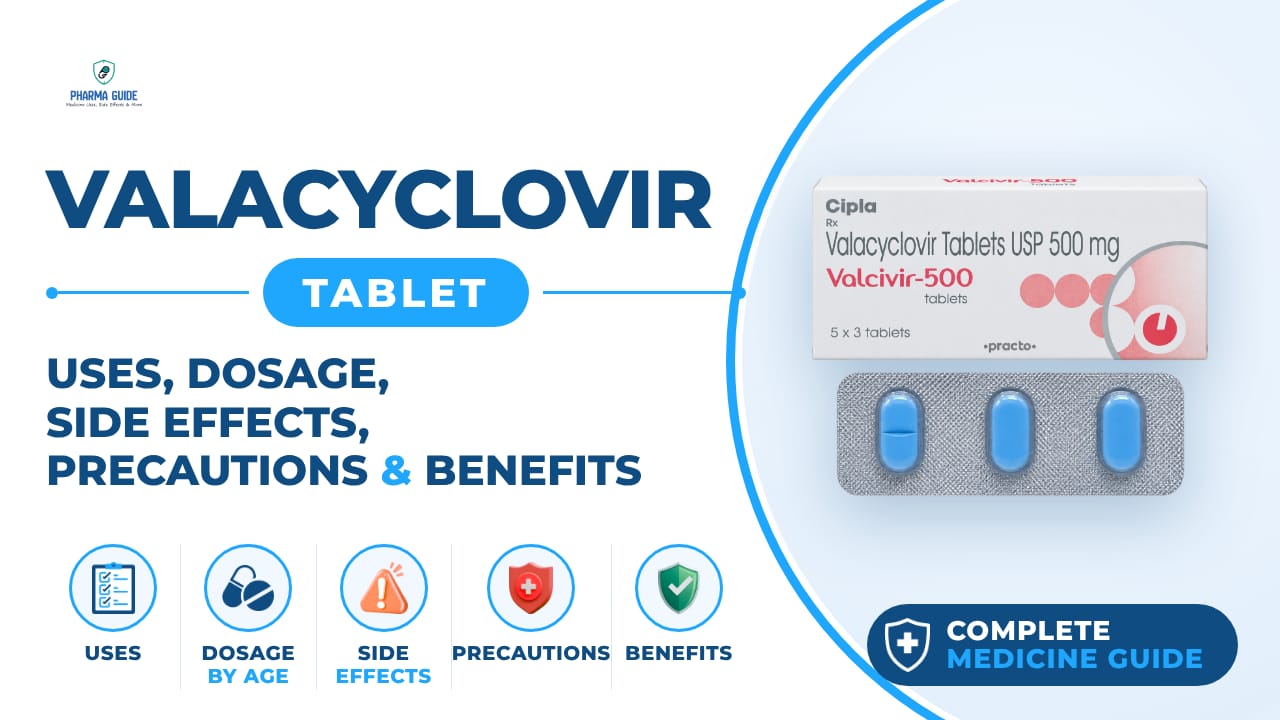
| Generic name | valacyclovir |
|---|---|
| Drug class | Purine nucleosides (deoxynucleoside analogue DNA polymerase inhibitor) |
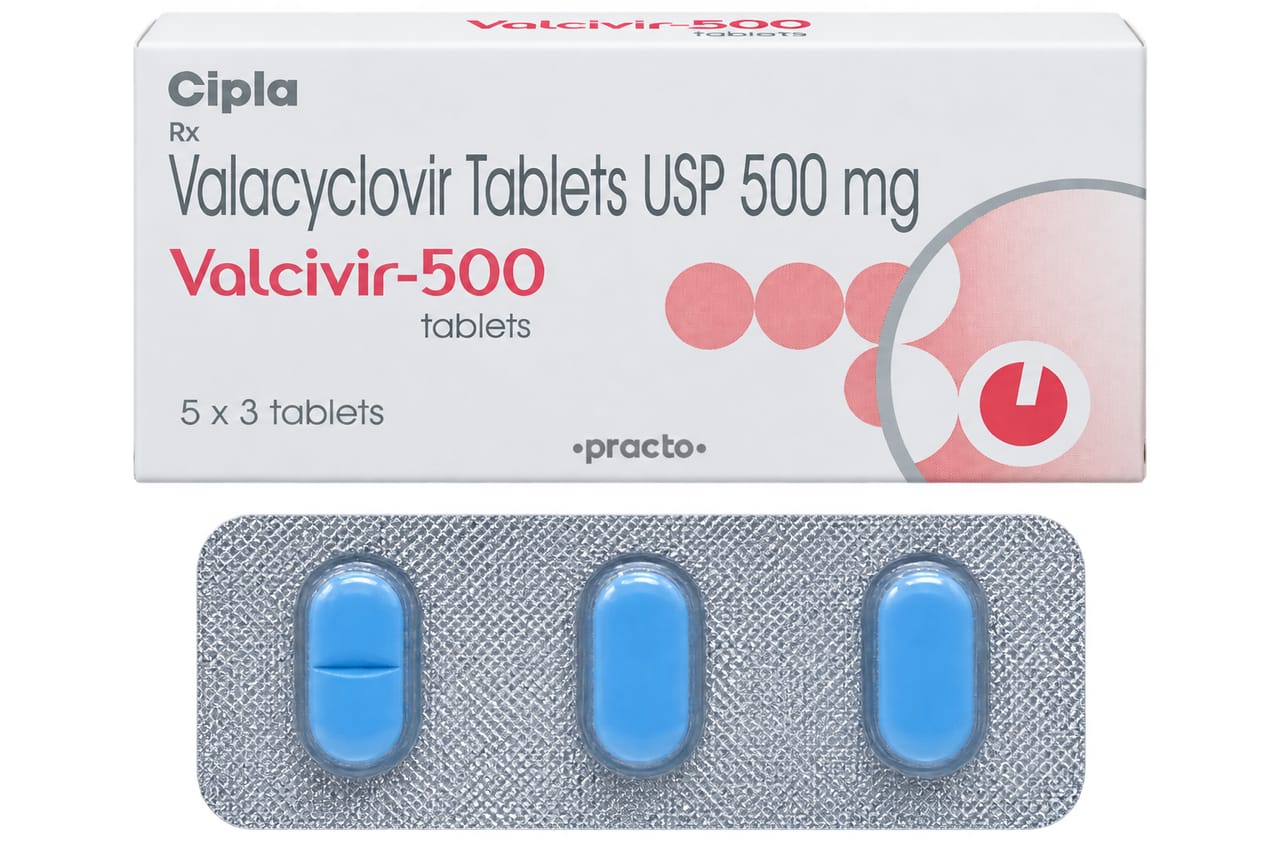
| Forms | Tablets (500 mg and 1 gram, film-coated), Oral suspension (can be prepared from tablets for patients who cannot swallow tablets) |
Quick overview
Valacyclovir Tablet is an antiviral medicine that belongs to the purine nucleoside class. In the body, it converts into acyclovir, a substance that fights herpes viruses. It is used to treat cold sores, genital herpes, shingles, and chickenpox, and while it does not cure these infections, it can lessen symptoms and help sores heal faster.
What is Valacyclovir Tablet
Valacyclovir is an antiviral medicine. In the body, it becomes acyclovir, which fights herpes viruses. It does not cure the infection but can lessen symptoms and help sores heal faster.
Valacyclovir Tablet uses
- Treating cold sores (herpes labialis) in adults and children 12 years and older
- Treating an initial or recurring episode of genital herpes in adults with normal immune systems
- Long-term suppression of genital herpes outbreaks in adults with normal immune systems or with HIV-1
- Reducing the risk of spreading genital herpes to a partner, along with safer sex practices
- Treating shingles (herpes zoster) in adults with normal immune systems
- Treating chickenpox in children with normal immune systems aged 2 to less than 18 years
Benefits of Valacyclovir Tablet
- Can shorten the length of a cold sore episode by about a day compared to placebo
- Can reduce time to lesion healing and time to stopping viral shedding in genital herpes
- Can lower the chance of passing genital herpes to a partner when combined with safer sex practices
- Helps sores from shingles and herpes heal faster and reduces pain and discomfort
How Valacyclovir Tablet works
Valacyclovir is changed by the body into acyclovir, which blocks an enzyme the herpes virus needs to copy its DNA, stopping the virus from multiplying.
Valacyclovir Tablet dosage
This medicine can be taken with or without food. Start treatment as soon as possible at the first sign of symptoms, such as tingling, itching, or burning, or when a sore appears. Take exactly as prescribed and do not stop or change treatment without talking to your healthcare provider.
If a child cannot swallow the tablets, ask the healthcare provider about an oral suspension form instead. Drink plenty of fluids while taking this medicine to help keep the kidneys working properly. Keep sores as clean and dry as possible, and wearing loose clothing may help prevent irritation of the sores.
If a dose is missed, take it as soon as you remember; if it is almost time for the next dose, skip the missed one and continue your regular schedule; do not double up doses. This medicine does not cure the infection and does not stop you from spreading it to others.
| Age group | Dose |
|---|---|
| Under 2 years | Not routinely recommended |
| 2–11 years | 20 mg/kg 3 times daily for 5 days for chickenpox; max 1 g per dose |
| 12–17 years | 2 g twice daily for 1 day for cold sores |
| Adults ≥18 years | 500 mg–1 g, depending on infection |
Available forms and strengths
- Tablets (500 mg and 1 gram, film-coated)
- Oral suspension (can be prepared from tablets for patients who cannot swallow tablets)
Side effects of Valacyclovir Tablet
Common
- Headache
- Nausea
- Stomach (abdominal) pain
Serious
- Thrombotic thrombocytopenic purpura (TTP) and hemolytic uremic syndrome (HUS), which can cause blood clots and reduced blood flow to organs, sometimes leading to death
- Kidney failure or acute renal failure
- Nervous system problems such as aggressive behavior, confusion, hallucinations, shaky movements, speech problems, seizures, or coma
- Severe skin reactions including AGEP, DRESS, toxic epidermal necrolysis, Stevens-Johnson syndrome, and erythema multiforme, which can involve a painful rash with blisters or sores in the mouth or peeling skin
- Allergic reactions including anaphylaxis, angioedema, difficulty breathing, swelling of the face, lips, tongue, or throat, hives, itching, or rash
- Blood problems such as thrombocytopenia and aplastic anemia
Warnings and precautions
- Do not take this medicine if you are allergic to valacyclovir, acyclovir, or any of its ingredients, or if you have had a severe skin reaction to valacyclovir or acyclovir before.
- TTP/HUS, a serious blood disorder, has occurred in people with advanced HIV-1 disease or bone marrow/kidney transplants taking high doses, and has led to death in some cases. Treatment should stop right away if this occurs.
- Elderly patients and those with kidney problems are more likely to develop kidney failure or nervous system side effects such as confusion or hallucinations, and may need a lower dose.
- Serious skin reactions can occur, including rash with blistering or peeling skin. Stop the medicine and get medical help immediately if this happens.
- This medicine does not cure herpes infections and does not prevent spreading the virus to others, even during treatment.
- Practice safer sex, including avoiding sexual contact during outbreaks and using condoms, since the virus can still spread even without symptoms.
- People with kidney disease, including those on dialysis, need special caution and may need a lower dose. Acute kidney failure can occur, especially in patients not drinking enough fluids or taking other drugs that can harm the kidneys.
- It is not known if valacyclovir will harm an unborn baby. Studies so far have not found a clear link to major birth defects, but data are limited. You and your healthcare provider will decide together whether to use it during pregnancy.
- Valacyclovir's active form passes into breast milk. Talk to your healthcare provider about the benefits of breastfeeding along with your need for this medicine and any possible risks to the baby.
Storage
- Store at 20° to 25°C (68° to 77°F) [see USP Controlled Room Temperature]. Dispense in a well-closed container as defined in the USP.
- Store valacyclovir oral suspension in a refrigerator. Throw away any unused liquid after 28 days. Shake the liquid well before each use.
When to see a doctor
- Get emergency help right away for signs of an allergic reaction, such as hives, trouble breathing, or swelling of the face, lips, tongue, or throat.
- Stop taking the medicine and get medical help immediately if you develop a painful rash with blisters or sores in the mouth, or blistering or peeling skin.
- Call your doctor right away if you notice signs of nervous system problems, such as aggressive behavior, confusion, unsteady movement, hallucinations, shaky movements, seizures, or coma.
- Contact your doctor right away if you notice signs of a serious blood disorder, such as fever, easy bruising or bleeding, unusual red spots on the skin, bloody diarrhea, vomiting, pale or yellowed skin, weakness, fainting, or little to no urination.
- Seek emergency care or contact poison control if you think you have taken too much of this medicine.
Alternatives
- Valtrex
- Zovirax
- Famvir
- Famciclovir
Watch the video
FAQs
What is Valacyclovir Tablet used for?
It treats cold sores, genital herpes (initial and recurrent episodes), long-term suppression of genital herpes outbreaks, shingles, and chickenpox, and helps reduce the risk of spreading genital herpes to a partner.
Does Valacyclovir cure herpes infections?
No, it does not cure the infection or stop you from spreading it to others, but it can lessen symptoms and help sores heal faster.
How does Valacyclovir Tablet work?
It is converted in the body into acyclovir, which blocks an enzyme the herpes virus needs to copy its DNA, stopping the virus from multiplying.
What are the common side effects of Valacyclovir Tablet?
Common side effects include headache, nausea, and stomach (abdominal) pain.
What should I do if I miss a dose of Valacyclovir Tablet?
Take it as soon as you remember, but if it is almost time for your next dose, skip the missed one and continue your regular schedule without doubling up.
General information, not medical advice
Your prescriber and the leaflet in your pack know your situation. This page does not.
- Follow your prescriber and the leaflet
- Don't start, stop, or change a dose on your own
- Doses and warnings differ by country and product
Sources
- Camber Pharmaceuticals, Inc. FDA Prescribing Information and Patient Information for Valacyclovir Tablets, Revised 11/2025 and 12/2025
- Drugs.com Valacyclovir consumer drug information, last updated Aug 13, 2026
- Mayo Clinic - Valacyclovir (oral route) Description, Precautions, Proper Use and Side Effects, last updated Feb 1, 2026
Video
Related medicines

Injectafer Injection: Uses, Dosage, Side Effects, Precautions and Alternates
Iron products
Injectafer (ferric carboxymaltose) treats iron deficiency anemia and heart failure-related iron deficiency via IV. Learn uses, dosage, side effects, and

Gliclazide Tablet: Uses, Dosage, Side Effects, Precautions and Alternates
Sulfonylurea (hypoglycemic/antidiabetic agent)
Gliclazide Tablet is a sulfonylurea for type 2 diabetes that boosts insulin release. Learn about dosage, side effects, warnings, and precautions.