
Safety
General information, not medical advice
Your prescriber and the leaflet in your pack know your situation. This page does not.
- Follow your prescriber and the leaflet
- Don't start, stop, or change a dose on your own
- Doses and warnings differ by country and product
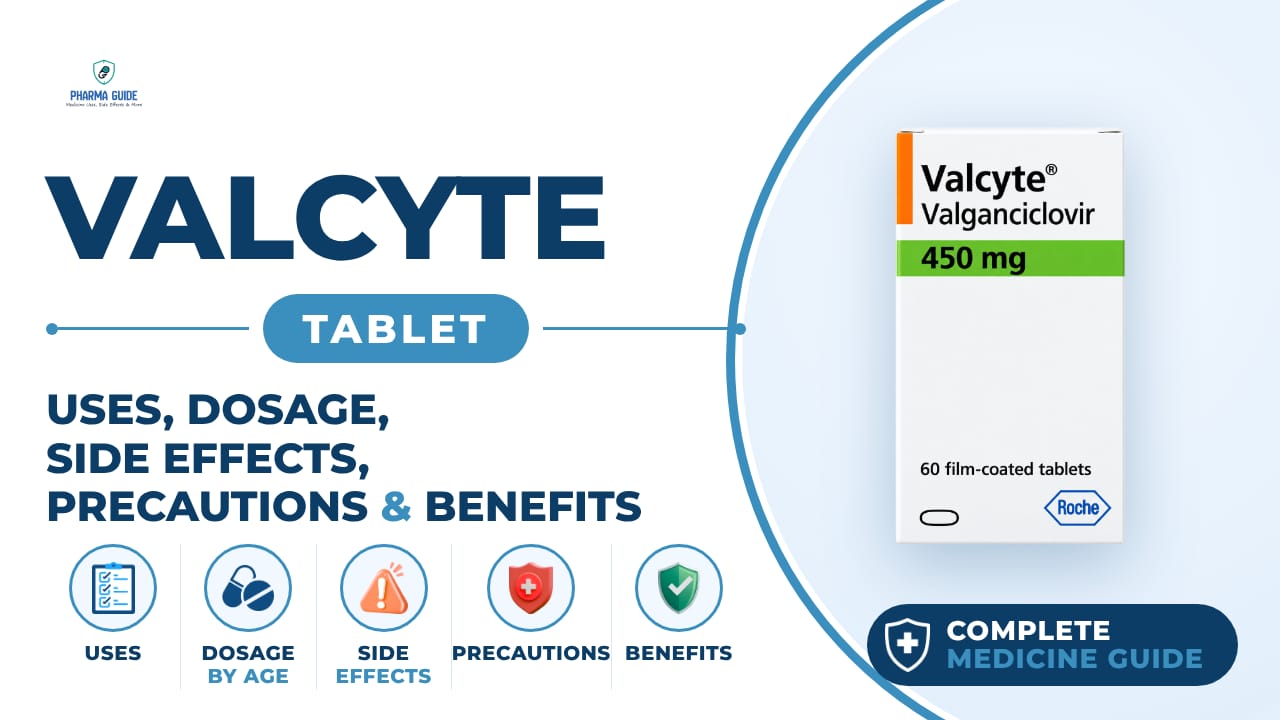
Valcyte Tablet: Uses, Dosage, Side Effects, Precautions and Alternates
| Generic name | valganciclovir |
|---|---|
| Drug class | Purine nucleosides |
| Forms | Tablet, Oral liquid (powder for oral solution) |
Quick overview
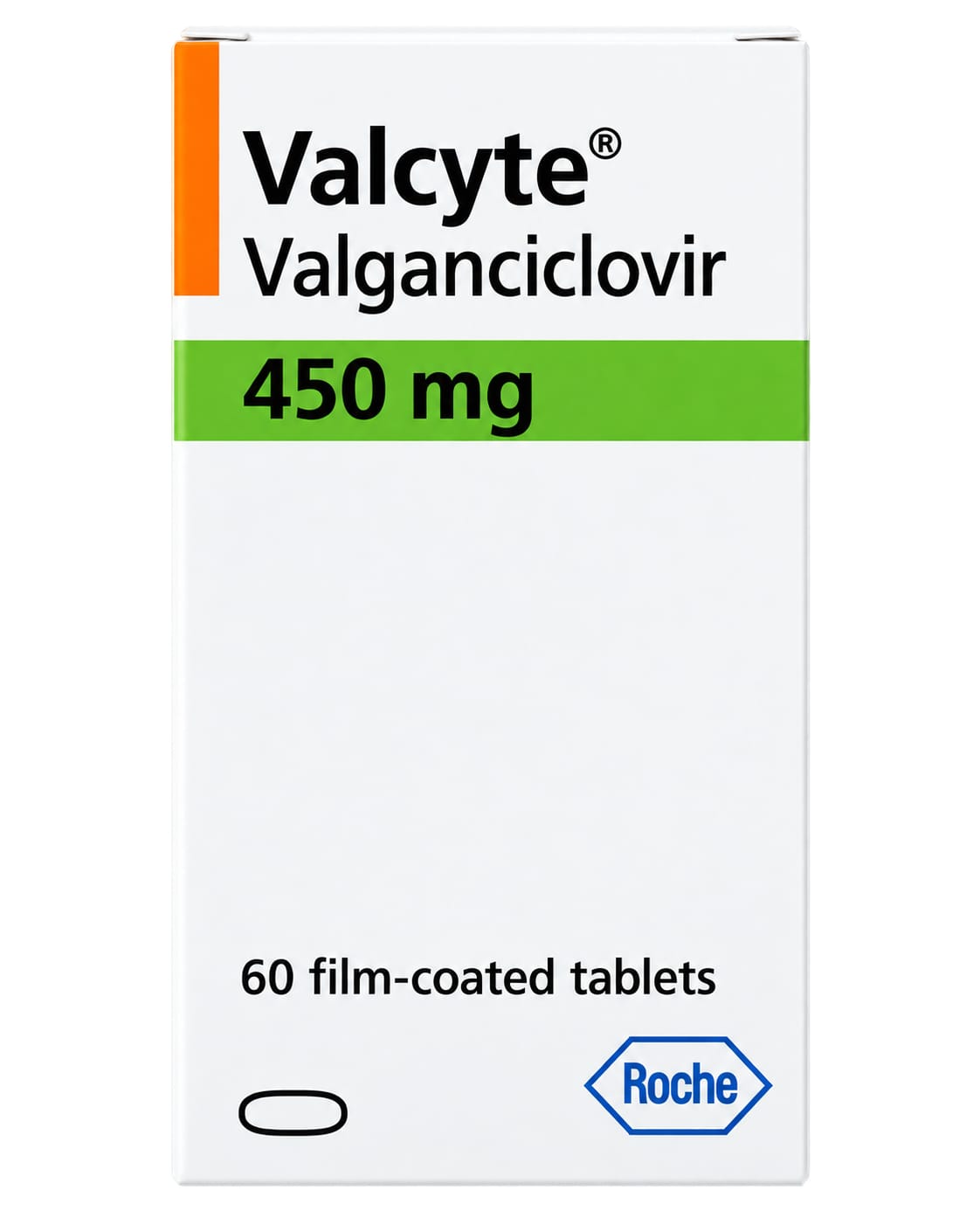
Valcyte Tablet (valganciclovir) is a prescription antiviral medicine belonging to the purine nucleosides drug class. It works by changing into ganciclovir in the body to stop cytomegalovirus (CMV) from multiplying. It is used to treat CMV eye infection in adults with AIDS and to prevent CMV disease after certain organ transplants in both adults and children. It does not cure CMV, but it helps control the infection.
What is Valcyte Tablet
Valcyte is a prescription antiviral medicine. Its active ingredient, valganciclovir, changes into ganciclovir in the body to stop a virus called cytomegalovirus (CMV) from multiplying. It does not cure CMV, but it helps control the infection.
Valcyte Tablet uses
- Treats CMV eye infection (CMV retinitis) in adults with AIDS, which can otherwise lead to blindness
- Prevents CMV disease in adults after a heart, kidney, or pancreas transplant
- Prevents CMV infection in children 4 months to 16 years old after a kidney transplant
- Prevents CMV disease in children 1 month to 16 years old after a heart transplant
Benefits of Valcyte Tablet
- Helps control CMV retinitis and lowers the risk of blindness
- Helps prevent CMV disease from developing after an organ transplant
- Helps stop the spread of CMV infection to other parts of the body
How Valcyte Tablet works
Valcyte changes into ganciclovir in the body, which stops the CMV virus from making copies of itself (replicating) and growing, so it helps keep the infection from spreading.
Valcyte Tablet dosage
Take with food to help your body absorb the medicine. Swallow tablets whole with a glass of water; do not crush, break, or chew them. If a tablet breaks or you touch crushed tablet powder, wash your skin with soap and water, or rinse your eyes with plain water if it gets in your eyes. If you use the liquid form, shake it well and measure doses with the device provided, not a kitchen spoon (the liquid is only for children). Take your dose at about the same time each day. Do not change your dose or stop taking it without talking to your doctor first, even if you feel better. Keep taking it regularly and refill your prescription before you run out. You will likely need regular blood tests while taking this medicine. If you are being treated for CMV eye infection, you should have your eyes checked regularly.
| Age group | Dose |
|---|---|
| 4 months–17 years | Dose is calculated from body surface area and kidney function; oral solution is often used |
| 18–64 years – CMV retinitis induction | 900 mg twice daily for 21 days |
| 18–64 years – maintenance | 900 mg once daily |
| 65 years and older | Same indication-based adult regimen, with dose adjustment according to kidney function |
Available forms and strengths
- Tablet
- Oral liquid (powder for oral solution)
Side effects of Valcyte Tablet
Common
- Diarrhea
- Nausea or vomiting
- Headache
- Fever and tiredness (fatigue)
- Tremors (in adults) or cold/throat symptoms (in children)
- Trouble sleeping (insomnia)
- Pain or burning when urinating
- Looking pale
Serious
- Signs of blood disorders: fever, chills, easy bruising, unusual bleeding, feeling light-headed or short of breath, pale skin
- Signs of infection: fever, chills, tiredness, flu-like symptoms, mouth or skin sores, sore throat
- Kidney problems: little or no urination, painful or difficult urination, swelling in feet or ankles, feeling tired or short of breath
- Seizures (convulsions)
- Pain or swelling near a transplanted organ
- Allergic reaction: hives, difficulty breathing, swelling of face, lips, tongue, or throat
- Confusion, agitation, hallucinations (thinking, hearing, or seeing things that are not real)
- Worsening eyesight
Warnings and precautions
- This medicine can severely lower white blood cells, red blood cells, or platelets, raising the risk of infection or bleeding. Regular blood tests are needed to monitor this.
- Valcyte can cause severe birth defects and may affect fertility in both men and women. Effective contraception is required during and after treatment.
- Do not break, crush, or chew the tablets. If skin touches a broken tablet, wash it thoroughly with soap and water.
- Using this medicine may raise your risk of developing certain cancers.
- Taking this medicine will not stop the spread of your disease to others, so ask your doctor how to prevent transmission.
- Valcyte is not recommended during pregnancy because it can cause birth defects. Tell your doctor right away if pregnancy occurs while either partner is using this medicine.
- Women should use effective birth control during treatment and for at least 30 days after the last dose; men should use barrier protection for at least 90 days after their last dose.
- Breastfeeding is not recommended while taking this medicine, and women with HIV or AIDS should not breastfeed since the virus could pass to the baby through breast milk.
- This medicine can harm the kidneys, and the risk is higher in people who are dehydrated, older adults, or those taking certain other medicines. Tell your doctor if you have kidney disease or are on dialysis.
- Liver function should be monitored when clinically appropriate.
- There are no known direct interactions between this medicine and alcohol, but heavy drinking can weaken your immune response and make it harder for your body to fight infection.
- This medicine can affect your alertness or coordination, and may cause drowsiness, dizziness, confusion, or seizures in some people. Do not drive or do activities that need alertness until you know how it affects you.
Storage
- Store Valcyte tablets at room temperature away from moisture and heat.
- Store Valcyte liquid in the refrigerator. Do not freeze. Throw away any unused after 49 days.
- Keep your tablets in the bottle until it is time to take them.
- Keep VALCYTE in a cool dry place where the temperature stays below 30°C.
- Do not store it, or any other medicine, in a bathroom or near a sink.
- Keep VALCYTE where children cannot reach it.
When to see a doctor
- Get emergency help right away if you have signs of a severe allergic reaction, such as hives, trouble breathing, or swelling of the face, lips, tongue, or throat.
- Call your doctor right away if you notice signs of infection such as fever, chills, tiredness, flu-like symptoms, mouth or skin sores, pale skin, cold hands and feet, easy bruising, or unusual bleeding.
- Call your doctor right away if you have a seizure, pain or burning when urinating, pain or swelling near your transplanted organ, or signs of kidney problems like little or no urination, swelling in the feet or ankles, or feeling tired or short of breath.
- Tell your doctor immediately if you notice a skin rash, stomach pain, cough, tiredness, oral thrush, inability to sleep, or worsening eyesight.
- Get urgent medical help if you notice swelling of the tongue, lips, or throat, signs of infection, unexplained bruising or bleeding, confusion, agitation, hallucinations, or seizures.
- If you think you or someone else has taken too much of this medicine, get emergency medical help right away or contact a poison control center.
Alternatives
- Maribavir
- Foscarnet
- Cidofovir
- Ganciclovir
Watch the video
FAQs
What is Valcyte Tablet used for?
Valcyte treats CMV eye infection (CMV retinitis) in adults with AIDS and prevents CMV disease after heart, kidney, or pancreas transplants in adults, and after kidney or heart transplants in children.
How does Valcyte Tablet work?
Valcyte changes into ganciclovir in the body, which stops the cytomegalovirus (CMV) from replicating and growing, helping keep the infection from spreading.
What is the dosage of Valcyte Tablet for CMV retinitis?
For adults aged 18-64 with CMV retinitis, the induction dose is 900 mg twice daily for 21 days, followed by a maintenance dose of 900 mg once daily.
What are the serious side effects of Valcyte Tablet?
Serious side effects include signs of blood disorders, signs of infection, kidney problems, seizures, pain or swelling near a transplanted organ, allergic reactions, confusion or hallucinations, and worsening eyesight.
Can Valcyte Tablet be taken during pregnancy?
Valcyte is not recommended during pregnancy because it can cause birth defects. Effective contraception is required during treatment and for at least 30 days after the last dose for women and 90 days for men.
General information, not medical advice
Your prescriber and the leaflet in your pack know your situation. This page does not.
- Follow your prescriber and the leaflet
- Don't start, stop, or change a dose on your own
- Doses and warnings differ by country and product
Sources
Video
Related medicines

Injectafer Injection: Uses, Dosage, Side Effects, Precautions and Alternates
Iron products
Injectafer (ferric carboxymaltose) treats iron deficiency anemia and heart failure-related iron deficiency via IV. Learn uses, dosage, side effects, and

Gliclazide Tablet: Uses, Dosage, Side Effects, Precautions and Alternates
Sulfonylurea (hypoglycemic/antidiabetic agent)
Gliclazide Tablet is a sulfonylurea for type 2 diabetes that boosts insulin release. Learn about dosage, side effects, warnings, and precautions.