
Safety
General information, not medical advice
Your prescriber and the leaflet in your pack know your situation. This page does not.
- Follow your prescriber and the leaflet
- Don't start, stop, or change a dose on your own
- Doses and warnings differ by country and product
Vancocin Capsule: Uses, Dosage, Side Effects, Precautions and Alternates
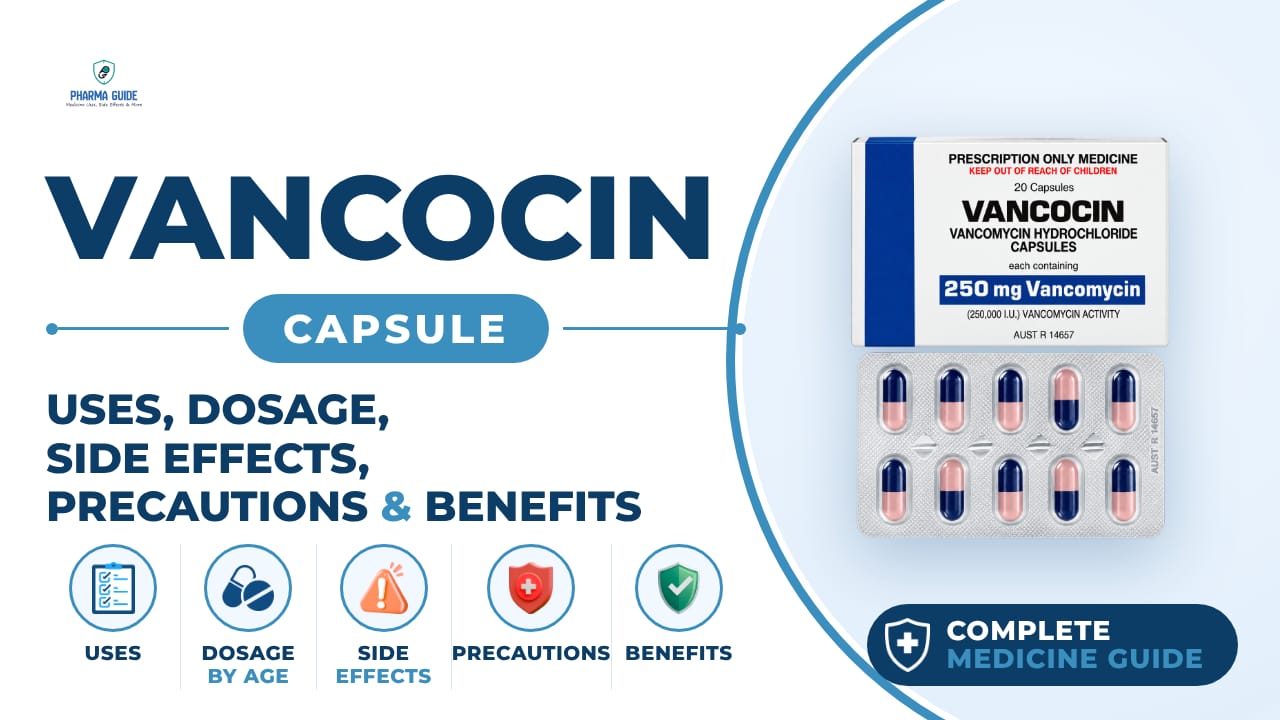
| Generic name | vancomycin hydrochloride |
|---|---|
| Drug class | Glycopeptides |
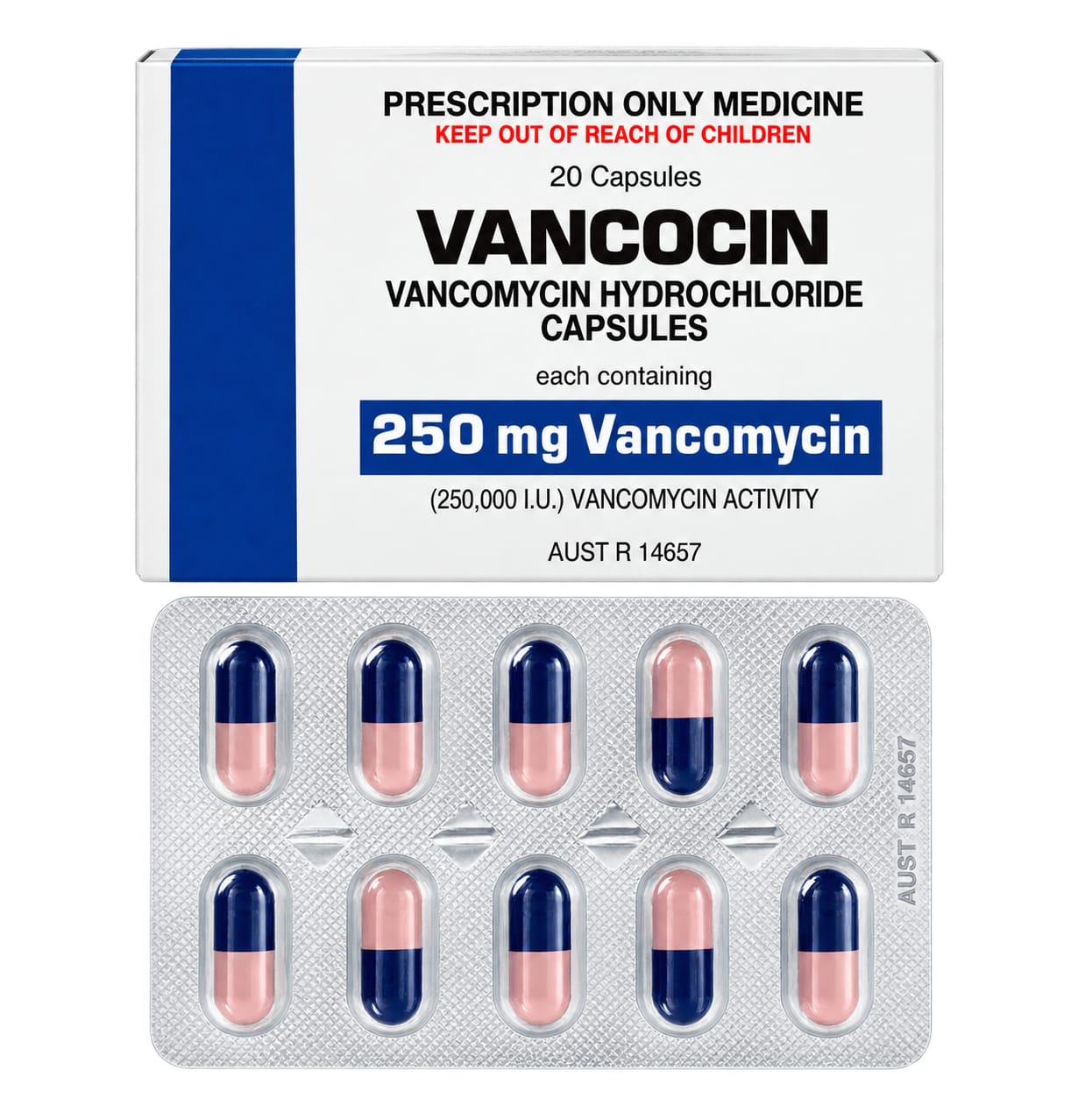
| Forms | Capsules (125 mg and 250 mg) |
Quick overview
Vancocin Capsule contains vancomycin hydrochloride, an antibiotic from the glycopeptide class. It is used to treat serious bacterial infections of the bowel, including Clostridioides difficile-associated diarrhea and certain Staphylococcus aureus infections. It works mainly within the bowel with minimal absorption into the bloodstream.
What is Vancocin Capsule
Vancocin is an antibiotic capsule containing vancomycin hydrochloride. It is used to treat serious bacterial infections of the bowel.
Vancocin Capsule uses
- Treatment of Clostridioides difficile-associated diarrhea
- Treatment of enterocolitis caused by Staphylococcus aureus, including methicillin-resistant strains
- Treatment of serious infections involving the bowel
Benefits of Vancocin Capsule
- Effective against susceptible C. difficile
- Minimal systemic absorption when taken orally
- Can help resolve antibiotic-associated colitis
- Provides an established oral treatment option for intestinal infection
How Vancocin Capsule works
Vancocin works by killing bacteria or stopping them from growing in the bowel. It mainly stops the bacteria from building their cell walls, and it also changes how the bacterial cell membrane works and affects how bacteria make RNA.
Vancocin Capsule dosage
Swallow the capsules whole with a full glass of water; do not chew or crush them. They can be taken with or without food. Take the medicine for as long as your doctor tells you, and finish the full course even if you start feeling better after a few days. If you miss a dose, skip it and take your next dose at the usual time; do not double up to make up for a missed dose. Do not stop taking it or change how much you take without checking with your doctor first. Elderly patients or those with existing kidney problems may need a lower amount, as decided by their doctor.
| Age group | Dose |
|---|---|
| 12–17 years | Commonly 125 mg 4 times daily for 10 days for C. difficile |
| 18–64 years | Commonly 125 mg 4 times daily for 10 days |
| 65–74 years | Usually 125 mg 4 times daily for 10 days |
Available forms and strengths
- Capsules (125 mg and 250 mg)
Side effects of Vancocin Capsule
Common
- Nausea
- Abdominal pain/stomach ache
- Vomiting
- Diarrhea
- Gas (flatulence)
- Fever
- Swelling of the arms or legs
- Fatigue
- Urinary tract infection
- Back pain
- Headache
- Indigestion
- Chills
- Low potassium levels
Serious
- Hives, difficulty breathing, or swelling of the face, lips, tongue, or throat (allergic reaction)
- Flushing of the upper body
- Dizziness
- Low blood pressure
- Muscle pain or spasms of the chest or back
- Ringing in the ears, hearing problems, or hearing loss
- Change in the amount of urine
- Easy bleeding or bruising
- Persistent sore throat
- Persistent or severe watery or bloody diarrhea, sometimes weeks after stopping the medicine
- Frequent infections such as fever, severe chills, sore throat, or mouth ulcers
- Vertigo, dizziness, or tinnitus
- Itchy rash
- Loss of appetite
- Irregular or fast heartbeat, chest tightness, wheezing, or breathlessness
- Skin blistering and bleeding in the lips, eyes, mouth, nose, or genitals
- High fever with rash
- Severe skin reactions such as toxic epidermal necrolysis or Stevens-Johnson syndrome
- Severe headache, confusion, slurred speech, arm or leg weakness, trouble walking, loss of coordination, very stiff muscles, high fever, profuse sweating, or tremors
- Serious eye symptoms such as sudden vision loss, blurred vision, tunnel vision, eye pain or swelling, or seeing halos around lights
Warnings and precautions
- Do not take Vancocin if you are pregnant or planning to become pregnant unless you and your doctor have discussed the risks and benefits.
- Tell your doctor right away if you become pregnant while taking it. Breastfeeding is not recommended while taking Vancocin, because the medicine passes into breast milk.
- People with kidney disease should tell their doctor before taking this medicine, as they may be more sensitive to its effects and may need a lower dose. Kidney function should be checked during and after treatment, especially in people over 65.
- Tell your doctor if you have or have had liver disease before taking Vancocin. Be careful when driving or using machines until you know how this medicine affects you.
- This medicine must be taken by mouth only for bowel infections; it is not absorbed well into the bloodstream and will not work for other types of infections.
- Kidney damage can happen during or after treatment, and the risk is higher in people over 65. Kidney function should be monitored.
- Hearing problems, including hearing loss, have happened in some patients, especially those with kidney disease or existing hearing loss.
- Serious skin reactions have been reported. Stop taking the medicine right away and get medical help if you notice a rash, blisters, or sores in the mouth or other areas.
- Using this antibiotic when it is not needed can lead to bacteria becoming resistant to it and other antibiotics in the future.
- Do not stop taking the medicine or change your dose without checking with your doctor first, as your condition could get worse.
- Do not take any diarrhea medicine without checking with your doctor first.
Storage
- Keep the capsules in the blister pack until it is time to take them
- Keep in a cool, dry place, away from moisture, heat, or light, where the temperature stays below 25°C
- Do not store in the bathroom, near a sink, in the car, or on window sills
- Keep where young children cannot reach it; a locked cupboard at least one-and-a-half metres above the ground is a good place to store medicines
- If you no longer need the medicine or it is out of date, take it to a pharmacy for safe disposal
- Do not use after the expiry date
When to see a doctor
- Get medical help right away if you have signs of an allergic reaction such as hives, difficulty breathing, or swelling of the face, lips, tongue, or throat.
- Seek medical care immediately if you have fast, irregular, or pounding heartbeats, fluttering in the chest, shortness of breath, or sudden dizziness or fainting.
- Get help right away if you have a severe headache, confusion, slurred speech, arm or leg weakness, trouble walking, loss of coordination, feeling unsteady, very stiff muscles, high fever, heavy sweating, or tremors.
- Call your doctor right away or go to the emergency department if you notice skin blistering and bleeding in the lips, eyes, mouth, nose, or genitals, or a high fever with rash.
- Tell your doctor immediately if you have severe stomach cramps or pain, severe watery or bloody diarrhea, or fever along with these symptoms, especially if they happen weeks after you finish the medicine.
- If you think you have taken too much, get urgent medical attention right away, even if you feel fine.
Alternatives
- Fidaxomicin
- Metronidazole
- Bezlotoxumab
Watch the video
FAQs
What is Vancocin Capsule used for?
It is used to treat serious bacterial infections of the bowel, including Clostridioides difficile-associated diarrhea and enterocolitis caused by Staphylococcus aureus, including methicillin-resistant strains.
How should Vancocin Capsule be taken?
Swallow the capsules whole with a full glass of water; do not chew or crush them. They can be taken with or without food. Take the medicine for as long as your doctor tells you and finish the full course even if you feel better.
What is the common dosage of Vancocin Capsule?
For ages 12 to 74, the common dose is 125 mg 4 times daily for 10 days for C. difficile infection, though elderly patients or those with kidney problems may need a lower amount as decided by their doctor.
What are the serious side effects of Vancocin Capsule?
Serious side effects include allergic reactions, hearing problems or hearing loss, changes in urine amount, easy bleeding or bruising, persistent severe watery or bloody diarrhea, severe skin reactions, and neurological symptoms like confusion or slurred speech.
Can Vancocin Capsule be taken during pregnancy?
Do not take Vancocin if you are pregnant or planning to become pregnant unless you and your doctor have discussed the risks and benefits, and breastfeeding is not recommended while taking it.
General information, not medical advice
Your prescriber and the leaflet in your pack know your situation. This page does not.
- Follow your prescriber and the leaflet
- Don't start, stop, or change a dose on your own
- Doses and warnings differ by country and product
Sources
Video
Related medicines

Injectafer Injection: Uses, Dosage, Side Effects, Precautions and Alternates
Iron products
Injectafer (ferric carboxymaltose) treats iron deficiency anemia and heart failure-related iron deficiency via IV. Learn uses, dosage, side effects, and

Gliclazide Tablet: Uses, Dosage, Side Effects, Precautions and Alternates
Sulfonylurea (hypoglycemic/antidiabetic agent)
Gliclazide Tablet is a sulfonylurea for type 2 diabetes that boosts insulin release. Learn about dosage, side effects, warnings, and precautions.