
Safety
General information, not medical advice
Your prescriber and the leaflet in your pack know your situation. This page does not.
- Follow your prescriber and the leaflet
- Don't start, stop, or change a dose on your own
- Doses and warnings differ by country and product
Varilrix Injection: Uses, Dosage, Side Effects, Precautions and Alternates
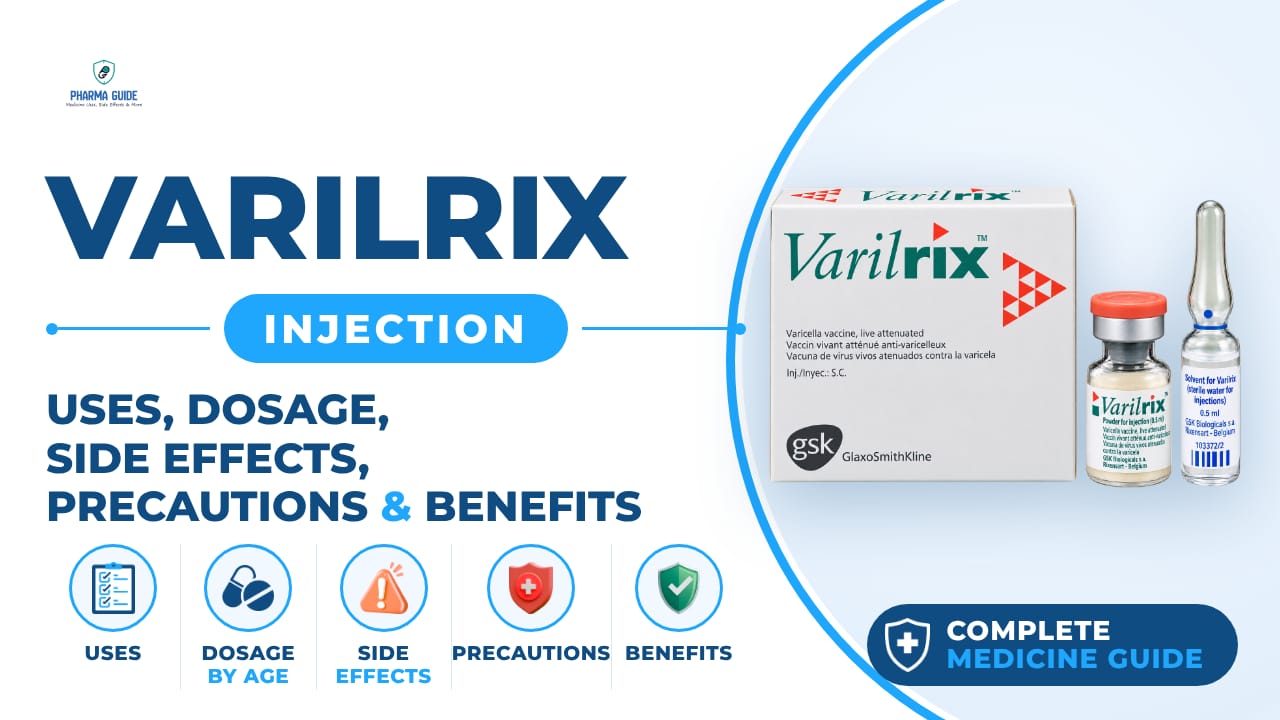
| Generic name | Varicella zoster vaccine, live attenuated (Oka strain) |
|---|---|
| Drug class | Viral vaccine (live attenuated vaccine) |
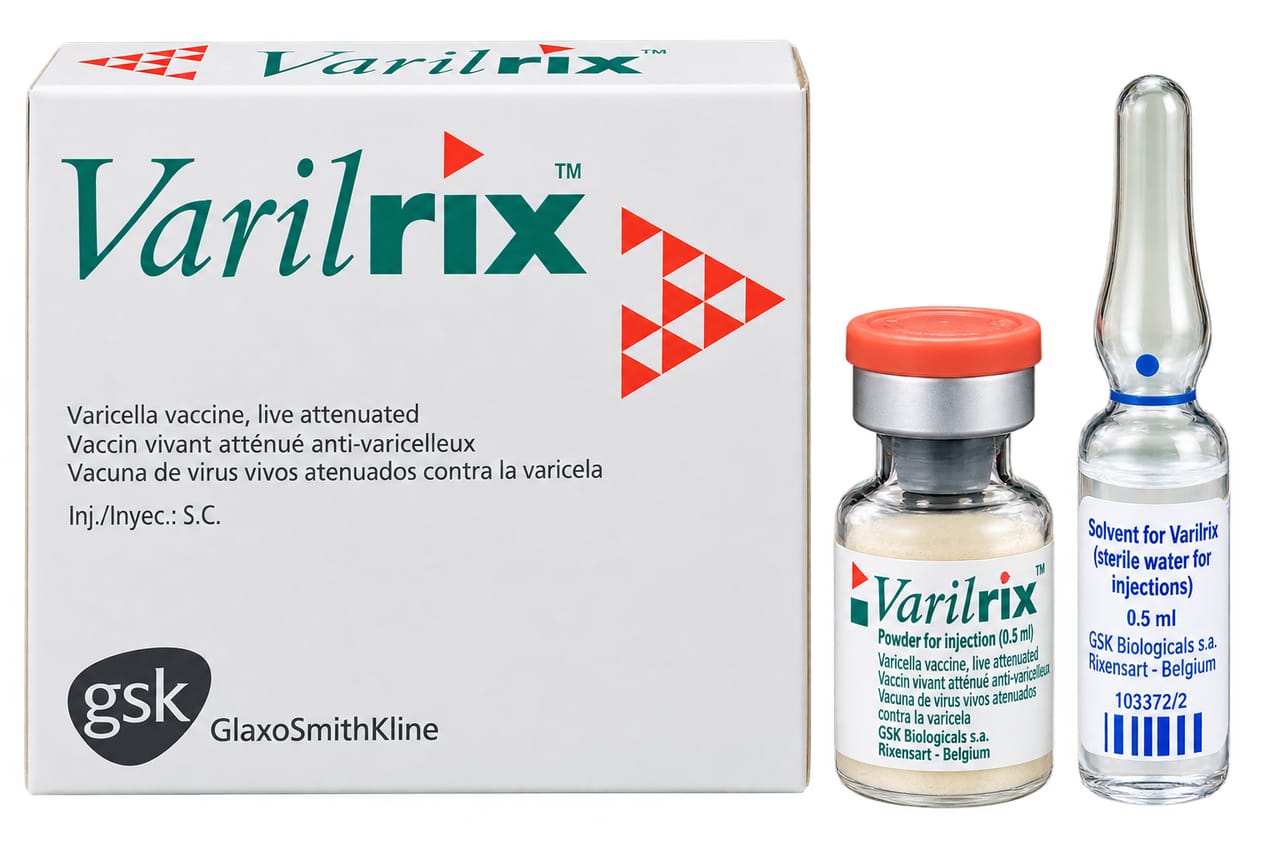
| Forms | Powder in a glass vial with a clear sterile water diluent in a separate prefilled syringe, to be mixed before injection |
Quick overview
Varilrix is a live attenuated vaccine (Oka strain) used to help protect against chickenpox (varicella) in children aged 9 months or older, adolescents, and adults. It is given as an injection under the skin, usually in two doses, and works by prompting the immune system to produce protective antibodies. Common side effects include injection site reactions, headache, and fever, while rare serious effects can include seizures or shingles.
What is Varilrix Injection
Varilrix is a vaccine that contains a live but weakened form of the varicella-zoster virus. It is used to help protect against chickenpox.
Varilrix Injection uses
- Prevention of chickenpox in children aged 9 months or older, adolescents, and adults
Benefits of Varilrix Injection
- Helps protect against chickenpox (varicella).
- Reduces the risk of developing severe chickenpox and related complications.
- Stimulates the immune system to produce protective antibodies against varicella-zoster virus.
- Can be used for routine vaccination from 12 months of age and, in some circumstances, from 9 months.
- May be given within 72 hours after exposure to chickenpox to help prevent infection or reduce its severity.
- Can help protect individuals who are at higher risk of severe varicella, when vaccination is medically appropriate.
How Varilrix Injection works
The vaccine contains a weakened form of the chickenpox virus. When it is injected, it causes the body to produce its own antibodies that protect against the disease without causing full-blown chickenpox.
Varilrix Injection dosage
Varilrix is given by a doctor or nurse as an injection under the skin, usually in the shoulder or thigh, or the outer upper arm area. It should never be given into a vein. For children from 9 months up to and including 12 years, the timing and number of doses is decided by the doctor based on official recommendations. Adults and adolescents aged 13 years and older are generally given two separate doses at least six weeks apart.
If a scheduled dose is missed, contact the doctor or nurse to arrange another visit as soon as possible. It is advised to remain at the clinic for about 15 minutes after the injection in case of an allergic reaction. Usage does not depend on food timings.
| Age group | Dose |
|---|---|
| Under 9 months | Generally not routinely recommended; use only in specific circumstances according to local guidance |
| 9–11 months | 0.5 mL per dose; 2 doses are required, generally at least 3 months apart |
| 12 months–12 years | 0.5 mL per dose, 2-dose vaccination schedule |
| 13–17 years | 0.5 mL per dose, 2 doses, generally at least 6 weeks apart |
| 18+ years | 0.5 mL per dose, 2 doses, generally at least 6 weeks apart |
Available forms and strengths
- Powder in a glass vial with a clear sterile water diluent in a separate prefilled syringe, to be mixed before injection
Side effects of Varilrix Injection
Common
- Pain, redness and swelling at the injection site
- Headache
- Fever
- Toothache
- Tiredness (fatigue)
- Generally feeling unwell
- Dizziness
- Vomiting
- Diarrhoea
- Stomach pain or discomfort
- Indigestion
- Nausea
- Painful, swollen joints
- Aching muscles, muscle tenderness or weakness not caused by exercise
- Nose and throat infection
- Cough
- Runny or blocked nose, sneezing (rhinitis)
- Sore throat and discomfort when swallowing
- Swollen glands in the neck, armpit or groin
- Rash (spots and/or blisters)
- Itching
- Hives (urticaria)
- Discharge with itching of the eyes and crusty eyelids (conjunctivitis)
- Infection of the middle ear
- Earache
- Migraine
- Sleepiness
- Irritability
- Nervousness
- Chest pain
- Chills
- Loss of appetite
Serious
- Chickenpox-like rash
- Shingles (herpes zoster)
- Fits or seizures
- Temporary lumpy rash affecting the skin, mouth and other parts of the body
- Bleeding or bruising more easily than normal, which may be associated with skin rashes/peeling or fever
- Stroke (damage to the brain from interrupted blood supply)
- Inflammation of the brain (encephalitis), including fatal cases especially in people with weakened immune systems
- Loss or reduced levels of consciousness, convulsions or loss of control of bodily movements, with fever and headache
- Infection or inflammation of the nervous system causing temporary loss of control of bodily movements, walking, or sensation changes
- Serious allergic reactions including difficulty breathing or swallowing, hives, itching, swelling of the eyes, face, or throat, sudden drop in blood pressure, and loss of consciousness
- Signs of stroke such as sudden severe headache, loss of coordination, vision changes, slurred speech, or unexplained weakness or numbness
Warnings and precautions
- Do not receive this vaccine if you or your child are allergic to it, to any vaccine against varicella, or to any of its ingredients, including neomycin or gelatin.
- Do not receive this vaccine if you or your child have severely lowered immunity, such as from inherited immune deficiency, cancer, HIV infection, or certain medicines or radiation treatments.
- Do not receive this vaccine if you or your child have a severe infection with a high temperature; a minor infection like a cold is usually not a problem, but check with your doctor first.
- After vaccination, avoid contact with people who have lowered immunity for up to six weeks, since the disease may be more serious for them.
- If you or your child develop a rash within four weeks after vaccination, avoid contact with people who have low immunity while the rash lasts.
- People who have had this vaccine should not take aspirin-type medicines (salicylates) for six weeks afterward, because of the risk of a rare but serious condition called Reye's syndrome.
- This vaccine should not be given during pregnancy. You should avoid becoming pregnant for one month (or as advised by your doctor) after receiving it, and tell your doctor right away if you become pregnant within that time.
- Talk to your doctor if you are breastfeeding or planning to breastfeed, since the effect on breastfed infants has not been studied.
- It is not known how this vaccine interacts with alcohol, so it is best to check with your doctor before drinking.
- Be careful when driving or using machinery until you know how this vaccine affects you, since it may cause dizziness in some people.
Storage
- Store refrigerated at 2–8°C (36–46°F).
- Keep in the original packaging to protect from light.
- Do not freeze; discard if the vaccine has been frozen.
- After reconstitution, the vaccine should preferably be used immediately.
- Maintain the recommended cold chain during storage and transport.
- Keep securely stored and out of reach of children.
When to see a doctor
- Contact a doctor immediately if you notice signs of an allergic reaction, such as itchy or blistering rash, swelling of the eyes and face, difficulty breathing or swallowing, a sudden drop in blood pressure, or loss of consciousness.
- Contact your doctor urgently or go straight to the Emergency Department if you develop loss or reduced consciousness, convulsions, or loss of control of bodily movements, along with fever and headache.
- Call your doctor straight away, or go straight to the Emergency Department, if you notice any serious side effects such as a chickenpox-like rash, shingles, seizures, unusual bleeding or bruising, or signs of stroke.
- If you think too much vaccine was given, you may need urgent medical attention even if there are no symptoms — contact your doctor, a poison control service, or go to the nearest hospital Emergency Department.
Alternatives
- Priorix-Tetra (MMRV)
- ProQuad (MMRV)
- Varicella Vaccine Live
- Varivax
Watch the video
FAQs
What is Varilrix Injection used for?
Varilrix is used for prevention of chickenpox (varicella) in children aged 9 months or older, adolescents, and adults.
How is Varilrix Injection given?
Varilrix is given by a doctor or nurse as an injection under the skin, usually in the shoulder, thigh, or outer upper arm. It should never be given into a vein. Adults and adolescents aged 13 and older generally receive two doses at least six weeks apart.
What are the common side effects of Varilrix Injection?
Common side effects include pain, redness and swelling at the injection site, headache, fever, tiredness, dizziness, vomiting, diarrhoea, stomach discomfort, joint pain, muscle aches, and nose and throat infections.
Can Varilrix be given during pregnancy?
No, this vaccine should not be given during pregnancy. You should avoid becoming pregnant for one month, or as advised by your doctor, after receiving it.
Can Varilrix be given after exposure to chickenpox?
Yes, it may be given within 72 hours after exposure to chickenpox to help prevent infection or reduce its severity.
General information, not medical advice
Your prescriber and the leaflet in your pack know your situation. This page does not.
- Follow your prescriber and the leaflet
- Don't start, stop, or change a dose on your own
- Doses and warnings differ by country and product
Sources
Video
Related medicines

Injectafer Injection: Uses, Dosage, Side Effects, Precautions and Alternates
Iron products
Injectafer (ferric carboxymaltose) treats iron deficiency anemia and heart failure-related iron deficiency via IV. Learn uses, dosage, side effects, and

Gliclazide Tablet: Uses, Dosage, Side Effects, Precautions and Alternates
Sulfonylurea (hypoglycemic/antidiabetic agent)
Gliclazide Tablet is a sulfonylurea for type 2 diabetes that boosts insulin release. Learn about dosage, side effects, warnings, and precautions.