
Safety
General information, not medical advice
Your prescriber and the leaflet in your pack know your situation. This page does not.
- Follow your prescriber and the leaflet
- Don't start, stop, or change a dose on your own
- Doses and warnings differ by country and product
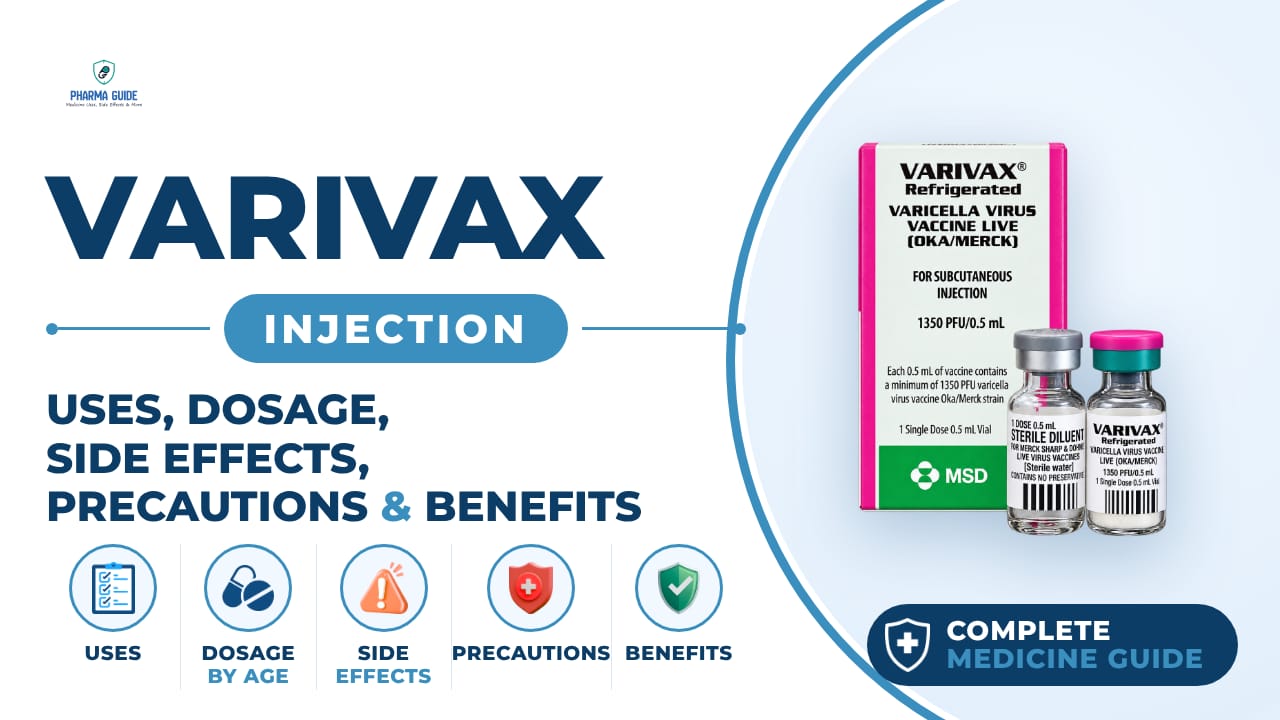
Varivax Injection: Uses, Dosage, Side Effects, Precautions and Alternates
| Generic name | Varicella Virus Vaccine Live |
|---|---|
| Drug class | Live viral vaccine |
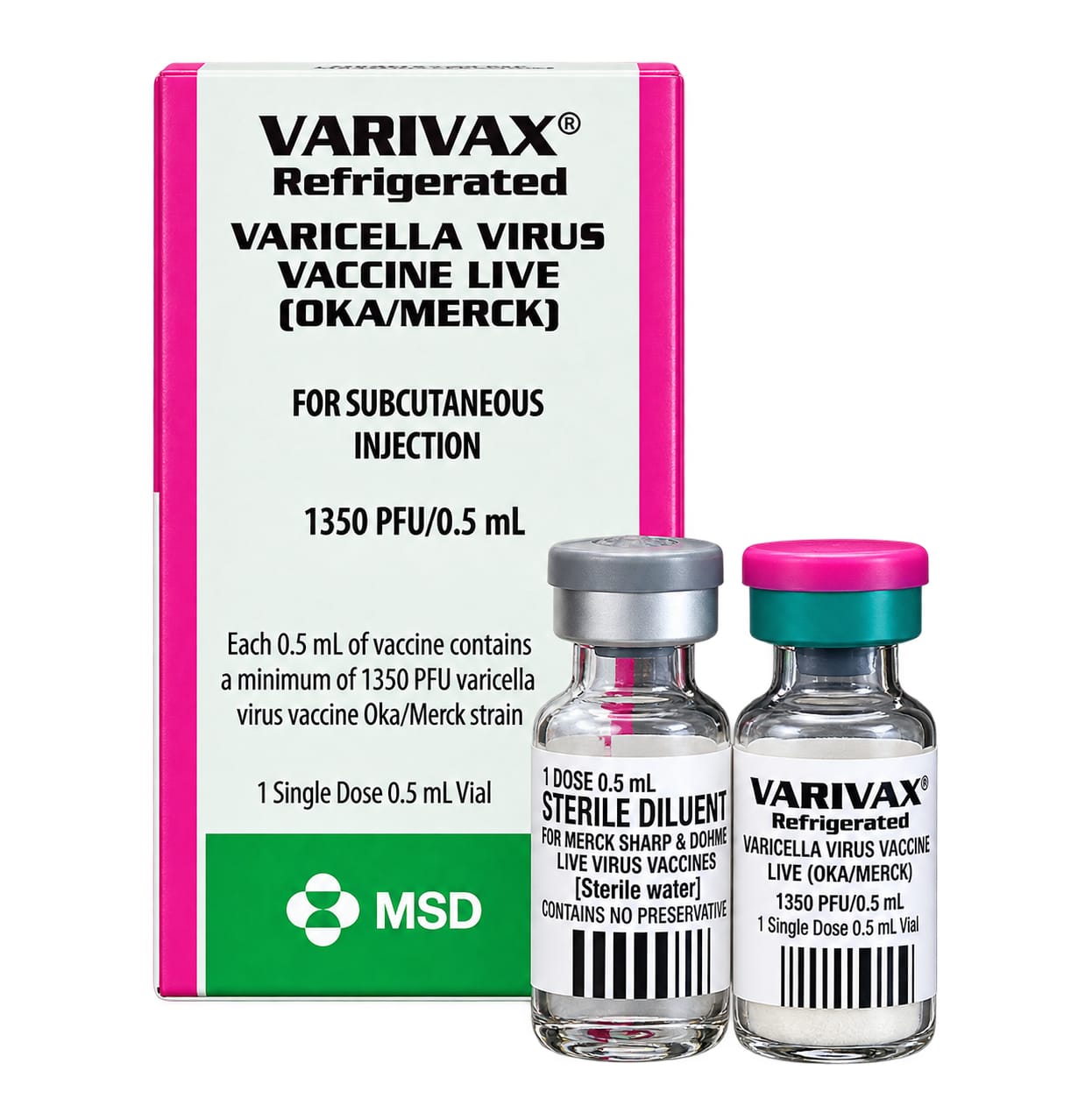
| Forms | Suspension for injection supplied as a lyophilized (freeze-dried) powder to be reconstituted with sterile diluent, Single-dose vial, Prefilled syringe of sterile diluent |
Quick overview
Varivax Injection (Varicella Virus Vaccine Live) is a live viral vaccine used to help prevent chickenpox (varicella) in people 12 months of age and older. It contains a weakened, live form of the chickenpox virus that prompts the immune system to build protection. It is given as an injection by a doctor or trained nurse according to an age-based dosing schedule, and it carries specific precautions, including avoidance during pregnancy.
What is Varivax Injection
Varivax is a vaccine that helps prevent chickenpox (varicella) in people 12 months of age and older. It contains a weakened, live form of the chickenpox virus.
Varivax Injection uses
- Active immunization for the prevention of varicella (chickenpox) in individuals 12 months of age and older
Benefits of Varivax Injection
- Helps prevent chickenpox
- Reduces risk of severe varicella
- Helps reduce complications from varicella infection
- Provides long-term immune protection in most vaccinated people
How Varivax Injection works
Varivax contains a weakened form of the chickenpox virus. It works by causing the immune system to make antibodies against the virus, so the body is prepared to fight off the real virus if exposed later.
Varivax Injection dosage
Varivax is given as a shot under the skin or into a muscle of the upper arm by a doctor or trained nurse. It should not be injected into a vein. Children 12 months to 12 years of age usually receive two doses, with the second given years after the first, though timing may vary. Adolescents 13 years and older and adults who have not been vaccinated or had chickenpox before receive two doses spaced weeks apart. Your doctor will decide the exact number of doses and timing based on official recommendations. If a dose is missed, your healthcare professional will let you know when you should have it.
Avoid aspirin or other salicylate medicines for six weeks after vaccination. Avoid close contact for up to six weeks after vaccination with people who have weak immune systems, pregnant women who have never had chickenpox, or newborns whose mothers have never had chickenpox. Women should avoid becoming pregnant for three months after vaccination.
| Age group | Dose |
|---|---|
| 12 months–12 years | 0.5 mL per dose, given as a 2-dose series |
| 13–17 years | 0.5 mL per dose, 2 doses separated by at least 4 weeks |
| 18 years and older | 0.5 mL per dose, 2 doses separated by at least 4 weeks if not already immune |
Available forms and strengths
- Suspension for injection supplied as a lyophilized (freeze-dried) powder to be reconstituted with sterile diluent
- Single-dose vial
- Prefilled syringe of sterile diluent
Side effects of Varivax Injection
Common
- Fever
- Pain, soreness, swelling, itching, or redness at the injection site
- Chickenpox-like rash at the injection site or on the body
- Irritability
- Tingling of the skin
- Swollen glands in the neck, armpit, or groin
- Bruising, numbness, stiffness or a hard lump where the shot was given
Serious
- Seizures or fits
- Severe skin conditions or skin infections
- Allergic reactions, including hives, swelling of the face, lips, mouth, throat, or difficulty breathing
- Bruising more easily than normal; red or purple, flat, pinhead spots under the skin
- Severe paleness
- Difficulty walking
- Shingles (herpes zoster)
- Drooping eyelid or sagging muscles on one side of the face (Bell's palsy)
- Pneumonia or pneumonitis (fever, chills, cough, difficulty breathing, wheezing)
- Encephalitis (inflammation of the brain)
- Meningitis (inflammation of the coverings of the brain and spinal cord)
- Stroke
- Chickenpox infection from the vaccine virus
Warnings and precautions
- Do not give this vaccine to people with weakened immune systems, as it can cause serious, widespread chickenpox disease and extensive rash.
- People who get vaccinated can sometimes spread the vaccine virus to others, which may cause chickenpox infection, including severe disease, in close contacts.
- Do not give immune globulins or blood products at the same time as this vaccine, since they can reduce how well the vaccine works.
- Avoid aspirin and other salicylate medicines for six weeks after vaccination in children and teens, due to a link between salicylates, chickenpox, and a serious condition called Reye syndrome.
- People with a family history of immune system problems present at birth should have their immune status checked before getting this vaccine.
- The vaccine virus can remain dormant in the body and may cause shingles later in life.
- This vaccine should not be given to women who are pregnant. Women should avoid becoming pregnant for three months after getting vaccinated.
- It is not known whether the vaccine virus passes into breast milk. Talk with your doctor about the benefits and risks of getting this vaccine while breastfeeding.
- No routine dose adjustment is needed for kidney function, though some people with advanced kidney disease may have a weaker vaccine response.
- This vaccine is generally appropriate for people at risk of hepatitis, but severe acute illness should be assessed before vaccination.
- There is no direct interaction with alcohol, but heavy alcohol use can harm liver health and may impair immune response.
- This vaccine should not normally affect your ability to drive or operate machinery, but it may cause tiredness or dizziness in some people. Be careful until you know how it affects you.
Storage
- Before reconstitution, store the lyophilized vaccine in a freezer at a temperature between -58°F and +5°F (-50°C and -15°C)
- Vaccine may be stored at refrigerator temperature (36°F to 46°F, 2°C to 8°C) for up to 72 continuous hours prior to reconstitution
- Before reconstitution, protect from light
- The sterile diluent should be stored at room temperature (68°F to 77°F, 20°C to 25°C), or in the refrigerator
- Discard if reconstituted vaccine is not used within 30 minutes
- Do not freeze reconstituted vaccine
- Keep it where children cannot reach it
- Keep it in the refrigerator, but not in the door compartment
- Do not freeze VARIVAX Refrigerated
- VARIVAX Refrigerated is stable for up to 24 months when stored in the refrigerator
- Keep the injection in the original pack until it is time for it to be given
When to see a doctor
- Get emergency help right away for signs of a serious allergic reaction, such as hives, difficulty breathing, or swelling of the face, lips, mouth, throat, or neck.
- Call your doctor right away if you or your child have seizures, severe skin problems, skin infections, unusual bruising, purple or red spots under the skin, or difficulty walking.
- Call your doctor right away if you have signs of a possible brain or nervous system problem, such as fever with chills, cough, chest pain, trouble breathing, stiff neck, sensitivity to light, confusion, or sudden numbness or weakness on one side of the body.
- Tell your doctor if you develop any new or unusual symptoms after getting the vaccine.
Alternatives
- ProQuad (MMRV)
- Priorix-Tetra (MMRV)
- Varilrix
Watch the video
FAQs
What is Varivax Injection used for?
Varivax is used for active immunization to prevent varicella (chickenpox) in individuals 12 months of age and older.
How is Varivax given?
Varivax is given as a shot under the skin or into a muscle of the upper arm by a doctor or trained nurse. Children 12 months to 12 years usually receive two doses, with the second given years after the first, while adolescents 13 years and older and unvaccinated adults receive two doses spaced weeks apart.
Can pregnant women receive Varivax?
No, Varivax should not be given to women who are pregnant, and women should avoid becoming pregnant for three months after getting vaccinated.
What are the common side effects of Varivax?
Common side effects include fever, pain or swelling at the injection site, a chickenpox-like rash, irritability, tingling of the skin, and swollen glands.
Should I avoid aspirin after getting Varivax?
Yes, you should avoid aspirin or other salicylate medicines for six weeks after vaccination due to a link between salicylates, chickenpox, and Reye syndrome.
General information, not medical advice
Your prescriber and the leaflet in your pack know your situation. This page does not.
- Follow your prescriber and the leaflet
- Don't start, stop, or change a dose on your own
- Doses and warnings differ by country and product
Sources
- VARIVAX Prescribing Information, Merck Sharp & Dohme LLC, Revised 8/2026
- VARIVAX Patient Information leaflet, Merck Sharp & Dohme LLC
- Varivax Consumer Medicine Information (CMI), MedsInfo, last reviewed March 2026
Video
Related medicines

Injectafer Injection: Uses, Dosage, Side Effects, Precautions and Alternates
Iron products
Injectafer (ferric carboxymaltose) treats iron deficiency anemia and heart failure-related iron deficiency via IV. Learn uses, dosage, side effects, and

Gliclazide Tablet: Uses, Dosage, Side Effects, Precautions and Alternates
Sulfonylurea (hypoglycemic/antidiabetic agent)
Gliclazide Tablet is a sulfonylurea for type 2 diabetes that boosts insulin release. Learn about dosage, side effects, warnings, and precautions.