
Safety
General information, not medical advice
Your prescriber and the leaflet in your pack know your situation. This page does not.
- Follow your prescriber and the leaflet
- Don't start, stop, or change a dose on your own
- Doses and warnings differ by country and product
Vasograin Tablet: Uses, Dosage, Side Effects, Precautions and Alternates
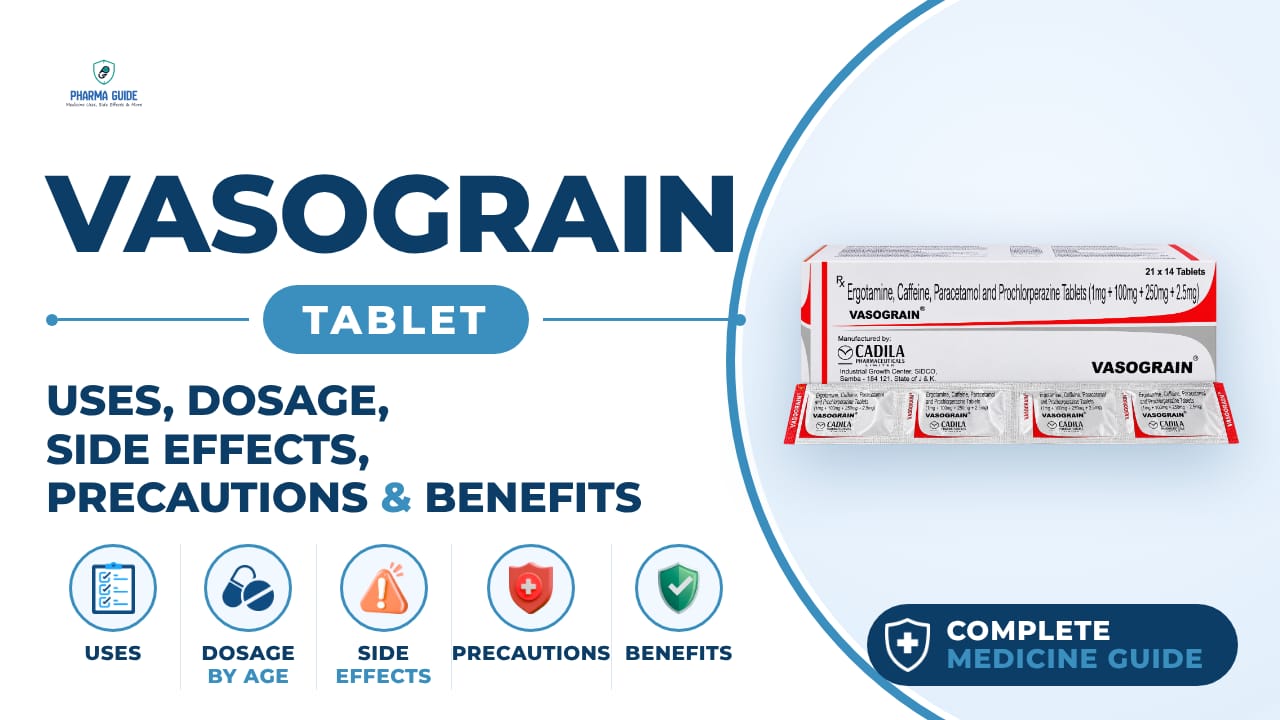
| Generic name | Caffeine + Ergotamine + Paracetamol + Prochlorperazine |
|---|---|
| Drug class | Antimigraine combination |
| Forms | Tablet |
Quick overview
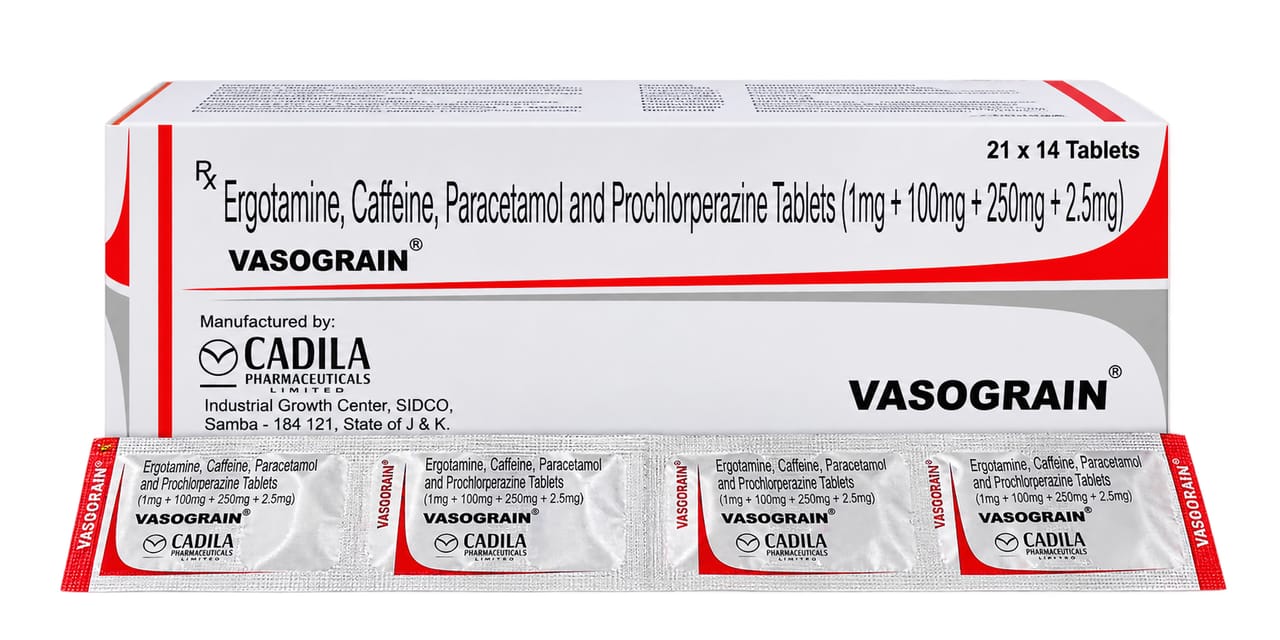
Vasograin Tablet is a combination medicine containing ergotamine, caffeine, paracetamol, and prochlorperazine, used to treat acute migraine attacks. It helps relieve the throbbing headache of migraine as well as the nausea and vomiting that often accompany it. It is taken at the onset of a migraine attack, not for daily use or prevention, and should only be used as prescribed by a doctor.
What is Vasograin Tablet
Vasograin is a combination tablet with four medicines: ergotamine, caffeine, paracetamol, and prochlorperazine. It is used to treat migraine attacks, including the throbbing headache and the nausea and vomiting that often come with them.
Vasograin Tablet uses
- Treating an acute migraine attack (throbbing headache)
- Relieving nausea and vomiting that come with migraine
Benefits of Vasograin Tablet
- Migraine Relief: Helps relieve acute migraine headaches.
- Headache Support: Helps reduce moderate to severe migraine pain.
- Nausea Relief: Prochlorperazine helps reduce migraine-associated nausea and vomiting.
- Blood Vessel Action: Ergotamine constricts certain blood vessels involved in migraine.
- Pain Relief: Paracetamol contributes to reduction of headache pain.
How Vasograin Tablet works
Ergotamine narrows widened blood vessels in the head to stop migraine pain. Caffeine helps the body absorb the other ingredients better and also narrows blood vessels, which adds to the pain relief. Paracetamol blocks chemicals in the body that cause pain, swelling, and fever. Prochlorperazine acts on a part of the brain to reduce nausea and vomiting and also adds some pain relief.
Vasograin Tablet dosage
Take this medicine only if your doctor has prescribed it for you. Swallow the tablet whole with a glass of water; do not break, crush, or chew it. It can be taken with or without food, though taking it with food may help avoid stomach upset. Take it at the very first sign of a migraine attack, not for daily use or to prevent future migraines. Take it at around the same time each day if your doctor has you on a regular schedule. Do not take more than the maximum amount your doctor sets for one attack or one week.
If you miss a dose, take it as soon as you remember, but skip it if it is almost time for your next dose; do not double up. Do not stop taking this medicine without talking to your doctor first. It is not recommended for children under 16 to 18 years of age, and older adults should use this medicine only under close medical supervision.
| Age group | Dose |
|---|---|
| Under 18 Years | Not recommended unless specifically prescribed by a specialist |
| 18–64 Years | 1 tablet at the onset of migraine, followed by additional doses only as prescribed |
| Older Adults (65+ Years) | Use only under medical supervision; dose should be individualized |
Available forms and strengths
Tablet
Side effects of Vasograin Tablet
Common
- Nausea or vomiting
- Stomach upset
- Dry mouth
- Constipation
- Dizziness
- Insomnia
- Drowsiness
- Blood pressure changes or irregular heartbeat
- Cold, numb, or tingling hands or feet
- Skin rash
- Headache
- Tremor
- Irritability
- Weight gain
Serious
- Liver damage
- Stevens-Johnson syndrome
- Anaphylactic reaction (severe allergic reaction)
- Seizures (uncontrollable jerking of limbs)
- Chest pain
- Pain or swelling in the legs
- Sudden drop in blood pressure on standing
- Difficulty urinating
- Gastric or mouth ulcer
- Bloody or cloudy urine
- Unusual tiredness or weakness
Warnings and precautions
- Vasograin should not be used during pregnancy because it may harm the developing baby. Talk to your doctor before taking it if you are pregnant or planning a pregnancy.
- Vasograin is not recommended while breastfeeding because it passes into breast milk and may harm the infant. Talk to your doctor before using it.
- This medicine is removed from the body by the kidneys, so people with kidney problems should use it carefully, as it can increase the risk of side effects. Talk to your doctor if you have kidney disease.
- This medicine is processed by the liver, so a damaged liver may not break it down properly, leading to build-up that can worsen liver problems. Use with caution, or avoid, if you have liver disease, and discuss this with your doctor first.
- Drinking alcohol while taking this medicine is not recommended, as it can increase the risk of side effects like dizziness, fatigue, weakness, and nausea.
- This medicine may cause drowsiness or dizziness, so avoid driving or operating machinery until you know how it affects you.
- Do not take this medicine if you have severe heart disease, high blood pressure, liver disease, kidney disease, peptic ulcer, or poor blood circulation, unless your doctor says it is safe.
- Taking this medicine with certain antibiotics, antifungal medicines, or HIV medicines can cause dangerous interactions with the ergotamine in this tablet.
- Do not take any other medicine containing paracetamol at the same time as this tablet, to avoid taking too much paracetamol.
- This medicine should be stopped right away if you develop a rare but serious reaction causing high fever, stiff muscles, and confusion.
- This medicine is not recommended for children under 16 to 18 years old because its safety in children has not been established.
- Taking more than the maximum dose set by your doctor can be dangerous because too much ergotamine can cause serious harm.
- Do not stop taking this medicine on your own; only stop if your doctor tells you to.
Storage
- Store below 30°C
- Keep the container tightly closed and protected from light and dampness
- Keep out of reach of children and pets
- Check the expiry date before use
- Dispose of unused medicine properly
When to see a doctor
- Get medical help right away if you notice chest pain, or cold, numb, or painful fingers or toes, which can be signs of a serious reaction to this medicine.
- Get medical help right away if you have unusual, uncontrollable movements of your body.
- Seek medical attention immediately if you notice signs of an allergic reaction such as skin rash, itching or swelling anywhere on the body, dizziness, or difficulty breathing.
- If you think you have taken too much of this medicine, seek immediate medical attention.
Alternatives
- Sumatriptan
- Rizatriptan
- Zolmitriptan
Watch the video
FAQs
What is Vasograin Tablet used for?
Vasograin Tablet is used to treat acute migraine attacks, including the throbbing headache and the nausea and vomiting that often come with them. It is taken at the onset of an attack, not for daily use or prevention.
How should I take Vasograin Tablet?
Swallow the tablet whole with a glass of water without breaking, crushing, or chewing it. It can be taken with or without food, and should be taken at the very first sign of a migraine attack rather than for prevention.
Can Vasograin Tablet be used during pregnancy or breastfeeding?
No, Vasograin should not be used during pregnancy as it may harm the developing baby, and it is not recommended while breastfeeding because it passes into breast milk and may harm the infant.
Can I drink alcohol while taking Vasograin Tablet?
Drinking alcohol while taking this medicine is not recommended, as it can increase the risk of side effects like dizziness, fatigue, weakness, and nausea.
What are the common side effects of Vasograin Tablet?
Common side effects include nausea or vomiting, stomach upset, dry mouth, constipation, dizziness, insomnia, drowsiness, blood pressure changes or irregular heartbeat, cold or tingling hands or feet, skin rash, headache, tremor, irritability, and weight gain.
General information, not medical advice
Your prescriber and the leaflet in your pack know your situation. This page does not.
- Follow your prescriber and the leaflet
- Don't start, stop, or change a dose on your own
- Doses and warnings differ by country and product
Sources
- KD Tripathi. Seventh Edition. New Delhi, India: Jaypee Brothers Medical Publishers; 2013
- US Food and Drug Administration (FDA) package leaflet information for the user; Cafegot (ergotamine tartrate and caffeine)
- US Food and Drug Administration (FDA) package leaflet information for the user; Acetaminophen
- US Food and Drug Administration (FDA) package leaflet information for the user; Ofirmev (acetaminophen)
- US Food and Drug Administration (FDA) package leaflet information for the user; Prochlorperazine edisylate
- DrugBank Online - Ergotamine, Caffeine, Acetaminophen, Prochlorperazine
- DailyMed - Prochlorperazine maleate tablet
- PubChem - Ergotamine, Acetaminophen, Caffeine
- MedlinePlus Drug Information - Prochlorperazine
Video
Related medicines

Injectafer Injection: Uses, Dosage, Side Effects, Precautions and Alternates
Iron products
Injectafer (ferric carboxymaltose) treats iron deficiency anemia and heart failure-related iron deficiency via IV. Learn uses, dosage, side effects, and

Gliclazide Tablet: Uses, Dosage, Side Effects, Precautions and Alternates
Sulfonylurea (hypoglycemic/antidiabetic agent)
Gliclazide Tablet is a sulfonylurea for type 2 diabetes that boosts insulin release. Learn about dosage, side effects, warnings, and precautions.