
Safety
General information, not medical advice
Your prescriber and the leaflet in your pack know your situation. This page does not.
- Follow your prescriber and the leaflet
- Don't start, stop, or change a dose on your own
- Doses and warnings differ by country and product
Vectical Ointment: Uses, Dosage, Side Effects, Precautions and Alternates
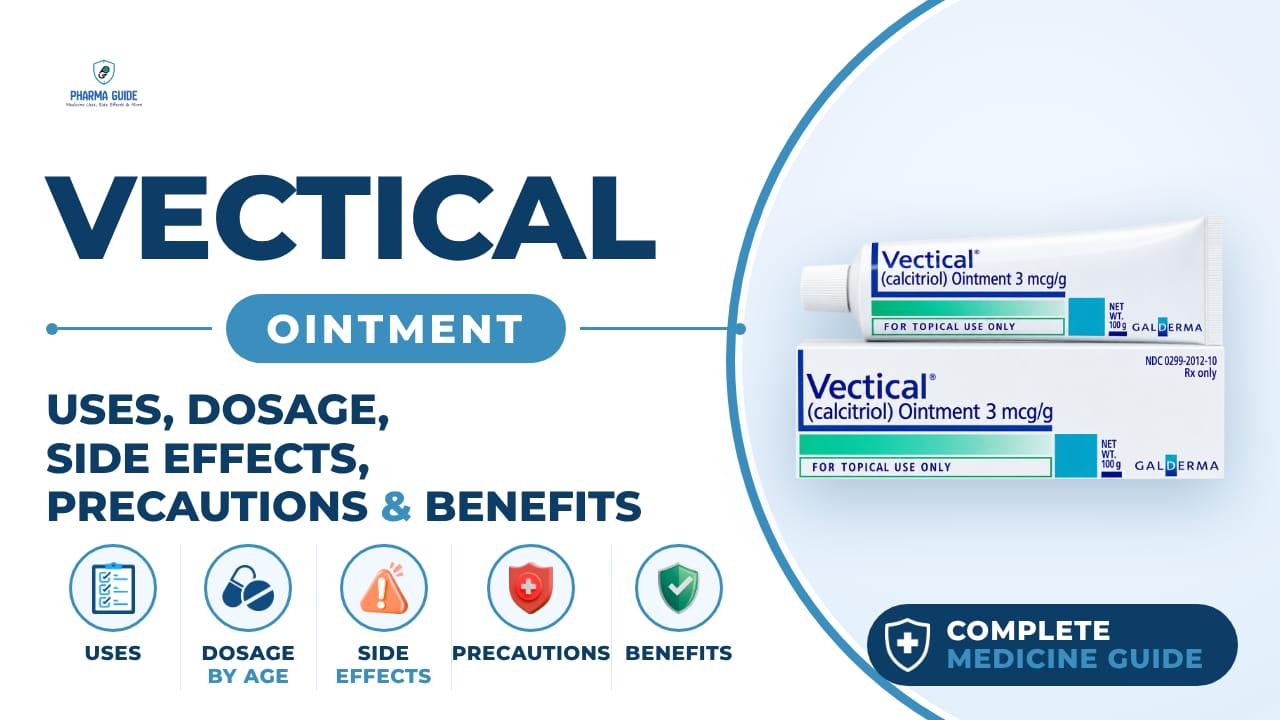
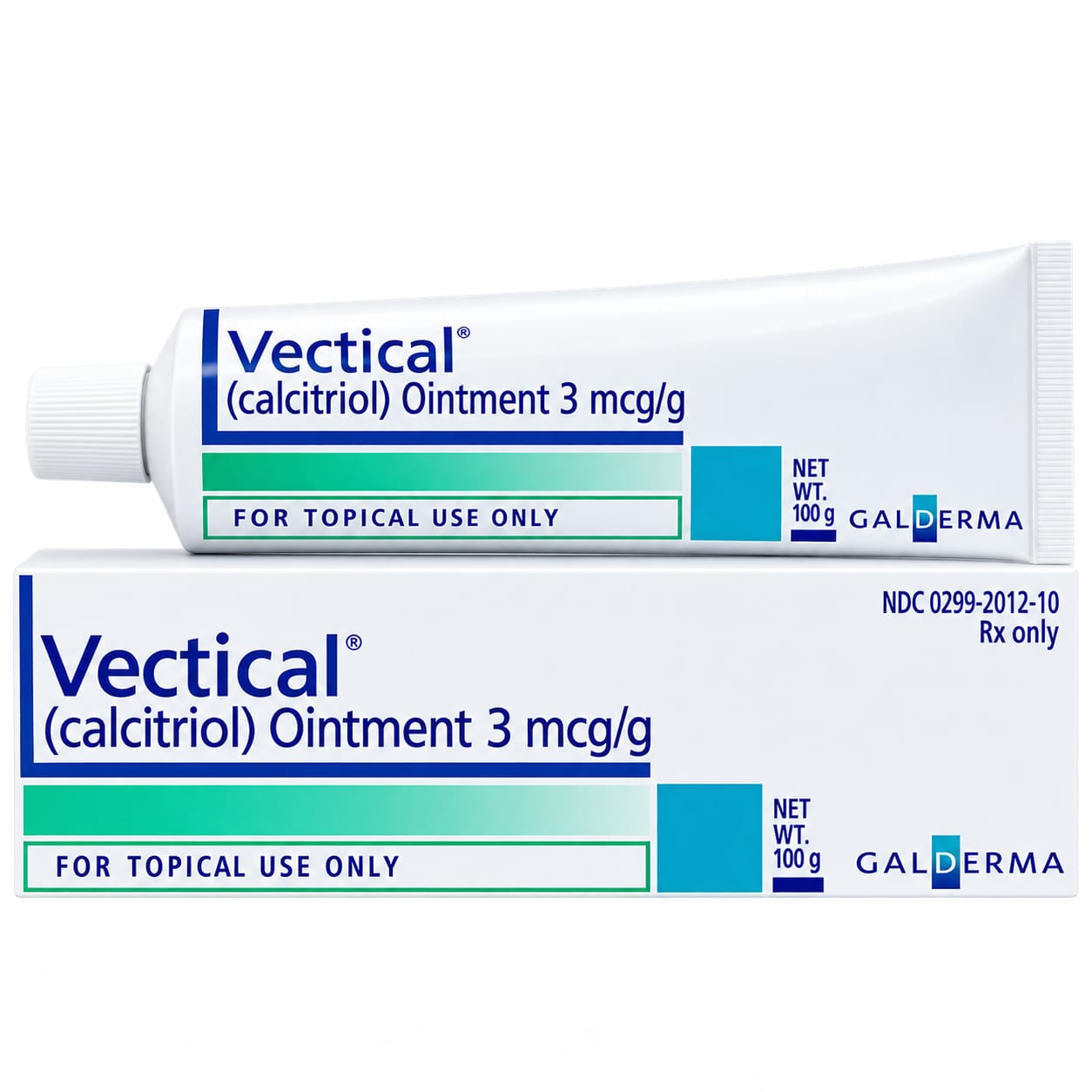
| Generic name | calcitriol (topical) |
|---|---|
| Drug class | Topical antipsoriatics (vitamin D analog) |
| Forms | Ointment, 3 mcg/g |
Quick overview
Vectical Ointment contains calcitriol, a topical vitamin D analog belonging to the antipsoriatic drug class. It is applied to the skin to treat mild-to-moderate plaque psoriasis in adults and children aged 2 years and older. It works by slowing excessive skin-cell growth and helping reduce thickened, scaly plaques. It is for use on the skin only and should be used exactly as prescribed.
What is Vectical Ointment
Vectical is a topical ointment form of vitamin D used on the skin to treat mild-to-moderate plaque psoriasis in adults and children aged 2 years and older.
Vectical Ointment uses
- Treats mild to moderate plaque psoriasis (psoriasis vulgaris).
- Helps reduce excessive skin-cell production.
- Reduces thickened and scaly psoriasis plaques.
- Helps improve skin texture in affected areas.
Benefits of Vectical Ointment
- Helps regulate excessive skin-cell growth.
- May reduce psoriasis plaque thickness and scaling.
- Supports normal skin-cell development.
- Can improve the appearance of affected skin.
How Vectical Ointment works
Vectical is a form of vitamin D. It works by slowing down the rate at which skin cells grow and multiply, helping restore a more normal balance of skin cells and reduce inflammation.
Vectical Ointment dosage
Use exactly as prescribed and follow all directions on the prescription label or medication guide. This medicine is for use on the skin only; do not take it by mouth. Do not apply to the lips, face, eyes, or vaginal area. Wash your hands before and after applying, unless you are treating psoriasis on the hands. Apply a thin layer and rub it in completely until it disappears into the skin. Do not cover treated areas with bandaging or plastic (occlusive dressings), as this can increase absorption. Only apply to areas affected by psoriasis, and avoid healthy skin.
Dosing needs for children are based on age and will change once the child turns 7 years old. If a dose is missed, apply as soon as remembered, but skip it if it is almost time for the next dose; do not apply two doses at once.
| Age group | Dose |
|---|---|
| Under 2 years | Safety and effectiveness not established; no approved dosage |
| 2–6 years | Apply a thin layer twice daily; maximum 100 g per week |
| 13–74 years | Apply a thin layer twice daily; maximum 200 g per week |
| 75 years and older | Apply a thin layer twice daily; maximum 200 g per week, with careful monitoring of tolerability |
Available forms and strengths
- Ointment, 3 mcg/g
Side effects of Vectical Ointment
Common
- Itching (pruritus)
- Skin discomfort or mild irritation at the application site
- Increased calcium in the urine (hypercalciuria)
- Abnormal lab test results
Serious
- Severe skin irritation, blistering, or worsening redness
- Worsened psoriasis symptoms or no improvement
- Signs of high blood calcium (hypercalcemia): nausea, vomiting, loss of appetite, constipation, increased thirst or urination, tiredness, muscle weakness, confusion, or bone pain
- Signs of a serious allergic reaction: hives, difficulty breathing, swelling of the face, lips, tongue, or throat
Warnings and precautions
- Do not use this medicine if you have a severe form of psoriasis with pus, skin peeling, or severe redness.
- This medicine can affect how your body handles calcium, which may lead to high blood calcium levels (hypercalcemia). This risk may be higher if the treated area is covered or bandaged.
- Do not apply to the face, eyes, lips, mouth, or vaginal area, and do not cover treated skin with waterproof or tight bandages.
- This medicine may make your skin more sensitive to the sun. Avoid too much sunlight or tanning beds, and wear protective clothing and sunscreen when outdoors.
- Tell your doctor if you have ever had calcium problems, a metabolic imbalance, or if you are receiving UV light treatment (phototherapy) for psoriasis.
- It is not known if this medicine could affect pregnancy or harm an unborn baby. Tell your doctor if you are pregnant or planning to become pregnant.
- It is not known if this medicine passes into breast milk. If used while breastfeeding, do not apply it to the nipple or breast area so it does not get into the baby's mouth.
- No routine renal dose adjustment is established. Patients with significant kidney impairment require medical assessment because excessive calcitriol absorption may affect calcium metabolism.
- No standard hepatic dosage adjustment is established. Patients with severe liver disease should receive individualized medical evaluation.
- It is not known whether drinking alcohol affects this medicine.
- Vectical Ointment is not generally associated with drowsiness or impaired alertness and is unlikely to affect driving ability.
Storage
- Store at room temperature away from moisture and heat.
- Do not freeze or refrigerate.
- Store between 68°F and 77°F (20°C to 25°C); may be exposed to 59°F to 86°F (15°C to 30°C) for shorter periods such as during transport.
When to see a doctor
- Get emergency medical help if you have signs of a serious allergic reaction, such as hives, difficulty breathing, or swelling of the face, lips, tongue, or throat.
- Stop using the medicine and call your doctor if you notice blistering, severe redness, itching, or other irritation of the treated skin, or if your psoriasis gets worse or does not improve.
- Call your doctor right away if you have symptoms of high blood calcium, such as nausea, vomiting, loss of appetite, constipation, increased thirst or urination, tiredness, muscle weakness, confusion, or bone pain.
- If too much medicine is used or swallowed by accident, seek emergency medical attention or contact a poison control center right away.
Alternatives
- Calcipotriol
- Dovonex
- Calcipotriene Cream
- Calcitriol Ointment
Watch the video
FAQs
What is Vectical Ointment used for?
Vectical Ointment is used to treat mild-to-moderate plaque psoriasis (psoriasis vulgaris) in adults and children aged 2 years and older by reducing excessive skin-cell production and thickened, scaly plaques.
How is Vectical Ointment applied?
Apply a thin layer to affected skin and rub it in completely until it disappears, typically twice daily. Avoid the lips, face, eyes, and vaginal area, and do not cover treated skin with bandaging or plastic.
What are the common side effects of Vectical Ointment?
Common side effects include itching, skin discomfort or mild irritation at the application site, increased calcium in the urine, and abnormal lab test results.
Can Vectical Ointment cause high blood calcium?
Yes, Vectical can affect how the body handles calcium and may lead to hypercalcemia, especially if the treated area is covered or bandaged. Symptoms include nausea, vomiting, loss of appetite, constipation, increased thirst or urination, tiredness, muscle weakness, confusion, or bone pain.
Is Vectical Ointment safe to use during pregnancy or breastfeeding?
It is not known if Vectical could affect pregnancy or harm an unborn baby, so pregnant patients should tell their doctor. If used while breastfeeding, avoid applying it to the nipple or breast area so it does not get into the baby's mouth.
General information, not medical advice
Your prescriber and the leaflet in your pack know your situation. This page does not.
- Follow your prescriber and the leaflet
- Don't start, stop, or change a dose on your own
- Doses and warnings differ by country and product
Sources
Video
Related medicines

Injectafer Injection: Uses, Dosage, Side Effects, Precautions and Alternates
Iron products
Injectafer (ferric carboxymaltose) treats iron deficiency anemia and heart failure-related iron deficiency via IV. Learn uses, dosage, side effects, and

Gliclazide Tablet: Uses, Dosage, Side Effects, Precautions and Alternates
Sulfonylurea (hypoglycemic/antidiabetic agent)
Gliclazide Tablet is a sulfonylurea for type 2 diabetes that boosts insulin release. Learn about dosage, side effects, warnings, and precautions.