
Safety
General information, not medical advice
Your prescriber and the leaflet in your pack know your situation. This page does not.
- Follow your prescriber and the leaflet
- Don't start, stop, or change a dose on your own
- Doses and warnings differ by country and product
Veklury Injection: Uses, Dosage, Side Effects, Precautions and Alternates
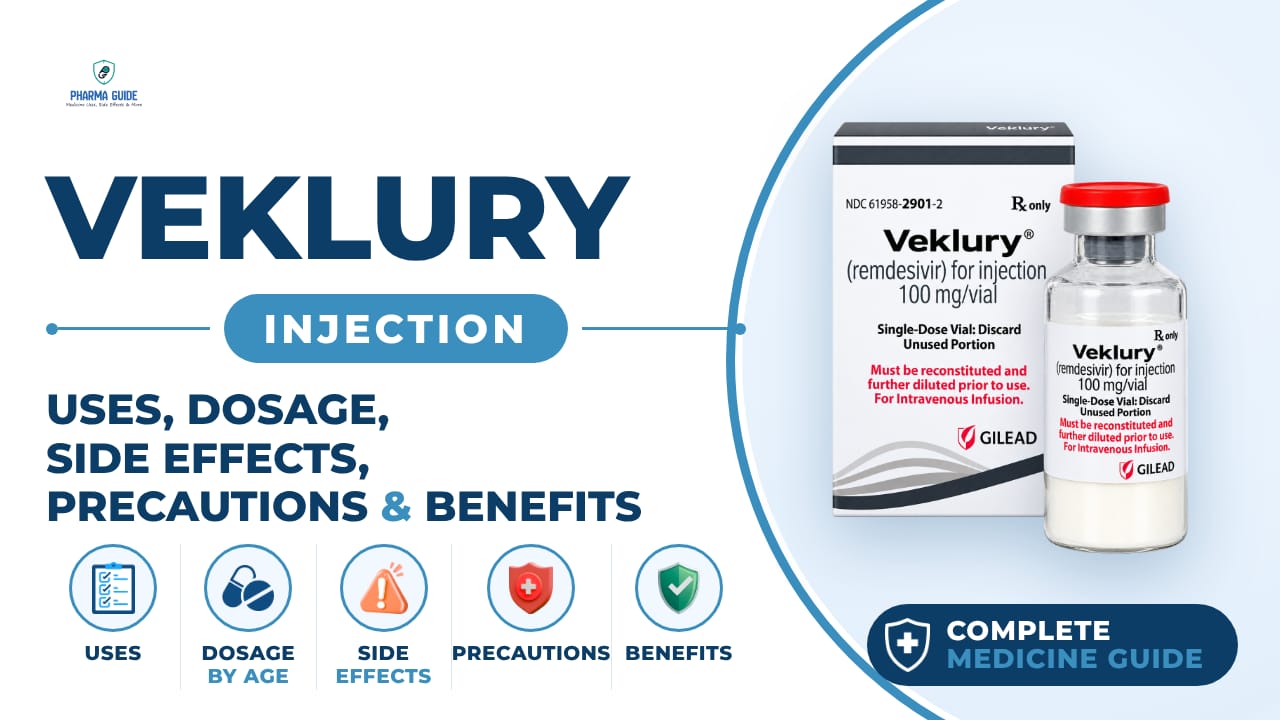
| Generic name | remdesivir |
|---|---|
| Drug class | Antiviral (nucleotide analogue prodrug) |
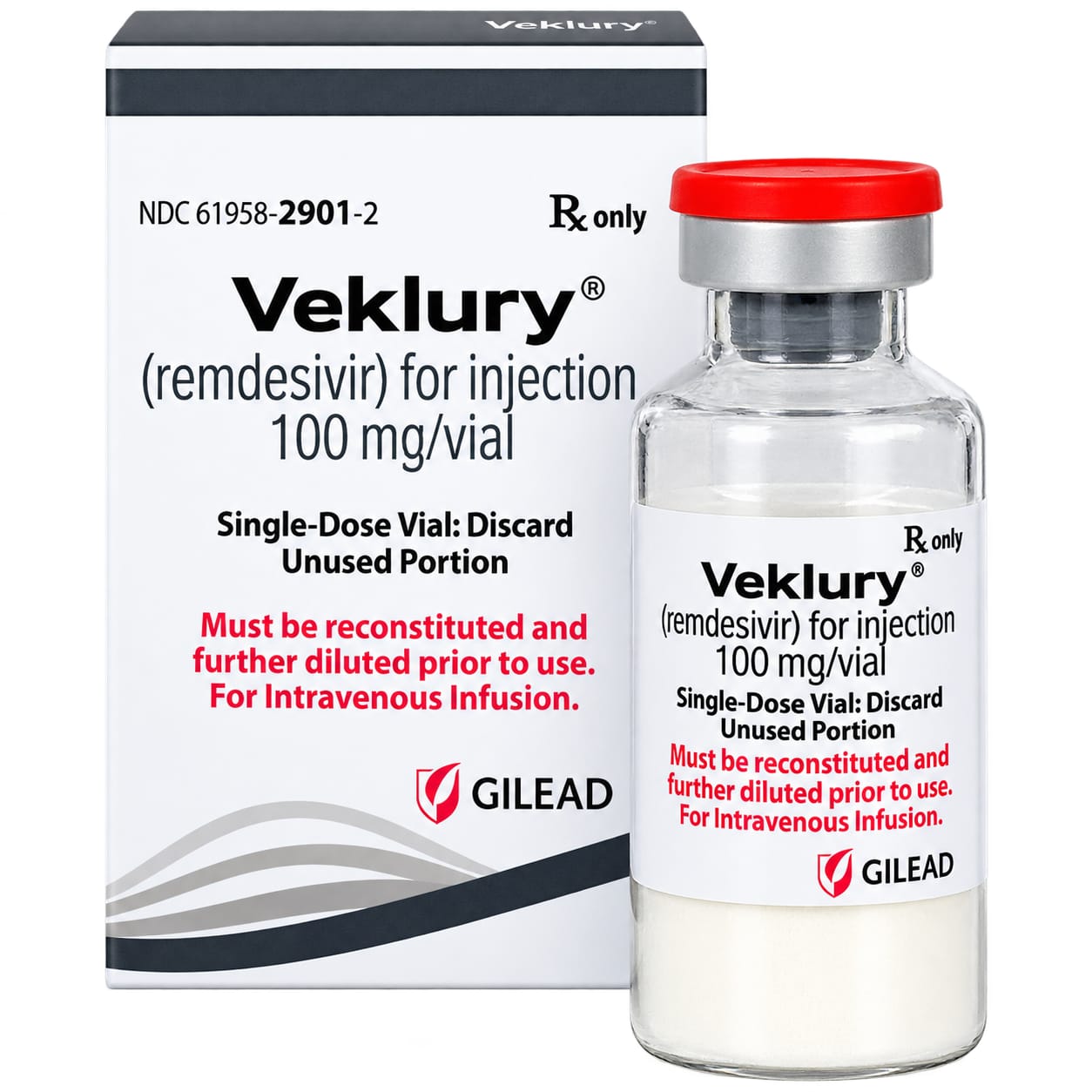
| Forms | Powder for injection/infusion (100 mg per vial, reconstituted to 5 mg/mL) |
Quick overview
Veklury Injection contains remdesivir, an antiviral medicine from the nucleotide analogue prodrug class. It is given as an infusion into a vein to treat COVID-19 in certain hospitalized adults and children, as well as in eligible high-risk patients who do not need extra oxygen. Veklury works by stopping the coronavirus from multiplying inside cells, helping to slow the infection and support recovery.
What is Veklury Injection
Veklury is a prescription antiviral medicine given as an infusion into a vein. It contains the active ingredient remdesivir and is used to treat COVID-19 in certain adults and children.
Veklury Injection uses
- Treatment of COVID-19 in hospitalized adults and children (at least 4 weeks old and weighing at least 3 kg) who have pneumonia and need extra oxygen
- Treatment of COVID-19 in adults and children (weighing at least 40 kg) who do not need extra oxygen but are at high risk of their COVID-19 becoming severe
Benefits of Veklury Injection
- Treats COVID-19
- Helps reduce progression to severe disease in eligible high-risk patients
- Can be used in both hospitalized and eligible non-hospitalized patients
- Approved for adults and eligible pediatric patients
- Provides a treatment option when oral antivirals are unsuitable
How Veklury Injection works
Veklury works by stopping the coronavirus from multiplying inside cells, which helps slow the infection in the body so you can recover faster.
Veklury Injection dosage
Veklury is given by a doctor or nurse as a drip into a vein (intravenous infusion) lasting 30 to 120 minutes, once a day. You will be closely monitored during and after your treatment. Patients receiving Veklury outside hospital will be monitored after the infusion according to local medical practice. Treatment with Veklury does not stop you passing the COVID-19 virus to others and does not prevent infection with the virus, so you will still need to isolate during treatment.
| Age group | Dose |
|---|---|
| Birth–17 years, 1.5 kg to <40 kg | 5 mg/kg on Day 1, then 2.5 mg/kg once daily from Day 2 |
| Children/adolescents ≥40 kg | 200 mg on Day 1, then 100 mg once daily from Day 2 |
| Adults 18–64 years | 200 mg on Day 1, then 100 mg once daily from Day 2 |
Available forms and strengths
- Powder for injection/infusion (100 mg per vial, reconstituted to 5 mg/mL)
Side effects of Veklury Injection
Common
- Headache
- Nausea (feeling sick)
- Rash
- Increased liver enzymes (transaminases)
- Increased prothrombin time (a blood clotting test)
Serious
- Allergic or infusion-related reactions including changes in blood pressure or heart rate, low blood oxygen, high temperature, shortness of breath, wheezing, swelling of the face, lips, tongue or throat, vomiting, sweating, and shivering
- Anaphylactic reaction
- Significant liver enzyme elevation or signs of liver inflammation
- Acute kidney injury
- Seizures
- Slow heart rate (sinus bradycardia)
Warnings and precautions
- Veklury can cause allergic reactions or reactions related to the infusion, which can be serious, including anaphylaxis.
- Do not take chloroquine or hydroxychloroquine at the same time as Veklury, as this may make Veklury less effective.
- Veklury must only be given as an intravenous infusion, never as an intramuscular injection.
- Veklury should only be given in settings where staff can immediately treat a severe infusion or allergic reaction such as anaphylaxis.
- It is not known whether Veklury is safe and effective in children younger than 4 weeks old or weighing less than 3 kg.
- Veklury should not be used during the first trimester of pregnancy unless clearly needed. It may be considered in the second or third trimester if the benefits outweigh the risks to the mother and baby.
- Remdesivir passes into breast milk. The decision to breastfeed during treatment should be made with your doctor after weighing the benefits and risks.
- No dose change is needed for kidney problems, but people with severe kidney impairment or kidney failure will be closely monitored because levels of some breakdown products of the drug are higher in these patients.
- No dose change is needed for liver problems, but your doctor will test your liver function before and during treatment and may stop the medicine if liver enzyme levels rise too much or you show signs of liver inflammation.
- No major direct interaction with alcohol is established, but avoiding alcohol while acutely ill is generally sensible.
- Veklury is not expected to affect your ability to drive, but be careful before driving or using machines until you know how it affects you.
Storage
- Store below 30°C before use
- After reconstitution, the vial should be used immediately to prepare the diluted solution
- The diluted solution for infusion can be stored up to 24 hours at room temperature (20°C to 25°C) or 48 hours in the refrigerator (2°C to 8°C) prior to administration
- Do not reuse or save unused Veklury for future use; this product contains no preservative so partially used vials should be discarded
- In New Zealand, any unused medicine or waste material should be disposed of by taking it to your local pharmacy
When to see a doctor
- Get emergency help right away if you notice signs of a serious allergic reaction, such as swelling of the face, lips, tongue or throat, difficulty breathing, or hives.
- Tell your nurse or doctor immediately if you notice changes in blood pressure or heart rate, low blood oxygen, high temperature, shortness of breath, wheezing, rash, nausea, vomiting, sweating, or shivering during or after the infusion.
- Call your doctor straight away, or go to the emergency department, if you experience any of the serious side effects related to the infusion.
- Tell your doctor immediately if you think you have missed a dose or been given too much Veklury, even if you feel fine.
Alternatives
- Paxlovid (nirmatrelvir/ritonavir), when eligible
Watch the video
FAQs
What is Veklury Injection used for?
Veklury is used to treat COVID-19 in hospitalized adults and children (at least 4 weeks old and 3 kg) with pneumonia needing extra oxygen, and in adults and children weighing at least 40 kg who don't need extra oxygen but are at high risk of severe COVID-19.
How is Veklury given?
Veklury is given by a doctor or nurse as an intravenous infusion lasting 30 to 120 minutes, once a day, with close monitoring during and after treatment.
What are the common side effects of Veklury?
Common side effects include headache, nausea, rash, increased liver enzymes, and increased prothrombin time.
Can Veklury be used during pregnancy?
Veklury should not be used during the first trimester of pregnancy unless clearly needed, but may be considered in the second or third trimester if benefits outweigh risks.
Does Veklury stop you from spreading COVID-19 to others?
No, treatment with Veklury does not stop you from passing the COVID-19 virus to others and does not prevent infection, so you will still need to isolate during treatment.
General information, not medical advice
Your prescriber and the leaflet in your pack know your situation. This page does not.
- Follow your prescriber and the leaflet
- Don't start, stop, or change a dose on your own
- Doses and warnings differ by country and product
Sources
Video
Related medicines

Injectafer Injection: Uses, Dosage, Side Effects, Precautions and Alternates
Iron products
Injectafer (ferric carboxymaltose) treats iron deficiency anemia and heart failure-related iron deficiency via IV. Learn uses, dosage, side effects, and

Gliclazide Tablet: Uses, Dosage, Side Effects, Precautions and Alternates
Sulfonylurea (hypoglycemic/antidiabetic agent)
Gliclazide Tablet is a sulfonylurea for type 2 diabetes that boosts insulin release. Learn about dosage, side effects, warnings, and precautions.