
Safety
General information, not medical advice
Your prescriber and the leaflet in your pack know your situation. This page does not.
- Follow your prescriber and the leaflet
- Don't start, stop, or change a dose on your own
- Doses and warnings differ by country and product
Veltin Gel: Uses, Dosage, Side Effects, Precautions and Alternates
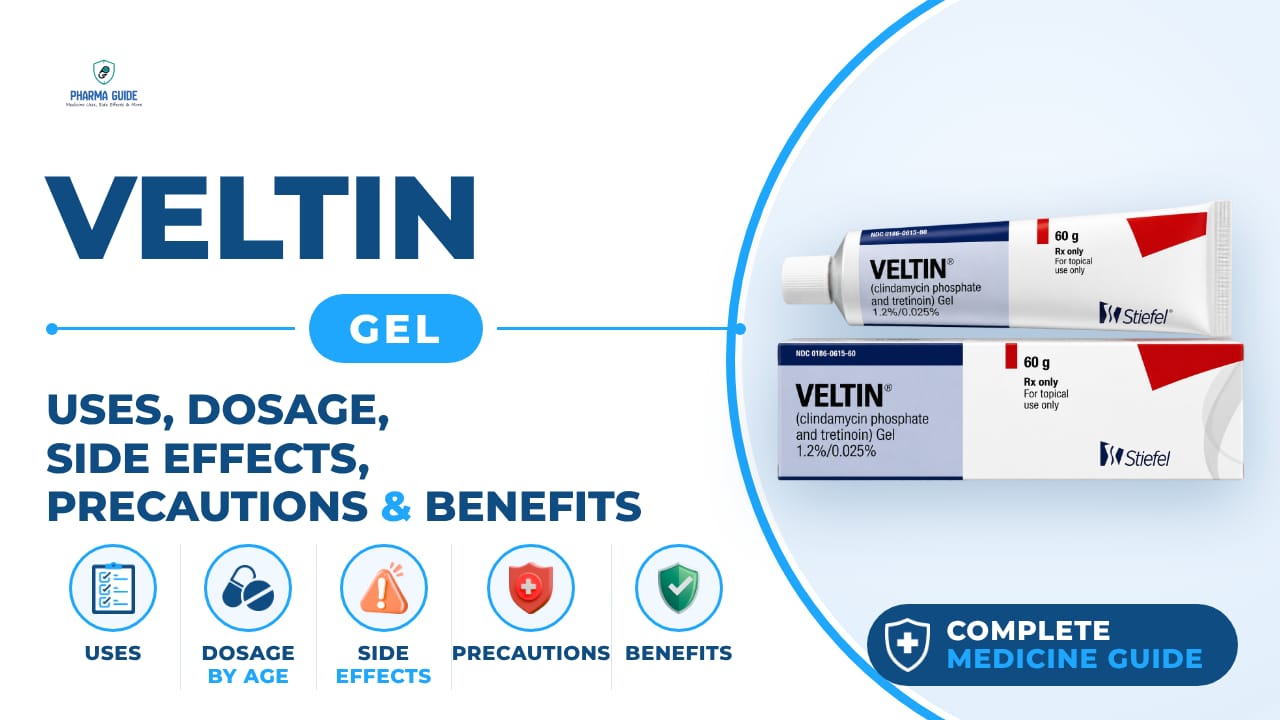
| Generic name | clindamycin phosphate and tretinoin |
|---|---|
| Drug class | Topical acne agent (lincosamide antibiotic and retinoid combination) |
| Forms | Topical gel |
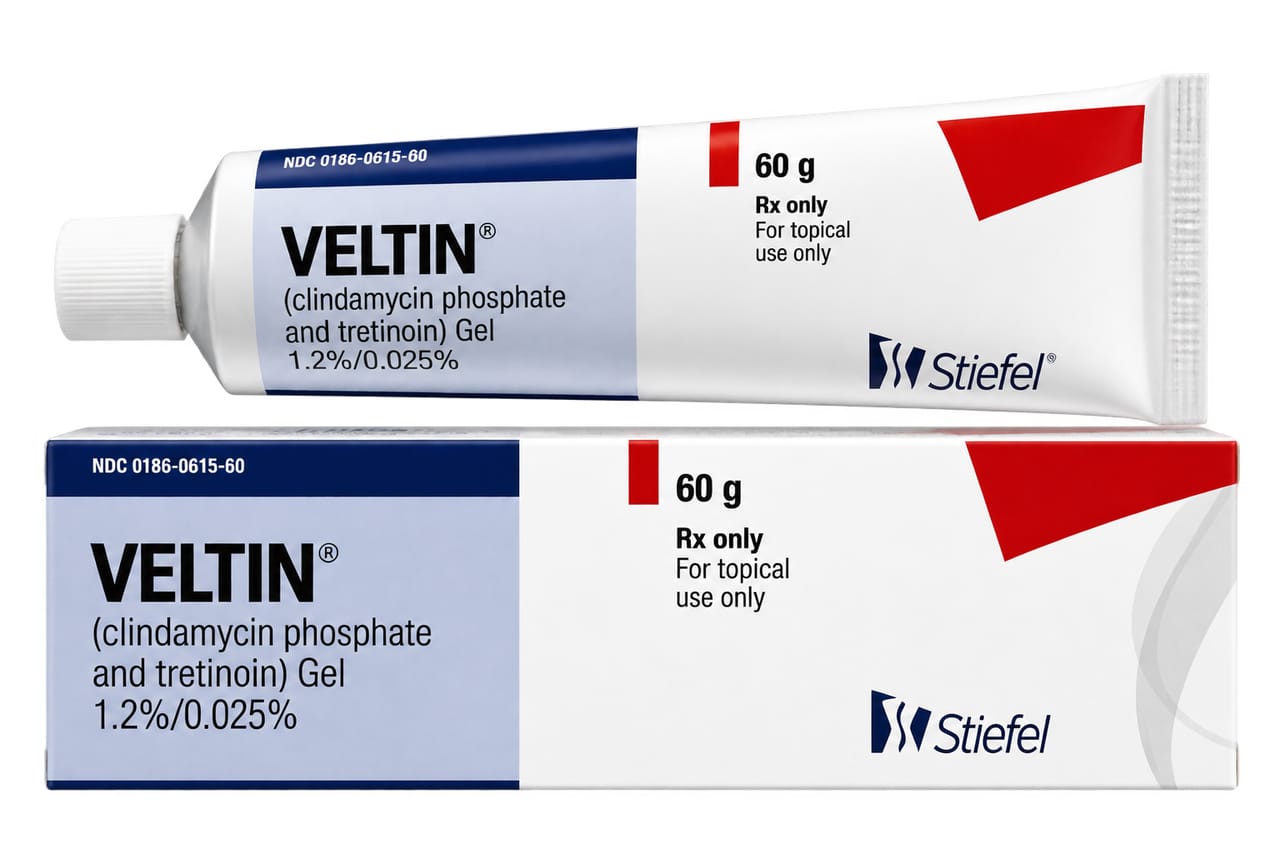
Quick overview
Veltin Gel is a prescription topical medicine that combines clindamycin phosphate, an antibiotic, with tretinoin, a form of vitamin A. It is used to treat acne vulgaris in adults and children 12 years and older. The gel is applied once daily at bedtime and works by fighting acne-causing bacteria while helping the skin renew itself. It carries certain warnings, including risks related to intestinal conditions and sun sensitivity.
What is Veltin Gel
Veltin is a gel that combines two medicines: clindamycin, an antibiotic, and tretinoin, a form of vitamin A. It is a prescription medicine applied to the skin to treat acne.
Veltin Gel uses
- Treats acne vulgaris in adults and children 12 years and older
Benefits of Veltin Gel
- Clindamycin fights the bacteria that contribute to acne
- Tretinoin reduces oil release from skin glands and helps skin renew itself more quickly, which can reduce acne lesions
How Veltin Gel works
Clindamycin works by stopping the growth of bacteria linked to acne. Tretinoin affects how skin cells grow and shed, which helps unclog pores and reduce the formation of new blemishes.
Veltin Gel dosage
Wash your hands before and after applying the gel. Wash your face with a mild soap or cleanser and pat the skin dry with a clean towel before applying. Apply only a thin layer to cover the entire affected area, not more than once daily, at bedtime. Do not apply more often than prescribed, since this will not speed results and may increase irritation.
Avoid getting the gel in your eyes, mouth, nose, or on your lips; if it gets into these areas, wash with water. Do not apply to sunburned, windburned, dry, chapped, irritated, or broken skin. Do not wash your face more than three times a day while using this medicine. Avoid washing treated skin or applying other skin products for at least one hour after applying the gel.
Use for the full length of time your doctor prescribes, even if you think it is not working. Your acne may look worse in the first few weeks because the medicine is working on pimples forming under the skin; it may take several weeks to see results. This medicine is for use on the skin only and should not be swallowed or used in the eyes, mouth, or vagina. This medicine has not been established as safe and effective in children younger than 12 years.
| Age group | Dose |
|---|---|
| Under 12 years | Not established / not recommended |
| 12–17 years | Apply approximately a pea-sized amount once daily in the evening to lightly cover the entire affected area |
| 18–64 years | Apply approximately a pea-sized amount once daily in the evening |
| 65+ years | Apply approximately a pea-sized amount once daily in the evening; use under medical supervision |
Available forms and strengths
- Topical gel
Side effects of Veltin Gel
Common
- Mild skin irritation, dryness, or peeling
- Mild skin redness
- Itching of treated skin
- Burning or stinging
Serious
- Signs of an allergic reaction: hives, difficulty breathing, swelling of the face, lips, tongue, or throat
- Severe redness, burning, stinging, or scaling of treated skin areas
- Diarrhea that is watery or bloody, which may signal colitis
- Severe abdominal or stomach pain or cramping
- Blood or mucus in the stool
- Severe sunburn
Warnings and precautions
- Do not use this medicine if you have Crohn's disease, ulcerative colitis, inflammation of the intestines (enteritis), or a history of severe diarrhea caused by an antibiotic.
- Do not use Veltin together with another antibiotic called erythromycin or skin products that contain erythromycin.
- Even though this is a skin medicine, enough of the antibiotic ingredient may be absorbed into your body to cause serious side effects, including severe colitis that can lead to death.
- This medicine can make your skin more sensitive to sunlight, increasing your risk of sunburn.
- Avoid sunlight, sunlamps, and tanning beds, and use sunscreen and protective clothing. If your skin is sunburned, do not use this medicine until it has fully healed.
- If you need surgery, including with general anesthesia, tell the surgeon ahead of time that you are using this medicine, since one of its ingredients can affect how certain anesthesia medicines work.
- For external use only. Do not use in the eyes, mouth, lips, vagina, or other mucous membranes.
- Avoid broken, sunburned, or severely irritated skin, as tretinoin can significantly increase irritation. Using more than a pea-sized amount or applying more than once daily can increase irritation.
- Avoid harsh skincare products, particularly abrasive soaps, strong cleansers, and products with a strong drying effect. Wind and cold weather may increase skin irritation during treatment.
- Avoid using skin products that contain alcohol, along with other irritating products like astringents, spices, or lime, on treated skin.
- It is not known whether Veltin will harm an unborn baby. This medicine is rated FDA pregnancy category C, meaning risk cannot be ruled out. Tell your doctor if you are pregnant or plan to become pregnant.
- It is not known whether this medicine passes into breast milk. You and your doctor should decide whether you will use Veltin or breastfeed, not both.
Storage
- Store at room temperature, between 59°F to 86°F (15°C to 30°C)
- Protect from freezing
- Keep away from heat and light
- Keep out of the reach of children
When to see a doctor
Get emergency medical help right away if you have signs of a serious allergic reaction, such as hives, difficulty breathing, or swelling of your face, lips, tongue, or throat.
Stop using this medicine and call your doctor right away if you have severe redness, burning, stinging, or scaling of your skin, or diarrhea that is watery or bloody.
Call your doctor right away if you develop diarrhea that doesn't stop, stomach pain or cramping, or blood or mucus in your stool. Do not take anti-diarrhea medicine unless your doctor tells you to, since it can make things worse.
Call your doctor if skin irritation becomes severe, or if your acne does not improve after several weeks of use.
If this medicine is swallowed and causes serious symptoms like passing out or trouble breathing, get emergency help right away. Otherwise, contact your local poison control center for advice.
Alternatives
- Adapalene
- Azelaic acid
- Tretinoin
Watch the video
FAQs
What is Veltin Gel used for?
Veltin Gel is a prescription medicine used to treat acne vulgaris in adults and children 12 years and older.
How do you apply Veltin Gel?
Apply a thin, pea-sized layer to the entire affected area once daily at bedtime after washing and drying your face, avoiding the eyes, mouth, nose, and lips.
What are the side effects of Veltin Gel?
Common side effects include mild skin irritation, dryness, peeling, redness, itching, and burning or stinging. Serious side effects can include allergic reactions, severe skin irritation, and watery or bloody diarrhea.
Who should not use Veltin Gel?
Veltin Gel should not be used by people with Crohn's disease, ulcerative colitis, enteritis, or a history of severe antibiotic-related diarrhea, or alongside erythromycin products.
Does Veltin Gel increase sun sensitivity?
Yes, Veltin Gel can make skin more sensitive to sunlight, so it's important to avoid sun exposure, tanning beds, and use sunscreen and protective clothing.
General information, not medical advice
Your prescriber and the leaflet in your pack know your situation. This page does not.
- Follow your prescriber and the leaflet
- Don't start, stop, or change a dose on your own
- Doses and warnings differ by country and product
Sources
Video
Related medicines
Ziana Gel: Uses, Dosage, Side Effects, Precautions and Alternates
Topical acne agent (lincosamide antibiotic and retinoid combination)
Ziana Gel combines clindamycin and tretinoin to treat acne vulgaris in people 12+. Learn how it works, dosage, side effects, and precautions.

Injectafer Injection: Uses, Dosage, Side Effects, Precautions and Alternates
Iron products
Injectafer (ferric carboxymaltose) treats iron deficiency anemia and heart failure-related iron deficiency via IV. Learn uses, dosage, side effects, and