
Safety
General information, not medical advice
Your prescriber and the leaflet in your pack know your situation. This page does not.
- Follow your prescriber and the leaflet
- Don't start, stop, or change a dose on your own
- Doses and warnings differ by country and product
Ziana Gel: Uses, Dosage, Side Effects, Precautions and Alternates
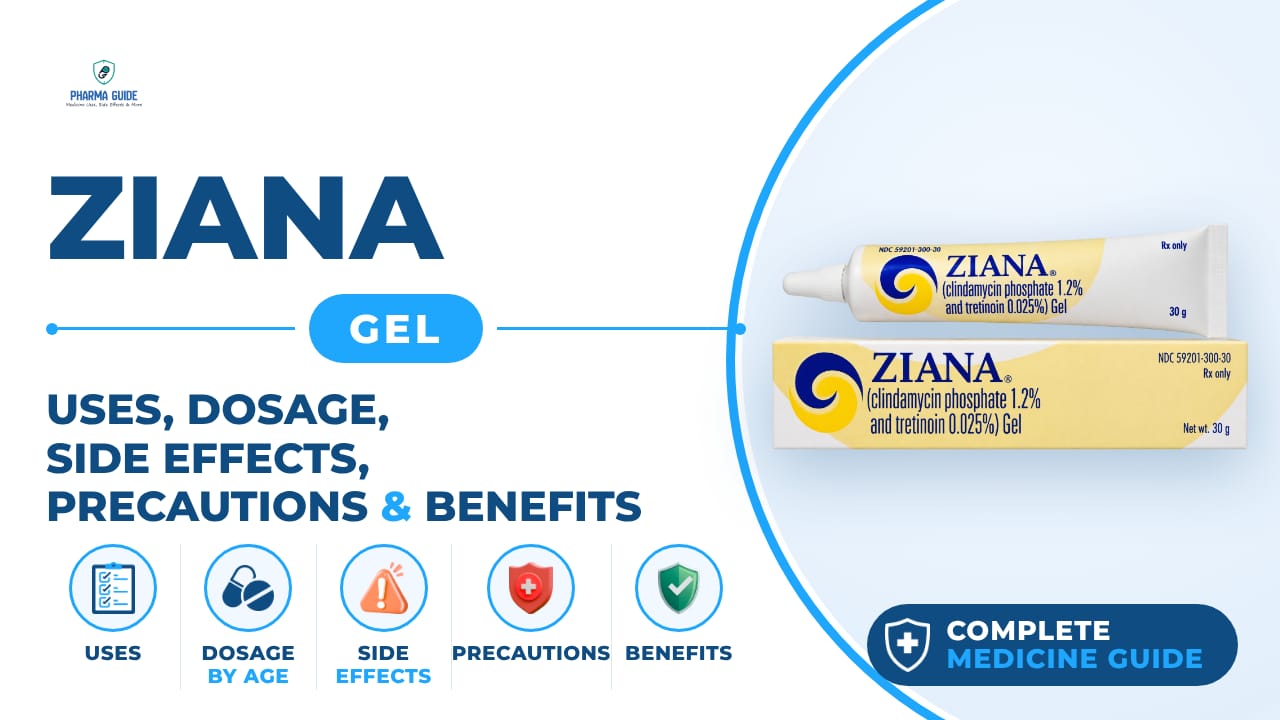
| Generic name | clindamycin phosphate and tretinoin |
|---|---|
| Drug class | Topical acne agent (lincosamide antibiotic and retinoid combination) |
| Forms | Topical gel |
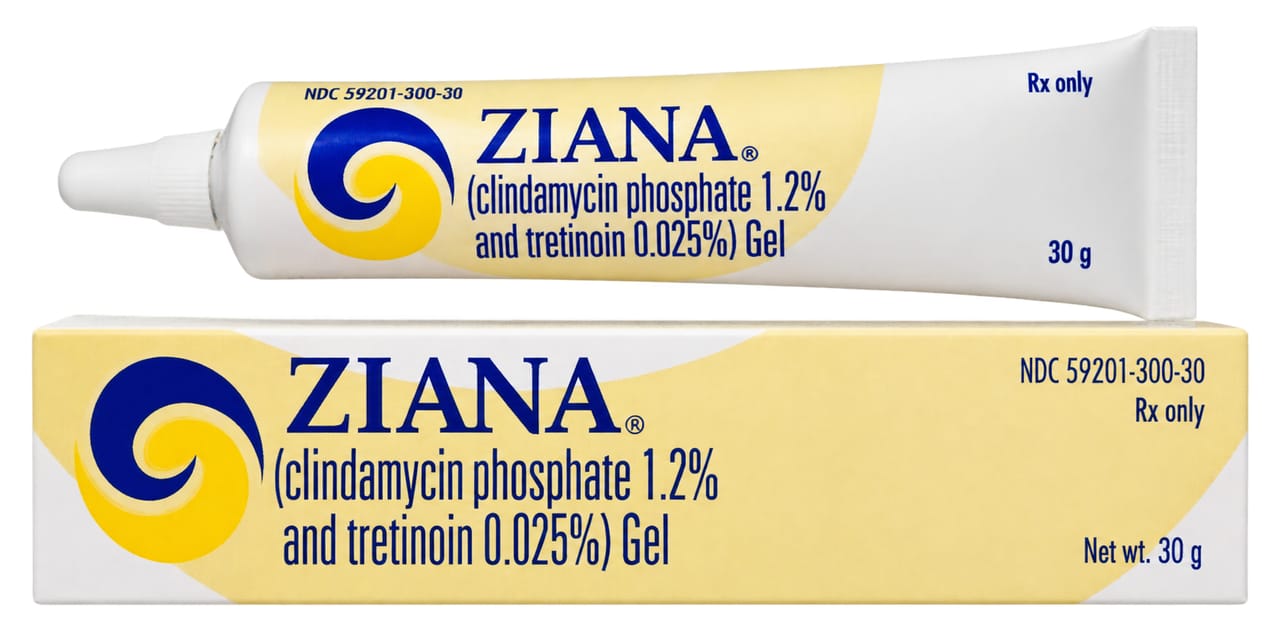
Quick overview
Ziana Gel contains clindamycin phosphate and tretinoin, combining an antibiotic and a retinoid in one topical product. It is applied to the skin once daily to treat acne vulgaris, including severe nodular acne, in people 12 years of age and older. The medicine works by fighting acne-causing bacteria while also reducing oil production and helping prevent clogged pores.
What is Ziana Gel
Ziana Gel is a combination medicine for the skin that contains two active ingredients: clindamycin, an antibiotic, and tretinoin, a form of vitamin A. It is used to treat acne.
Ziana Gel uses
- Treats acne vulgaris, including severe nodular acne, in people 12 years of age and older
Benefits of Ziana Gel
- Combines an antibiotic and a retinoid in one product for once-daily use
- Reduces the number of acne pimples and helps them heal faster
- Can help clear moderate to severe acne
How Ziana Gel works
Clindamycin is an antibiotic that fights the bacteria that cause acne. Tretinoin, a form of vitamin A, reduces oil production, helps skin cells turn over more quickly, and helps prevent pores from clogging.
Ziana Gel dosage
Wash your hands before and after applying this medication. Wash your face gently with a mild soap and warm water, then pat the skin dry. Apply a pea-sized amount to your entire face once a day at bedtime.
Avoid getting the gel in your eyes, mouth, nose, corners of the nose, or on your lips; if this happens, rinse with water. Do not apply to sunburned, windburned, dry, chapped, irritated, or broken skin. Do not wash your face more than 2 to 3 times a day, since washing too often or scrubbing can make acne worse.
Apply sunscreen every morning and reapply during the day as needed. Avoid washing treated skin or applying other skin products for at least 1 hour after applying this medicine. Use for the full length of time your doctor prescribes, even if you don't see results right away.
This medicine is not approved for use in children younger than 12 years old. If you miss a dose, apply it as soon as you remember, but skip it if it is almost time for your next dose — do not double up.
| Age group | Dose |
|---|---|
| Under 12 years | Not established / not recommended |
| 12–17 years | Apply a pea-sized amount once daily at bedtime to the entire affected facial area |
| 18–64 years | Apply a pea-sized amount once daily at bedtime to the entire affected facial area |
| 65+ years | Apply a pea-sized amount once daily at bedtime; clinical experience in this age group is limited |
Available forms and strengths
- Topical gel
Side effects of Ziana Gel
Common
- Mild skin dryness, redness, or peeling
- Itching of treated skin
- Burning or stinging where applied
- Temporary change in skin color (lighter or darker)
Serious
- Signs of an allergic reaction: hives, difficulty breathing, swelling of the face, lips, tongue, or throat
- Severe redness, burning, stinging, swelling, blistering, or crusting of treated skin
- Watery or bloody diarrhea, which could be a sign of a serious intestinal problem (colitis)
- Severe stomach cramps, tenderness, or pain
- Fever
Warnings and precautions
- It is not known whether Ziana will harm an unborn baby. Tell your doctor if you are pregnant or planning to become pregnant, so they can help you weigh the risks and benefits. It is not known if this medicine passes into breast milk or could harm a nursing baby. You should not breastfeed while using Ziana.
- For external use only. Do not use in the eyes, mouth, lips, corners of the nose, or other mucous membranes. Do not use if you have Crohn's disease, ulcerative colitis, regional enteritis, or a history of antibiotic-associated colitis. Stop Ziana and contact a doctor if significant, persistent, watery, or bloody diarrhea develops, because topical clindamycin can rarely cause severe colitis.
- May cause dryness, redness, peeling, itching, burning, or stinging. Severe irritation may require stopping treatment. Avoid excessive sunlight, sunlamps, and tanning beds. Use sunscreen daily and protective clothing. Avoid using abrasive or strongly drying soaps, cleansers, cosmetics, alcohol-containing products, or astringents, as they may increase irritation. Do not combine with erythromycin-containing products unless specifically directed by a healthcare professional.
- Avoid skin products that contain alcohol, since they can increase irritation when used with this medicine.
- Cold and windy weather can increase skin irritation. Do not apply to sunburned or severely irritated skin until it has healed.
- Safety and effectiveness have not been established in children under 12.
- Do not use this medicine if you have Crohn's disease, ulcerative colitis, inflammation of the intestines, or if you have ever had severe diarrhea caused by an antibiotic.
- Do not use Ziana together with erythromycin, whether taken by mouth or used on the skin.
- Even though this medicine is applied to the skin, enough of the antibiotic can be absorbed into the body to cause serious side effects, including severe colitis that can be life-threatening.
- This medicine can make your skin much more sensitive to sunlight and sunburn. Avoid sunlight, sunlamps, and tanning beds, and use sunscreen and protective clothing.
- If you need surgery, tell your surgeon ahead of time that you are using this medicine, since it may affect certain anesthesia medicines.
Storage
- Store at room temperature, 59° to 86°F (15° to 30°C)
- Do not freeze
- Keep away from heat and light
- Keep the tube tightly closed
- Keep out of the reach of children
When to see a doctor
- Get emergency medical help right away if you have signs of an allergic reaction, such as hives, trouble breathing, or swelling of your face, lips, tongue, or throat.
- Stop using this medicine and call your doctor right away if you have severe redness, burning, stinging, or scaling of the treated skin, or watery or bloody diarrhea.
- Stop using the medicine and contact your doctor if your skin becomes very red, swollen, blistered, or crusted.
- If you think you have used too much of this medicine and have serious symptoms, get emergency medical help right away; otherwise contact your local poison control center.
Alternatives
- Clindamycin + Tretinoin Gel
- Veltin Gel
- Tretinoin Gel/Cream
Watch the video
FAQs
What is Ziana Gel used for?
Ziana Gel treats acne vulgaris, including severe nodular acne, in people 12 years of age and older.
How do you apply Ziana Gel?
Wash your face gently and pat dry, then apply a pea-sized amount to the entire face once daily at bedtime. Avoid the eyes, mouth, nose, and lips, and don't wash your face or apply other products for at least 1 hour after application.
What are the common side effects of Ziana Gel?
Common side effects include mild skin dryness, redness, or peeling, itching, burning or stinging where applied, and temporary changes in skin color.
Who should not use Ziana Gel?
Ziana Gel should not be used by people with Crohn's disease, ulcerative colitis, regional enteritis, or a history of antibiotic-associated colitis, and it should not be combined with erythromycin products.
Can Ziana Gel be used during pregnancy or breastfeeding?
It is not known whether Ziana will harm an unborn baby, so you should tell your doctor if you are pregnant or planning to become pregnant. You should not breastfeed while using Ziana since it is not known if it passes into breast milk.
General information, not medical advice
Your prescriber and the leaflet in your pack know your situation. This page does not.
- Follow your prescriber and the leaflet
- Don't start, stop, or change a dose on your own
- Doses and warnings differ by country and product
Sources
Video
Related medicines
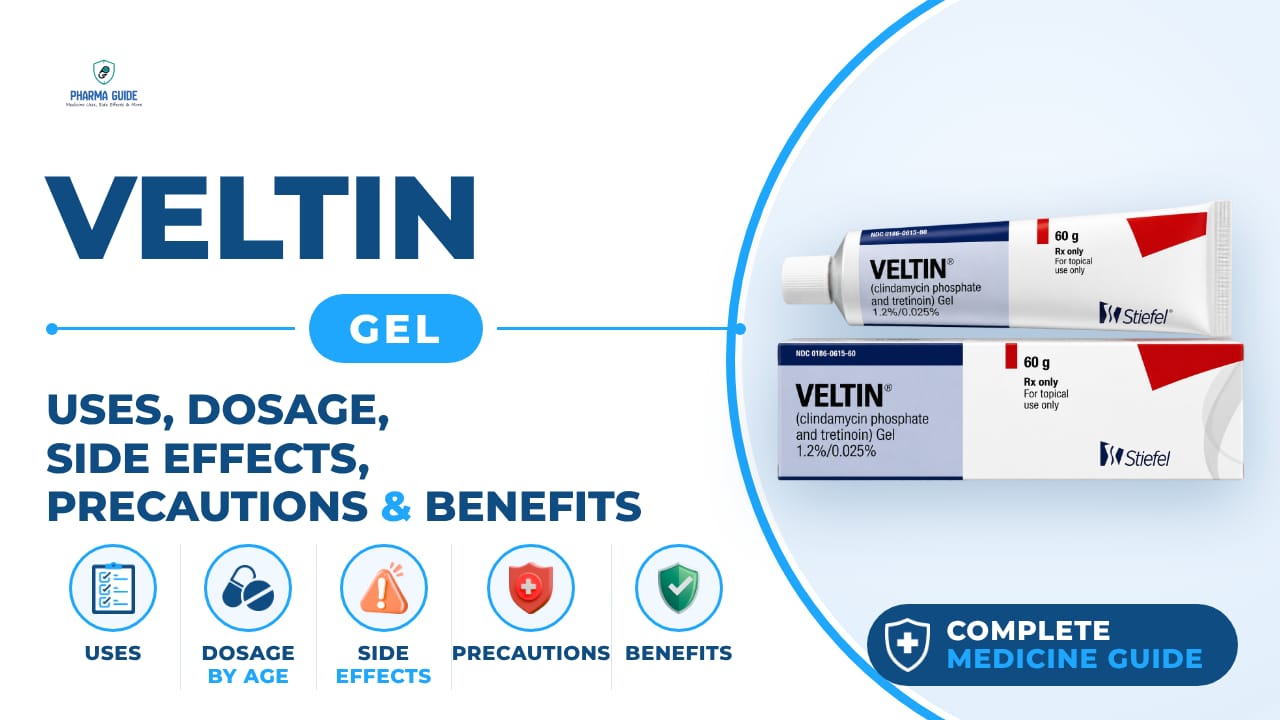
Veltin Gel: Uses, Dosage, Side Effects, Precautions and Alternates
Topical acne agent (lincosamide antibiotic and retinoid combination)
Veltin Gel combines clindamycin and tretinoin to treat acne in adults and teens 12+. Learn dosage, side effects, warnings, and precautions.

Injectafer Injection: Uses, Dosage, Side Effects, Precautions and Alternates
Iron products
Injectafer (ferric carboxymaltose) treats iron deficiency anemia and heart failure-related iron deficiency via IV. Learn uses, dosage, side effects, and