
Safety
General information, not medical advice
Your prescriber and the leaflet in your pack know your situation. This page does not.
- Follow your prescriber and the leaflet
- Don't start, stop, or change a dose on your own
- Doses and warnings differ by country and product
Venclexta Tablet: Uses, Dosage, Side Effects, Precautions and Alternates
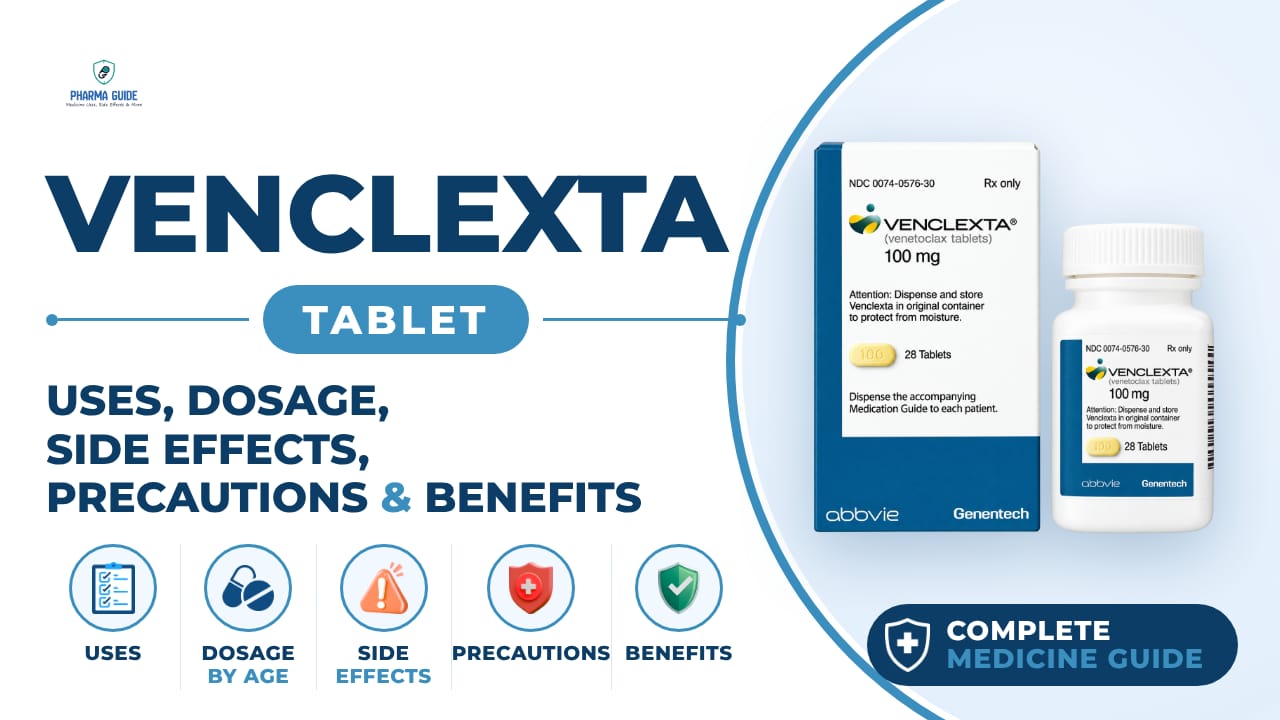
| Generic name | venetoclax |
|---|---|
| Forms | tablet |
Quick overview
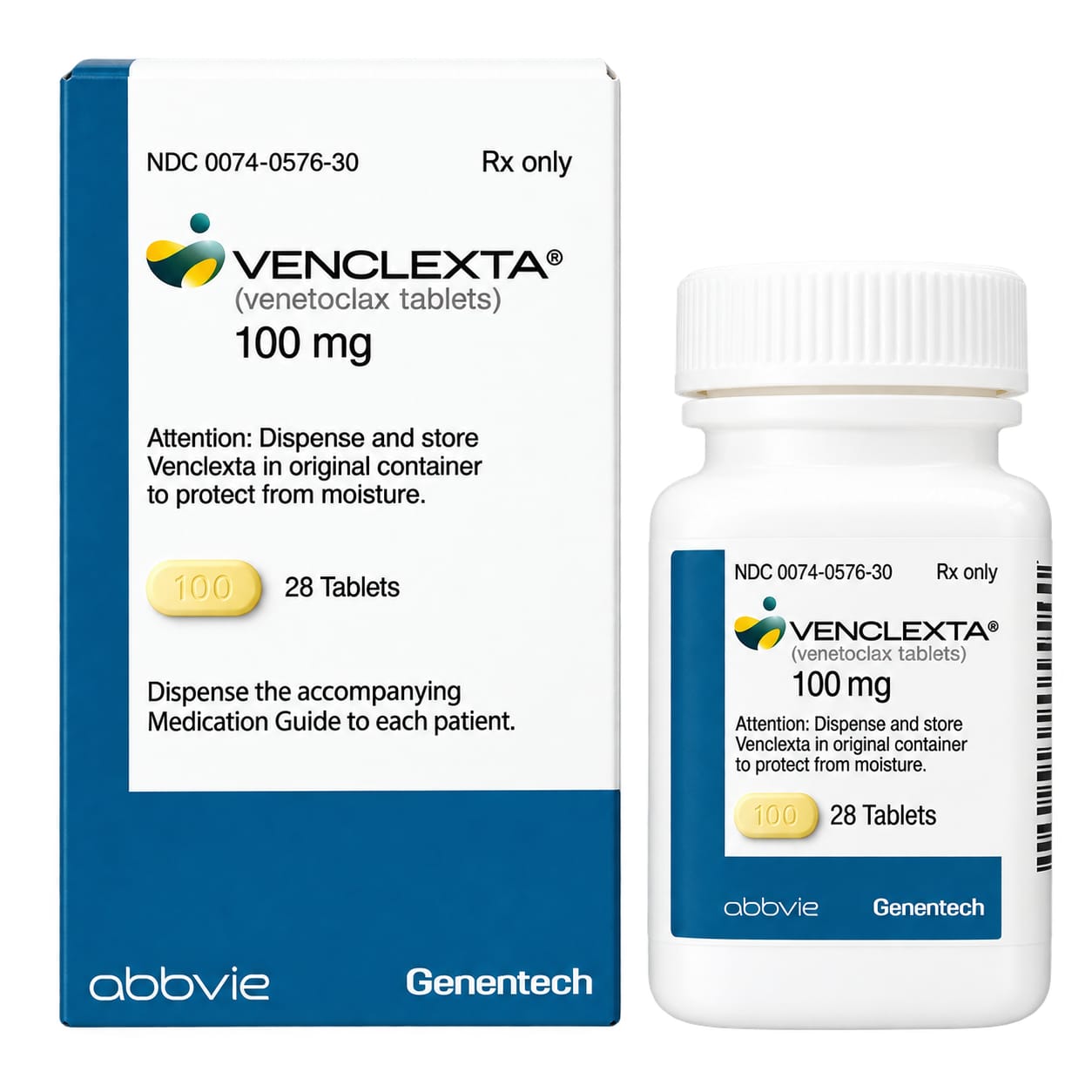
Venclexta Tablet contains the active ingredient venetoclax and is a prescription medicine used to treat certain blood cancers, including chronic lymphocytic leukaemia (CLL), small lymphocytic lymphoma (SLL), and, in combination therapy, acute myeloid leukaemia (AML). It works by blocking a protein called BCL-2 to help the body clear cancerous cells. It is taken by mouth and is not for use in children younger than 18 years.
What is Venclexta Tablet
Venclexta is a prescription medicine that contains the active ingredient venetoclax. It is used to treat certain blood cancers.
Venclexta Tablet uses
- Chronic lymphocytic leukaemia (CLL), a condition where the blood and bone marrow contain too many of a type of white blood cells (lymphocytes)
- Small lymphocytic lymphoma (SLL), a condition where the lymph nodes contain too many of a type of white blood cells (lymphocytes)
- Acute myeloid leukaemia (AML), a condition where blood cells do not develop properly in the bone marrow
Benefits of Venclexta Tablet
- Treats chronic lymphocytic leukemia (CLL)
- Treats small lymphocytic lymphoma (SLL)
- Used in combination therapy for certain acute myeloid leukemia (AML)
- Blocks the BCL-2 protein, promoting death of malignant cells
- Provides an oral targeted-treatment option
How Venclexta Tablet works
Venclexta binds to a protein called BCL-2 in cancer cells. This helps restore the body's natural process of cell death (apoptosis), which cancer disrupts, allowing the body to kill cancer cells and make room for healthy cells to grow.
Venclexta Tablet dosage
Take Venclexta during a meal or immediately after a meal at about the same time every day. Do not break, crush or chew the tablets; swallow them whole with a full glass of water. Drink plenty of water every day when taking Venclexta, especially starting two days before and on the day of your first dose, and every time the dose is increased.
Take Venclexta every day as instructed, until your doctor tells you to stop. Your doctor will start you on a low dose and gradually increase it over time; follow your doctor's instructions carefully, especially when first starting treatment or increasing the dose. Do not stop taking this medicine or change the dose without checking with your doctor.
If you miss a dose by less than 8 hours, take it as soon as you remember and take the next dose at the usual time the next day. If you miss a dose by more than 8 hours, skip the missed dose and take the next dose at the usual time the next day. Do not take a double dose to make up for a missed dose.
If you vomit after taking Venclexta, do not take extra tablets; just take the correct dose the next day at your usual time. Do not transfer tablets to a different container. Do not drink grapefruit juice or eat grapefruit, Seville oranges, or starfruit while taking Venclexta. Not for use in children younger than 18 years.
| Age group | Dose |
|---|---|
| 18–64 years, CLL/SLL | Week 1: 20 mg/day; Week 2: 50 mg/day; Week 3: 100 mg/day; Week 4: 200 mg/day; Week 5 onward: 400 mg/day |
| 65–74 years, CLL/SLL | Same adult ramp-up: 20 → 50 → 100 → 200 → 400 mg once daily |
| 75 years and older, CLL/SLL | Same indication-based 5-week ramp-up to 400 mg once daily, with close monitoring |
Available forms and strengths
- Tablet
Side effects of Venclexta Tablet
Common
- Diarrhoea
- Tummy pain
- Constipation
- Nausea (feeling sick)
- Vomiting
- Reduced appetite
- Weight loss
- A sore inside the mouth
- Looking pale
- Feeling tired or weak
- Having little or no energy
- Shortness of breath when exercising
- Feeling dizzy or fainting
- Headache
- Trouble sleeping
- Low blood pressure
- Bleeding
- Swelling of your arms, legs, hands and feet
- Cough
- Sore throat
- Muscle and joint pain
- Rash
- Stomach (abdominal) pain
Serious
- Tumour Lysis Syndrome (TLS)
- Low white blood cell count (neutropenia)
- Infection, including serious infections such as pneumonia and blood infection (sepsis)
- Fertility problems in men
Warnings and precautions
- Tumour Lysis Syndrome (TLS), which can be fatal, has occurred rarely in patients receiving Venclexta. It is caused by rapid breakdown of cancer cells and can cause serious damage to the kidneys and other organs.
- Certain medicines must not be taken when starting Venclexta and while the dose is being increased, due to increased risk of TLS.
- Do not receive a live vaccine before, during, or after treatment with Venclexta until your doctor says it is okay.
- Do not eat or drink grapefruit, Seville oranges, or starfruit while taking Venclexta, as these may increase the amount of the drug in your blood.
- Do not stop taking this medicine suddenly without checking with your doctor.
- Do not take Venclexta if you are pregnant or think you might be pregnant. Tell your doctor immediately if you become pregnant.
- Women who can become pregnant must use a highly effective form of contraception during treatment and for at least 30 days after the last dose.
- Do not take Venclexta if you are breastfeeding.
- Tell your doctor if you have or have had kidney problems, as this can increase the risk of Tumour Lysis Syndrome.
- Check with your doctor if you have any problems with your liver.
- Drinking alcohol while taking Venclexta may make you feel sick or vomit, and these symptoms may be worse.
- Take care when driving or using machinery until you know how Venclexta affects you.
Storage
- Store Venclexta in a cool dry place away from direct sunlight
- Store it in a cool dry place away from moisture, heat or sunlight; for example, do not store it in the bathroom or near a sink, or in the car or on window sills
- Do not use this medicine after the expiry date
- Keep it where young children cannot reach it
- Keep VENCLEXTA in original packaging to protect from moisture
- If your doctor advises that you no longer need to take this medicine or it is out of date, take it to any pharmacy for safe disposal
When to see a doctor
- Call your doctor straight away or go to the Emergency Department if you think you may have symptoms of Tumour Lysis Syndrome, especially at the beginning of treatment, such as fever or chills, feeling sick or vomiting, being short of breath, changes in heart rate, feeling unusually tired, dark cloudy urine, joint pain, feeling confused, or convulsions.
- Call your doctor straight away if you notice signs of an infection, such as fever or chills, feeling weak, feeling confused, cough, runny nose, sore throat, congestion on the chest, or pain or burning when passing urine.
- If you become pregnant while taking Venclexta, tell your doctor immediately.
- If you take too much Venclexta, contact your doctor or go to the Emergency Department at your nearest hospital right away, even if you feel fine.
Alternatives
- Ibrutinib
- Acalabrutinib
- Zanubrutinib
- Obinutuzumab
Watch the video
FAQs
What is Venclexta Tablet used for?
Venclexta Tablet is used to treat chronic lymphocytic leukaemia (CLL), small lymphocytic lymphoma (SLL), and, in combination therapy, acute myeloid leukaemia (AML).
How does Venclexta Tablet work?
Venclexta binds to a protein called BCL-2 in cancer cells, helping restore the body's natural process of cell death (apoptosis) so it can kill cancer cells and allow healthy cells to grow.
How should I take Venclexta Tablet?
Take Venclexta during a meal or immediately after a meal at about the same time every day. Swallow the tablets whole with a full glass of water without breaking, crushing or chewing them, and drink plenty of water, especially when starting treatment or increasing the dose.
What foods should I avoid while taking Venclexta Tablet?
Avoid grapefruit, Seville oranges, and starfruit while taking Venclexta, as these may increase the amount of the drug in your blood.
What is Tumour Lysis Syndrome and why is it a concern with Venclexta?
Tumour Lysis Syndrome (TLS) is a rare but potentially fatal condition caused by rapid breakdown of cancer cells, which can seriously damage the kidneys and other organs. It has occurred rarely in patients receiving Venclexta, especially at the start of treatment.
General information, not medical advice
Your prescriber and the leaflet in your pack know your situation. This page does not.
- Follow your prescriber and the leaflet
- Don't start, stop, or change a dose on your own
- Doses and warnings differ by country and product
Sources
Video
Related medicines

Injectafer Injection: Uses, Dosage, Side Effects, Precautions and Alternates
Iron products
Injectafer (ferric carboxymaltose) treats iron deficiency anemia and heart failure-related iron deficiency via IV. Learn uses, dosage, side effects, and

Gliclazide Tablet: Uses, Dosage, Side Effects, Precautions and Alternates
Sulfonylurea (hypoglycemic/antidiabetic agent)
Gliclazide Tablet is a sulfonylurea for type 2 diabetes that boosts insulin release. Learn about dosage, side effects, warnings, and precautions.