
Safety
General information, not medical advice
Your prescriber and the leaflet in your pack know your situation. This page does not.
- Follow your prescriber and the leaflet
- Don't start, stop, or change a dose on your own
- Doses and warnings differ by country and product
Verapamil Tablet: Uses, Dosage, Side Effects, Precautions and Alternates
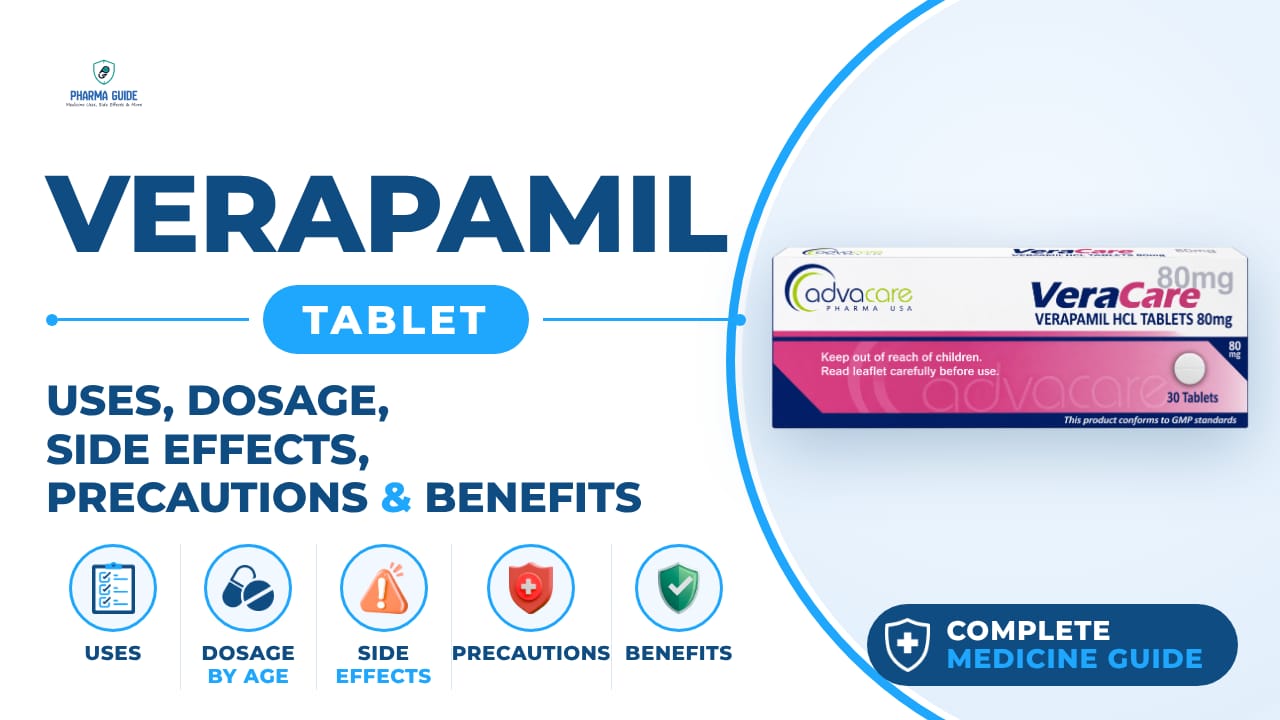
| Generic name | Verapamil hydrochloride |
|---|---|
| Drug class | Calcium channel blocker (non-dihydropyridine) |
| Forms | Immediate-release tablet, Extended-release (sustained-release) tablet, Extended-release capsule, Intravenous injection/solution |
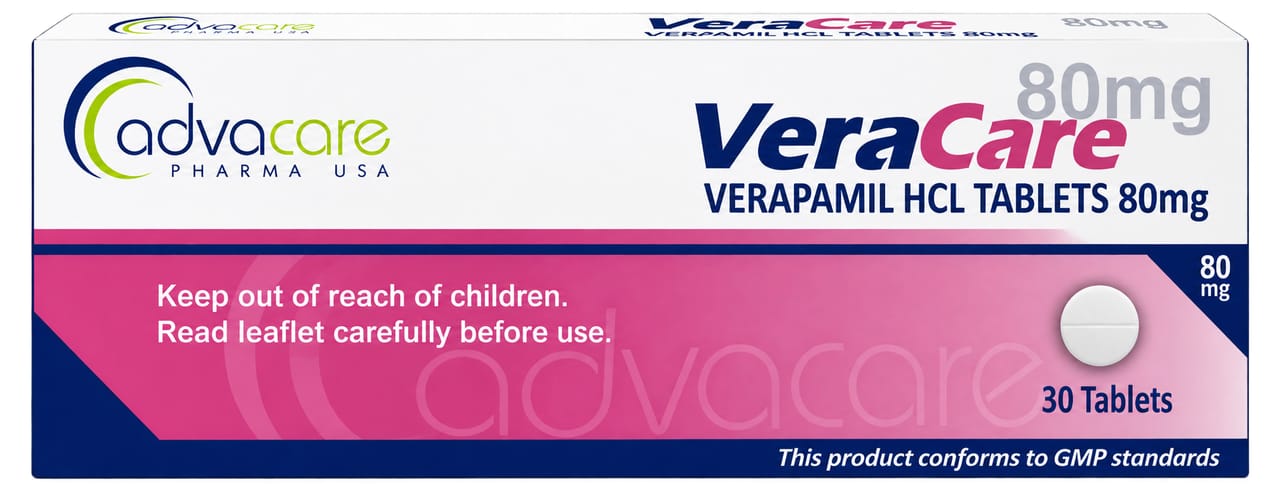
Quick overview
Verapamil Tablet (verapamil hydrochloride) is a calcium channel blocker used to treat high blood pressure, angina (chest pain), and certain irregular heartbeats such as supraventricular tachycardia and atrial fibrillation/flutter. It works by relaxing the muscles of the heart and blood vessels so the heart does not have to work as hard. It is available in several forms, including immediate-release and extended-release tablets, extended-release capsules, and an intravenous solution.
What is Verapamil Tablet
Verapamil is a medicine that belongs to a class of drugs called calcium-channel blockers. It relaxes the muscles of your heart and blood vessels, so the heart does not have to work as hard.
Verapamil Tablet uses
- High blood pressure (hypertension)
- Chest pain (angina)
- Irregular heartbeats (arrhythmias), including certain types of supraventricular tachycardia and atrial fibrillation/flutter
Benefits of Verapamil Tablet
- Helps lower high blood pressure (hypertension).
- Helps prevent and control angina (chest pain).
- Helps control certain fast or abnormal heart rhythms, such as supraventricular tachycardia.
- Can help slow the heart rate in atrial fibrillation or atrial flutter.
- Relaxes blood vessels, helping improve blood flow and reduce the heart's workload.
- Helps reduce symptoms such as palpitations and rapid heartbeat in appropriate patients.
How Verapamil Tablet works
Verapamil blocks calcium from entering the muscle cells of the heart and blood vessels. This relaxes the blood vessels and slows the heart's electrical activity, which lowers blood pressure, reduces how hard the heart has to work, and helps control irregular heartbeats.
Verapamil Tablet dosage
Take this medicine exactly as prescribed by your doctor and follow the directions on your prescription label. Some forms of verapamil should not be crushed or chewed; some extended-release capsules can be opened and the contents mixed with applesauce and swallowed right away with a full glass of cool water — ask your pharmacist how to take your specific product. Sustained-release tablets should be taken with food and swallowed whole, not chewed or crushed.
Try to take this medicine at the same time each day. If you have high blood pressure, keep taking this medicine even if you feel well, since high blood pressure often has no symptoms. Do not stop taking this medicine suddenly without talking to your doctor, as this can cause sudden changes in blood pressure or heart rate.
If you miss a dose of the oral form, take it as soon as you remember, but skip it if it is almost time for your next dose. Do not take two doses at once. Avoid taking this medicine with grapefruit or grapefruit juice, as this can raise levels of the medicine in your body.
| Age group | Dose |
|---|---|
| Under 18 years | Routine oral dosing not established; specialist use only |
| 18–64 years – Hypertension | Immediate-release: usually 80 mg 3 times daily initially |
| 18–64 years – Angina | Usually 80–120 mg 3 times daily |
| 18–64 years – Arrhythmias | Usually 240–480 mg/day, divided |
| 65+ years | Usually start at a lower dose and titrate cautiously |
Available forms and strengths
- Immediate-release tablet
- Extended-release (sustained-release) tablet
- Extended-release capsule
- Intravenous injection/solution
Side effects of Verapamil Tablet
Common
- Constipation
- Dizziness
- Nausea
- Low blood pressure
- Headache
- Swelling in the hands, feet, or ankles
- Tiredness
- Flu-like symptoms or infections
Serious
- Signs of an allergic reaction: hives, difficulty breathing, swelling of the face, lips, tongue, or throat
- Chest pain, or a fast, slow, or uneven heart rate
- A light-headed feeling like you might pass out
- Signs of heart failure: swelling, rapid weight gain, feeling short of breath
- Signs of liver problems: loss of appetite, stomach pain (upper right side), tiredness, itching, dark urine, clay-colored stools, yellowing of the skin or eyes
- Signs of fluid build-up in or around the lungs: pain when breathing, feeling short of breath while lying down, wheezing, gasping for breath, cough with foamy mucus, cold clammy skin, anxiety, rapid heartbeats
Warnings and precautions
- Pregnancy: It is not known if verapamil will harm an unborn baby.
- Tell your doctor if you are pregnant or planning to become pregnant, as this medicine is generally not recommended during pregnancy unless the benefits outweigh the risks.
- Breastfeeding: Verapamil passes into breast milk. Some sources advise against breastfeeding while taking this medicine, so talk to your doctor about the risks and benefits.
- Kidney: Verapamil should be used with caution if you have kidney problems, since the medicine may build up in your body and increase the risk of side effects.
- Liver: Verapamil is broken down by the liver, so it should be used carefully if you have liver disease, as the drug can build up and cause more side effects.
- Alcohol: Avoid drinking alcohol while taking this medicine, since it can increase alcohol's effects, such as extreme drowsiness, confusion, and nausea.
- Driving: This medicine may cause dizziness or weakness, so avoid driving or operating machinery until you know how it affects you.
- Do not use verapamil if you have certain serious heart conditions, such as sick sinus syndrome or AV block (unless you have a pacemaker), severe heart failure, or certain heart rhythm disorders like Wolff-Parkinson-White or Lown-Ganong-Levine syndrome, or if you have had fainting spells from a slow heartbeat.
- This medicine can worsen heart failure, especially in people who already have heart problems.
- Verapamil can cause your blood pressure to drop too much, causing dizziness, tiredness, or lightheadedness, especially when starting the medicine or increasing the dose.
- Although rare, this medicine can cause the heart rate to slow down too much or cause heart block, making you feel weak, lightheaded, or causing you to pass out.
- Rarely, this medicine can raise liver enzymes, which can lead to liver problems if not treated.
- Do not use this medicine together with ivabradine.
- This medicine should not be combined with an intravenous beta-blocker.
Storage
- Store at 20–25°C (68–77°F).
- Protect from light and moisture.
- Keep in a cool, dry place.
- Keep in the original, tightly closed container.
- Keep out of reach of children.
When to see a doctor
- Get emergency medical help right away if you have signs of an allergic reaction, such as hives, trouble breathing, or swelling of your face, lips, tongue, or throat.
- Call your doctor right away if you have chest pain, a fast, slow, or uneven heart rate, or a light-headed feeling like you might pass out.
- Seek emergency care if you suspect an overdose, since it can be fatal. Overdose symptoms may include very low blood pressure, slow heart rate, chest pain, shortness of breath, tiredness, high blood sugar, confusion, or severe dizziness or fainting.
- Get medical help right away if you notice severe nausea, vomiting, right-sided stomach pain, fatigue, low or no appetite, or yellowing of the skin or eyes, which may signal liver problems.
Alternatives
- Diltiazem
- Bisoprolol
- Nifedipine
- Amlodipine
- Ramipril
Watch the video
FAQs
What is Verapamil Tablet used for?
Verapamil Tablet is used to treat high blood pressure, angina (chest pain), and certain irregular heartbeats, including supraventricular tachycardia and atrial fibrillation/flutter.
How does Verapamil Tablet work?
Verapamil blocks calcium from entering the muscle cells of the heart and blood vessels, which relaxes blood vessels and slows the heart's electrical activity, lowering blood pressure, reducing the heart's workload, and helping control irregular heartbeats.
Can I drink grapefruit juice with Verapamil Tablet?
No, you should avoid taking Verapamil with grapefruit or grapefruit juice, as this can raise levels of the medicine in your body.
What are the common side effects of Verapamil Tablet?
Common side effects include constipation, dizziness, nausea, low blood pressure, headache, swelling in the hands, feet, or ankles, tiredness, and flu-like symptoms or infections.
What should I avoid while taking Verapamil Tablet?
You should avoid drinking alcohol, as it can increase alcohol's effects such as drowsiness, confusion, and nausea, and avoid driving or operating machinery until you know how the medicine affects you.
General information, not medical advice
Your prescriber and the leaflet in your pack know your situation. This page does not.
- Follow your prescriber and the leaflet
- Don't start, stop, or change a dose on your own
- Doses and warnings differ by country and product
Sources
Video
Related medicines

Injectafer Injection: Uses, Dosage, Side Effects, Precautions and Alternates
Iron products
Injectafer (ferric carboxymaltose) treats iron deficiency anemia and heart failure-related iron deficiency via IV. Learn uses, dosage, side effects, and

Gliclazide Tablet: Uses, Dosage, Side Effects, Precautions and Alternates
Sulfonylurea (hypoglycemic/antidiabetic agent)
Gliclazide Tablet is a sulfonylurea for type 2 diabetes that boosts insulin release. Learn about dosage, side effects, warnings, and precautions.