
Safety
General information, not medical advice
Your prescriber and the leaflet in your pack know your situation. This page does not.
- Follow your prescriber and the leaflet
- Don't start, stop, or change a dose on your own
- Doses and warnings differ by country and product
Vermox Tablet: Uses, Dosage, Side Effects, Precautions and Alternates
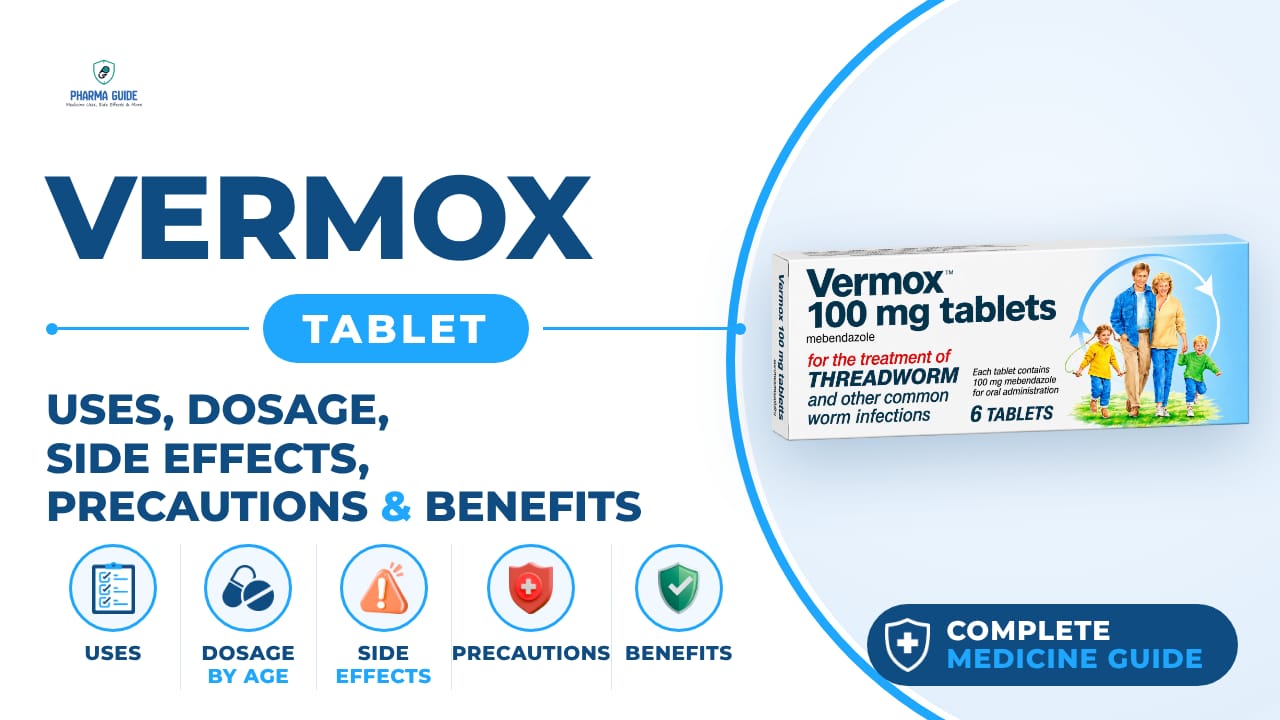
| Generic name | Mebendazole |
|---|---|
| Drug class | Anthelmintic (antiparasitic) |
| Forms | Tablets, 100 mg, Oral suspension, 20 mg/mL |

Quick overview
Vermox Tablet contains mebendazole, an anthelmintic medicine used to treat infections caused by parasitic worms such as pinworm, roundworm, whipworm, hookworm, threadworm, and large tapeworm. It works by stopping worms from taking in the sugar they need to survive, which kills them. Vermox is taken as tablets or oral suspension, generally twice daily for three days depending on age and type of infection, and should always be used exactly as prescribed.
What is Vermox Tablet
Vermox is a medicine that belongs to a group called anthelmintics. These medicines get rid of or destroy parasitic worms that live in the human body.
Vermox Tablet uses
- Pinworm infection
- Roundworm infection
- Whipworm infection
- Hookworm infection
- Threadworm infection
- Large tapeworm infection
- Mixed worm infestations
Benefits of Vermox Tablet
- Treats infestations of one or several types of parasitic worms
- The correct dose can completely clear worms in most patients, even in severe or mixed infestations
How Vermox Tablet works
Vermox stops parasitic worms from taking in the sugar they need to survive, which kills the worms.
Vermox Tablet dosage
Always take Vermox exactly as your healthcare professional tells you to. Tablets can be swallowed whole with water or chewed, and they can be crushed before giving to young children who have trouble swallowing them. Vermox can be taken with or without food, and no special diet, fasting, or laxatives are needed. Shake the oral suspension bottle before use, and complete the full course even if you feel better.
| Age group | Dose |
|---|---|
| 2–11 years | 100 mg twice daily for 3 days for common intestinal worms; pinworm may use 100 mg once |
| 12–17 years | 100 mg twice daily for 3 days; regimen depends on worm infection |
| 18–64 years | 100 mg twice daily for 3 days; pinworm may use 100 mg once |
| 65+ years | Usually the adult regimen, with medical assessment when appropriate |
Available forms and strengths
- Tablets, 100 mg
- Oral suspension, 20 mg/mL
Side effects of Vermox Tablet
Common
- Dizziness
- Stomach aches and pains, gas, abdominal pain, diarrhea, nausea and vomiting
- Skin rash
- Hives
- Hair loss, which in some cases may be permanent
- Drowsiness
- Itching
- Headache
Serious
- Liver problems: upper abdominal pain, nausea or loss of appetite, extreme tiredness, fever, dark urine, yellowing of skin and eyes
- Neutropenia: infections, fatigue, fever, aches, pains, flu-like symptoms, sore throat, swollen lymph nodes, mouth or anal ulcers
- Agranulocytosis: fever, tiredness, faster breathing, dizziness, increased heart rate, sore throat
- Glomerulonephritis (kidney disease): swelling, blood in urine, urinating less than usual, urinating at night, lack of appetite, nausea, vomiting, tiredness
- Allergic reaction: swollen mouth, throat, extremities, difficulty breathing, shortness of breath, skin rash, itching, hives, flushing or fainting
- Convulsions (seizures): uncontrollable jerking movements, loss of consciousness, uncontrollable shaking
- Toxic epidermal necrolysis: widespread skin pain, spreading rash, blisters and large areas of peeling skin
- Stevens-Johnson syndrome: redness, blistering and/or peeling of skin and mucous membranes, fever, chills, headache, cough, body aches, swollen glands
- Angioedema: swollen face, eyes, lips, tongue, throat or airway causing trouble breathing or talking, swollen hands or feet, dizziness, nausea, vomiting
- Abnormal liver test results: extreme tiredness, dark urine, abdominal pain
- Abnormal kidney function: extreme tiredness, swelling, changes in urination, yellowing of skin and eyes
- Blood in urine (hematuria): red or cola-colored urine, blood clots in urine, frequent or painful urination
- Casts in urine (cylindruria): milky white urine, pain while urinating, pain in the loin region, weight loss
Warnings and precautions
- Vermox should not be given during pregnancy, especially in the first three months, unless the benefits clearly outweigh the risks to the unborn baby, because animal studies showed harm to the fetus and safety in pregnant women has not been established.
- A small amount of mebendazole passes into breast milk, so caution is needed if Vermox is given to breastfeeding women.
- Patients should be monitored for changes in kidney function while taking Vermox, and kidney disease (glomerulonephritis) has been reported with high doses used for a long time.
- Liver problems such as reversible liver function changes and hepatitis have been reported in patients taking Vermox at normal doses, so liver function should be monitored.
- Avoid alcohol during treatment with Vermox.
- No studies have looked at whether Vermox affects the ability to drive or use machines, but the medicine may cause drowsiness or dizziness.
- Do not take Vermox together with metronidazole, an antibiotic, because this combination has been linked to a possible risk of a severe skin reaction.
- Cimetidine, a heartburn medicine, may raise the levels of Vermox in the body, so your dose might need to be adjusted if you take both.
- Vermox should not be given to children under 1 year old.
- Convulsions, including in infants, have been reported with Vermox, so it should only be given to very young children if the worm infection is seriously affecting their nutrition and growth.
- Taking higher than recommended doses or using Vermox for a long time can cause serious blood, kidney, or liver problems, and hair loss that may be permanent.
Storage
- Store between 15 and 30°C
- Protect from light
- Keep out of the sight and reach of children
- Do not use this medicine after the expiry date
- Do not throw away any medicine via wastewater or household waste; ask your pharmacist how to throw away medicines you no longer use
When to see a doctor
- Get medical help right away if you have signs of a severe skin reaction such as widespread rash, blisters, or peeling skin, with or without fever.
- Get medical help right away if you have a serious allergic reaction, such as hives, itching, flushing, fainting, or difficulty breathing.
- Get medical help right away if convulsions (seizures) occur.
- If you think you or someone you are caring for has taken too much Vermox, contact a healthcare professional, hospital emergency department, or your local poison control center right away, even if there are no symptoms.
Alternatives
- Albendazole
- Ivermectin
- Pyrantel Pamoate
- Praziquantel
- Niclosamide
Watch the video
FAQs
What is Vermox Tablet used for
Vermox is used to treat infections caused by parasitic worms such as pinworm, roundworm, whipworm, hookworm, threadworm, and large tapeworm, including mixed worm infestations.
How does Vermox Tablet work
Vermox works by stopping parasitic worms from taking in the sugar they need to survive, which kills the worms.
What is the dosage of Vermox Tablet
Vermox is generally taken as 100 mg twice daily for 3 days depending on age and type of infection, though pinworm infections may be treated with a single 100 mg dose. It should always be taken exactly as prescribed.
Can Vermox Tablet be taken during pregnancy
Vermox should not be given during pregnancy, especially in the first three months, unless the benefits clearly outweigh the risks, since animal studies showed harm to the fetus and safety in pregnant women has not been established.
What are the common side effects of Vermox Tablet
Common side effects include dizziness, stomach aches and pains, gas, abdominal pain, diarrhea, nausea and vomiting, skin rash, hives, hair loss, drowsiness, itching, and headache.
General information, not medical advice
Your prescriber and the leaflet in your pack know your situation. This page does not.
- Follow your prescriber and the leaflet
- Don't start, stop, or change a dose on your own
- Doses and warnings differ by country and product
Sources
Video
Related medicines

Injectafer Injection: Uses, Dosage, Side Effects, Precautions and Alternates
Iron products
Injectafer (ferric carboxymaltose) treats iron deficiency anemia and heart failure-related iron deficiency via IV. Learn uses, dosage, side effects, and

Gliclazide Tablet: Uses, Dosage, Side Effects, Precautions and Alternates
Sulfonylurea (hypoglycemic/antidiabetic agent)
Gliclazide Tablet is a sulfonylurea for type 2 diabetes that boosts insulin release. Learn about dosage, side effects, warnings, and precautions.