
Safety
General information, not medical advice
Your prescriber and the leaflet in your pack know your situation. This page does not.
- Follow your prescriber and the leaflet
- Don't start, stop, or change a dose on your own
- Doses and warnings differ by country and product
Vertin Tablet: Uses, Dosage, Side Effects, Precautions and Alternates
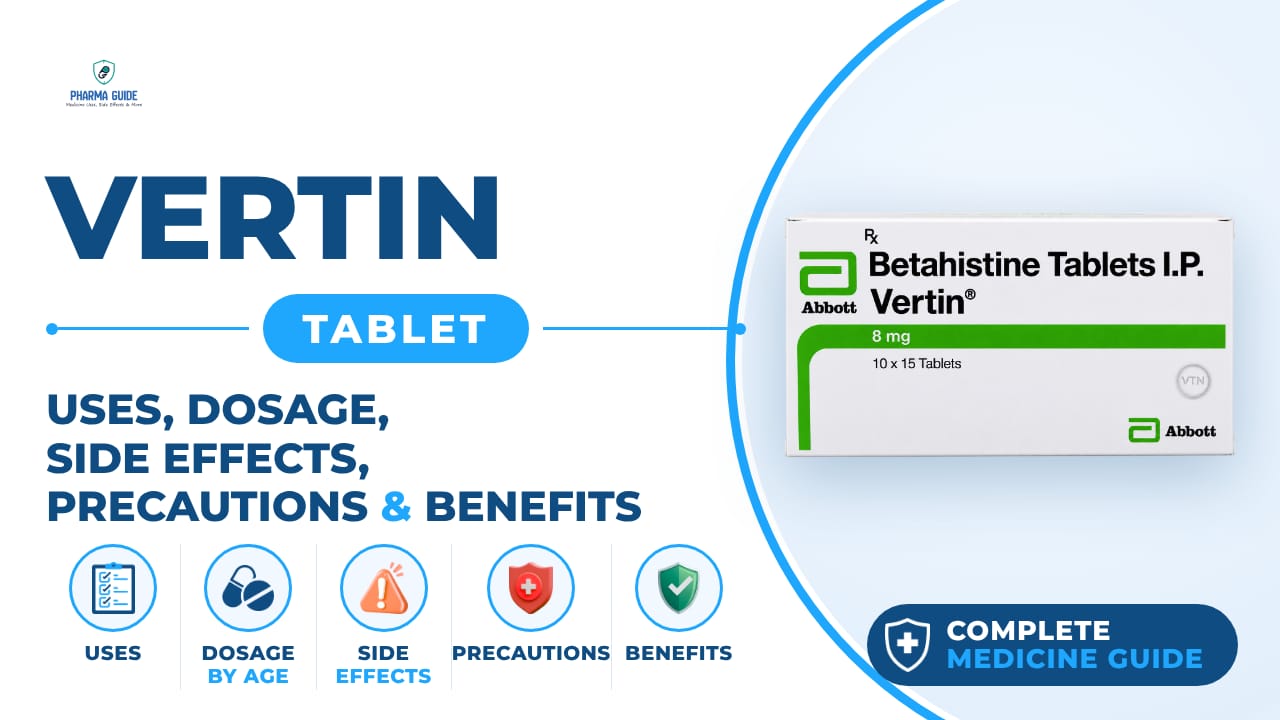
| Generic name | Betahistine |
|---|---|
| Drug class | Antivertigo agents |
| Forms | Tablet, Mouth dissolving tablet, Orally disintegrating tablet |
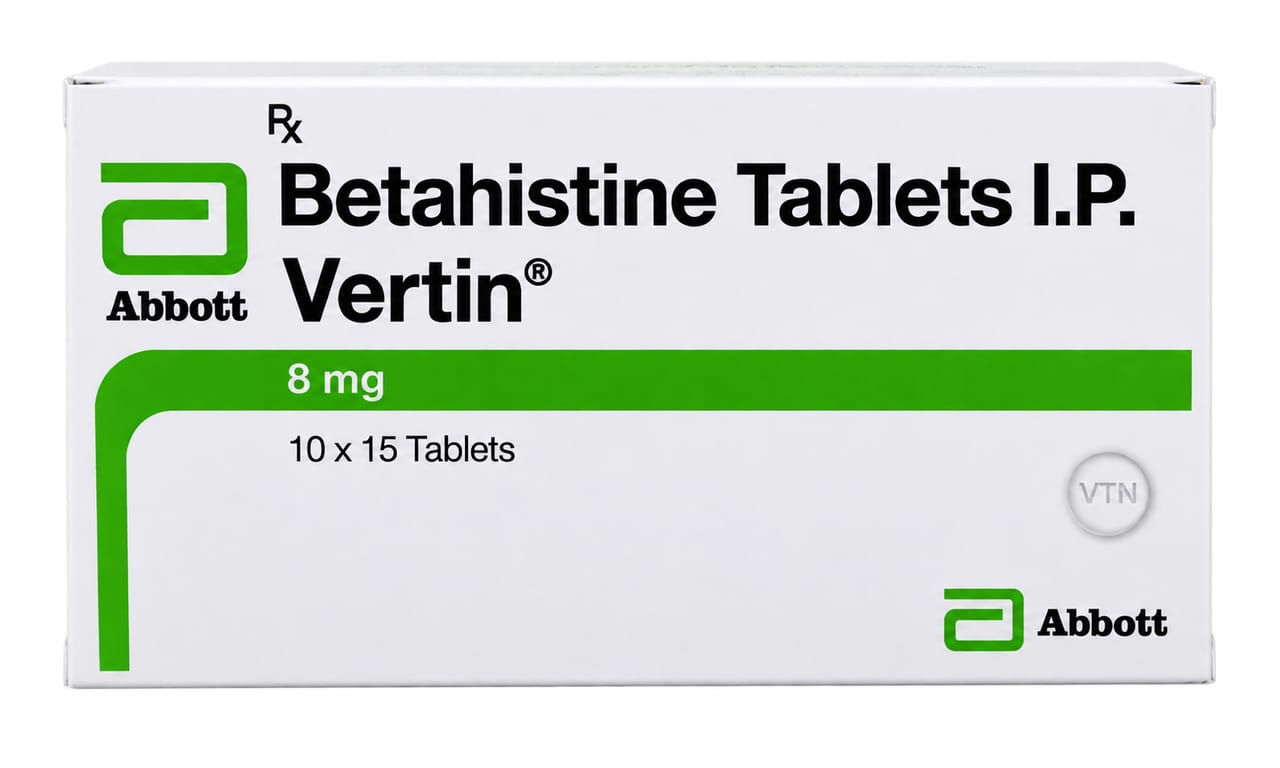
Quick overview
Vertin Tablet contains Betahistine, an antivertigo medicine used to treat Meniere's disease, a disorder of the inner ear that causes episodes of dizziness, vertigo, ringing in the ears, nausea and hearing problems. It works by improving blood flow around the inner ear to ease these symptoms. It is available as a tablet, mouth dissolving tablet, and orally disintegrating tablet.
What is Vertin Tablet
Vertin is a tablet containing Betahistine, an antivertigo medicine used to treat Meniere's disease, a disorder of the inner ear that causes episodes of dizziness, vertigo, ringing in the ears, nausea and hearing problems.
Vertin Tablet uses
- Meniere's disease
- Vertigo (spinning or dizziness sensation)
- Tinnitus (ringing in the ears)
- Nausea
- Hearing problems/loss linked to Meniere's disease
Benefits of Vertin Tablet
- Helps relieve vertigo, dizziness and spinning sensations
- Reduces ringing in the ears (tinnitus)
- Eases nausea associated with Meniere's disease
- Helps stabilize hearing fluctuations linked to inner-ear pressure
How Vertin Tablet works
Vertin works by widening blood vessels and improving blood flow around the inner ear, which reduces the build-up of fluid pressure there and eases symptoms like vertigo, ringing in the ears, nausea, and hearing loss.
Vertin Tablet dosage
Take this medicine exactly as prescribed by your doctor; do not take more or less than recommended. Take it with food to help avoid stomach problems. Swallow tablets whole with a glass of water; do not crush or chew them. If using a mouth-dissolving or orally disintegrating form, let it dissolve in your mouth rather than swallowing or chewing it. Take it for the full recommended duration, since stopping suddenly may make your symptoms worse. Avoid caffeine, dairy products, alcohol, and foods high in sodium, as these may trigger Meniere's disease symptoms. Not recommended for use in children below 18 years of age.
If you miss a dose, take it as soon as you remember, but skip it if it is almost time for your next dose; do not double up.
| Age group | Dose |
|---|---|
| Under 18 Years | Not recommended unless prescribed by a specialist |
| Adults (18–64 Years) | 8–16 mg three times daily (maximum usually 48 mg/day) |
| Older Adults (65+ years) | Same adult dose; adjustment based on medical condition |
Available forms and strengths
- Tablet
- Mouth dissolving tablet
- Orally disintegrating tablet
Side effects of Vertin Tablet
Common
- Nausea and vomiting
- Headache
- Indigestion
- Bloating
- Stomach pain
- Skin rash and itching
Serious
- Difficulty in breathing
- Severe allergic reaction (skin rash, swelling of face/tongue/throat)
Warnings and precautions
- Avoid this medicine if you are allergic to it. Get medical help right away if you notice a rash, swelling of the face, tongue or throat, or breathing difficulty.
- This medicine is not recommended if you have pheochromocytoma, a rare adrenal gland tumor, since it may trigger release of hormones that raise blood pressure.
- Use with caution if you have stomach ulcers, since this medicine may occasionally cause indigestion.
- Use with caution if you have asthma, as this medicine may worsen the condition.
- Not recommended for children under 18, as safety and effectiveness have not been established in this age group.
- Use with caution if you have severe low blood pressure, as this medicine may worsen the condition.
- Never take more than the amount your doctor has prescribed.
- This medicine is not recommended during pregnancy because there is not enough safety information. Talk to your doctor if you are pregnant.
- This medicine is not recommended while breastfeeding unless your doctor decides it is necessary. Discuss the risks and benefits with your doctor first.
- This medicine can have moderate side effects on the kidneys. If you notice any harmful effects, stop taking it and consult your doctor before using it again.
- Very few cases of liver side effects have been reported with this medicine.
- It is not known how this medicine interacts with alcohol, so it's best to check with your doctor before drinking.
- The condition being treated (vertigo) can itself affect your ability to drive or operate machinery because it may cause sudden spinning sensations.
When to see a doctor
- Get emergency medical help if you have signs of a severe allergic reaction such as skin rash, swelling of the face, tongue or throat, or trouble breathing.
- If you think you have taken too much of this medicine, get medical help right away.
- Tell your doctor if side effects such as nausea, headache, indigestion, or stomach pain persist or get worse.
Alternatives
- Cinnarizine
- Prochlorperazine
- Flunarizine
Watch the video
FAQs
What is Vertin Tablet used for?
Vertin Tablet is used to treat Meniere's disease and its symptoms, including vertigo, tinnitus (ringing in the ears), nausea, and hearing problems linked to the condition.
How does Vertin Tablet work?
Vertin works by widening blood vessels and improving blood flow around the inner ear, which reduces fluid pressure build-up and eases vertigo, tinnitus, nausea, and hearing loss.
What is the dosage of Vertin Tablet for adults?
Adults (18-64 years) usually take 8-16 mg three times daily, with a maximum of about 48 mg per day, as prescribed by a doctor. Older adults take the same adult dose with adjustments based on medical condition.
What are the common side effects of Vertin Tablet?
Common side effects include nausea and vomiting, headache, indigestion, bloating, stomach pain, and skin rash or itching.
Can Vertin Tablet be taken during pregnancy?
Vertin Tablet is not recommended during pregnancy because there is not enough safety information, so you should talk to your doctor if you are pregnant.
General information, not medical advice
Your prescriber and the leaflet in your pack know your situation. This page does not.
- Follow your prescriber and the leaflet
- Don't start, stop, or change a dose on your own
- Doses and warnings differ by country and product
Sources
- https://pubchem.ncbi.nlm.nih.gov/compound/Betahistine
- https://www.medicines.org.uk/emc/files/pil.7053.pdf
- https://www.medicines.org.uk/emc/product/7052/smpc#MACHINEOPS
- KD Tripathi. Seventh Edition. New Delhi, India: Jaypee Brothers Medical Publishers; 2013: Page No 163
- Therapeutic Goods Administration (TGA): Department of Health, Government of Australia; Package leaflet information for the user; Apo-betahistine (betahistine dihydrochloride)
- Therapeutic Goods Administration (TGA): Department of Health, Government of Australia; Package leaflet information for the user; Serc® (betahistine dihydrochloride)
- Therapeutic Goods Administration (TGA): Department of Health, Government of Australia; Package leaflet information for the user; Setear (betahistine)
Video
Related medicines

Injectafer Injection: Uses, Dosage, Side Effects, Precautions and Alternates
Iron products
Injectafer (ferric carboxymaltose) treats iron deficiency anemia and heart failure-related iron deficiency via IV. Learn uses, dosage, side effects, and

Gliclazide Tablet: Uses, Dosage, Side Effects, Precautions and Alternates
Sulfonylurea (hypoglycemic/antidiabetic agent)
Gliclazide Tablet is a sulfonylurea for type 2 diabetes that boosts insulin release. Learn about dosage, side effects, warnings, and precautions.