
Safety
General information, not medical advice
Your prescriber and the leaflet in your pack know your situation. This page does not.
- Follow your prescriber and the leaflet
- Don't start, stop, or change a dose on your own
- Doses and warnings differ by country and product
Vesicare Tablet: Uses, Dosage, Side Effects, Precautions and Alternates
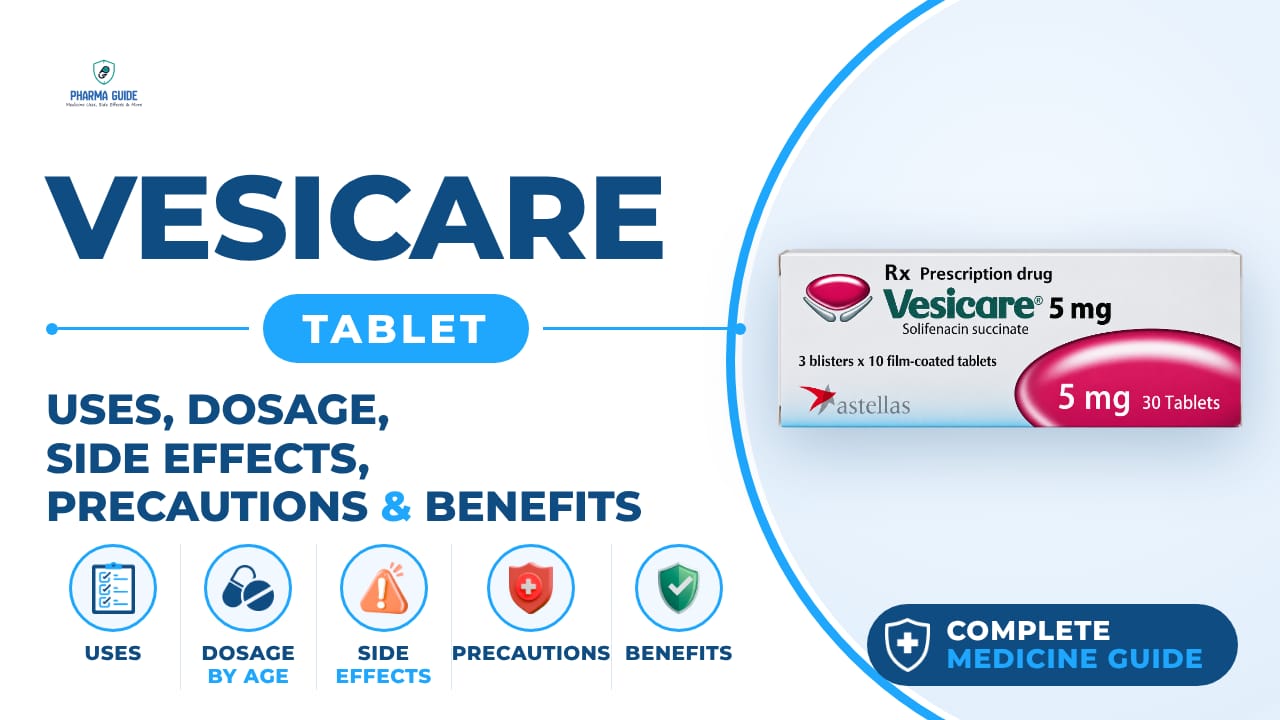
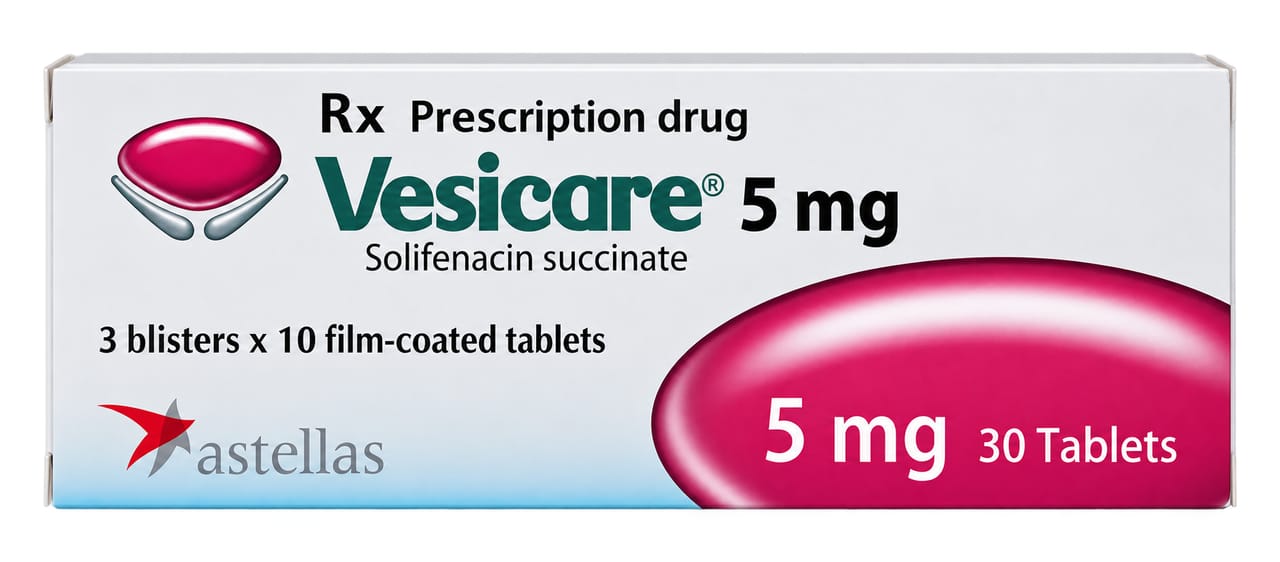
| Generic name | solifenacin succinate |
|---|---|
| Drug class | Urinary antispasmodics (muscarinic antagonist) |
| Forms | Tablets (5 mg and 10 mg), Oral suspension (liquid) - VESIcare LS |
Quick overview
Vesicare Tablet (solifenacin succinate) is a prescription urinary antispasmodic used to treat overactive bladder symptoms such as frequent or urgent urination and urine leakage. It works by blocking muscarinic receptors that control bladder muscle contractions, helping to calm an overactive bladder. The usual adult dose is 5 mg once daily, which may be increased to 10 mg once daily if needed. Common side effects include dry mouth, blurred vision, and constipation.
What is Vesicare Tablet
VESIcare is a prescription medicine used to treat symptoms of overactive bladder, such as frequent or urgent urination, and incontinence (urine leakage). It contains solifenacin succinate, which belongs to a group of medicines called anticholinergics.
Vesicare Tablet uses
- Treats overactive bladder with symptoms of urge urinary incontinence (leaking or wetting accidents), urgency (a strong need to urinate right away), and frequency (urinating often)
- VESIcare LS oral liquid treats overactive bladder caused by a neurologic disorder such as multiple sclerosis or spinal cord injury in children at least 2 years old when other medicines cannot be used or have not worked
Benefits of Vesicare Tablet
- Helps control overactive bladder symptoms
- Reduces sudden and strong urges to urinate
- Helps decrease frequent urination
- Can reduce urge incontinence (urine leakage)
- Helps the bladder hold urine for longer by relaxing bladder muscle contractions
How Vesicare Tablet works
Solifenacin blocks certain receptors (called muscarinic receptors) that control bladder muscle contractions, which helps calm an overactive bladder.
Vesicare Tablet dosage
Take the tablet exactly as prescribed by your doctor, usually once a day, with or without food. Do not crush, chew, or break the tablet; swallow it whole with water. For the oral liquid, shake before measuring a dose and use the dosing syringe provided or a proper dose-measuring device, not a kitchen spoon. After taking the liquid form, drink a glass of water or milk; avoid taking it with food or other drinks to prevent a bitter aftertaste.
If you miss a tablet dose, skip it and take your next dose at the regular time; do not take two doses on the same day. If you miss a dose of the oral liquid, take it as soon as you can, but skip it if you are more than 12 hours late; do not take two doses at once. The tablet form is not approved for use in children.
| Age group | Dose |
|---|---|
| Under 18 years | Routine tablet use for overactive bladder is not established |
| Adults – Overactive bladder | 5 mg once daily |
| Adults – If needed and tolerated | May increase to 10 mg once daily |
| Severe kidney impairment | Maximum 5 mg once daily |
| Moderate liver impairment | Maximum 5 mg once daily; avoid in severe hepatic impairment |
Available forms and strengths
- Tablets (5 mg and 10 mg)
- Oral suspension (liquid) - VESIcare LS
Side effects of Vesicare Tablet
Common
- Blurred vision
- Dry mouth, dry eyes
- Painful urination
- Constipation
- Nausea
- Dyspepsia (indigestion)
- Abdominal pain
- Urinary tract infection
- Heat stroke symptoms - decreased sweating, dry skin, dizziness, tiredness, nausea, feeling hot
Serious
- Signs of an allergic reaction (hives, difficult breathing, swelling in your face or throat) or a severe skin reaction (fever, sore throat, burning eyes, skin pain, red or purple skin rash with blistering and peeling)
- Severe stomach pain, or constipation for 3 days or longer
- Pain or burning when you urinate
- Headache, confusion, drowsiness, hallucinations
- Vision changes, eye pain, or seeing halos around lights
- Little or no urination
- Dehydration symptoms - dizziness, tiredness, feeling very thirsty or hot, decreased sweating, or hot and dry skin
- High potassium level symptoms - nausea, weakness, tingly feeling, chest pain, irregular heartbeats, loss of movement
Warnings and precautions
- Do not use this medicine if you have untreated or uncontrolled narrow-angle glaucoma, a blockage in your digestive tract, or if you are unable to urinate.
- Serious allergic reactions including swelling of the face, lips, tongue, or throat (angioedema) and severe whole-body allergic reactions (anaphylaxis) have been reported and can be life-threatening
- This medicine is not recommended for people with significant bladder blockage, as it may cause further urinary retention and kidney injury
- This medicine is not recommended for people with reduced gut movement, as it may worsen the condition
- This medicine can cause central nervous system effects like headache, confusion, hallucinations, and drowsiness, especially after starting treatment or increasing the dose
- Use with caution if you are being treated for narrow-angle glaucoma, as it may worsen the condition
- This medicine is not recommended for people at high risk of a heart rhythm problem called QT prolongation, including those with a history of it or who take medicines known to cause it
- This medicine can decrease sweating, which may increase the risk of overheating or heat stroke during exercise or in hot weather
- It is not known whether this medicine will harm an unborn baby. Tell your doctor if you are pregnant or plan to become pregnant.
- You should not breastfeed while using this medicine.
- Tell your doctor if you have kidney disease; people with severe kidney impairment should not take more than the lower dose.
- Tell your doctor if you have liver disease. People with moderate liver impairment should not take more than the lower dose, and this medicine is not recommended for those with severe liver impairment.
- This medicine can cause blurred vision or drowsiness. Avoid driving or operating heavy machinery until you know how it affects you.
Storage
- Store at 20–25°C (68–77°F) at controlled room temperature
- Keep in a cool, dry place away from excessive heat and humidity
- Protect tablets from moisture and direct sunlight
- Keep tablets in the original packaging or tightly closed container
- Avoid storing in bathrooms or other hot and humid areas
- Keep out of reach and sight of children and pets
When to see a doctor
- Get emergency medical help if you have signs of a serious allergic reaction such as hives, difficulty breathing, or swelling of your face or throat, or a severe skin reaction with fever, sore throat, burning eyes, or a painful blistering rash
- Stop taking this medicine and call your doctor right away if you have severe stomach pain or are constipated for three or more days, pain or burning when urinating, little or no urination, headache, confusion, drowsiness, hallucinations, vision changes, eye pain, or seeing halos around lights, signs of dehydration, or signs of a high potassium level such as nausea, weakness, tingling, chest pain, or irregular heartbeat
- If you think you have taken too much of this medicine, seek emergency medical attention or contact your local poison control center right away
- If involvement of the tongue, back of the throat, or voice box occurs, promptly stop taking this medicine and seek treatment to make sure your airway stays open
Alternatives
- Trospium
- Darifenacin
- Tolterodine
- Oxybutynin
Watch the video
FAQs
What is Vesicare Tablet used for?
Vesicare Tablet is used to treat symptoms of overactive bladder, including urgency, frequency, and urge urinary incontinence (leaking or wetting accidents).
How does Vesicare Tablet work?
Solifenacin, the active ingredient, blocks muscarinic receptors that control bladder muscle contractions, helping to calm an overactive bladder.
What is the usual dose of Vesicare Tablet?
The usual adult dose is 5 mg once daily, which may be increased to 10 mg once daily if needed and tolerated.
What are the common side effects of Vesicare Tablet?
Common side effects include dry mouth, dry eyes, blurred vision, constipation, nausea, indigestion, abdominal pain, painful urination, and urinary tract infection.
Who should not take Vesicare Tablet?
This medicine should not be used by people with untreated or uncontrolled narrow-angle glaucoma, a blockage in the digestive tract, or those unable to urinate.
General information, not medical advice
Your prescriber and the leaflet in your pack know your situation. This page does not.
- Follow your prescriber and the leaflet
- Don't start, stop, or change a dose on your own
- Doses and warnings differ by country and product
Sources
Video
Related medicines

Injectafer Injection: Uses, Dosage, Side Effects, Precautions and Alternates
Iron products
Injectafer (ferric carboxymaltose) treats iron deficiency anemia and heart failure-related iron deficiency via IV. Learn uses, dosage, side effects, and

Gliclazide Tablet: Uses, Dosage, Side Effects, Precautions and Alternates
Sulfonylurea (hypoglycemic/antidiabetic agent)
Gliclazide Tablet is a sulfonylurea for type 2 diabetes that boosts insulin release. Learn about dosage, side effects, warnings, and precautions.