
Safety
General information, not medical advice
Your prescriber and the leaflet in your pack know your situation. This page does not.
- Follow your prescriber and the leaflet
- Don't start, stop, or change a dose on your own
- Doses and warnings differ by country and product
Vexol Eye Drops: Uses, Dosage, Side Effects, Precautions and Alternates
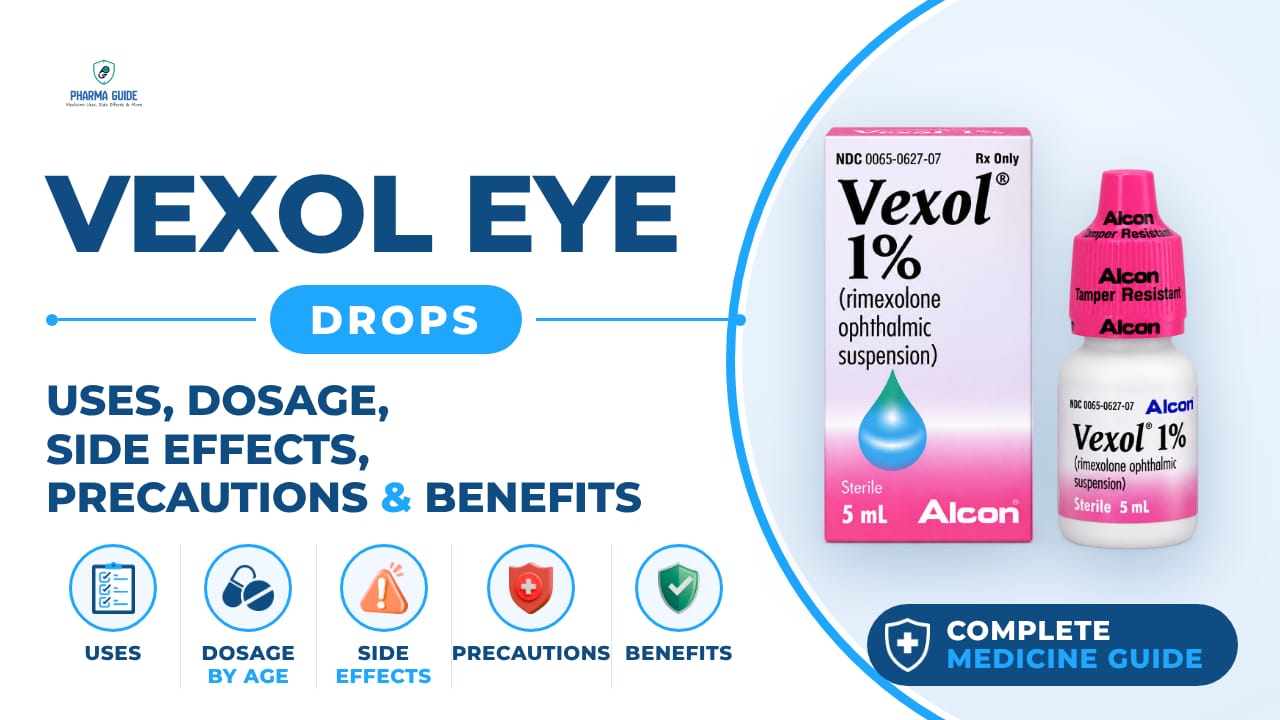
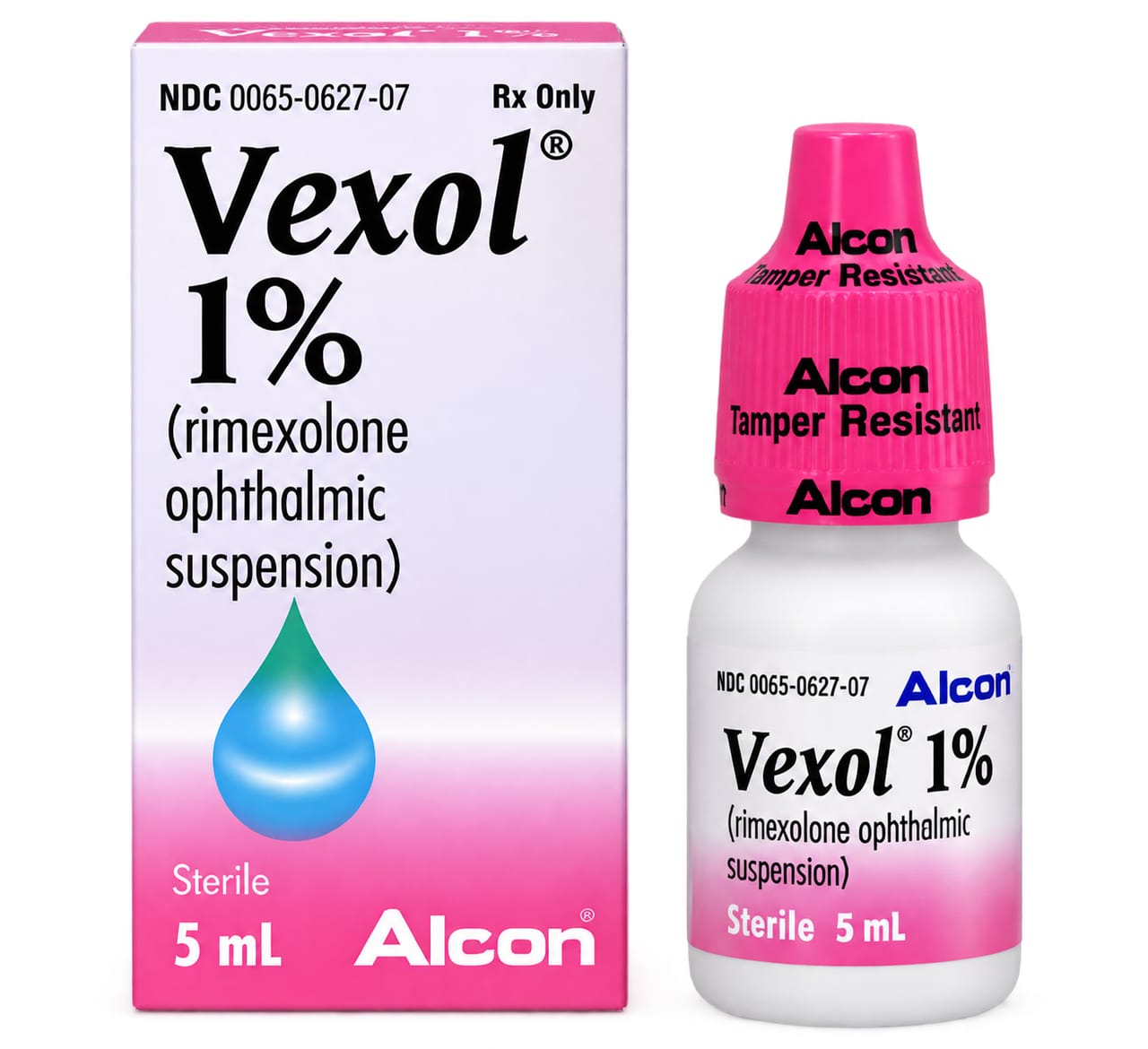
| Generic name | rimexolone |
|---|---|
| Drug class | Corticosteroids, Ophthalmic |
| Forms | Ophthalmic suspension (eye drops) |
Quick overview
Vexol Eye Drops (rimexolone) is a corticosteroid ophthalmic suspension used to treat eye inflammation caused by surgery, anterior uveitis, or other conditions. It works by calming the eye's inflammatory response to reduce swelling, redness, and irritation. It is applied directly to the eye and should be used exactly as prescribed by a doctor.
What is Vexol Eye Drops
Vexol is a corticosteroid eye drop (rimexolone 1% ophthalmic suspension) used to treat eye inflammation caused by infections, injury, surgery, or other conditions.
Vexol Eye Drops uses
- Treatment of postoperative inflammation following ocular surgery
- Treatment of anterior uveitis (inflammation inside the eye)
Benefits of Vexol Eye Drops
- Reduces inflammation in the eye after surgery
- Helps reduce inflammation caused by anterior uveitis
How Vexol Eye Drops works
Vexol is a corticosteroid that calms down the eye's inflammatory response, reducing swelling, redness, and irritation caused by conditions like surgery or uveitis.
Vexol Eye Drops dosage
Shake the bottle well before using. Do not let the dropper tip touch your eye, hands, or any other surface, as this can contaminate the suspension or cause an eye infection. If you are told to use it in both eyes, your doctor may give you two separate bottles, one for each eye, to prevent spreading infection between eyes — mark each bottle for the correct eye and use only in that eye. This medicine may cause blurred vision or affect your ability to think clearly, so be careful when driving or doing tasks that require clear vision.
| Age group | Dose |
|---|---|
| Under 18 years | Safety and effectiveness not established; use only if prescribed by an ophthalmologist |
| 18–64 years | Post-operative inflammation: 1–2 drops in affected eye(s) 4 times daily for the first 2 weeks, starting 24 hours after surgery. |
| 65+ years | Same adult dosing; no routine age-based adjustment |
Available forms and strengths
- Ophthalmic suspension (eye drops)
Side effects of Vexol Eye Drops
Common
- Stinging or burning of the eyes for 1 to 2 minutes
- Temporary blurred vision or other vision changes
- Eye discomfort
- Dry or watery eyes
- Eye redness
- Eyes being more sensitive to light
- Eye itching
- Feeling as if something is in your eye
- Headache
- Runny or stuffy nose
- Sore throat
- Unusual or unpleasant taste in your mouth
Serious
- Hives
- Difficulty breathing
- Swelling of your face, lips, tongue, or throat
- Vision changes
- Eye pain
- Seeing halos around lights
- Pain behind your eyes
- Eye swelling
- Redness or severe itching of the eye
- Severe discomfort of the eye
- Crusting or drainage from the eye
- Increased pressure inside the eye
- Cataract formation
- Perforation of the cornea (rare)
Warnings and precautions
- Vexol is for use in the eye only and should never be injected.
- Using this medicine for a long time can raise eye pressure, damage the optic nerve, cause vision problems, and lead to cataracts.
- Long-term use may also make it easier to develop new eye infections because it weakens the eye's natural defenses.
- This medicine can hide or worsen existing eye infections that produce pus.
- In eyes with thinning of the cornea or the white part of the eye, this medicine has been linked to holes forming in the eye.
- Do not use this medicine if you have certain eye infections caused by viruses, fungi, or certain bacteria, or if you are allergic to any ingredient in it.
- Do not use this medicine if you have an untreated bacterial, viral, or fungal eye infection.
- You should not breastfeed while using this medicine.
- If the dropper tip touches a surface and becomes contaminated, it could cause an eye infection that may lead to vision loss or serious eye damage.
- Vexol should be used during pregnancy only if prescribed by a doctor, since it is not fully known how safe it is for the fetus.
- It is not known if this medicine passes into breast milk in meaningful amounts, so talk to your doctor before breastfeeding while using Vexol.
- This medicine may cause blurred vision and may affect your thinking or reactions, so be careful when driving or doing anything that requires clear sight and alertness.
Storage
- Store upright between 36°-77°F (2°-25°C)
- Do not freeze
- Shake well before using
When to see a doctor
- Get emergency medical help right away if you have signs of an allergic reaction like hives, difficulty breathing, or swelling of your face, lips, tongue, or throat.
- Stop using the medicine and call your doctor right away if you notice vision changes, eye pain, seeing halos around lights, pain behind your eyes, a feeling like something is in your eye, or signs of infection such as swelling, redness, itching, severe discomfort, or crusting/drainage.
- Seek medical care immediately for serious eye symptoms such as sudden vision loss, blurred vision, tunnel vision, eye pain or swelling, or seeing halos around lights.
- Seek medical care immediately for serious heart symptoms such as a fast, irregular, or pounding heartbeat, fluttering in your chest, shortness of breath, or sudden dizziness or fainting.
- Seek medical care immediately for a severe headache, confusion, slurred speech, arm or leg weakness, trouble walking, loss of coordination, feeling unsteady, very stiff muscles, high fever, heavy sweating, or tremors.
Alternatives
- Pred Forte
- Flarex
- Durezol
Watch the video
FAQs
What is Vexol Eye Drops used for?
Vexol is a corticosteroid eye drop used to treat postoperative inflammation following ocular surgery and anterior uveitis (inflammation inside the eye).
How is Vexol Eye Drops used?
Shake the bottle well before using. For adults, the typical dose for post-operative inflammation is 1–2 drops in the affected eye(s) 4 times daily for the first 2 weeks, starting 24 hours after surgery. Avoid letting the dropper tip touch your eye, hands, or any surface to prevent contamination.
What are the common side effects of Vexol Eye Drops?
Common side effects include stinging or burning for 1 to 2 minutes, temporary blurred vision, eye discomfort, dry or watery eyes, redness, light sensitivity, itching, headache, runny or stuffy nose, sore throat, and an unusual taste in the mouth.
Can Vexol Eye Drops be used during pregnancy or breastfeeding?
Vexol should be used during pregnancy only if prescribed by a doctor, since its safety for the fetus is not fully known. It is also not known if it passes into breast milk in meaningful amounts, so you should not breastfeed while using it without talking to your doctor.
What precautions should be taken with long-term use of Vexol Eye Drops?
Long-term use can raise eye pressure, damage the optic nerve, cause vision problems, lead to cataracts, and make it easier to develop new eye infections because it weakens the eye's natural defenses.
General information, not medical advice
Your prescriber and the leaflet in your pack know your situation. This page does not.
- Follow your prescriber and the leaflet
- Don't start, stop, or change a dose on your own
- Doses and warnings differ by country and product
Sources
Video
Related medicines

Injectafer Injection: Uses, Dosage, Side Effects, Precautions and Alternates
Iron products
Injectafer (ferric carboxymaltose) treats iron deficiency anemia and heart failure-related iron deficiency via IV. Learn uses, dosage, side effects, and

Gliclazide Tablet: Uses, Dosage, Side Effects, Precautions and Alternates
Sulfonylurea (hypoglycemic/antidiabetic agent)
Gliclazide Tablet is a sulfonylurea for type 2 diabetes that boosts insulin release. Learn about dosage, side effects, warnings, and precautions.