
Safety
General information, not medical advice
Your prescriber and the leaflet in your pack know your situation. This page does not.
- Follow your prescriber and the leaflet
- Don't start, stop, or change a dose on your own
- Doses and warnings differ by country and product
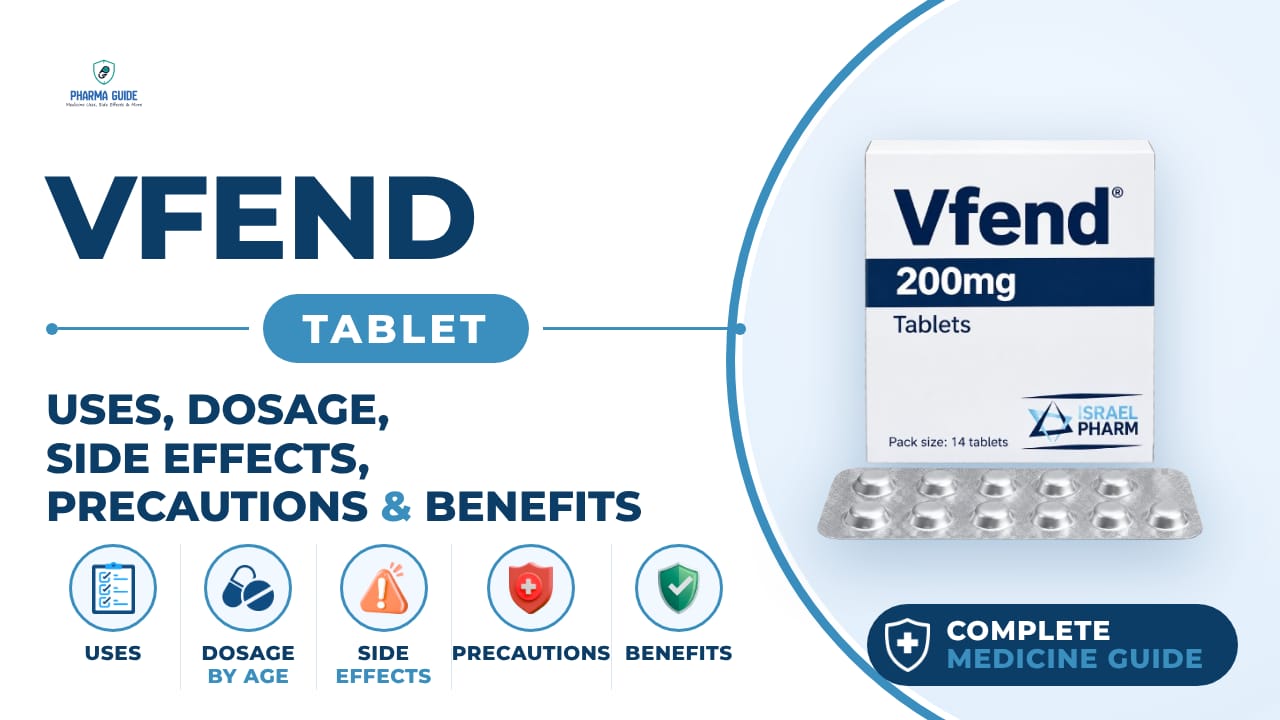
Vfend Tablet: Uses, Dosage, Side Effects, Precautions and Alternates
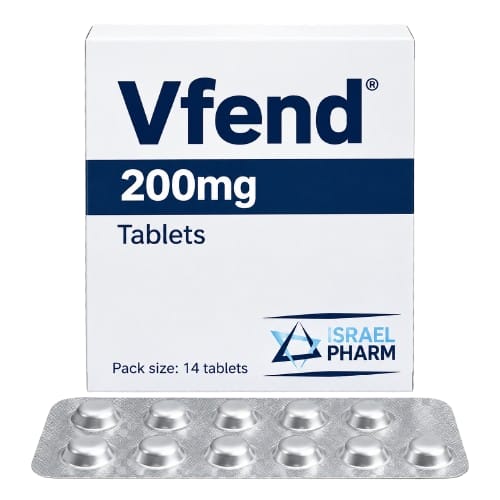
| Generic name | voriconazole |
|---|---|
| Drug class | Antifungal (triazole antifungal agent) |
| Forms | Tablets (50 mg and 200 mg), Oral suspension (liquid) |
Quick overview
Vfend Tablet contains voriconazole, a triazole antifungal medicine used to treat serious fungal infections in the blood and body. It works by stopping the growth of fungi that cause these infections. It is used for conditions such as invasive aspergillosis, certain Candida infections, esophageal candidiasis, and serious infections caused by Scedosporium and Fusarium species. It should be taken exactly as prescribed, usually twice a day.
What is Vfend Tablet
Vfend is a prescription antifungal medicine used to treat serious fungal infections in the blood and body. It works by stopping the growth of the fungi that cause these infections.
Vfend Tablet uses
- Treatment of invasive aspergillosis (a serious lung or body fungal infection)
- Treatment of candidemia in patients without low white blood cell counts and certain other deep tissue Candida infections (such as infections in the abdomen, kidney, bladder wall, skin, and wounds)
- Treatment of esophageal candidiasis (a yeast infection of the esophagus)
- Treatment of serious fungal infections caused by Scedosporium and Fusarium species in patients who cannot tolerate or did not respond to other antifungal therapy
Benefits of Vfend Tablet
- Treats serious fungal infections.
- Helps treat invasive aspergillosis.
- Treats certain serious Candida infections.
- Helps treat infections caused by susceptible Fusarium species.
- Helps control difficult fungal infections in high-risk patients.
How Vfend Tablet works
Voriconazole works by blocking an enzyme fungi need to build their cell walls. This stops the fungus from growing and surviving, which is how it fights the infection.
Vfend Tablet dosage
Take tablets or the oral liquid at least 1 hour before or 1 hour after a meal. Take the medicine exactly as your healthcare provider tells you to, usually twice a day (every 12 hours). Swallow tablets whole with water. Shake the closed bottle of mixed oral suspension for about 10 seconds before each use. Only use the oral dispenser that comes with the oral suspension to measure your dose; do not mix the suspension with any other medicine or flavoring.
If you miss a dose, take it as soon as you remember, but if it is almost time for your next dose, skip the missed dose and continue your normal schedule — do not take two doses at once.
The IV form is given by a healthcare provider as a slow infusion into a vein over 1 to 3 hours and should never be given as a quick injection.
Continue taking this medicine for the full length of time your doctor prescribes, even if you feel better, unless your doctor tells you to stop.
| Age group | Dose |
|---|---|
| Under 18 years | Not recommended |
| 18–64 years | 200 mg, twice/day |
| 65+ years | 200 mg, twice/day |
Available forms and strengths
- Tablets (50 mg and 200 mg)
- Oral suspension (liquid)
Side effects of Vfend Tablet
Common
- Nausea
- Vomiting
- Diarrhea
- Headache
- Fever
- Chills
- Rash
- Vision changes (such as blurred vision or changes in color vision)
- Fast heartbeat (tachycardia)
- Hallucinations (seeing or hearing things that are not there)
- Abnormal liver function test results
- Swelling in the hands, ankles, or feet
Serious
- Signs of an allergic reaction: hives, difficulty breathing, swelling of the face, lips, tongue, or throat
- Signs of liver problems: itchy skin, yellowing of the eyes or skin, feeling very tired, flu-like symptoms, nausea or vomiting
- Serious heart problems: changes in heart rate or rhythm, including the heart stopping (cardiac arrest)
- Serious skin reactions: rash or hives, mouth sores, blistering or peeling of the skin, trouble swallowing or breathing
- Severe sensitivity to sunlight (photosensitivity), which can increase the risk of skin cancer
- Kidney problems, including kidney failure: little or no urination, swelling in the feet or ankles, tiredness
- Adrenal gland problems: tiredness, nausea and vomiting, abdominal pain, dizziness, weight loss (adrenal insufficiency), or weight gain, rounded face, easy bruising (Cushing's syndrome)
- Inflammation of the pancreas (pancreatitis): severe stomach pain that does not go away, possibly spreading to the back
- Bone problems: weakening of bones and bone pain
- Prolonged or serious vision problems, including optic nerve inflammation
Warnings and precautions
- This medicine can cause serious, sometimes fatal, liver problems. Your liver function should be checked before and regularly during treatment.
- This medicine can affect the heart's electrical rhythm, which in rare cases has led to dangerous irregular heartbeats, cardiac arrest, and sudden death, especially in seriously ill patients with other risk factors.
- This medicine can cause serious skin reactions, including life-threatening conditions. Stop the medicine and seek care right away if a rash or skin reaction occurs.
- This medicine can make skin much more sensitive to sunlight, increasing the risk of severe sunburn, early skin aging, and skin cancer, including in children. Avoid direct sunlight and use sun protection.
- This medicine interacts with many other drugs, some of which must never be taken together with it because of risk of serious or life-threatening effects.
- Visual disturbances such as blurred vision or changes in color vision are common; if treatment lasts more than 28 days, your eyesight should be monitored.
- This medicine can cause new or worsening kidney problems, including kidney failure, especially in seriously ill patients.
- This medicine can affect the adrenal glands, causing either reduced adrenal function or (when combined with corticosteroids) overactive adrenal function.
- This medicine is not recommended during pregnancy because it can harm an unborn baby. Women who can become pregnant should use effective birth control during treatment.
- It is not known whether this medicine passes into breast milk, so breastfeeding is not recommended while taking it. Talk to your doctor about the best way to feed your baby.
- Tell your doctor if you have kidney problems. Your doctor may do blood tests to check your kidney function, and the IV form may need to be avoided or switched to tablets or liquid in patients with moderate to severe kidney problems.
- Tell your doctor if you have or have had liver disease. Your dose may need to be reduced, and your doctor should monitor your liver function with blood tests during treatment.
- Do not drive at night while taking this medicine, and avoid driving, operating machinery, or doing other dangerous activities until you know how it affects your vision, since it can cause blurred vision or increased sensitivity to light.
Storage
- Store tablets and oral suspension at room temperature between 59°F to 86°F (15°C to 30°C)
- Do not refrigerate or freeze tablets or the mixed oral suspension
- Keep the container tightly closed
- Throw away (discard) any unused oral suspension 14 days after it was mixed
- Keep this medicine and all medicines out of the reach of children
- Safely throw away medicine that is out of date or no longer needed
When to see a doctor
- Get medical help right away if you have signs of a severe allergic reaction, such as hives, difficulty breathing, or swelling of the face, lips, tongue, or throat.
- Seek emergency care immediately for serious heart symptoms such as fast, irregular, or pounding heartbeats, fluttering in the chest, shortness of breath, or sudden dizziness or fainting.
- Seek emergency care immediately if you have serious eye symptoms like sudden vision loss, blurred vision, tunnel vision, eye pain or swelling, or seeing halos around lights.
- Seek emergency care immediately for severe headache, confusion, slurred speech, arm or leg weakness, trouble walking, loss of coordination, very stiff muscles, high fever, profuse sweating, or tremors.
- Call your healthcare provider right away if you get a new skin rash or if your skin rash gets worse.
- Call your healthcare provider or go to the nearest hospital emergency room right away if you have symptoms of liver problems, kidney problems, adrenal gland problems, pancreatitis, or bone problems.
Alternatives
- Amphotericin B
- Posaconazole
- Fluconazole
Watch the video
FAQs
What is Vfend Tablet used for?
Vfend Tablet is used to treat invasive aspergillosis, candidemia and certain deep tissue Candida infections, esophageal candidiasis, and serious infections caused by Scedosporium and Fusarium species.
How should Vfend Tablet be taken?
Take tablets at least 1 hour before or 1 hour after a meal, exactly as prescribed, usually twice a day (every 12 hours). Swallow tablets whole with water, and continue for the full prescribed length of time.
What is the usual dose of Vfend Tablet for adults?
For adults aged 18 to 64 years and for those 65 and older, the usual dose is 200 mg twice a day. It is not recommended for use in patients under 18 years of age.
What are the common side effects of Vfend Tablet?
Common side effects include nausea, vomiting, diarrhea, headache, fever, chills, rash, vision changes, fast heartbeat, hallucinations, abnormal liver function test results, and swelling in the hands, ankles, or feet.
What precautions should be followed while taking Vfend Tablet?
Vfend can cause liver problems, heart rhythm changes, serious skin reactions, and increased sun sensitivity, so liver function should be monitored, sun exposure avoided, and night driving avoided until you know how it affects your vision.
General information, not medical advice
Your prescriber and the leaflet in your pack know your situation. This page does not.
- Follow your prescriber and the leaflet
- Don't start, stop, or change a dose on your own
- Doses and warnings differ by country and product
Sources
Video
Related medicines

Injectafer Injection: Uses, Dosage, Side Effects, Precautions and Alternates
Iron products
Injectafer (ferric carboxymaltose) treats iron deficiency anemia and heart failure-related iron deficiency via IV. Learn uses, dosage, side effects, and

Gliclazide Tablet: Uses, Dosage, Side Effects, Precautions and Alternates
Sulfonylurea (hypoglycemic/antidiabetic agent)
Gliclazide Tablet is a sulfonylurea for type 2 diabetes that boosts insulin release. Learn about dosage, side effects, warnings, and precautions.