
Safety
General information, not medical advice
Your prescriber and the leaflet in your pack know your situation. This page does not.
- Follow your prescriber and the leaflet
- Don't start, stop, or change a dose on your own
- Doses and warnings differ by country and product
Vibativ Injection: Uses, Dosage, Side Effects, Precautions and Alternates
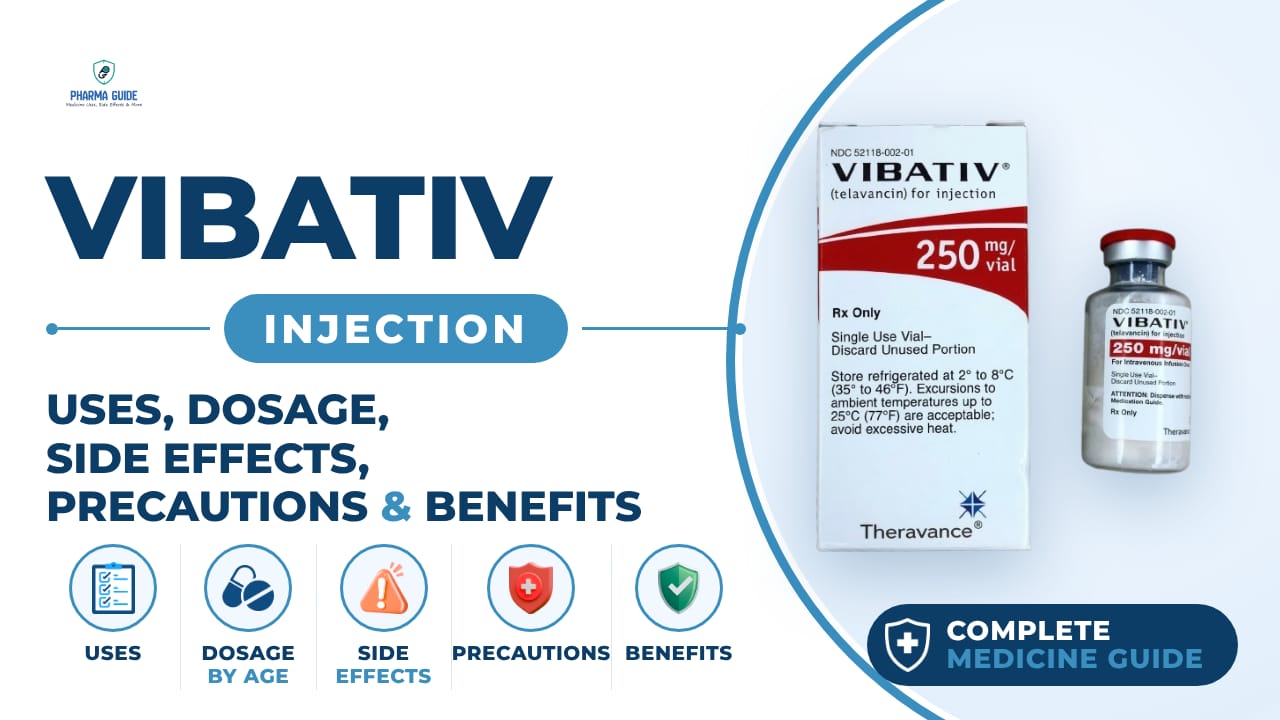
| Generic name | telavancin |
|---|---|
| Drug class | Glycopeptide (lipoglycopeptide) antibiotic |
| Forms | Injection (powder for solution, given by IV infusion) |
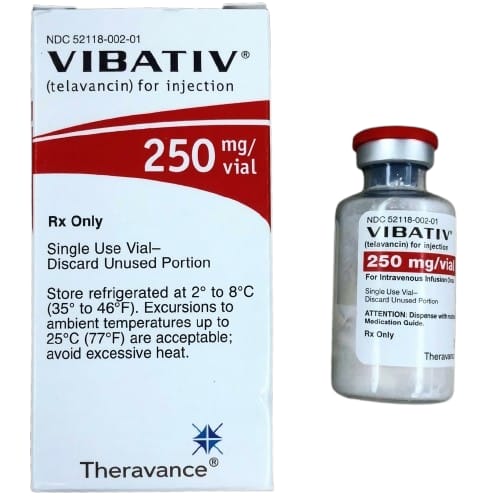
Quick overview
Vibativ Injection (telavancin) is a prescription intravenous antibiotic used in adults to treat serious skin infections and certain types of hospital-acquired pneumonia. It belongs to the glycopeptide (lipoglycopeptide) class of antibiotics and works by weakening and killing susceptible bacteria, including MRSA. It is given as a slow IV infusion by a healthcare provider, typically once daily, and requires monitoring of kidney function throughout treatment.
What is Vibativ Injection
Vibativ is a prescription intravenous antibiotic used to treat certain serious bacterial infections in adults. Its generic name is telavancin, and it belongs to the glycopeptide (lipoglycopeptide) class of antibiotics.
Vibativ Injection uses
- Serious (complicated) skin infections
- Hospital-acquired bacterial pneumonia (HABP)
- Ventilator-associated bacterial pneumonia (VABP)
Benefits of Vibativ Injection
- Treats infections caused by susceptible bacteria including MRSA
- Can be used when other antibiotics are not suitable for certain hospital-acquired pneumonia cases
How Vibativ Injection works
Vibativ kills bacteria by stopping them from building their cell walls and by damaging their outer cell membrane.
Vibativ Injection dosage
Vibativ is given by a healthcare provider as a slow infusion into a vein over about 1 hour, once a day. It is usually given once every 24 hours for 7 to 21 days, depending on the infection. Do not stop receiving it early unless your healthcare provider tells you to, even if you feel better. Complete the full course of treatment, even if symptoms improve quickly, to reduce the risk of resistant infection. Your kidney function will be checked with blood tests before, during, and after treatment.
| Age group | Dose |
|---|---|
| Under 18 years | Not recommended |
| 18–64 years | 750 mg, once/day |
| 65+ years | 750 mg, once/day |
Available forms and strengths
- Injection (powder for solution, given by IV infusion)
Side effects of Vibativ Injection
Common
- Change in sense of taste (metallic or soapy taste)
- Nausea
- Vomiting
- Foamy urine
- Diarrhea
- Loss of appetite
- Chills or shivering
- Headache
- Dizziness
- Vaginal itching or discharge
- Skin rash or itching
- Redness or pain around the IV needle site
Serious
- Severe allergic reaction: hives, trouble breathing or swallowing, swelling of lips, tongue, or face, throat tightness, rapid heartbeat, fainting
- Infusion-related reaction (Red-man Syndrome): flushing, rash, itching, especially if infused too fast
- Kidney problems: little or no urination, swelling in ankles or feet, weight gain, foamy urine, confusion, seizures
- Heart rhythm problems (QTc prolongation): fast or irregular heartbeat, fluttering in the chest, fainting, dizziness
- Watery or bloody diarrhea that can occur even months after the last dose, which may signal a serious gut infection
- Serious eye symptoms such as sudden vision loss, blurred vision, eye pain or swelling, or seeing halos around lights
- Severe headache, confusion, slurred speech, arm or leg weakness, trouble walking, loss of coordination, very stiff muscles, high fever, profuse sweating, or tremors
Warnings and precautions
- People with pre-existing moderate to severe kidney problems who were treated with Vibativ for hospital-acquired or ventilator-associated pneumonia had a higher risk of death compared with vancomycin.
- Vibativ can cause new or worsening kidney damage, so kidney function should be monitored in everyone receiving it.
- Vibativ may harm an unborn baby, based on animal studies showing developmental problems at doses similar to those used in humans.
- Serious and sometimes fatal allergic reactions, including anaphylaxis, can occur after the first or later doses.
- Infusing Vibativ too quickly can cause flushing, hives, itching, or rash (a reaction similar to 'Red-man Syndrome'). It should be infused slowly over 60 minutes.
- Like other antibiotics, Vibativ can cause a serious diarrhea linked to C. difficile bacteria, which can occur even months after the last dose.
- Vibativ can affect the heart's electrical rhythm (QTc prolongation), so caution is needed in patients taking other medicines that can also affect heart rhythm.
- Vibativ should not be used together with intravenous unfractionated heparin because it can make certain blood clotting test results inaccurate.
- Vibativ is not recommended during pregnancy because it may harm an unborn baby. A pregnancy test may be required before starting treatment, and effective birth control should be used during treatment and for 2 days after the last dose.
- It is not known if Vibativ passes into breast milk. You and your healthcare provider should decide together whether you should breastfeed while receiving it.
- Vibativ can cause new or worsening kidney problems, and people with pre-existing moderate to severe kidney impairment have a higher risk of complications. Kidney function is checked with blood tests before, during, and after treatment.
- No dosage adjustment is recommended for patients with mild or moderate liver impairment.
- There are no known interactions between this medicine and alcohol, but heavy drinking can weaken your immune response and make it harder for your body to fight infection.
Storage
- Store unused vials in a refrigerator
- After mixing with diluent, the vial may be kept at room temperature for up to 12 hours before further dilution and use
- If stored in a refrigerator after mixing, it must be further diluted and used within 7 days
- The final diluted solution in the IV bag can also be kept frozen for up to 32 days at specified cold temperatures
- Each vial is for one use only; throw it away after use even if some medicine remains
- Dispose of used needles and syringes in a puncture-proof sharps container, following local disposal rules
- Keep out of the reach of children and pets
When to see a doctor
- Get emergency help right away for signs of a severe allergic reaction, such as hives, trouble breathing or swallowing, swelling of the face, lips, or tongue, throat tightness, rapid heartbeat, or fainting.
- Call your healthcare provider right away if you notice signs of kidney problems, such as little or no urination, swelling in your ankles or feet, weight gain, or foamy urine.
- Contact your doctor right away if you have watery or bloody diarrhea, even if it starts months after your last dose.
- Seek medical help right away for signs of heart rhythm problems, such as fast or pounding heartbeats, fluttering in your chest, shortness of breath, or sudden dizziness.
- Get medical help right away for serious eye symptoms like sudden vision loss, blurred vision, eye pain or swelling, or seeing halos around lights.
- Seek medical attention right away if you think you have received too much Vibativ.
Alternatives
- Ceftaroline
- Daptomycin
- Vancomycin
Watch the video
FAQs
What is Vibativ Injection used for?
Vibativ is used to treat serious complicated skin infections and hospital-acquired or ventilator-associated bacterial pneumonia in adults, including infections caused by MRSA.
How is Vibativ Injection given?
It is given by a healthcare provider as a slow IV infusion over about 1 hour, once every 24 hours, usually for 7 to 21 days depending on the infection.
What are the common side effects of Vibativ?
Common side effects include a change in taste, nausea, vomiting, foamy urine, diarrhea, loss of appetite, chills, headache, dizziness, vaginal itching or discharge, skin rash, and pain at the IV site.
Is Vibativ safe during pregnancy?
Vibativ is not recommended during pregnancy because it may harm an unborn baby. A pregnancy test may be required before starting treatment, and effective birth control should be used during and for 2 days after treatment.
What precautions are needed with kidney problems?
Vibativ can cause new or worsening kidney damage, and people with pre-existing moderate to severe kidney problems have a higher risk of complications, so kidney function is monitored before, during, and after treatment.
General information, not medical advice
Your prescriber and the leaflet in your pack know your situation. This page does not.
- Follow your prescriber and the leaflet
- Don't start, stop, or change a dose on your own
- Doses and warnings differ by country and product
Sources
Video
Related medicines

Injectafer Injection: Uses, Dosage, Side Effects, Precautions and Alternates
Iron products
Injectafer (ferric carboxymaltose) treats iron deficiency anemia and heart failure-related iron deficiency via IV. Learn uses, dosage, side effects, and

Gliclazide Tablet: Uses, Dosage, Side Effects, Precautions and Alternates
Sulfonylurea (hypoglycemic/antidiabetic agent)
Gliclazide Tablet is a sulfonylurea for type 2 diabetes that boosts insulin release. Learn about dosage, side effects, warnings, and precautions.