
Safety
General information, not medical advice
Your prescriber and the leaflet in your pack know your situation. This page does not.
- Follow your prescriber and the leaflet
- Don't start, stop, or change a dose on your own
- Doses and warnings differ by country and product
Vibradox Capsule: Uses, Dosage, Side Effects, Precautions and Alternates
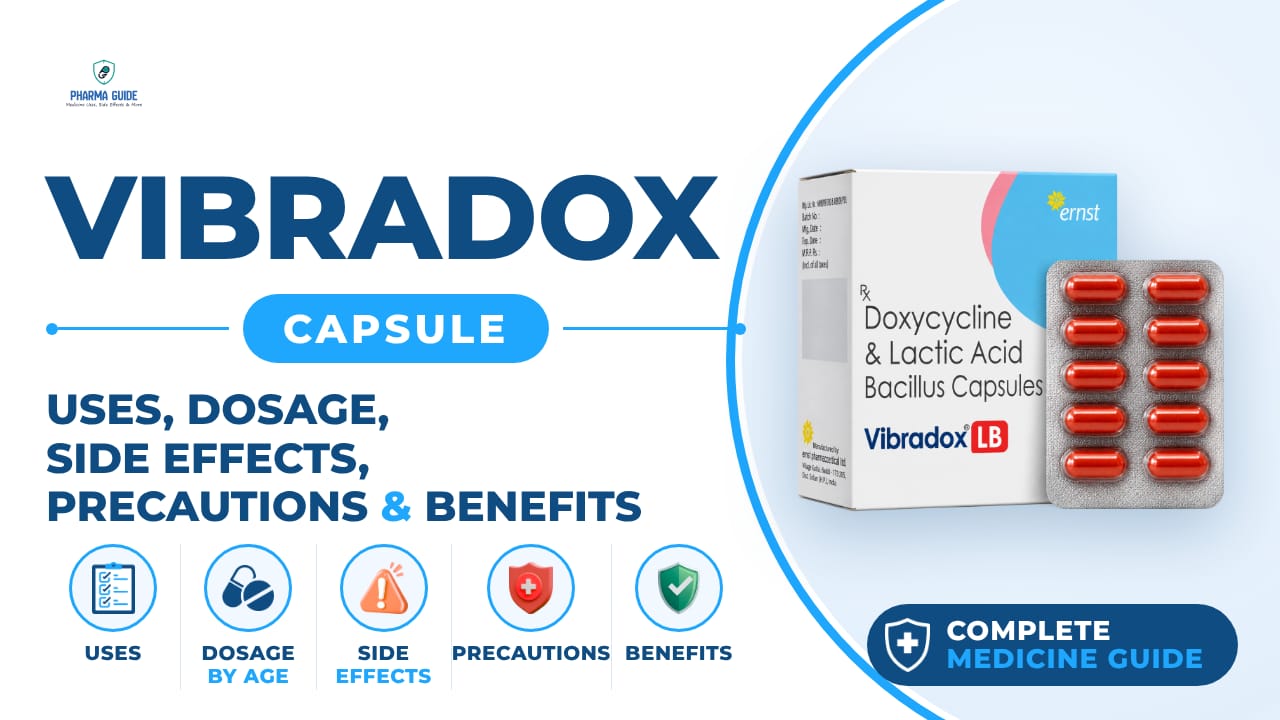
| Generic name | Doxycycline + Lactic Acid Bacillus (Lactobacillus) |
|---|---|
| Drug class | Tetracycline antibiotic combined with probiotic |
| Forms | Capsule |
Quick overview
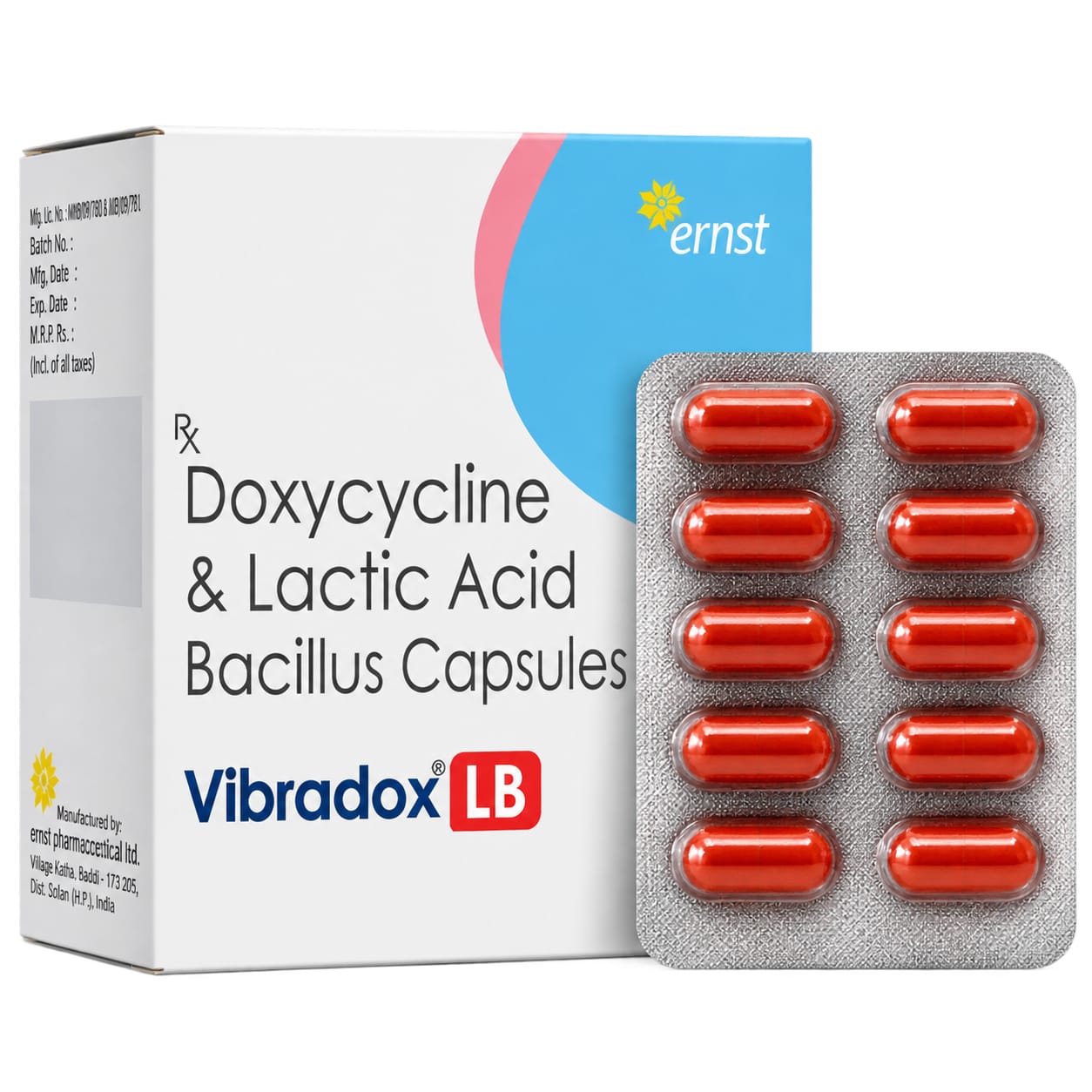
Vibradox Capsule is a combination medicine containing doxycycline, a broad-spectrum tetracycline antibiotic, and Lactic Acid Bacillus (Lactobacillus), a beneficial probiotic. It is used to treat a range of bacterial infections while helping to protect the gut from antibiotic-related digestive upset. It works by stopping bacteria from multiplying while the probiotic supports the gut's natural bacterial balance.
What is Vibradox Capsule
Vibradox Capsule is a combination medicine containing doxycycline, a broad-spectrum tetracycline antibiotic, and Lactic Acid Bacillus (Lactobacillus), a beneficial probiotic. It is used to treat bacterial infections while helping to protect the gut from antibiotic-related digestive upset.
Vibradox Capsule uses
- Treating pneumonia, bronchitis, and whooping cough
- Managing severe acne and inflammatory rosacea
- Clearing bacterial infections of the bladder and kidneys
- Managing infections like chlamydia, syphilis, and gonorrhoea
- Preventing malaria in high-risk travel areas
- Treating bacterial infections within the abdomen
- Reducing antibiotic-associated diarrhoea
Benefits of Vibradox Capsule
- Treats the infection while helping protect the gut's natural bacterial balance
- Doxycycline can reach infections deep in body tissues such as the prostate, bones, and skin layers
- The probiotic component may help the gut recover during long courses of antibiotic treatment
How Vibradox Capsule works
Doxycycline stops bacteria from making the proteins they need to grow and multiply, which halts the spread of infection so the body's immune system can clear it. It also reduces inflammation, which helps with acne. The Lactobacillus in the capsule produces lactic acid in the gut, which helps good bacteria crowd out harmful bacteria.
Vibradox Capsule dosage
Take the capsule as a whole with a full glass of water. Stay sitting or standing for a while after taking it, and avoid lying down right after, to prevent throat irritation. Take it with or after food if it causes stomach upset, but avoid dairy products like milk, yoghurt, or cheese around the time of your dose. Wait about 2 hours after your dose before having dairy products, since calcium can reduce how well the medicine is absorbed. Take doses at regular, evenly spaced times each day. Complete the full course of treatment even if you feel better after a few days. Wear sunscreen and protective clothing since your skin will be more sensitive to sunlight. This medicine is not recommended for children under 8 years old, and should be used with caution in children aged 8 to 12.
| Age group | Dose |
|---|---|
| Under 8 Years | Generally avoided unless specifically prescribed by a specialist |
| 8 Years and Above | Dose depends on infection type and body weight |
| Adults (18–64 Years) | Usually 100 mg once or twice daily depending on infection |
| Older Adults (65+ Years) | Usually 100 mg once or twice daily; adjustment may be needed based on health condition |
Available forms and strengths
Vibradox is available as a capsule.
Side effects of Vibradox Capsule
Common
- Nausea
- Increased sensitivity to sunlight (photosensitivity)
- Stomach upset, bloating, or gas
- Dizziness
- Abdominal pain
- Headache
- Vomiting
- Allergic rash
- Difficulty swallowing
- Vaginal itching or yeast infection
- Discoloured teeth (mainly a risk in young children)
- Loss of appetite
Serious
- Severe chest pain or difficulty swallowing (oesophagitis)
- Severe headache, blurred vision, or ringing in the ears (intracranial hypertension)
- Watery or bloody stools (severe diarrhoea)
- Yellowing of the eyes or skin, or dark urine (liver problems)
- Swelling of the face, tongue, or throat, or difficulty breathing (severe allergic reaction)
Warnings and precautions
This medicine should not be used during pregnancy because it can cause permanent tooth staining and affect bone development in the unborn baby. It should also be avoided while breastfeeding because it passes into breast milk and can affect the baby's teeth and bone development.
This medicine is generally considered safer for the kidneys than other similar antibiotics, but people with severe kidney failure should talk to their doctor. It should be used carefully in people with liver disease, since high doses can be harmful to the liver. Alcohol should be limited while taking this medicine, as it can make the antibiotic less effective. It can rarely cause dizziness or blurred vision, so avoid driving until you feel steady.
- Do not give this medicine to children under 8 years old, as it can cause permanent discolouration of their teeth.
- Tell your doctor if you have systemic lupus erythematosus, as this medicine can cause the condition to flare up.
- Tell your doctor if you have myasthenia gravis, a muscle disorder, because this medicine may make muscle weakness worse.
- Tell your doctor if you have benign intracranial hypertension, a brain condition that causes severe headaches.
- Tell your doctor if you have inflammation of the food pipe (oesophagitis).
- This medicine should not be combined with isotretinoin, as this can raise the risk of dangerous pressure inside the skull.
Storage
- Store below 25°C in a cool and dry place
- Keep the tablets in their original light-resistant blister pack
- Keep out of reach of children and pets
When to see a doctor
- Get medical help right away if you have severe chest pain or trouble swallowing.
- Get medical help right away if you have a severe headache, blurred vision, or ringing in your ears.
- Stop the medicine and tell your doctor if you have watery or bloody diarrhoea.
- Get medical help right away if your eyes or skin turn yellow, or your urine becomes dark.
- Get emergency help right away if you have swelling of the face, tongue, or throat, or trouble breathing.
- If you think you have taken too much of this medicine, contact your doctor immediately or go to the nearest hospital.
Alternatives
- Amoxicillin
- Minocycline
- Clarithromycin
- Azithromycin
Watch the video
FAQs
What is Vibradox Capsule used for?
It treats infections like pneumonia, bronchitis, whooping cough, severe acne, bladder and kidney infections, chlamydia, syphilis, gonorrhoea, abdominal infections, and helps prevent malaria in high-risk areas. It also helps reduce antibiotic-associated diarrhoea.
How should I take Vibradox Capsule?
Swallow the capsule whole with a full glass of water, staying upright afterward to avoid throat irritation. Avoid dairy products around dosing time since calcium can reduce absorption; wait about 2 hours before having dairy. Complete the full course even if you feel better early.
Can Vibradox Capsule be given to children?
It is not recommended for children under 8 years old due to the risk of permanent tooth discolouration, and should be used with caution in children aged 8 to 12.
Can Vibradox Capsule be used during pregnancy or breastfeeding?
No, it should be avoided during pregnancy and breastfeeding because it can cause permanent tooth staining and affect bone development in the baby.
What are the serious side effects of Vibradox Capsule?
Serious side effects include severe chest pain or difficulty swallowing, severe headache or blurred vision, watery or bloody diarrhoea, yellowing of the eyes or skin, and signs of a severe allergic reaction like facial swelling or difficulty breathing.
General information, not medical advice
Your prescriber and the leaflet in your pack know your situation. This page does not.
- Follow your prescriber and the leaflet
- Don't start, stop, or change a dose on your own
- Doses and warnings differ by country and product
Sources
- https://www.drugs.com/drug-interactions/doxycycline-with-lactobacillus-acidophilus-940-0-1424-0.html
- https://www.drugs.com/doxycycline.html
- https://pmc.ncbi.nlm.nih.gov/articles/PMC5309459/
- https://www.mayoclinic.org/drugs-supplements/doxycycline-oral-route/description/drg-20068229
- https://www.mayoclinic.org/drugs-supplements/lactobacillus-acidophilus-oral-route/description/drg-20310912
Video
Related medicines

Injectafer Injection: Uses, Dosage, Side Effects, Precautions and Alternates
Iron products
Injectafer (ferric carboxymaltose) treats iron deficiency anemia and heart failure-related iron deficiency via IV. Learn uses, dosage, side effects, and

Gliclazide Tablet: Uses, Dosage, Side Effects, Precautions and Alternates
Sulfonylurea (hypoglycemic/antidiabetic agent)
Gliclazide Tablet is a sulfonylurea for type 2 diabetes that boosts insulin release. Learn about dosage, side effects, warnings, and precautions.