
Safety
General information, not medical advice
Your prescriber and the leaflet in your pack know your situation. This page does not.
- Follow your prescriber and the leaflet
- Don't start, stop, or change a dose on your own
- Doses and warnings differ by country and product
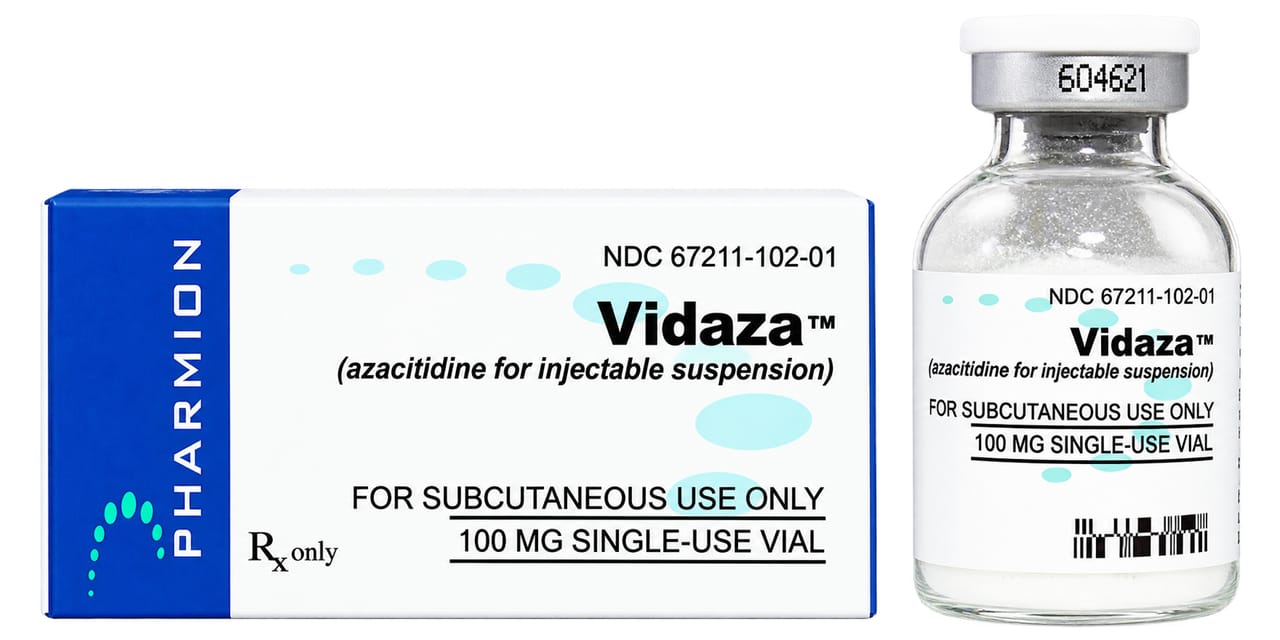
Vidaza Injection: Uses, Dosage, Side Effects, Precautions and Alternates

| Generic name | azacitidine |
|---|---|
| Drug class | antineoplastic, nucleoside metabolic inhibitor |
| Forms | Injection (given under the skin or into a vein), Lyophilized powder in single-dose injection vials, Powder for suspension |
Quick overview
Vidaza Injection (azacitidine) is an antineoplastic, nucleoside metabolic inhibitor given by injection to treat certain bone marrow disorders and blood cancers. It is administered by a healthcare provider in a hospital or clinic, usually under the skin or into a vein. It works by helping the bone marrow make healthy blood cells while destroying abnormal ones. Treatment requires regular blood test monitoring and carries important precautions, including effects on fertility, pregnancy, and the risk of serious blood, kidney, and liver effects.
What is Vidaza Injection
Vidaza is a chemotherapy medicine given as an injection to treat certain bone marrow disorders and blood cancers. It is given to you by a healthcare provider in a hospital or clinic, usually under the skin or into a vein.
Vidaza Injection uses
- Treats certain myelodysplastic syndromes (MDS), a group of conditions where the bone marrow does not make enough healthy blood cells
- Treats a rare type of leukemia, including juvenile myelomonocytic leukemia (JMML)
- Used for specific bone marrow subtypes including refractory anemia, refractory anemia with ringed sideroblasts, refractory anemia with excess blasts, refractory anemia with excess blasts in transformation, and chronic myelomonocytic leukemia
- May be used for other conditions as determined by your health care provider
Benefits of Vidaza Injection
- Helps the bone marrow make healthy blood cells
- Helps destroy abnormal blood cells
- Acts as a standard treatment to slow disease progression and improve survival in higher-risk patients
How Vidaza Injection works
Azacitidine is a chemotherapy drug that may work by helping your bone marrow make healthy blood cells and by destroying blood cells that are not normal.
Vidaza Injection dosage
This medicine is given to you by a healthcare provider in a hospital or clinic as an injection under the skin or as an infusion into a vein. It is usually given once a day for 7 days in a row, repeated every 4 weeks, for at least 4 to 6 treatment cycles. You may also be given medicine to help prevent nausea and vomiting before each treatment.
If you miss a treatment appointment, call your doctor or clinic right away to reschedule. If any of the medicine accidentally gets on your skin, wash it thoroughly with soap and warm water. It is important to keep all appointments for blood tests so your provider can check how your body is responding and make sure the medicine is safe for you.
Use exactly as prescribed by your doctor or pharmacist.
Available forms and strengths
- Injection (given under the skin or into a vein)
- Lyophilized powder in single-dose injection vials
- Powder for suspension
Side effects of Vidaza Injection
Common
- Nausea and vomiting
- Diarrhea or constipation
- Fever and chills
- Tiredness and weakness
- Redness, pain, or bruising at the injection site
- Low blood cell counts (easy bruising or bleeding)
- Rash
- Joint pain or pain in arms or legs
- Low potassium levels
- Stomach pain and upset stomach
- Infection in the nose or throat, sore throat, or cold-like symptoms
- Dizziness
Serious
- Severe allergic reactions, including trouble breathing, swelling of face, lips, or throat, hives, or racing heart
- Blood disorders such as low red blood cells, low platelets, and low white blood cells leading to fever, bruising, bleeding, or infections
- Kidney damage, including reduced urination, swelling in feet or legs, confusion, or trouble breathing
- Liver problems, including upper stomach pain, itching, dark urine, or yellowing of skin or eyes
- Tumor lysis syndrome (fast breakdown of cancer cells), with symptoms like nausea, vomiting, muscle cramps, swelling, or seizures
- Lung infection with fever, cough, or chest pain
Warnings and precautions
- This medicine can severely lower white blood cells, red blood cells, and platelets, increasing the risk of serious bleeding and infection.
- This medicine can cause tumor lysis syndrome, a fast breakdown of cancer cells that can be serious. Drinking plenty of water and attending blood test appointments can help your provider monitor for this.
- Do not use this medicine if you are allergic to azacitidine or mannitol, or if you have advanced liver cancer.
- This medicine may cause infertility in both men and women.
- This medicine can harm an unborn baby. Women should have a pregnancy test before starting treatment and should not be pregnant while using it.
- Women should use effective birth control during treatment and for 6 months after the last dose, and men should use effective birth control for 3 months after their last dose.
- It is not known if this medicine passes into breast milk. You should not breastfeed while using it and for one week after your last dose.
- Tell your doctor if you have kidney disease, since this medicine should be used with caution and may build up more in the body if kidneys are not working well. Elderly patients are more likely to have kidney problems.
- Tell your doctor if you have liver disease or have ever had liver tumors. You should not receive this medicine if you have advanced liver cancer, and it should be used with caution if you have severe liver disease.
- It is not known if alcohol affects this medicine, but heavy drinking can weaken your immune system and make it harder for your body to fight cancer.
- Kidney function should be monitored; dose interruption or adjustment may be required if renal toxicity develops.
Storage
- Azacitidine is usually given by a health care provider in a hospital or clinic. You will not store it at home.
- Store Vidaza injection at 25º C (77º F); excursions are permitted to 15º-30º C (59º-86º F).
When to see a doctor
- Get emergency help right away if you have signs of a serious allergic reaction, such as hives, trouble breathing, or swelling of the face, lips, tongue, or throat.
- Call your doctor right away if you have signs of low blood cell counts, such as fever, chills, tiredness, mouth sores, easy bruising, unusual bleeding, pale skin, or feeling light-headed or short of breath.
- Call your doctor right away if you notice signs of kidney problems, such as lower back pain, blood in urine, little or no urination, or swelling in your feet or ankles.
- Call your doctor right away if you have signs of liver problems, such as upper stomach pain, itching, dark urine, or yellowing of the skin or eyes.
- Call your doctor right away if you have signs of tumor cell breakdown, such as tiredness, weakness, muscle cramps, nausea, vomiting, or an abnormal heart rate.
- If you think you have used too much of this medicine, get emergency medical help right away or contact a poison control center.
Alternatives
- Lenalidomide
- Venetoclax-based regimens
- Oral decitabine/cedazuridine
- Decitabine
Watch the video
FAQs
What is Vidaza Injection used for?
Vidaza is used to treat certain myelodysplastic syndromes (MDS), a rare leukemia called juvenile myelomonocytic leukemia (JMML), and specific bone marrow subtypes such as refractory anemia and chronic myelomonocytic leukemia.
How is Vidaza Injection given?
It is given by a healthcare provider in a hospital or clinic as an injection under the skin or as an infusion into a vein, usually once a day for 7 days in a row, repeated every 4 weeks, for at least 4 to 6 treatment cycles.
What are the serious side effects of Vidaza Injection?
Serious side effects include severe allergic reactions, low blood cell counts leading to bleeding or infection, kidney damage, liver problems, tumor lysis syndrome, and lung infection.
Can Vidaza Injection affect fertility or pregnancy?
Yes, this medicine may cause infertility in both men and women and can harm an unborn baby, so effective birth control is needed during treatment and for a period after the last dose.
What should be monitored during Vidaza Injection treatment?
Regular blood tests are needed to monitor blood cell counts and kidney function, since the medicine can lower blood cell counts and may build up in the body if kidneys are not working well.
General information, not medical advice
Your prescriber and the leaflet in your pack know your situation. This page does not.
- Follow your prescriber and the leaflet
- Don't start, stop, or change a dose on your own
- Doses and warnings differ by country and product
Sources
Video
Related medicines

Injectafer Injection: Uses, Dosage, Side Effects, Precautions and Alternates
Iron products
Injectafer (ferric carboxymaltose) treats iron deficiency anemia and heart failure-related iron deficiency via IV. Learn uses, dosage, side effects, and

Gliclazide Tablet: Uses, Dosage, Side Effects, Precautions and Alternates
Sulfonylurea (hypoglycemic/antidiabetic agent)
Gliclazide Tablet is a sulfonylurea for type 2 diabetes that boosts insulin release. Learn about dosage, side effects, warnings, and precautions.