
Safety
General information, not medical advice
Your prescriber and the leaflet in your pack know your situation. This page does not.
- Follow your prescriber and the leaflet
- Don't start, stop, or change a dose on your own
- Doses and warnings differ by country and product
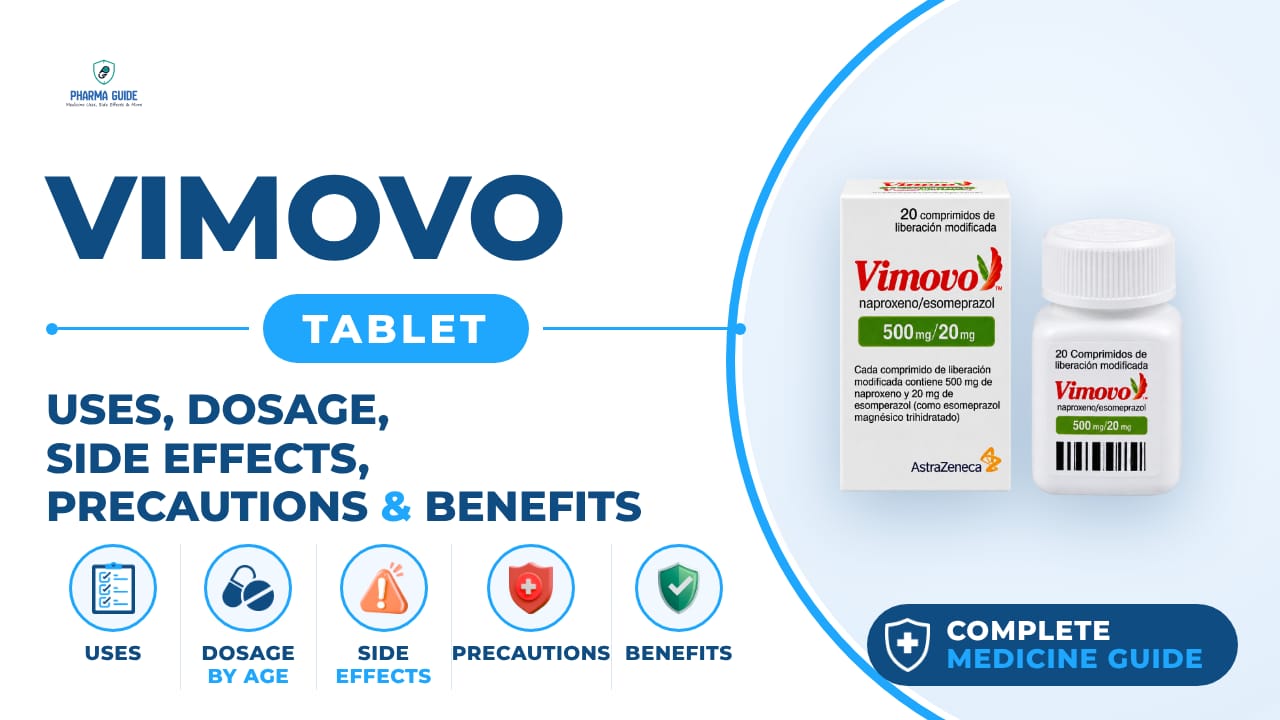
Vimovo Tablet: Uses, Dosage, Side Effects, Precautions and Alternates
| Generic name | esomeprazole and naproxen |
|---|---|
| Drug class | Nonsteroidal anti-inflammatories (NSAIDs) / Proton pump inhibitor combination |
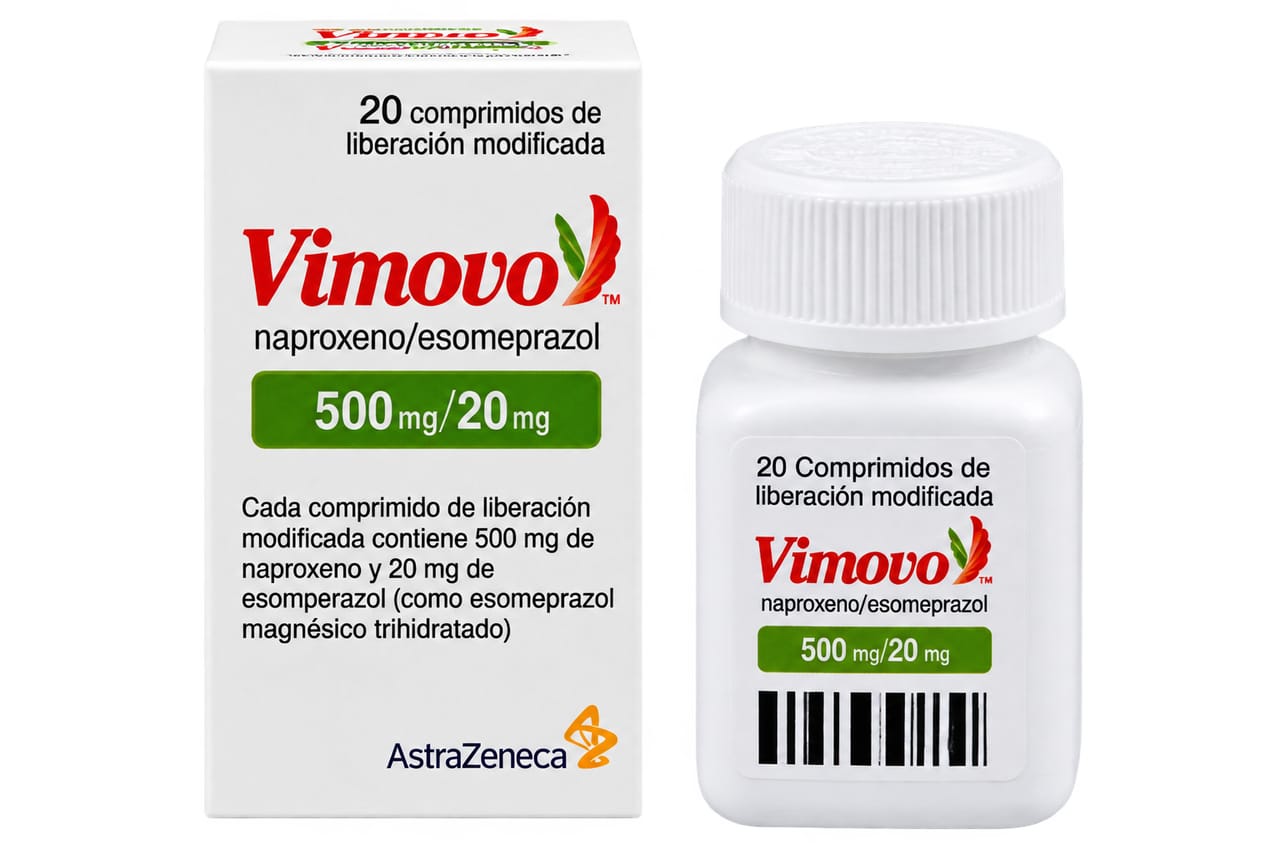
| Forms | Delayed-release tablet, Modified-release (MR) tablet |
Quick overview
Vimovo Tablet contains esomeprazole and naproxen, and belongs to the combination drug class of nonsteroidal anti-inflammatories (NSAIDs) and proton pump inhibitors. Naproxen relieves pain and inflammation, while esomeprazole helps reduce the risk of stomach ulcers that naproxen can cause. It is used for arthritis conditions and for reducing the risk of stomach ulcers in people who need to take naproxen.
What is Vimovo Tablet
Vimovo is a combination medicine containing naproxen, a nonsteroidal anti-inflammatory drug (NSAID), and esomeprazole, a proton pump inhibitor. Naproxen helps relieve pain and inflammation, while esomeprazole helps reduce the risk of stomach ulcers caused by the naproxen.
Vimovo Tablet uses
- Osteoarthritis
- Rheumatoid arthritis
- Juvenile idiopathic arthritis (in adolescents 12 years and older)
- Ankylosing spondylitis
- Reducing the risk of stomach ulcers in people who need to take naproxen
Benefits of Vimovo Tablet
- Works well to relieve pain and swelling from arthritis
- Helps protect against stomach irritation and ulcers from naproxen without needing to take another pill
How Vimovo Tablet works
Naproxen blocks a protein called COX that makes chemicals causing pain and swelling, which relieves arthritis symptoms. Esomeprazole is a proton pump inhibitor that reduces the amount of acid the stomach makes, which lowers the risk of stomach irritation, damage, and ulcers caused by the naproxen.
Vimovo Tablet dosage
Take this medicine twice each day, at least 30 minutes before a meal. Swallow the tablet whole with liquid; do not split, chew, crush, or dissolve it. You may use antacids while taking this medicine. Taking it with food may reduce or delay how well it works, so take it on an empty stomach before eating. Try to take your doses at the same time every day.
If you forget a dose, take it as soon as you remember, but skip it if it is almost time for your next dose - do not take two doses at once. This medicine is not meant for quick relief of sudden pain, since it takes several hours for the pain-relieving ingredient to start working. It is not approved for use in anyone younger than 12 years old or weighing less than 38 kilograms (84 pounds).
| Age group | Dose |
|---|---|
| Under 12 years | Not routinely recommended |
| 12–17 years | Specialist/doctor-directed use only; certain formulations may be used for juvenile arthritis |
| 18–64 years | 1 tablet twice daily |
| 65 years & older | 1 tablet twice daily if appropriate; lowest effective dose under medical supervision |
Available forms and strengths
- Delayed-release tablet
- Modified-release (MR) tablet
Side effects of Vimovo Tablet
Common
- Inflammation of the stomach lining (gastritis) with symptoms like stomach pain, nausea, and loss of appetite
- Diarrhea
- Passing gas
- Headache
- Changes in taste
- Upper respiratory tract infection
- Urinary tract infection
- Indigestion
- Constipation
- Feeling thirsty
- Dizziness
- Dry mouth
- Weight loss
- Joint pain
- Skin rashes
Serious
- Signs of a heart attack: chest pain spreading to the jaw or shoulder, cold sweat, shortness of breath
- Signs of a stroke: sudden numbness or weakness on one side of the body, slurred speech, confusion, severe headache, trouble seeing or walking
- Serious stomach or intestinal bleeding: black, bloody, or tarry stools, or coughing up blood or vomit that looks like coffee grounds
- Kidney problems: urinating less than usual, blood in urine, fever, rash, nausea, loss of appetite, joint pain, weight gain
- Liver problems: loss of appetite, upper right stomach pain, dark urine, yellowing of the skin or eyes (jaundice)
- Low magnesium levels: dizziness, fast or irregular heart rate, tremors, jitteriness, muscle cramps or spasms
- Low red blood cells (anemia): pale skin, unusual tiredness, feeling light-headed or short of breath, cold hands and feet
- New or worsening lupus symptoms: joint pain and a skin rash on the cheeks or arms that worsens in sunlight
- Severe allergic reaction: hives, swelling of the face or throat, difficulty breathing, wheezing
- Severe skin reactions: fever, sore throat, burning eyes, skin pain, red or purple rash with blistering and peeling
- Heart failure: swelling, rapid weight gain, shortness of breath
- New or worsening high blood pressure
- Diarrhea from a serious intestinal infection: watery stools or stomach pain that does not go away, possibly with fever
- Bone fractures of the hip, wrist, or spine with long-term use
- Low vitamin B-12 levels with long-term use: shortness of breath, lightheadedness, irregular heartbeat, muscle weakness, pale skin, tiredness, mood changes, tingling or numbness in arms or legs
- Stomach growths called fundic gland polyps with long-term use
Warnings and precautions
This medicine can increase the risk of a fatal heart attack or stroke, even in people without risk factors. Do not use it right before or after heart bypass surgery (CABG). This medicine may cause stomach or intestinal bleeding, which can be fatal and can happen without warning, especially in older adults.
Do not take this medicine if you are allergic to esomeprazole or naproxen, or similar medicines, or if you have had an asthma attack or severe allergic reaction after taking aspirin or an NSAID. Do not take this medicine if you also take an HIV medicine that contains rilpivirine.
Long-term use or taking this medicine more than once a day may increase the risk of a broken bone in the hip, wrist, or spine. This medicine may cause new or worsening symptoms of lupus, including joint pain and a skin rash on the cheeks or arms that worsens in sunlight. Long-term use may cause stomach growths called fundic gland polyps. Using this medicine for longer than 2 years could lead to vitamin B-12 deficiency. Diarrhea may be a sign of a new infection. Contact your doctor if diarrhea is watery or bloody.
If you are pregnant, you should not take this medicine unless your doctor tells you to. Taking it during the last 20 weeks of pregnancy can cause serious heart or kidney problems in the unborn baby and possible complications with your pregnancy. It is not recommended after about 30 weeks of pregnancy.
It may not be safe to breastfeed while using this medicine, since part of it can pass into breast milk. Ask your doctor about the best way to feed your baby.
This medicine can cause kidney problems. Tell your doctor if you have kidney disease, or if you notice urinating less than usual or blood in your urine. Tell your doctor if you have liver disease before taking this medicine, as it can cause liver problems including liver failure.
Avoid drinking alcohol while taking this medicine, as it can increase the risk of stomach bleeding.
Storage
- Store at room temperature between 68ºF to 77ºF (20ºC to 25ºC)
- Store in the original container
- Keep the container tightly closed to protect from moisture
- Store away from moisture, heat, and light
- Keep out of the reach of children
When to see a doctor
Get emergency medical help right away if you have signs of a serious allergic reaction such as hives, sneezing, runny or stuffy nose, wheezing, difficulty breathing, or swelling of the face or throat, or a severe skin reaction with fever, sore throat, burning eyes, skin pain, or a red or purple rash with blistering and peeling.
Stop taking this medicine and get emergency help if you have signs of a heart attack or stroke, such as chest pain spreading to the jaw or shoulder, sudden numbness or weakness on one side of the body, slurred speech, or feeling short of breath.
Call your doctor right away if you have severe stomach pain, watery or bloody diarrhea, bloody or tarry stools, or vomit that looks like coffee grounds.
Call your doctor if you notice signs of heart problems like swelling, rapid weight gain, or shortness of breath, or signs of kidney problems like fever, rash, nausea, loss of appetite, joint pain, urinating less than usual, blood in your urine, or weight gain.
Call your doctor if you notice signs of liver problems such as loss of appetite, upper right stomach pain, dark urine, or yellowing of skin or eyes.
Call your doctor if you have symptoms of low magnesium such as dizziness, irregular heart rate, tremors, jitteriness, muscle cramps or spasms.
Seek emergency medical attention right away if you think you have taken too much of this medicine. Overdose symptoms may include drowsiness, severe weakness, stomach pain, or vomiting.
Alternatives
- Naproxen + esomeprazole
- Naproxen + lansoprazole
- Celecoxib
- Etoricoxib
Watch the video
FAQs
What is Vimovo Tablet used for?
Vimovo is used to treat osteoarthritis, rheumatoid arthritis, juvenile idiopathic arthritis in adolescents 12 and older, and ankylosing spondylitis, and to reduce the risk of stomach ulcers in people who need to take naproxen.
How should I take Vimovo Tablet?
Take it twice a day, at least 30 minutes before a meal, swallowing the tablet whole with liquid without splitting, chewing, crushing, or dissolving it. It should be taken on an empty stomach since food may reduce or delay how well it works.
What are the common side effects of Vimovo Tablet?
Common side effects include gastritis, diarrhea, passing gas, headache, changes in taste, upper respiratory or urinary tract infections, indigestion, constipation, thirst, dizziness, dry mouth, weight loss, joint pain, and skin rashes.
Who should not take Vimovo Tablet?
You should not take Vimovo if you are allergic to esomeprazole or naproxen, have had an asthma attack or severe allergic reaction after taking aspirin or an NSAID, or if you also take an HIV medicine containing rilpivirine. It should not be used right before or after heart bypass surgery.
Can Vimovo Tablet be taken during pregnancy?
Vimovo should not be taken during pregnancy unless directed by a doctor, since taking it during the last 20 weeks can cause serious heart or kidney problems in the unborn baby, and it is not recommended after about 30 weeks of pregnancy.
General information, not medical advice
Your prescriber and the leaflet in your pack know your situation. This page does not.
- Follow your prescriber and the leaflet
- Don't start, stop, or change a dose on your own
- Doses and warnings differ by country and product
Sources
Video
Related medicines

Injectafer Injection: Uses, Dosage, Side Effects, Precautions and Alternates
Iron products
Injectafer (ferric carboxymaltose) treats iron deficiency anemia and heart failure-related iron deficiency via IV. Learn uses, dosage, side effects, and

Gliclazide Tablet: Uses, Dosage, Side Effects, Precautions and Alternates
Sulfonylurea (hypoglycemic/antidiabetic agent)
Gliclazide Tablet is a sulfonylurea for type 2 diabetes that boosts insulin release. Learn about dosage, side effects, warnings, and precautions.