
Safety
General information, not medical advice
Your prescriber and the leaflet in your pack know your situation. This page does not.
- Follow your prescriber and the leaflet
- Don't start, stop, or change a dose on your own
- Doses and warnings differ by country and product
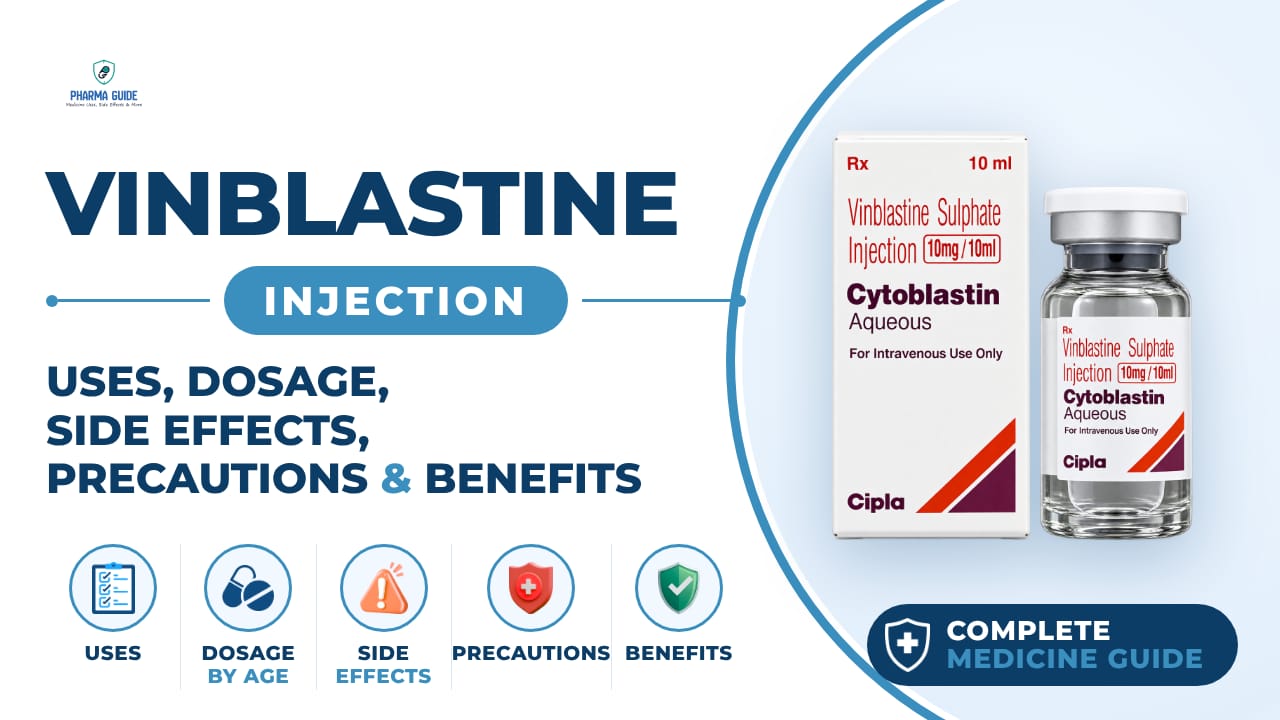
Vinblastine Injection: Uses, Dosage, Side Effects, Precautions and Alternates
| Generic name | Vinblastine sulfate |
|---|---|
| Drug class | Antineoplastic agent (vinca alkaloid / cytotoxic / mitotic inhibitor) |
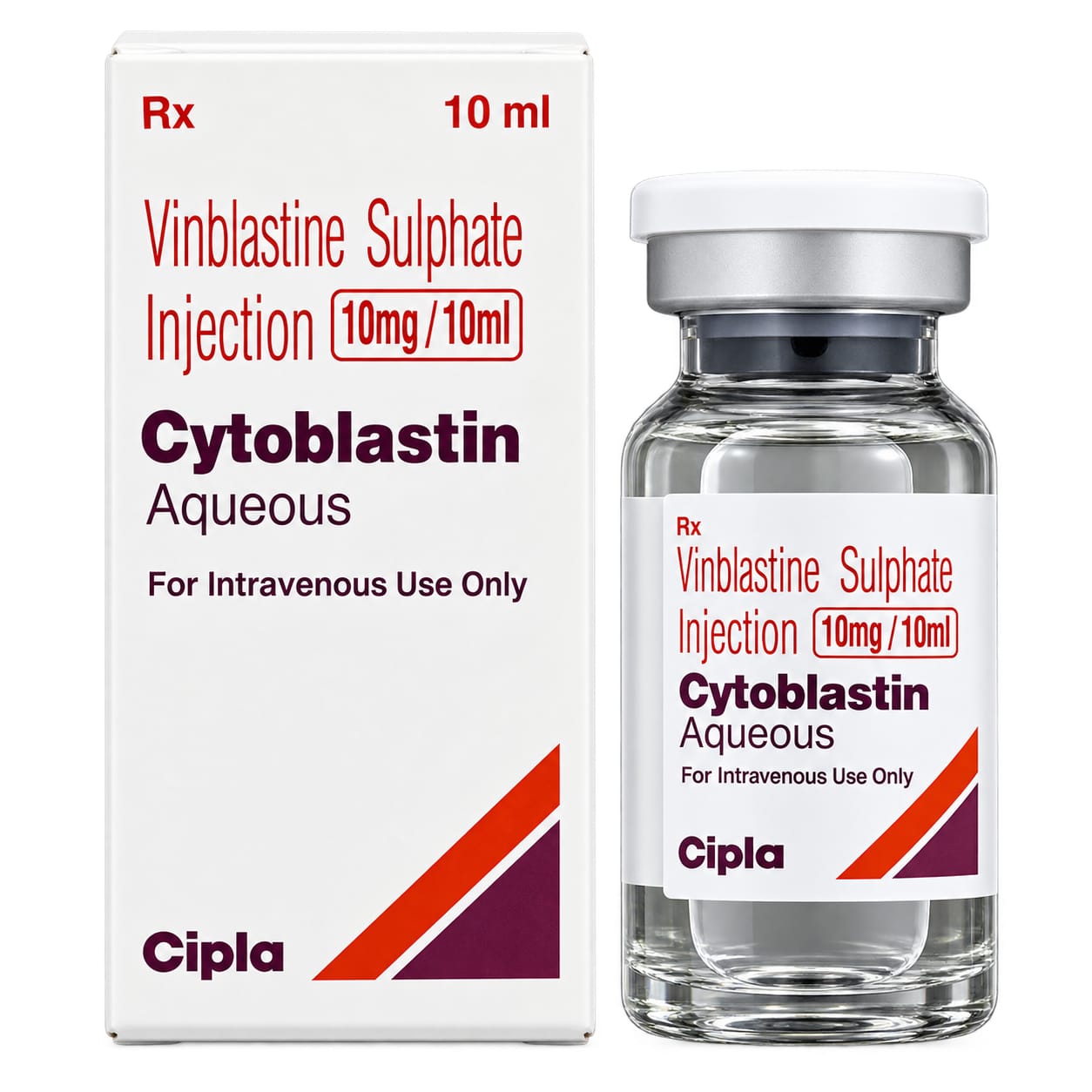
| Forms | Solution for injection, 1 mg/mL (10 mg/10 mL single-use vials) |
Quick overview
Vinblastine Sulphate Injection is a cancer chemotherapy medicine, from the vinca alkaloid class of antineoplastic (cytotoxic) agents, originally obtained from the periwinkle plant. It is given directly into a vein by a healthcare professional to treat a variety of cancers, including lymphomas, testicular and ovarian cancer, and certain skin cancers. It works by interfering with cancer cell growth and division. It may be used alone or combined with other anti-cancer medicines.
What is Vinblastine Injection
Vinblastine Sulphate Injection is a cancer chemotherapy medicine given into a vein. It belongs to a group of medicines called antineoplastics or cytotoxics, and is a vinca alkaloid obtained from the periwinkle plant.
Vinblastine Injection uses
- Cancer of the lymph nodes (Hodgkin's disease and certain lymphomas)
- Cancer of the spleen
- Cancer of the bone marrow (histiocytosis conditions)
- Cancer of the testicles
- Cancer of the ovaries
- Advanced mycosis fungoides (a skin cancer)
- Kaposi's sarcoma
- Breast cancer that has not responded to hormone therapy or surgery
- Choriocarcinoma (a cancer of the placenta) that has resisted other treatments
- May be given alone or combined with other anti-cancer medicines
Benefits of Vinblastine Injection
- Vinblastine has provided palliative treatment for a variety of malignant neoplastic diseases, temporarily shrinking some tumors
- Its use has relieved pain and other symptoms associated with cancer and allowed some patients to regain appetite and weight
- Used in certain Hodgkin lymphoma regimens
- Used for selected non-Hodgkin lymphomas
- Can treat certain testicular cancers
- Commonly used as part of combination chemotherapy
How Vinblastine Injection works
Vinblastine works by interfering with the growth and division of cancer cells, which eventually destroys them. It stops cells from dividing normally and disrupts their internal chemical processes.
Vinblastine Injection dosage
This medicine is given only by a healthcare professional experienced with cancer chemotherapy drugs, in a healthcare setting. It is given only into a vein, either as a slow injection or as an infusion (drip); it must never be given by any other route. It is usually given once a week. Your doctor will check your blood counts once or twice a week during treatment and may adjust or stop treatment based on the results. If you miss a scheduled treatment appointment, talk to your healthcare professional about rescheduling.
| Age group | Dose |
|---|---|
| Children / adolescents | Usually 2.5–6 mg/m² IV once weekly, depending on the cancer protocol |
| 18–64 years | Common initial dose: 3.7 mg/m² IV once weekly, then adjusted according to blood counts and treatment response |
Available forms and strengths
- Solution for injection, 1 mg/mL (10 mg/10 mL single-use vials)
Side effects of Vinblastine Injection
Common
- Blistering of the skin, skin ulcers
- Mouth ulcers
- Sore throat
- Significant weight loss or loss of appetite
- Dizziness
- Numbness or tingling in fingers and toes (pins and needles)
- Stomach cramps, constipation or diarrhea
- Nausea or vomiting
- Pain in the chest, jaw, bones or where the tumor is
- Headache
- Difficulty with balance
- Uncontrolled movements of the eyes
- Shortness of breath, wheezing
- Dry cough
- Weakness
- Tiredness and generally feeling unwell
- Hair loss
- Ringing in the ears or hearing loss
- Depressed mood
- Problems with ejaculation
- Lack of menstrual periods
Serious
- Depression with thoughts of death or suicide
- Gastrointestinal problems: stomach pain, blood in the stool, rectal bleeding
- Hearing problems: ear pain, hearing loss
- High blood pressure: shortness of breath, fatigue, dizziness or fainting, chest pain, swelling in ankles and legs, bluish skin or lips, racing heartbeat
- Injection site reaction: blistering, itching, pain, redness, severe skin damage, tenderness, warmth
- Low white blood cells (leukopenia): signs of infection such as sore throat and fever, fatigue, aches, flu-like symptoms
- Liver problems: yellowing of skin or eyes, upper right stomach pain or swelling, nausea or vomiting, dark urine, pale stool, unusual tiredness
- Myelosuppression (decreased bone marrow function affecting blood cell production)
- Heart attack: chest pressure or pain spreading to jaw, arm or upper abdomen, shortness of breath, dizziness, sweating, irregular heartbeat
- Nerve damage (neurotoxicity): confusion, convulsions, difficulty speaking, hallucinations, loss of coordination, memory loss, numbness and tingling, vision loss, muscle weakness, seizures
- Seizures with or without loss of consciousness
- Stroke: sudden numbness, weakness or tingling of face, arm or leg, sudden headache, blurry vision, trouble speaking or swallowing, loss of balance
- Severe allergic reaction: shortness of breath, wheezing, swelling of face, lips or tongue, rash, hives
Warnings and precautions
- This medicine must only be given into a vein. Giving it any other way can be fatal.
- Do not use this medicine if you have very low white blood cell counts (unless due to the condition being treated) or an uncontrolled bacterial infection.
- Using this medicine together with mitomycin, another anti-cancer medicine, can cause severe, potentially fatal breathing problems.
- Using daily low doses for a long time is not recommended; strict adherence to the prescribed schedule is very important, as giving too much too often has caused seizures, severe and permanent nervous system damage, and death.
- If the medicine leaks out of the vein into surrounding tissue, it can cause serious irritation and skin damage.
- Avoid getting this medicine in your eyes; it can cause severe irritation or corneal damage.
- This medicine may affect fertility in both men and women; discuss ways to preserve fertility with your healthcare professional before starting treatment.
- Elderly patients who are frail or have skin ulcers may have a stronger drop in white blood cells and should generally avoid this medicine.
- Vinblastine is not recommended during pregnancy because it may cause birth defects and harm the unborn baby.
- Women must avoid becoming pregnant during treatment and for at least 7 months after the last dose. Men must use effective contraception for at least 4 months after their last dose if their partner could become pregnant.
- It is not known if this medicine passes into breast milk. Women should not breastfeed during treatment and for 1 week after the last dose.
- No routine renal dose adjustment is usually required, but overall chemotherapy tolerance should be monitored.
- Liver disease can change how the body clears this medicine, increasing the risk of nerve damage, so the dose may need to be adjusted in patients with liver problems.
- There is no information on how this medicine interacts with alcohol, but caution is advised since the medicine can cause dizziness.
- Be careful driving or using machines until you know how this medicine affects you, as it can cause dizziness, drowsiness, or affect coordination.
Storage
- Vinblastine Sulphate Injection will be stored at the hospital by your healthcare professional
- Vinblastine Sulphate Injection should be stored at 2 - 8°C. Protect from light and freezing.
- Keep vial in outer carton. Each vial is sleeved with a transparent colourless PVC Sheath.
- Single use vials. Discard unused portion.
- Vials should be used immediately when removed from the carton and opened.
When to see a doctor
- Get immediate medical help for signs of a severe allergic reaction, such as trouble breathing, wheezing, or swelling of the face, lips, or tongue.
- Get medical help right away for signs of infection such as fever, chills, or sore throat, which can mean your white blood cell count is dangerously low.
- Seek immediate help for signs of a heart attack, such as chest pressure or pain spreading to the jaw, arm, or back, along with shortness of breath or sweating.
- Seek immediate help for signs of a stroke, such as sudden numbness, weakness, or tingling on one side of the body, sudden headache, or trouble speaking.
- Call your doctor immediately if you become pregnant, or if your partner becomes pregnant, while you are being treated with this medicine.
- Call your doctor right away if you notice unusual bleeding or bruising, black or tarry stools, or blood in your urine or stools.
- If this medicine accidentally gets into your eyes, tell your healthcare professional immediately so it can be washed out.
- If you think you have been given too much of this medicine, contact a healthcare professional or hospital emergency department immediately, even if you have no symptoms.
Alternatives
- Vincristine
- Vinorelbine
- Paclitaxel
Watch the video
FAQs
What is Vinblastine Injection used for?
It is used to treat cancers of the lymph nodes (Hodgkin's disease and certain lymphomas), spleen, bone marrow, testicles, ovaries, advanced mycosis fungoides, Kaposi's sarcoma, breast cancer unresponsive to hormone therapy or surgery, and resistant choriocarcinoma. It may be used alone or with other anti-cancer medicines.
How is Vinblastine Injection given?
It is given only by a healthcare professional directly into a vein, as a slow injection or infusion, usually once a week. It must never be given by any other route, as this can be fatal.
What are the common side effects of Vinblastine Injection?
Common side effects include mouth ulcers, sore throat, nausea or vomiting, numbness or tingling in fingers and toes, hair loss, dizziness, weakness, tiredness, headache, and constipation or diarrhea.
Is Vinblastine Injection safe during pregnancy?
No, it is not recommended during pregnancy because it may cause birth defects. Women must avoid becoming pregnant during treatment and for at least 7 months after the last dose, and men must use effective contraception for at least 4 months after their last dose.
What precautions should be taken with Vinblastine Injection?
This medicine must only be given into a vein, as any other route can be fatal. It should not be used in patients with very low white blood cell counts or uncontrolled bacterial infection, and combining it with mitomycin can cause severe breathing problems. It may also affect fertility and cause dizziness affecting driving or machine use.
General information, not medical advice
Your prescriber and the leaflet in your pack know your situation. This page does not.
- Follow your prescriber and the leaflet
- Don't start, stop, or change a dose on your own
- Doses and warnings differ by country and product
Sources
Video
Related medicines

Injectafer Injection: Uses, Dosage, Side Effects, Precautions and Alternates
Iron products
Injectafer (ferric carboxymaltose) treats iron deficiency anemia and heart failure-related iron deficiency via IV. Learn uses, dosage, side effects, and

Gliclazide Tablet: Uses, Dosage, Side Effects, Precautions and Alternates
Sulfonylurea (hypoglycemic/antidiabetic agent)
Gliclazide Tablet is a sulfonylurea for type 2 diabetes that boosts insulin release. Learn about dosage, side effects, warnings, and precautions.